Close Menu
TechCentralTechCentral

    Subscribe to the newsletter

    Get the best South African technology news and analysis delivered to your e-mail inbox every morning.

    Facebook X (Twitter) YouTube LinkedIn
    WhatsApp Facebook X (Twitter) LinkedIn YouTube
    TechCentralTechCentral
    • News
      South Africa's stablecoin silence is becoming a policy failure

      South Africa’s stablecoin silence is becoming a policy failure

      6 February 2026
      Every electric car you can buy in South Africa in early 2026, ranked by price

      Every electric car you can buy in South Africa in early 2026, ranked by price

      6 February 2026
      From stocks to crypto, markets reel as AI doubts grow

      From stocks to crypto, markets reel as AI doubts grow

      6 February 2026
      South Africa deepens China ties as US trade tensions escalate

      South Africa deepens China ties as US trade tensions escalate

      6 February 2026
      Big changes at Lesaka as Bank Zero deal nears completion - Lincoln Mali

      Big changes at Lesaka as Bank Zero deal nears completion

      6 February 2026
    • World
      AI won't replace software, says Nvidia CEO amid market rout - Jensen Huang

      AI won’t replace software, says Nvidia CEO amid market rout

      4 February 2026
      Apple acquires audio AI start-up Q.ai

      Apple acquires audio AI start-up Q.ai

      30 January 2026
      SpaceX IPO may be largest in history

      SpaceX IPO may be largest in history

      28 January 2026
      Nvidia throws AI at the weather

      Nvidia throws AI at weather forecasting

      27 January 2026
      Debate erupts over value of in-flight Wi-Fi

      Debate erupts over value of in-flight Wi-Fi

      26 January 2026
    • In-depth
      How liberalisation is rewiring South Africa's power sector

      How liberalisation is rewiring South Africa’s power sector

      21 January 2026
      The top-performing South African tech shares of 2025

      The top-performing South African tech shares of 2025

      12 January 2026
      Digital authoritarianism grows as African states normalise internet blackouts

      Digital authoritarianism grows as African states normalise internet blackouts

      19 December 2025
      TechCentral's South African Newsmakers of 2025

      TechCentral’s South African Newsmakers of 2025

      18 December 2025
      Black Friday goes digital in South Africa as online spending surges to record high

      Black Friday goes digital in South Africa as online spending surges to record high

      4 December 2025
    • TCS
      TCS+ | How Cloud On Demand is helping SA businesses succeed in the cloud - Xhenia Rhode, Dion Kalicharan

      TCS+ | Cloud On Demand and Consnet: inside a real-world AWS partner success story

      30 January 2026
      Watts & Wheels S1E3: 'BYD's Corolla Cross challenger'

      Watts & Wheels S1E3: ‘BYD’s Corolla Cross challenger’

      30 January 2026
      Watts & Wheels S1E3: 'BYD's Corolla Cross challenger'

      Watts & Wheels S1E2: ‘China attacks, BMW digs in, Toyota’s sublime supercar’

      23 January 2026

      TCS+ | Why cybersecurity is becoming a competitive advantage for SA businesses

      20 January 2026
      Watts & Wheels S1E3: 'BYD's Corolla Cross challenger'

      Watts & Wheels: S1E1 – ‘William, Prince of Wheels’

      8 January 2026
    • Opinion
      South Africa's skills advantage is being overlooked at home - Richard Firth

      South Africa’s skills advantage is being overlooked at home

      29 January 2026
      Why Elon Musk's Starlink is a 'hard no' for me - Songezo Zibi

      Why Elon Musk’s Starlink is a ‘hard no’ for me

      26 January 2026
      South Africa's new fibre broadband battle - Duncan McLeod

      South Africa’s new fibre broadband battle

      20 January 2026
      AI moves from pilots to production in South African companies - Nazia Pillay SAP

      AI moves from pilots to production in South African companies

      20 January 2026
      South Africa's new fibre broadband battle - Duncan McLeod

      ANC’s attack on Solly Malatsi shows how BEE dogma trumps economic reality

      14 December 2025
    • Company Hubs
      • Africa Data Centres
      • AfriGIS
      • Altron Digital Business
      • Altron Document Solutions
      • Altron Group
      • Arctic Wolf
      • AvertITD
      • Braintree
      • CallMiner
      • CambriLearn
      • CYBER1 Solutions
      • Digicloud Africa
      • Digimune
      • Domains.co.za
      • ESET
      • Euphoria Telecom
      • Incredible Business
      • iONLINE
      • IQbusiness
      • Iris Network Systems
      • LSD Open
      • NEC XON
      • Netstar
      • Network Platforms
      • Next DLP
      • Ovations
      • Paracon
      • Paratus
      • Q-KON
      • SevenC
      • SkyWire
      • Solid8 Technologies
      • Telit Cinterion
      • Tenable
      • Vertiv
      • Videri Digital
      • Vodacom Business
      • Wipro
      • Workday
      • XLink
    • Sections
      • AI and machine learning
      • Banking
      • Broadcasting and Media
      • Cloud services
      • Contact centres and CX
      • Cryptocurrencies
      • Education and skills
      • Electronics and hardware
      • Energy and sustainability
      • Enterprise software
      • Financial services
      • Information security
      • Internet and connectivity
      • Internet of Things
      • Investment
      • IT services
      • Lifestyle
      • Motoring
      • Public sector
      • Retail and e-commerce
      • Satellite communications
      • Science
      • SMEs and start-ups
      • Social media
      • Talent and leadership
      • Telecoms
    • Events
    • Advertise
    TechCentralTechCentral
    Home » Sections » Energy and sustainability » South Africans are building private alternatives to Eskom

    South Africans are building private alternatives to Eskom

    The result of Eskom's woes is that South Africans are increasingly being forced to explore alternative sources of electricity.
    By Hartmut Winkler21 January 2023
    Twitter LinkedIn Facebook WhatsApp Email Telegram Copy Link
    News Alerts
    WhatsApp

    South Africans have been battered by power shortages for several years. These have worsened to the point that towards the end of 2022, Eskom had only half of its power generation capacity operational.

    This has forced Eskom to escalate its rotational power cuts. By mid-January 2023, users were typically without electricity for eight to 10 hours a day. The situation is unlikely to improve much in the short to medium term. It’s expected that this year, especially as power demand increases in winter, the country’s electricity supply will decline to the point where power may sometimes be available for only 12 hours a day.

    Nor is the situation expected to improve in the medium to long term. The national electricity utility is in a precarious financial situation.

    Fifteen years ago, South Africans had access to abundant electricity at some of the cheapest pricing in the world

    The result is that South Africans are increasingly being forced to explore alternative sources of electricity. From big companies down to small households, entities are even considering whether it is possible to disconnect from the Eskom grid entirely and produce all their electricity in-house.

    Fifteen years ago, South Africans had access to abundant electricity at some of the cheapest pricing in the world. But since then electricity tariffs have skyrocketed at an average of four times the inflation rate.

    Factories, mines, farms, businesses and individuals are now choosing to reduce their dependence on Eskom’s network by supplementing their electricity with in-house power generation. While this lowers demand on the Eskom power supply, the level at which this has been happening so far is insufficient to substantially reduce power cuts. The construction of larger private solar plants, already initiated by some bigger entities, as well as the growing interest in rooftop solar in residential areas, will gradually be felt. But this, too, will not stop power cuts completely.

    Read: Ramaphosa to skip Davos to attend to Eskom crisis

    Some entities may go as far as cutting themselves off from Eskom entirely. How feasible is this?

    The obstacles

    Getting by without a connection to the national electricity grid is not new to many South Africans. The apartheid government deliberately slowed electrification of black residential areas and especially of the country’s rural areas. Where there was electricity supply far from the urban centres, it was largely arranged for the benefit of mining operations and white farming communities.

    In the 1990s, under the new democratic government, Eskom made concerted efforts to expand its supply and services to some of the most remote rural areas. This garnered wide praise and even yielded the Financial Times Global Energy Award. The result was that the bulk of the country’s population began to enjoy access to what was then unlimited electricity. It was also relatively cheap.

    But this had unintended consequences. Even when individuals felt drawn to the notion of carbon-free renewable energy, the simplicity of sourcing reliable, low-cost power from Eskom made all alternatives uncompetitive.

    Read: Mantashe to get political oversight of Eskom

    The second biggest obstacle has been that until about 10 years ago solar was expensive. The cost then dropped dramatically between 2011 and 2021: in line with international trends, by a factor of 10.

    The frequent Eskom power cuts accompanied by large price increases, and the drop in the price of solar electricity coupled with better storage options, have changed the equation completely.
    The alternatives

    Three on-site power options are briefly discussed.

    • Diesel generators: This well-established technology is already common in rural communities and was adopted by many households and businesses during the earlier waves of power cuts. But the diesel option isn’t cheap, and fuel is subject to price fluctuations. On top of this, generators require maintenance, they tend to be noisy and they emit fumes.
    • Biogas: This is produced from rotting agricultural leftovers or organic waste that collects in municipal landfills. South Africa’s agricultural sector produces ample fuel for this technology, so it is likely to see wider application in farming communities. But it’s impractical for residential and business use.
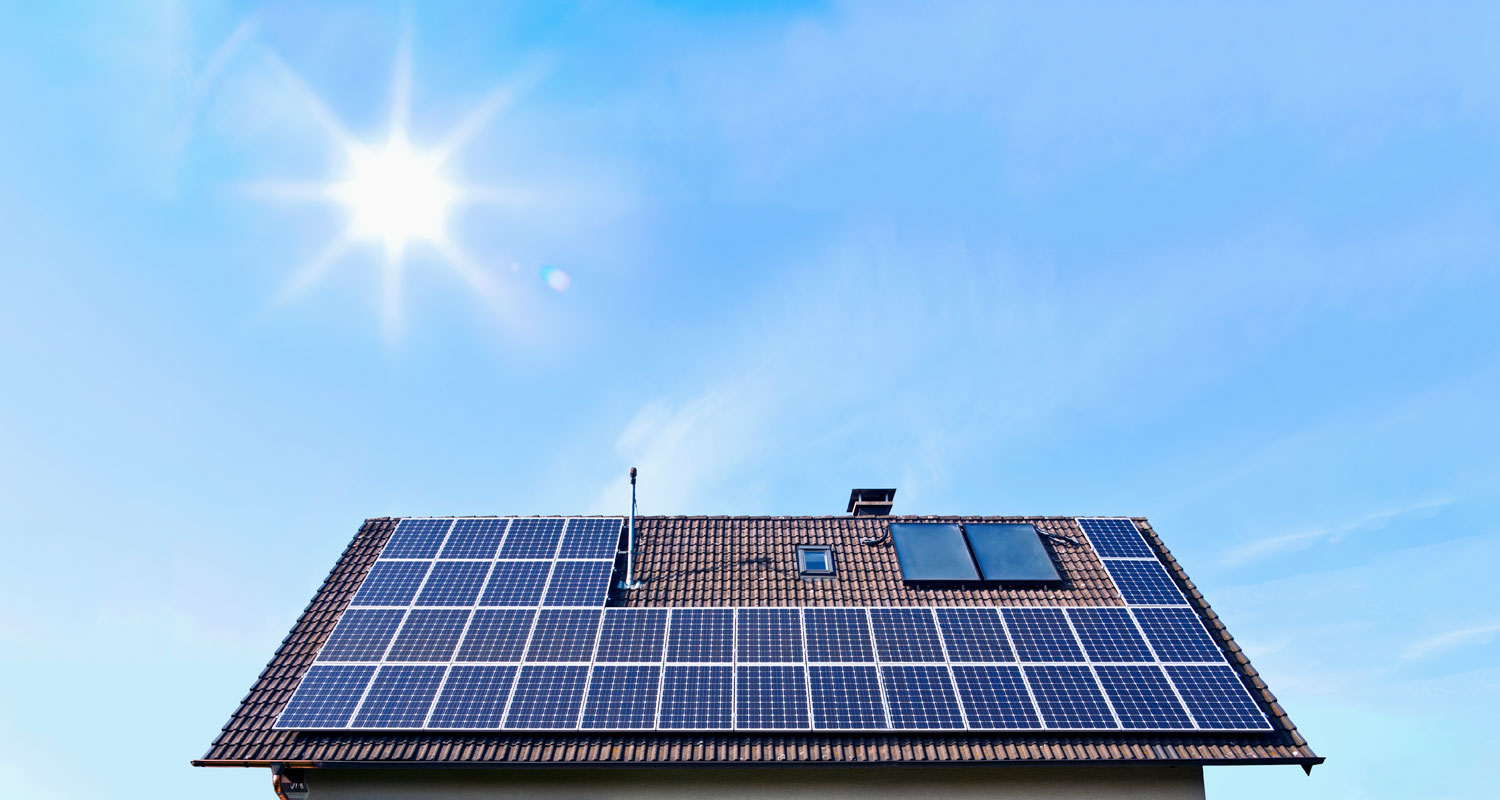
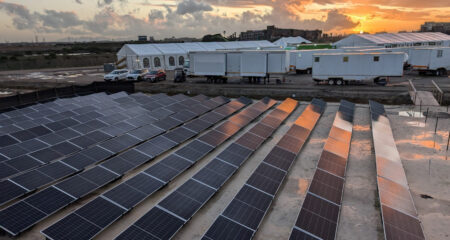
    • On-site solar installation: South Africa has ample sunshine. In addition, solar panel prices have dropped massively over the last decade. Efficient large-scale battery storage options have also become increasingly feasible. The persistent downside of solar installations is that they won’t bridge lengthy cloudy spells.

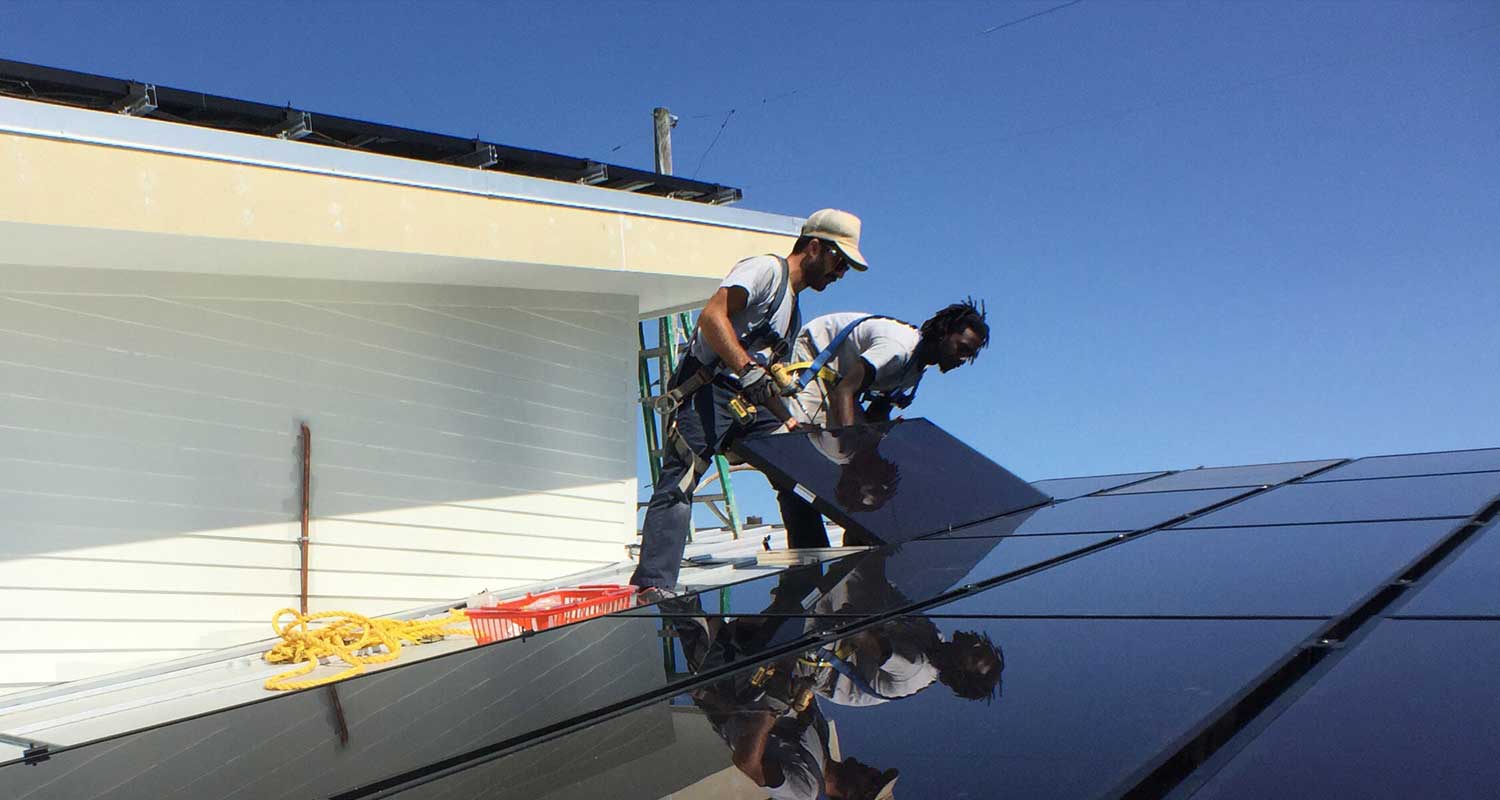
    The initial impetus for the grand move to solar rooftop has been provided by large enterprises with the financial capacity to invest in what amounts to full-blown private solar farms. These include mines, factories, shopping malls and agricultural estates. These enterprises expect to recover their investment costs in just a few years.

    Smaller entities, including typical households, are beginning to follow this trend.

    Exiting the grid, or not

    While it’s possible in theory to install enough solar panels and battery storage to see a household through a week without sunshine, this is still far from a financially optimal solution.

    Those that have invested in in-house solar capacity currently retain their access to Eskom electricity for periods when solar power is unavailable or not sufficient. Their primary aim is to lower their electricity bills and to have some backup power during the temporary Eskom blackouts.

    Panel numbers and battery capacity can in theory be increased until it becomes possible to have electricity for days. In this way they can bridge lengthy periods of cloudiness. But it’s costly to acquire equipment.

    South Africa is, however, a country that enjoys unusually many sunshine hours. This may well tempt those that are able to get by with occasional power interruptions to abandon the Eskom grid entirely, especially if punitive tariffs are imposed on those seeking only occasional Eskom backup power.

    Read: Government to take on Eskom debt in staggered way

    Medium and large companies requiring interruption-free power are however likely to opt for the hybrid model of self-generated electricity with Eskom backup. This trend has started and will grow. But it is clear that the past paradigm of complete reliance on Eskom is going to change forever.The Conversation

    Get TechCentral’s daily newsletter

    • The author, Hartmut Winkler, is professor of physics, University of Johannesburg
    • This article is republished from The Conversation

    Eskom Hartmut Winkler
    WhatsApp YouTube Follow on Google News Add as preferred source on Google
    Share. Facebook Twitter LinkedIn WhatsApp Telegram Email Copy Link
    Previous ArticleKarpowership to get regulatory decision by March
    Next Article Microsoft kicks off high-risk tech earnings season

    Related Posts

    Outa warns homeowners against rushing to register rooftop solar

    Outa warns homeowners against rushing to register rooftop solar

    27 January 2026
    How liberalisation is rewiring South Africa's power sector

    How liberalisation is rewiring South Africa’s power sector

    21 January 2026
    No risk of load shedding after Koeberg output scaled back

    No risk of load shedding after Koeberg output scaled back

    21 January 2026
    Company News
    The skills gap is a thinking gap: why South African employers can't find problem solvers

    The skills gap is a thinking gap: why SA employers can’t find problem solvers

    6 February 2026
    Vox Kiwi Wireless: fibre-like broadband for South African homes

    Vox Kiwi Wireless: fibre-like broadband for South African homes

    5 February 2026
    NEC XON achieves an African first with full Fortinet accreditation - Ian Kruger

    NEC XON achieves an African first with full Fortinet accreditation

    5 February 2026
    Opinion
    South Africa's skills advantage is being overlooked at home - Richard Firth

    South Africa’s skills advantage is being overlooked at home

    29 January 2026
    Why Elon Musk's Starlink is a 'hard no' for me - Songezo Zibi

    Why Elon Musk’s Starlink is a ‘hard no’ for me

    26 January 2026
    South Africa's new fibre broadband battle - Duncan McLeod

    South Africa’s new fibre broadband battle

    20 January 2026

    Subscribe to Updates

    Get the best South African technology news and analysis delivered to your e-mail inbox every morning.

    Latest Posts
    South Africa's stablecoin silence is becoming a policy failure

    South Africa’s stablecoin silence is becoming a policy failure

    6 February 2026
    Every electric car you can buy in South Africa in early 2026, ranked by price

    Every electric car you can buy in South Africa in early 2026, ranked by price

    6 February 2026
    From stocks to crypto, markets reel as AI doubts grow

    From stocks to crypto, markets reel as AI doubts grow

    6 February 2026
    South Africa deepens China ties as US trade tensions escalate

    South Africa deepens China ties as US trade tensions escalate

    6 February 2026
    © 2009 - 2026 NewsCentral Media
    • Cookie policy (ZA)
    • TechCentral – privacy and Popia

    Type above and press Enter to search. Press Esc to cancel.

    Manage consent

    TechCentral uses cookies to enhance its offerings. Consenting to these technologies allows us to serve you better. Not consenting or withdrawing consent may adversely affect certain features and functions of the website.

    Functional Always active
    The technical storage or access is strictly necessary for the legitimate purpose of enabling the use of a specific service explicitly requested by the subscriber or user, or for the sole purpose of carrying out the transmission of a communication over an electronic communications network.
    Preferences
    The technical storage or access is necessary for the legitimate purpose of storing preferences that are not requested by the subscriber or user.
    Statistics
    The technical storage or access that is used exclusively for statistical purposes. The technical storage or access that is used exclusively for anonymous statistical purposes. Without a subpoena, voluntary compliance on the part of your Internet Service Provider, or additional records from a third party, information stored or retrieved for this purpose alone cannot usually be used to identify you.
    Marketing
    The technical storage or access is required to create user profiles to send advertising, or to track the user on a website or across several websites for similar marketing purposes.
    • Manage options
    • Manage services
    • Manage {vendor_count} vendors
    • Read more about these purposes
    View preferences
    • {title}
    • {title}
    • {title}