Close Menu
TechCentralTechCentral

    Subscribe to the newsletter

    Get the best South African technology news and analysis delivered to your e-mail inbox every morning.

    Facebook X (Twitter) YouTube LinkedIn
    WhatsApp Facebook X (Twitter) LinkedIn YouTube
    TechCentralTechCentral
    • News
      Rural South Africans should not have to trade competition for coverage - Paul Colmer

      Rural South Africans should not have to trade competition for coverage

      3 September 2026
      Adrian Gore sets an October date for Discovery's 'super bank'

      Adrian Gore sets an October date for Discovery’s ‘super bank’

      3 September 2026
      Discovery bolts AI-driven healthtech onto Vitality with Icario deal

      Discovery bolts AI-driven healthtech onto Vitality with Icario deal

      3 September 2026
      Uber retreats from key African markets

      Uber retreats from key African markets

      3 September 2026
      FSCA debars CEO of JSE-listed bitcoin treasury company - Warren Wheatley and Stafford Masie

      FSCA debars CEO of JSE-listed bitcoin treasury company

      2 September 2026
    • World
      'This is not circular': Jensen Huang defends $3.5-billion MediaTek deal

      ‘This is not circular’: Jensen Huang defends $3.5-billion MediaTek deal

      2 September 2026
      AI-generated music banned from Australian charts

      AI-generated music banned from Australian charts

      26 August 2026
      Traders brace for a R4.5-trillion swing in Nvidia's value

      Traders brace for a R4.5-trillion swing in Nvidia’s value

      25 August 2026
      Russia building its own Starlink - and faster than expected - Vadym Skibitskyi

      Russia building its own Starlink – and faster than expected

      11 August 2026
      Meta AI will now tell parents if their teen is in crisis

      Meta AI will now tell parents if their teen is in crisis

      17 July 2026
    • In-depth
      Google DeepMind CEO Demis Hassabis. Image: John Sears

      The plan to stop AI from breaking the world

      16 July 2026
      The internet has a Strait of Hormuz problem

      The internet has a Strait of Hormuz problem

      15 July 2026
      AI boom sparks rally, frenzy and fear

      AI boom sparks rally, frenzy and fear

      11 June 2026
      Every plug-in hybrid on sale in South Africa, ranked by price - Lamborghini Temerario

      Every plug-in hybrid on sale in South Africa, ranked by price

      7 June 2026
      What Wi-Fi 8 will mean for wireless networks

      What Wi-Fi 8 will mean for wireless networks

      1 June 2026
    • TCS
      Winstone Jordaan on building a national EV charging network

      Winstone Jordaan on building a national EV charging network

      2 September 2026
      Watts & Wheels S1E8: 'Tesla lands in Africa, just not here'

      Watts & Wheels S1E8: ‘Tesla lands in Africa, just not here’

      24 August 2026
      TCS | Herotel CEO Van Zyl Botha on beating Starlink to South Africa

      TCS | Herotel CEO Van Zyl Botha on beating Starlink to South Africa

      14 August 2026
      Meet the CIO | Discovery's Derek Wilcocks on AI, guardrails and growth

      Meet the CIO | Derek Wilcocks on how AI personalised Vitality

      13 August 2026
      TCS | Money just became native to the internet - Steven Boykey Sidley

      TCS | Money just became native to the internet – Steven Boykey Sidley

      12 August 2026
    • Opinion
      The fragile joint in the Capitec machine - Pambos Soteriades

      The R197-billion market the banks can’t reach

      25 August 2026
      South African tech's compounding debt problem - Jannie van Zyl

      Management consulting as we know it is over

      21 August 2026
      South African tech's compounding debt problem - Jannie van Zyl

      The most dangerous customer is the quiet one

      10 August 2026
      South African tech's compounding debt problem - Jannie van Zyl

      South African tech’s compounding debt problem

      29 July 2026
      The fragile joint in the Capitec machine - Pambos Soteriades

      Best network, worst vibes: the puzzle of SA telecoms

      20 July 2026
    • Company Hubs
      • 1Stream
      • Africa Data Centres
      • AfriGIS
      • Altron Digital Business
      • Altron Document Solutions
      • Altron Group
      • Arctic Wolf
      • Ascent Technology
      • AvertITD
      • BBD
      • Braintree
      • CallMiner
      • CambriLearn
      • CM.com
      • Contactable
      • CYBER1 Solutions
      • Digicloud Africa
      • Digimune
      • Domains.co.za
      • ESET
      • Euphoria Telecom
      • HOSTAFRICA
      • Incredible Business
      • iONLINE
      • IQbusiness
      • Iris Network Systems
      • Kaspersky
      • LSD Open
      • Mitel
      • NEC XON
      • Netstar
      • Network Platforms
      • Next DLP
      • Ovations
      • Paracon
      • Paratus
      • Q-KON
      • SevenC
      • SkyWire
      • Solid8 Technologies
      • Telit Cinterion
      • Telviva
      • Tenable
      • Vertiv
      • Videri Digital
      • Vodacom Business
      • Vox
      • Wipro
      • Workday
      • XLink
    • Sections
      • AI and machine learning
      • Banking
      • Broadcasting and Media
      • Cloud services
      • Contact centres and CX
      • Cryptocurrencies
      • Education and skills
      • Electronics and hardware
      • Energy and sustainability
      • Enterprise software
      • Financial services
      • HealthTech
      • Information security
      • Internet and connectivity
      • Internet of Things
      • Investment
      • IT services
      • Lifestyle
      • Policy and regulation
      • Public sector
      • Retail and e-commerce
      • Satellite communications
      • Science
      • SMEs and start-ups
      • Social media
      • Talent and leadership
      • Telecoms
      • Watts & Wheels
    • Events
    • Advertise
    TechCentralTechCentral
    Home » Sections » Social media » 2018: The year Facebook lost all its friends

    2018: The year Facebook lost all its friends

    By Martyn Landi27 December 2018
    Twitter LinkedIn Facebook WhatsApp Email Telegram Copy Link
    News Alerts
    WhatsApp

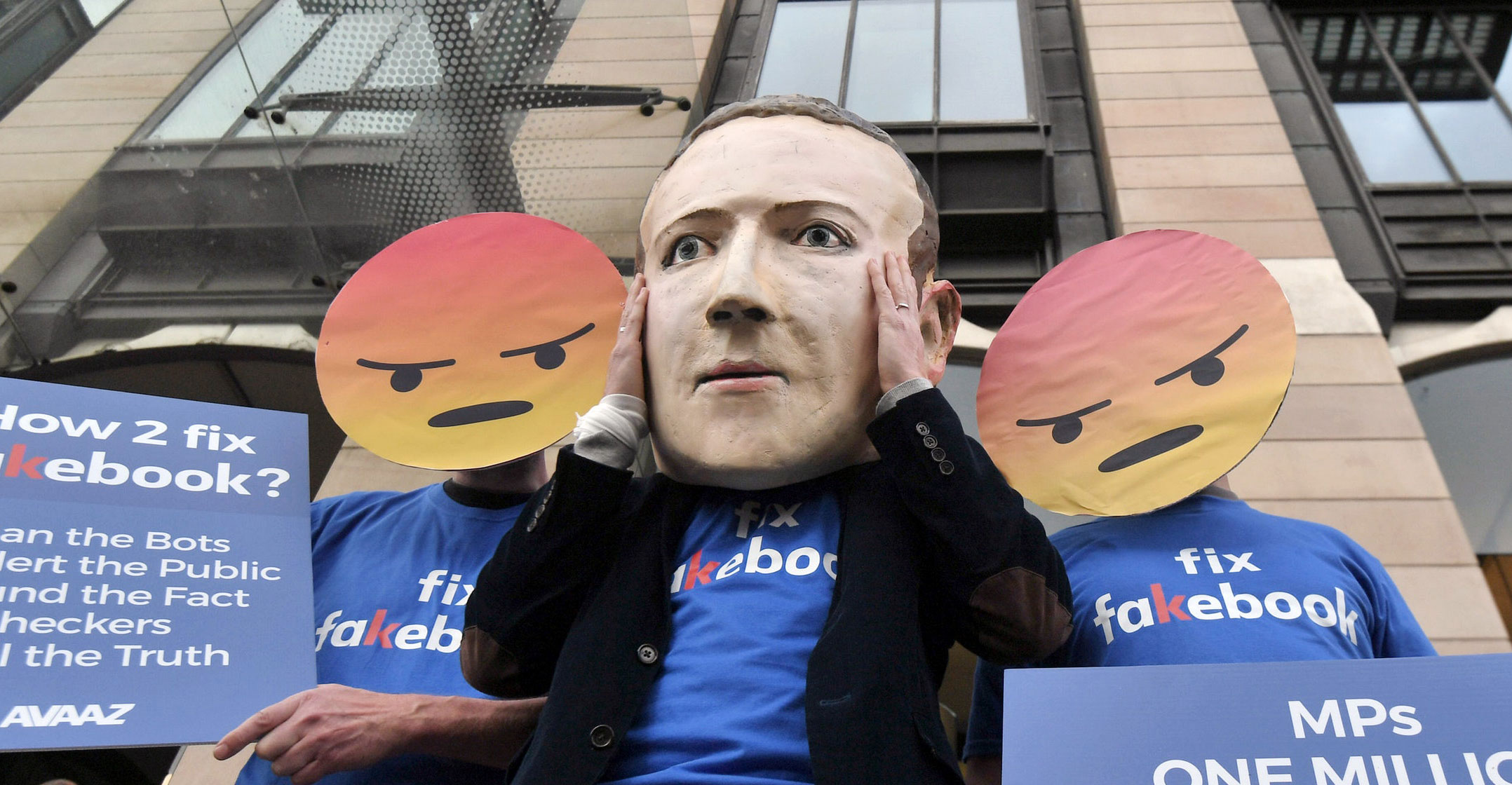
    Facebook founder Mark Zuckerberg began the year by pledging to fix the social network’s problems, but by the end of 2018 finds himself and his company under more scrutiny than ever.

    The billionaire’s pledge was in response to scrutiny about the influence of fake news and other content circulated on Facebook had on the 2016 US presidential election. But more bad news was quick to find the firm.

    At the end of January, the company revealed people were spending less time on the platform because of an algorithm change designed to encourage more time “well spent” on the platform.

    Zuckerberg’s performance drew criticism for his perceived dodging of questions, but he did apologise for the company not spotting Russian interference

    As a result, Zuckerberg said people were spending around 50 million hours less per day on Facebook.

    While that briefly startled investors, it was nothing compared to what was to follow in March, when an investigation by multiple news outlets published stories about Cambridge Analytica, the political data firm.

    It was revealed the firm had secretly gathered the data of millions of Facebook users as part of plans to target voters in the US.

    The story focused initially on how this data and Facebook’s troves of it could be used to influence elections, but it also quickly exposed the company’s flawed policies around the gathering, use and sharing of user information.

    Facebook’s public image was tarnished and would set the tone for increased scepticism during the year.

    Ignored

    Zuckerberg would repeatedly refuse or ignore requests to appear before MPs on a British house of commons select committee looking into fake news, with the site being labelled evasive and Zuckerberg eventually being empty chaired by one meeting of the committee in November.

    This was far from the only PR misstep. In the weeks following the discovery of the Cambridge Analytica scandal, it was discovered Zuckerberg had access to a unique tool that allowed him to delete old Facebook Messenger posts. It was quickly announced this would be rolled out to users as well.

    Then, in April, following weeks of scrutiny around the company’s approach to data privacy, the Facebook CEO appeared before two committees of the US congress.
    Zuckerberg’s performance drew criticism for his perceived dodging of questions, but he did apologise for the company not spotting Russian interference on the platform, saying he was “responsible for what happens here”.

    Even away from data privacy and fake news issues, Facebook was the subject of strife, with WhatsApp founder Jan Koum announcing at the end of April he was leaving the messaging app he founded, amid reports of disagreements internally with the direction of the app now part of the Facebook family.

    In May, Zuckerberg appeared before the European parliament to face more questions, further angering British MPs having sent the firm’s chief technology officer to appear before them instead just weeks earlier.

    More senior staff departures followed in September, with Instagram founders Kevin Systrom and Mike Krieger announcing they had resigned

    This was followed at the end of July by the company experiencing the worst single-day loss of any public stock on the US market, with more than US$100-billion wiped off the firm’s valuation after it warned of declining revenue growth in its financial results the previous evening.

    August saw the criticism from officials continue, with a United Nations report on the violence against Rohingya Muslims in Burma calling Facebook a “useful instrument” to those looking to spread hate.

    Facebook would later acknowledge its shortcomings in handling content from the country, pledging to address the issue by increasing the number of Burmese-speaking moderators.

    More senior staff departures followed in September, with Instagram founders Kevin Systrom and Mike Krieger announcing they had resigned from the company.

    Data breach

    Then, on 28 September, the company revealed it had suffered a data breach, one which initially was said to have exposed the personal data of as many as 50 million users. This figure was later rounded down to around 30 million, as the FBI and the EU opened investigations into the incident.

    Despite the growing list of questions over the firm’s data handling policies, in early October Facebook launched Portal, its video chat device designed to sit in the kitchen or living room. It was met with fierce criticism, with many questioning whether they could trust Facebook enough to place a camera built by the firm in their homes.

    During October, it was also announced that former UK deputy Prime Minister Nick Clegg was the company’s new head of global affairs and communications, a move seen as Facebook attempting to improve its relations with an increasingly sceptical Europe by turning to someone with political experience in the region.

    Facebook CEO Mark Zuckerberg. Image: Alessio Jacona

    Less than a month later, however, the focus was firmly back on Facebook’s current leadership, with a report from The New York Times alleging poor decision-making among the company’s top executives around Russian interference on the platform, and suggestions they knew of it earlier than previously disclosed.

    The company was also linked to the PR firm Definers, who it was alleged had attempted to circulate stories attacking Facebook critics, including billionaire philanthropist George Soros.

    In early October, Facebook launched Portal, its video chat device designed to sit in the kitchen or living room

    Further scrutiny of internal policy followed in early December, when an extraordinary sequence of events involving MPs seizing documents from a US software executive involved in a lawsuit against Facebook while he was in London, ended with the files being published, laying bare Facebook’s internal discussions around possibly selling user data and cutting off rivals from access to some parts of the social network if they were seen as a threat or rival.

    Days later, another security bug inside the platform was discovered, which Facebook said had inadvertently exposed the photos of up to 6.8 million users — including images they may have uploaded to the site but never posted.

    Even the traditional pre-Christmas slowdown did not reach the social network, with another New York Times investigation published on 18 December suggesting a string of data-sharing deals with third-party apps such as Netflix and Spotify had existed and given apps access to data, in some cases, without user permission.

    Closely followed by the announcement that the attorney-general for Washington, DC had filed a lawsuit against the company over the Cambridge Analytica scandal, it leaves Zuckerberg with a longer list of issues to fix than the billionaire Facebook boss began the year with.


    Follow TechCentral on Google News Add TechCentral as your preferred source on Google


    Facebook Mark Zuckerberg top
    WhatsApp YouTube
    Share. Facebook Twitter LinkedIn WhatsApp Telegram Email Copy Link
    Previous Article2018 a breakthrough year for Huawei, despite turmoil
    Next Article Another huge petrol price cut announced

    Related Posts

    Meta wins by settling

    Meta wins by settling

    27 August 2026
    Facebook and Instagram are getting nighttime curfews for children

    Facebook and Instagram are getting nighttime curfews for children

    26 August 2026
    Meta cash flow collapses as AI bill hits $145-billion - Mark Zuckerberg

    Meta cash flow collapses as AI bill hits $145-billion

    30 July 2026
    Company News
    How to build a security operations centre that actually works - Kaspersky

    How to build a security operations centre that actually works

    3 September 2026
    Paratus Uganda first to market with Starlink service

    Paratus Uganda first to market with Starlink service

    2 September 2026
    Solid8 brings AlgoSec Horizon to Southern Africa - Simone Santana

    Solid8 brings AlgoSec Horizon to Southern Africa

    1 September 2026
    Opinion
    The fragile joint in the Capitec machine - Pambos Soteriades

    The R197-billion market the banks can’t reach

    25 August 2026
    South African tech's compounding debt problem - Jannie van Zyl

    Management consulting as we know it is over

    21 August 2026
    South African tech's compounding debt problem - Jannie van Zyl

    The most dangerous customer is the quiet one

    10 August 2026

    Subscribe to Updates

    Get the best South African technology news and analysis delivered to your e-mail inbox every morning.

    Latest Posts
    Rural South Africans should not have to trade competition for coverage - Paul Colmer

    Rural South Africans should not have to trade competition for coverage

    3 September 2026
    Adrian Gore sets an October date for Discovery's 'super bank'

    Adrian Gore sets an October date for Discovery’s ‘super bank’

    3 September 2026
    How to build a security operations centre that actually works - Kaspersky

    How to build a security operations centre that actually works

    3 September 2026
    Discovery bolts AI-driven healthtech onto Vitality with Icario deal

    Discovery bolts AI-driven healthtech onto Vitality with Icario deal

    3 September 2026
    © 2009 - 2026 NewsCentral Media
    Built and maintained by Chronon
    • Cookie policy (ZA)
    • TechCentral – privacy and Popia

    Type above and press Enter to search. Press Esc to cancel.

    Manage consent

    TechCentral uses cookies to enhance its offerings. Consenting to these technologies allows us to serve you better. Not consenting or withdrawing consent may adversely affect certain features and functions of the website.

    Functional Always active
    The technical storage or access is strictly necessary for the legitimate purpose of enabling the use of a specific service explicitly requested by the subscriber or user, or for the sole purpose of carrying out the transmission of a communication over an electronic communications network.
    Preferences
    The technical storage or access is necessary for the legitimate purpose of storing preferences that are not requested by the subscriber or user.
    Statistics
    The technical storage or access that is used exclusively for statistical purposes. The technical storage or access that is used exclusively for anonymous statistical purposes. Without a subpoena, voluntary compliance on the part of your Internet Service Provider, or additional records from a third party, information stored or retrieved for this purpose alone cannot usually be used to identify you.
    Marketing
    The technical storage or access is required to create user profiles to send advertising, or to track the user on a website or across several websites for similar marketing purposes.
    • Manage options
    • Manage services
    • Manage {vendor_count} vendors
    • Read more about these purposes
    View preferences
    • {title}
    • {title}
    • {title}