Close Menu
TechCentralTechCentral

    Subscribe to the newsletter

    Get the best South African technology news and analysis delivered to your e-mail inbox every morning.

    Facebook X (Twitter) YouTube LinkedIn
    WhatsApp Facebook X (Twitter) LinkedIn YouTube
    TechCentralTechCentral
    • News
      Hyperscalers ate my next computer

      Hyperscalers ate my next computer

      8 May 2026
      Major African telco postpones mobile money listing

      Major African telco postpones mobile money listing

      8 May 2026
      Cabinet approves new permanent Sita board, ending years of turmoil - State IT Agency

      Cabinet approves new permanent Sita board, ending years of turmoil

      8 May 2026
      A 12-year-old competition case lands on Canal+'s desk - Altech Node

      A 12-year-old competition case lands on Canal+’s desk

      8 May 2026
      Why South Africa is Zoho's third-fastest-growing market - Andrew Bourne

      Why South Africa is Zoho’s third-fastest-growing market

      8 May 2026
    • World
      OpenAI's new audio APIs aim for conversational voice agents

      OpenAI’s new audio APIs aim for conversational voice agents

      8 May 2026
      'It was my idea': Musk claims paternity of OpenAI - Elon Musk

      ‘It was my idea’: Musk claims paternity of OpenAI

      29 April 2026
      Pivotal week for US tech stocks

      Pivotal week for US tech stocks

      28 April 2026
      Worries over OpenAI's growth as Anthropic gains ground - Sam Altman. Shelby Tauber/Reuters

      Worries over OpenAI’s growth as Anthropic gains ground

      28 April 2026
      Taylor Swift trademarks her voice to fight AI fakes

      Taylor Swift trademarks her voice to fight AI fakes

      28 April 2026
    • In-depth
      Alfa's electric rebel - Alfa Romeo Junior Elettrica Veloce

      Alfa’s electric rebel

      29 April 2026
      Africa switches on as Europe dims the lights

      Africa switches on as Europe dims the lights

      9 April 2026
      The biggest untapped EV market on Earth is hiding in plain sight

      The biggest untapped EV market on Earth is hiding in plain sight

      1 April 2026
      Datatec is firing on all cylinders - Jens Montanana

      The R16-billion tech giant hiding in plain sight

      26 March 2026
      The last generation of coders

      The last generation of coders

      18 February 2026
    • TCS
      Michael Rossouw

      TCS+ | The retirement decision most South Africans get wrong

      6 May 2026
      TCS | The Cape Town start-up listening for TB with AI - Braden van Breda

      TCS | The Cape Town start-up listening for TB with AI

      4 May 2026

      TCS+ | ‘The ISP for ISPs’: Vox’s shift to wholesale aggregator

      20 April 2026
      TCS | Werner Lindemann on how AI is rewriting the infosec rulebook

      TCS | Werner Lindemann on how AI is rewriting the infosec rulebook

      15 April 2026
      TCS | Donovan Marsh on AI and the future of filmmaking

      TCS | Donovan Marsh on AI and the future of filmmaking

      7 April 2026
    • Opinion
      Free calls, dead voice and Shameel Joosub's Spanish ghost - Duncan McLeod

      Free calls, dead voice and Shameel Joosub’s Spanish ghost

      22 April 2026
      The conflict of interest at the heart of PayShap's slow adoption - Cheslyn Jacobs

      The conflict of interest at the heart of PayShap’s slow adoption

      26 March 2026
      South Africa's energy future hinges on getting wheeling right - Aishah Gire

      South Africa’s energy future hinges on getting wheeling right

      10 March 2026
      Free calls, dead voice and Shameel Joosub's Spanish ghost - Duncan McLeod

      Apple just dropped a bomb on the Windows world

      5 March 2026
      R230-million in the bag for Endeavor's third Harvest Fund - Alison Collier

      VC’s centre of gravity is shifting – and South Africa is in the frame

      3 March 2026
    • Company Hubs
      • 1Stream
      • Africa Data Centres
      • AfriGIS
      • Altron Digital Business
      • Altron Document Solutions
      • Altron Group
      • Arctic Wolf
      • Ascent Technology
      • AvertITD
      • BBD
      • Braintree
      • CallMiner
      • CambriLearn
      • Contactable
      • CYBER1 Solutions
      • Digicloud Africa
      • Digimune
      • Domains.co.za
      • ESET
      • Euphoria Telecom
      • HOSTAFRICA
      • Incredible Business
      • iONLINE
      • IQbusiness
      • Iris Network Systems
      • Kaspersky
      • LSD Open
      • Mitel
      • NEC XON
      • Netstar
      • Network Platforms
      • Next DLP
      • Ovations
      • Paracon
      • Paratus
      • Q-KON
      • SevenC
      • SkyWire
      • Solid8 Technologies
      • Telit Cinterion
      • Telviva
      • Tenable
      • Vertiv
      • Videri Digital
      • Vodacom Business
      • Wipro
      • Workday
      • XLink
    • Sections
      • AI and machine learning
      • Banking
      • Broadcasting and Media
      • Cloud services
      • Contact centres and CX
      • Cryptocurrencies
      • Education and skills
      • Electronics and hardware
      • Energy and sustainability
      • Enterprise software
      • Financial services
      • HealthTech
      • Information security
      • Internet and connectivity
      • Internet of Things
      • Investment
      • IT services
      • Lifestyle
      • Motoring
      • Policy and regulation
      • Public sector
      • Retail and e-commerce
      • Satellite communications
      • Science
      • SMEs and start-ups
      • Social media
      • Talent and leadership
      • Telecoms
    • Events
    • Advertise
    TechCentralTechCentral
    Home » World » 5 ways nanotech will change the world

    5 ways nanotech will change the world

    By The Conversation22 March 2016
    Twitter LinkedIn Facebook WhatsApp Email Telegram Copy Link
    News Alerts
    WhatsApp

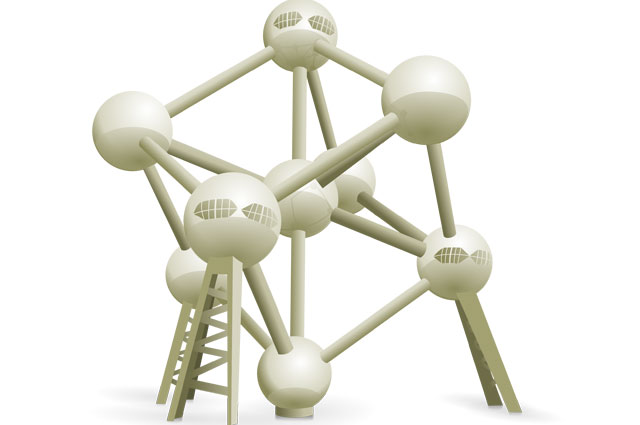
    nanotech-640

    The past 70 years have seen the way we live and work transformed by two tiny inventions. The electronic transistor and the microchip are what make all modern electronics possible, and since their development in the 1940s they’ve been getting smaller.

    Today, one chip can contain as many as 5bn transistors. If cars had followed the same development pathway, we would now be able to drive them at 500 000km/h and they would cost just R60 each.

    But to keep this progress going we need to be able to create circuits on the extremely small, nanometre scale. A nanometre is one billionth of a metre and so this kind of engineering involves manipulating individual atoms. We can do this, for example, by firing a beam of electrons at a material, or by vaporising it and depositing the resulting gaseous atoms layer by layer onto a base.

    The real challenge is using such techniques reliably to manufacture working nanoscale devices. The physical properties of matter, such as its melting point, electrical conductivity and chemical reactivity, become very different at the nanoscale, so shrinking a device can affect its performance. If we can master this technology, however, then we have the opportunity to improve not just electronics but all sorts of areas of modern life.

    1. Doctors inside your body

    Wearable fitness technology means we can monitor our health by strapping gadgets to ourselves. There are even prototype electronic tattoos that can sense our vital signs. But by scaling down this technology, we could go further by implanting or injecting tiny sensors inside our bodies. This would capture much more detailed information with less hassle to the patient, enabling doctors to personalise their treatment.

    The possibilities are endless, ranging from monitoring inflammation and post-surgery recovery to more exotic applications whereby electronic devices actually interfere with our body’s signals for controlling organ function. Although these technologies might sound like a thing of the far future, multibillion-dollar healthcare firms such as GlaxoSmithKline are already working on ways to develop so-called “electroceuticals”.

    2. Sensors, sensors, everywhere

    These sensors rely on newly-invented nanomaterials and manufacturing techniques to make them smaller, more complex and more energy efficient. For example, sensors with very fine features can now be printed in large quantities on flexible rolls of plastic at low cost. This opens up the possibility of placing sensors at lots of points over critical infrastructure to check constantly that everything is running correctly. Bridges, aircraft and even nuclear power plants could benefit.

    3. Self-healing structures

    If cracks do appear, then nanotechnology could play a further role. Changing the structure of materials at the nanoscale can give them some amazing properties — by giving them a texture that repels water, for example. In future, nanotechnology coatings or additives will even have the potential to allow materials to “heal” when damaged or worn. For example, dispersing nanoparticles throughout a material means that they can migrate to fill in any cracks that appear. This could produce self-healing materials for everything from aircraft cockpits to microelectronics, preventing small fractures from turning into large, more problematic cracks.

    4. Making big data possible

    All these sensors will produce more information than we’ve ever had to deal with before — so we’ll need the technology to process it and spot the patterns that will alert us to problems. The same will be true if we want to use the “big data” from traffic sensors to help manage congestion and prevent accidents, or prevent crime by using statistics to more effectively allocate police resources.

    Here, nanotechnology is helping to create ultra-dense memory that will allow us to store this wealth of data. But it’s also providing the inspiration for ultra-efficient algorithms for processing, encrypting and communicating data without compromising its reliability. Nature has several examples of big-data processes efficiently being performed in real-time by tiny structures, such as the parts of the eye and ear that turn external signals into information for the brain.

    Computer architectures inspired by the brain could also use energy more efficiently and so would struggle less with excess heat — one of the key problems with shrinking electronic devices further.

    5. Tackling climate change

    The fight against climate change means we need new ways to generate and use electricity, and nanotechnology is already playing a role. It has helped create batteries that can store more energy for electric cars and has enabled solar panels to convert more sunlight into electricity.

    The common trick in both applications is to use nanotexturing or nanomaterials (for example nanowires or carbon nanotubes) that turn a flat surface into a three-dimensional one with a much greater surface area. This means that there is more space for the reactions that enable energy storage or generation to take place, so the devices operate more efficiently.

    In the future, nanotechnology could also enable objects to harvest energy from their environment. New nanomaterials and concepts are currently being developed that show potential for producing energy from movement, light, variations in temperature, glucose and other sources with high conversion efficiency.The Conversation

    • Themis Prodromakis is reader in nanoelectronics, University of Southampton
    • This article was originally published on The Conversation

    Follow TechCentral on Google News Add TechCentral as your preferred source on Google


    WhatsApp YouTube
    Share. Facebook Twitter LinkedIn WhatsApp Telegram Email Copy Link
    Previous ArticleBackspace: ‘Human rights?’
    Next Article 4 laws SA app developers must know about

    Related Posts

    Hyperscalers ate my next computer

    Hyperscalers ate my next computer

    8 May 2026
    Major African telco postpones mobile money listing

    Major African telco postpones mobile money listing

    8 May 2026
    Cabinet approves new permanent Sita board, ending years of turmoil - State IT Agency

    Cabinet approves new permanent Sita board, ending years of turmoil

    8 May 2026
    Company News
    Your databases are being watched - just not by you - Ascent Technology Johan Lambert

    Your databases are being watched – just not by you

    8 May 2026
    Hexion deploys 30 petabyte sovereign data archive in South Africa

    Hexion deploys 30 petabyte sovereign data archive in South Africa

    7 May 2026
    We're hiring: TechCentral is looking for technology journalists

    We’re hiring: TechCentral is looking for technology journalists

    6 May 2026
    Opinion
    Free calls, dead voice and Shameel Joosub's Spanish ghost - Duncan McLeod

    Free calls, dead voice and Shameel Joosub’s Spanish ghost

    22 April 2026
    The conflict of interest at the heart of PayShap's slow adoption - Cheslyn Jacobs

    The conflict of interest at the heart of PayShap’s slow adoption

    26 March 2026
    South Africa's energy future hinges on getting wheeling right - Aishah Gire

    South Africa’s energy future hinges on getting wheeling right

    10 March 2026

    Subscribe to Updates

    Get the best South African technology news and analysis delivered to your e-mail inbox every morning.

    Latest Posts
    Hyperscalers ate my next computer

    Hyperscalers ate my next computer

    8 May 2026
    Major African telco postpones mobile money listing

    Major African telco postpones mobile money listing

    8 May 2026
    Cabinet approves new permanent Sita board, ending years of turmoil - State IT Agency

    Cabinet approves new permanent Sita board, ending years of turmoil

    8 May 2026
    Your databases are being watched - just not by you - Ascent Technology Johan Lambert

    Your databases are being watched – just not by you

    8 May 2026
    © 2009 - 2026 NewsCentral Media
    • Cookie policy (ZA)
    • TechCentral – privacy and Popia

    Type above and press Enter to search. Press Esc to cancel.

    Manage consent

    TechCentral uses cookies to enhance its offerings. Consenting to these technologies allows us to serve you better. Not consenting or withdrawing consent may adversely affect certain features and functions of the website.

    Functional Always active
    The technical storage or access is strictly necessary for the legitimate purpose of enabling the use of a specific service explicitly requested by the subscriber or user, or for the sole purpose of carrying out the transmission of a communication over an electronic communications network.
    Preferences
    The technical storage or access is necessary for the legitimate purpose of storing preferences that are not requested by the subscriber or user.
    Statistics
    The technical storage or access that is used exclusively for statistical purposes. The technical storage or access that is used exclusively for anonymous statistical purposes. Without a subpoena, voluntary compliance on the part of your Internet Service Provider, or additional records from a third party, information stored or retrieved for this purpose alone cannot usually be used to identify you.
    Marketing
    The technical storage or access is required to create user profiles to send advertising, or to track the user on a website or across several websites for similar marketing purposes.
    • Manage options
    • Manage services
    • Manage {vendor_count} vendors
    • Read more about these purposes
    View preferences
    • {title}
    • {title}
    • {title}