

Close Menu
TechCentralTechCentral

    Subscribe to the newsletter

    Get the best South African technology news and analysis delivered to your e-mail inbox every morning.

    Facebook X (Twitter) YouTube LinkedIn
    WhatsApp Facebook X (Twitter) LinkedIn YouTube
    TechCentralTechCentral
    • News
      Tech salaries in South Africa are bouncing back

      Tech salaries in South Africa are bouncing back

      9 February 2026
      Vumatel tops a million subscribers in South African broadband milestone - Dietlof Mare

      Vumatel tops a million subscribers in South African broadband milestone

      9 February 2026

      Washington takes on Beijing in race for Africa’s critical minerals

      9 February 2026
      Vodacom drops R5.6-billion for spectrum in key market

      Vodacom dropping R5.6-billion for spectrum in key market

      9 February 2026
      Nersa blunder triggers sharper electricity tariff increases

      Nersa blunder triggers sharper electricity tariff increases

      9 February 2026
    • World
      EU regulators take aim at WhatsApp

      EU regulators take aim at WhatsApp

      9 February 2026
      Musk hits brakes on Mars mission

      Musk hits brakes on Mars mission

      9 February 2026
      Crypto firm accidentally sends R700-billion in bitcoin to its users

      Crypto firm accidentally sends R700-billion in bitcoin to its users

      8 February 2026
      AI won't replace software, says Nvidia CEO amid market rout - Jensen Huang

      AI won’t replace software, says Nvidia CEO amid market rout

      4 February 2026
      Apple acquires audio AI start-up Q.ai

      Apple acquires audio AI start-up Q.ai

      30 January 2026
    • In-depth
      How liberalisation is rewiring South Africa's power sector

      How liberalisation is rewiring South Africa’s power sector

      21 January 2026
      The top-performing South African tech shares of 2025

      The top-performing South African tech shares of 2025

      12 January 2026
      Digital authoritarianism grows as African states normalise internet blackouts

      Digital authoritarianism grows as African states normalise internet blackouts

      19 December 2025
      TechCentral's South African Newsmakers of 2025

      TechCentral’s South African Newsmakers of 2025

      18 December 2025
      Black Friday goes digital in South Africa as online spending surges to record high

      Black Friday goes digital in South Africa as online spending surges to record high

      4 December 2025
    • TCS
      TCS+ | How Cloud On Demand is helping SA businesses succeed in the cloud - Xhenia Rhode, Dion Kalicharan

      TCS+ | Cloud On Demand and Consnet: inside a real-world AWS partner success story

      30 January 2026
      Watts & Wheels S1E3: 'BYD's Corolla Cross challenger'

      Watts & Wheels S1E3: ‘BYD’s Corolla Cross challenger’

      30 January 2026
      Watts & Wheels S1E3: 'BYD's Corolla Cross challenger'

      Watts & Wheels S1E2: ‘China attacks, BMW digs in, Toyota’s sublime supercar’

      23 January 2026

      TCS+ | Why cybersecurity is becoming a competitive advantage for SA businesses

      20 January 2026
      Watts & Wheels S1E3: 'BYD's Corolla Cross challenger'

      Watts & Wheels: S1E1 – ‘William, Prince of Wheels’

      8 January 2026
    • Opinion
      South Africa's skills advantage is being overlooked at home - Richard Firth

      South Africa’s skills advantage is being overlooked at home

      29 January 2026
      Why Elon Musk's Starlink is a 'hard no' for me - Songezo Zibi

      Why Elon Musk’s Starlink is a ‘hard no’ for me

      26 January 2026
      South Africa's new fibre broadband battle - Duncan McLeod

      South Africa’s new fibre broadband battle

      20 January 2026
      AI moves from pilots to production in South African companies - Nazia Pillay SAP

      AI moves from pilots to production in South African companies

      20 January 2026
      South Africa's new fibre broadband battle - Duncan McLeod

      ANC’s attack on Solly Malatsi shows how BEE dogma trumps economic reality

      14 December 2025
    • Company Hubs
      • Africa Data Centres
      • AfriGIS
      • Altron Digital Business
      • Altron Document Solutions
      • Altron Group
      • Arctic Wolf
      • AvertITD
      • Braintree
      • CallMiner
      • CambriLearn
      • CYBER1 Solutions
      • Digicloud Africa
      • Digimune
      • Domains.co.za
      • ESET
      • Euphoria Telecom
      • Incredible Business
      • iONLINE
      • IQbusiness
      • Iris Network Systems
      • LSD Open
      • NEC XON
      • Netstar
      • Network Platforms
      • Next DLP
      • Ovations
      • Paracon
      • Paratus
      • Q-KON
      • SevenC
      • SkyWire
      • Solid8 Technologies
      • Telit Cinterion
      • Tenable
      • Vertiv
      • Videri Digital
      • Vodacom Business
      • Wipro
      • Workday
      • XLink
    • Sections
      • AI and machine learning
      • Banking
      • Broadcasting and Media
      • Cloud services
      • Contact centres and CX
      • Cryptocurrencies
      • Education and skills
      • Electronics and hardware
      • Energy and sustainability
      • Enterprise software
      • Financial services
      • Information security
      • Internet and connectivity
      • Internet of Things
      • Investment
      • IT services
      • Lifestyle
      • Motoring
      • Public sector
      • Retail and e-commerce
      • Satellite communications
      • Science
      • SMEs and start-ups
      • Social media
      • Talent and leadership
      • Telecoms
    • Events
    • Advertise
    TechCentralTechCentral
    Home » In-depth » 5G networks promise insane speeds

    5G networks promise insane speeds

    By Editor30 September 2014
    Twitter LinkedIn Facebook WhatsApp Email Telegram Copy Link
    News Alerts
    WhatsApp

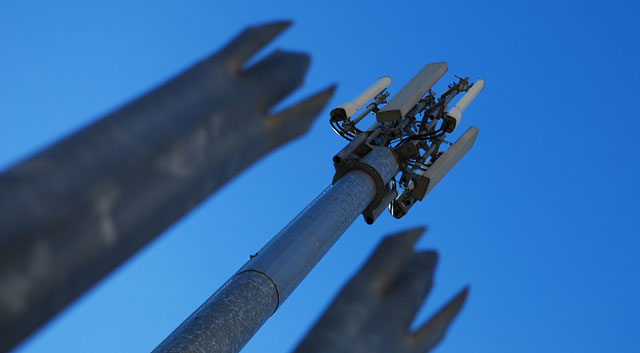
    cell-tower-640

    With the roll-out of 4G mobile Internet not even yet complete, it might seem early to consider starting work on the design of the next, fifth-generation (5G) mobile networks. The truth is that telecommunications systems are so complex in design and so slow to deploy that it could be 10 years between conception and end users being able to enjoy the benefits.

    Each generation of mobile telecoms technology has provided data transmission speeds several orders of magnitude higher than the last. The first-generation mobile phone tech, introduced in Scandinavia in 1981, was entirely analogue, providing — at a push — basic data transfer of only a few kilobits per second. Arriving in 1991, 2G GSM phone networks were entirely digital, bringing advances such as text messages and data rates of up to 14,4kbit/s. The introduction of GPRS and Edge, often called 2.5G, improved speeds to between 40-170kbit/s. The 3G networks that followed in 2001 upped data rates considerably to between 3-14,4Mbit/s and subsequent improvements such as HSPA (termed 3.5G) upped these again to 40-300Mbit/s and beyond.

    The 4G networks now being deployed based on LTE & LTE-A will in time offer speeds beyond a gigabit per second. Following the same curve, we can expect 5G to provide a similar leap by around 2025, offering multi-gigabit speeds currently enjoyed only by those with fibre-optic connections to the Internet backbone.

    But the next generation needs to provide more than speed alone. It must bring far better coverage, lower latency and greater capacity. Because, although 5G will aim to provide a quantum leap in terms of users’ quality of experience, the major difference is that 5G networks will be designed for use by machines, not just humans. The emerging Internet of things will see all manner of everyday objects, household appliances, portable and wearable devices designed to be Internet-connected.

    They will be able to provide data from sensors to us or to other connected devices — and our future cellular network technology will underpin the connectivity that makes these devices useful.

    The true revolutionary paradigm shift with 5G will, however, be the emergence of the tactile Internet, in which sufficiently responsive, reliable network connectivity will enable it to deliver physical, tactile experiences remotely. For example, imagine delivering (possibly self-assembling) hospital equipment to the areas of West Africa currently suffering from the Ebola epidemic. The best doctors and surgeons could then perform diagnosis and even surgery remotely using connected, tactile technologies. Remote surgery is already being performed — in years to come far greater feats will be possible, and this is what we at King’s College London are working on now.

    Because the tactile Internet will be servicing really critical aspects of society, it will need to be ultra-reliable, maybe a second of outage per year, support very low latency and short end-to-end delays in the order of milliseconds — and have sufficient capacity to allow large numbers of devices to communicate with each other simultaneously and autonomously. It will be able to interconnect with the traditional wired Internet, the mobile Internet and the Internet of things — thereby forming an Internet of entirely new dimensions and capabilities.

    cell-tower-640

    We imagine the tactile Internet will, in the business-to-business ecosystem, drive markets for autonomous cars, remote medical care markets, energy resource extraction and power generation, and other challenging industries. For consumers, it will revolutionise the way we teach, learn and interact with our surroundings. A preliminary market analysis has revealed that the potential market could extend to US$20 trillion worldwide — around 20% of today’s worldwide GDP.

    The efforts required to bring this about have already begun in industry, academia and in the committees of the International Telecommunication Union Radiocommunication (ITU-R), which draw up and formalise the standards for future technology. The expectation is that 5G networks will arrive in roughly 10 years — these long design cycles are a significant shortcoming, but they are the result of the consensus approach taken by the committees and standards bodies such as 3GPP. There are voices calling for a simplified and more efficient way to develop mobile standards, which would lower the barrier of entry for start-ups and drive innovation and faster development cycles.

    This might be the other revolution happening behind the doors of the development of 5G. In any case the next decade’s work bringing 5G to fruition will require a worldwide effort. In Europe at least, this has already begun at Technische Universität Dresden’s 5G Lab under Professor Gerhard Fettweis, through research from teams at King’s College London and the University of Bristol, and the imminent opening of the University of Surrey’s 5G Innovation Centre (5GIC).The Conversation

    • Mischa Dohler is professor of wireless communications at King’s College London
    • This article was originally published on The Conversation


    5G networks Mischa Dohler
    WhatsApp YouTube Follow on Google News Add as preferred source on Google
    Share. Facebook Twitter LinkedIn WhatsApp Telegram Email Copy Link
    Previous ArticleE-toll service ‘very poor’: survey
    Next Article Infraco to deliver annual report late

    Related Posts

    Technologies to supercharge mobile broadband

    24 March 2015
    Company News
    Paratus lights up new East Africa fibre highway linking Goma and Mombasa - Martin Cox

    Paratus lights up new East Africa fibre highway linking Goma and Mombasa

    9 February 2026
    The new way of working - an Mweb study

    The new way of working – an Mweb study

    9 February 2026
    Beyond the prompt: Why the future of enterprise AI is hybrid and agentic - LSD Open

    Beyond the prompt: Why the future of enterprise AI is hybrid and agentic

    9 February 2026
    Opinion
    South Africa's skills advantage is being overlooked at home - Richard Firth

    South Africa’s skills advantage is being overlooked at home

    29 January 2026
    Why Elon Musk's Starlink is a 'hard no' for me - Songezo Zibi

    Why Elon Musk’s Starlink is a ‘hard no’ for me

    26 January 2026
    South Africa's new fibre broadband battle - Duncan McLeod

    South Africa’s new fibre broadband battle

    20 January 2026

    Subscribe to Updates

    Get the best South African technology news and analysis delivered to your e-mail inbox every morning.

    Latest Posts
    Paratus lights up new East Africa fibre highway linking Goma and Mombasa - Martin Cox

    Paratus lights up new East Africa fibre highway linking Goma and Mombasa

    9 February 2026
    EU regulators take aim at WhatsApp

    EU regulators take aim at WhatsApp

    9 February 2026
    Tech salaries in South Africa are bouncing back

    Tech salaries in South Africa are bouncing back

    9 February 2026
    The new way of working - an Mweb study

    The new way of working – an Mweb study

    9 February 2026
    © 2009 - 2026 NewsCentral Media
    • Cookie policy (ZA)
    • TechCentral – privacy and Popia

    Type above and press Enter to search. Press Esc to cancel.

    Manage consent

    TechCentral uses cookies to enhance its offerings. Consenting to these technologies allows us to serve you better. Not consenting or withdrawing consent may adversely affect certain features and functions of the website.

    Functional Always active
    The technical storage or access is strictly necessary for the legitimate purpose of enabling the use of a specific service explicitly requested by the subscriber or user, or for the sole purpose of carrying out the transmission of a communication over an electronic communications network.
    Preferences
    The technical storage or access is necessary for the legitimate purpose of storing preferences that are not requested by the subscriber or user.
    Statistics
    The technical storage or access that is used exclusively for statistical purposes. The technical storage or access that is used exclusively for anonymous statistical purposes. Without a subpoena, voluntary compliance on the part of your Internet Service Provider, or additional records from a third party, information stored or retrieved for this purpose alone cannot usually be used to identify you.
    Marketing
    The technical storage or access is required to create user profiles to send advertising, or to track the user on a website or across several websites for similar marketing purposes.
    • Manage options
    • Manage services
    • Manage {vendor_count} vendors
    • Read more about these purposes
    View preferences
    • {title}
    • {title}
    • {title}