Close Menu
TechCentralTechCentral

    Subscribe to the newsletter

    Get the best South African technology news and analysis delivered to your e-mail inbox every morning.

    Facebook X (Twitter) YouTube LinkedIn
    WhatsApp Facebook X (Twitter) LinkedIn YouTube
    TechCentralTechCentral
    • News
      Cell C cleans up its balance sheet but faces tough trading reality

      Cell C cleans up its balance sheet but faces tough trading reality

      13 February 2026
      MVNO business shines in Cell C's first post-listing results - Jorges Mendes

      MVNO business shines in Cell C’s first post-listing results

      13 February 2026
      Ramaphosa presses ahead with Eskom break-up - Cyril Ramaphosa

      Ramaphosa presses ahead with Eskom break-up

      13 February 2026
      The key technology takeaways from Ramaphosa's 2026 Sona - Cyril Ramaphosa

      The key technology takeaways from Ramaphosa’s 2026 Sona

      13 February 2026
      Toyota SA CEO: NEV inaction will cost South Africa its motoring industry - Andrew Kirby

      Toyota SA CEO: NEV inaction will cost South Africa its motoring industry

      12 February 2026
    • World
      Russia bans WhatsApp

      Russia bans WhatsApp

      12 February 2026
      EU regulators take aim at WhatsApp

      EU regulators take aim at WhatsApp

      9 February 2026
      Musk hits brakes on Mars mission

      Musk hits brakes on Mars mission

      9 February 2026
      Crypto firm accidentally sends R700-billion in bitcoin to its users

      Crypto firm accidentally sends R700-billion in bitcoin to its users

      8 February 2026
      AI won't replace software, says Nvidia CEO amid market rout - Jensen Huang

      AI won’t replace software, says Nvidia CEO amid market rout

      4 February 2026
    • In-depth
      How liberalisation is rewiring South Africa's power sector

      How liberalisation is rewiring South Africa’s power sector

      21 January 2026
      The top-performing South African tech shares of 2025

      The top-performing South African tech shares of 2025

      12 January 2026
      Digital authoritarianism grows as African states normalise internet blackouts

      Digital authoritarianism grows as African states normalise internet blackouts

      19 December 2025
      TechCentral's South African Newsmakers of 2025

      TechCentral’s South African Newsmakers of 2025

      18 December 2025
      Black Friday goes digital in South Africa as online spending surges to record high

      Black Friday goes digital in South Africa as online spending surges to record high

      4 December 2025
    • TCS
      Watts & Wheels S1E4: 'We drive an electric Uber'

      Watts & Wheels S1E4: ‘We drive an electric Uber’

      10 February 2026
      TCS+ | How Cloud On Demand is helping SA businesses succeed in the cloud - Xhenia Rhode, Dion Kalicharan

      TCS+ | Cloud On Demand and Consnet: inside a real-world AWS partner success story

      30 January 2026
      Watts & Wheels S1E4: 'We drive an electric Uber'

      Watts & Wheels S1E3: ‘BYD’s Corolla Cross challenger’

      30 January 2026
      Watts & Wheels S1E4: 'We drive an electric Uber'

      Watts & Wheels S1E2: ‘China attacks, BMW digs in, Toyota’s sublime supercar’

      23 January 2026

      TCS+ | Why cybersecurity is becoming a competitive advantage for SA businesses

      20 January 2026
    • Opinion
      A million reasons monopolies don't work - Duncan McLeod

      A million reasons monopolies don’t work

      10 February 2026
      Eskom unbundling U-turn threatens to undo hard-won electricity gains - Busi Mavuso

      Eskom unbundling U-turn threatens to undo hard-won electricity gains

      9 February 2026
      South Africa's skills advantage is being overlooked at home - Richard Firth

      South Africa’s skills advantage is being overlooked at home

      29 January 2026
      Why Elon Musk's Starlink is a 'hard no' for me - Songezo Zibi

      Why Elon Musk’s Starlink is a ‘hard no’ for me

      26 January 2026
      A million reasons monopolies don't work - Duncan McLeod

      South Africa’s new fibre broadband battle

      20 January 2026
    • Company Hubs
      • Africa Data Centres
      • AfriGIS
      • Altron Digital Business
      • Altron Document Solutions
      • Altron Group
      • Arctic Wolf
      • AvertITD
      • Braintree
      • CallMiner
      • CambriLearn
      • CYBER1 Solutions
      • Digicloud Africa
      • Digimune
      • Domains.co.za
      • ESET
      • Euphoria Telecom
      • Incredible Business
      • iONLINE
      • IQbusiness
      • Iris Network Systems
      • LSD Open
      • Mitel
      • NEC XON
      • Netstar
      • Network Platforms
      • Next DLP
      • Ovations
      • Paracon
      • Paratus
      • Q-KON
      • SevenC
      • SkyWire
      • Solid8 Technologies
      • Telit Cinterion
      • Tenable
      • Vertiv
      • Videri Digital
      • Vodacom Business
      • Wipro
      • Workday
      • XLink
    • Sections
      • AI and machine learning
      • Banking
      • Broadcasting and Media
      • Cloud services
      • Contact centres and CX
      • Cryptocurrencies
      • Education and skills
      • Electronics and hardware
      • Energy and sustainability
      • Enterprise software
      • Financial services
      • Information security
      • Internet and connectivity
      • Internet of Things
      • Investment
      • IT services
      • Lifestyle
      • Motoring
      • Public sector
      • Retail and e-commerce
      • Satellite communications
      • Science
      • SMEs and start-ups
      • Social media
      • Talent and leadership
      • Telecoms
    • Events
    • Advertise
    TechCentralTechCentral
    Home » Company News » The answer to SA financial institutions’ ineffective terrorist financing controls

    The answer to SA financial institutions’ ineffective terrorist financing controls

    By Ovations Group28 April 2022
    Twitter LinkedIn Facebook WhatsApp Email Telegram Copy Link
    News Alerts
    WhatsApp

    South African financial institutions are ineffective at preventing the financing of terrorism and the financing of the proliferation of terrorism. This is according to a report issued by the Financial Action Task Force (FATF), a supra-governmental body that sets the policy frameworks for combating money laundering and the financing of terrorism worldwide. As a result, the terms “terrorist financing” and “proliferation financing” (TF/PF in financial crime compliance jargon) have been heard with increased frequency in conference calls and the corridors of financial institutions in South Africa.

    But what is terrorist financing and what is proliferation financing? And what’s the difference between the two?

    For more, visit ovationsgroup.com

    Simply put, terrorist financing is the provision of funds for terrorist acts, while proliferation financing is the provision of funds for the manufacture or acquisition of the weapons used in terrorist acts. For example, a financial institution that opens an account for a non-profit organisation that receives donations and then proceeds to commit terrorist acts facilitates terrorist financing. A financial institution that provides financial services to a chemicals manufacturer that sells its products to a terrorist organisation that uses these chemicals in the manufacturing of bombs facilitates proliferation financing.

    The screening of clients’ names against government-issued lists is not enough

    Detecting the financing of terrorism or the proliferation of terrorism sounds easy enough on the face of it: numerous bodies worldwide — the US Office of Foreign Asset Control, the United Nations, the European Union, the UK treasury and others — publish lists of known terrorists and terrorist organisations, and the South African Financial Intelligence Centre Act, better known as Fica, has incorporated regulations specific to one of these lists (the United Nations Security Council List). However, a simple, one-dimensional search of these lists, to check if new or existing clients appear on the list, is not enough, and the FATF agrees.

    Fully aware that they are listed in these databases, these individuals and organisations and their sympathisers and suppliers hide behind opaque organisational structures to avoid detection. To determine whether clients are linked to terrorists or terrorist groups, it’s important to keep record of the ownership structure and directorate of business clients and to verify this information against third-party sources. This verification should not only be done during client onboarding but also at regular intervals to ensure that the financial institution’s view of its client’s ownership structure and directorate is up to date and to confirm that none of the owners, parent companies, subsidiaries or directors appear on any of the lists of terrorists and terrorist organisations issued by governments worldwide.

    Screening

    However, the screening of clients’ names against these government-issued lists is not enough. To detect hidden links with terrorists and terrorist organisations, it is crucial that a regular adverse news search is conducted for all clients (or at least for high-risk clients) to find any potential links with terrorists and terrorist organisations.

    While this kind of daily client and related-party screening sounds complex and onerous, there are numerous tools available that make use of the latest news scraping, text analysis and machine learning technology to make it not only possible, but indefensible for it to be overlooked by financial institutions’ AML/CFT compliance frameworks.

    Scraping worldwide news articles and screening lists of known terrorists and terrorist organisations is only the beginning to identify terrorist financing and proliferation financing networks. The next and equally crucial step is to identify networks through the information that clients provide and to monitor their transactional activity. Shared contact details, addresses and IP addresses will highlight hidden networks between the existing clients of an institution. Monitoring transactional activity, on the other hand, is crucial to identify hidden networks implied by the beneficiaries of payments made and the originators of payments received.

    This kind of monitoring of transactions to reveal hidden networks poses its own set of challenges. For starters, the beneficiary and originator name data are not always reliable, and even the opposite account details for transfers are not readily available to most financial institutions’ AML/CFT monitoring systems. Furthermore, detecting hidden networks by monitoring payment flows requires organisations to pay attention to transaction values far below what their risk appetite and existing operational capacity allow for.

    However, these problems have already been solved by the latest financial crime surveillance tools — by using advanced analytics and machine learning. By using big data technology to process unstructured data, the latest financial crime surveillance systems can parse hundreds or even thousands of data points to detect payment networks. The machine learning capabilities that are native to these solutions ensure that the alerts that are raised are not a false alarm. Furthermore, by using machine learning, these solutions can detect new transactional patterns that highlight potential terrorist financing or proliferation financing without human intervention.

    Addressing the shortcomings identified in the FATF’s report on South African financial institutions’ counter-terrorist financing and proliferation financing measures may at first sound like yet another cost to add to the ever-growing regulatory risk and compliance bill. However, organisations that are brave enough to embrace the latest financial crime surveillance technologies may soon find that the additional benefit gained by introducing regulatory technology, or regtech, to their stable of surveillance tools far outweighs the cost.

    For more, visit ovationsgroup.com, or find Ovations Group on Facebook, LinkedIn, Twitter or Instagram.

    • The author, Francois Combrinck, is capability architect at Ovations Group


    FATF Financial Action Task Force Francois Combrinck Ovations Ovations Group
    WhatsApp YouTube Follow on Google News Add as preferred source on Google
    Share. Facebook Twitter LinkedIn WhatsApp Telegram Email Copy Link
    Previous ArticleWhy the internet of things should be top of your company’s priority list
    Next Article Benchmarking: a strategic advantage for CIOs in uncertain times

    Related Posts

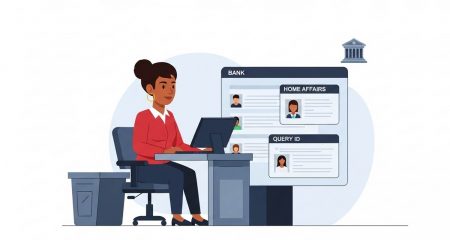
    Biometrics boss slams home affairs over R10 ID query fee

    Biometrics boss slams home affairs over R10 ID query fee

    7 July 2025
    Rand hits strongest level in three years

    Tech stability key to getting South Africa off damaging financial grey list

    23 June 2025
    Scaling enterprise productivity with AI - a must-attend event for business leaders

    Scaling enterprise productivity with AI – a must-attend event for business leaders

    21 May 2025
    Add A Comment

    Comments are closed.

    Company News
    Cell C delivers maiden results with growth momentum, financial flexibility - Jorges Mendes

    Cell C delivers maiden results with growth momentum, financial flexibility

    13 February 2026
    Start-up king joins Paratus Rwanda - Innocent Mutimura

    Start-up king joins Paratus Rwanda

    13 February 2026
    How NEC XON tackled identity risk for a major telco - Michael de Neuilly Rice

    How NEC XON tackled identity risk for a major telco

    11 February 2026
    Opinion
    A million reasons monopolies don't work - Duncan McLeod

    A million reasons monopolies don’t work

    10 February 2026
    Eskom unbundling U-turn threatens to undo hard-won electricity gains - Busi Mavuso

    Eskom unbundling U-turn threatens to undo hard-won electricity gains

    9 February 2026
    South Africa's skills advantage is being overlooked at home - Richard Firth

    South Africa’s skills advantage is being overlooked at home

    29 January 2026

    Subscribe to Updates

    Get the best South African technology news and analysis delivered to your e-mail inbox every morning.

    Latest Posts
    Cell C cleans up its balance sheet but faces tough trading reality

    Cell C cleans up its balance sheet but faces tough trading reality

    13 February 2026
    MVNO business shines in Cell C's first post-listing results - Jorges Mendes

    MVNO business shines in Cell C’s first post-listing results

    13 February 2026
    Ramaphosa presses ahead with Eskom break-up - Cyril Ramaphosa

    Ramaphosa presses ahead with Eskom break-up

    13 February 2026
    The key technology takeaways from Ramaphosa's 2026 Sona - Cyril Ramaphosa

    The key technology takeaways from Ramaphosa’s 2026 Sona

    13 February 2026
    © 2009 - 2026 NewsCentral Media
    • Cookie policy (ZA)
    • TechCentral – privacy and Popia

    Type above and press Enter to search. Press Esc to cancel.

    Manage consent

    TechCentral uses cookies to enhance its offerings. Consenting to these technologies allows us to serve you better. Not consenting or withdrawing consent may adversely affect certain features and functions of the website.

    Functional Always active
    The technical storage or access is strictly necessary for the legitimate purpose of enabling the use of a specific service explicitly requested by the subscriber or user, or for the sole purpose of carrying out the transmission of a communication over an electronic communications network.
    Preferences
    The technical storage or access is necessary for the legitimate purpose of storing preferences that are not requested by the subscriber or user.
    Statistics
    The technical storage or access that is used exclusively for statistical purposes. The technical storage or access that is used exclusively for anonymous statistical purposes. Without a subpoena, voluntary compliance on the part of your Internet Service Provider, or additional records from a third party, information stored or retrieved for this purpose alone cannot usually be used to identify you.
    Marketing
    The technical storage or access is required to create user profiles to send advertising, or to track the user on a website or across several websites for similar marketing purposes.
    • Manage options
    • Manage services
    • Manage {vendor_count} vendors
    • Read more about these purposes
    View preferences
    • {title}
    • {title}
    • {title}