Close Menu
TechCentralTechCentral

    Subscribe to the newsletter

    Get the best South African technology news and analysis delivered to your e-mail inbox every morning.

    Facebook X (Twitter) YouTube LinkedIn
    WhatsApp Facebook X (Twitter) LinkedIn YouTube
    TechCentralTechCentral
    • News
      Massive changes coming to Amazon Prime Video - Jeff Bezos

      Massive changes coming to Amazon Prime Video

      23 July 2026
      Load shedding is over - and that's exposing a new energy crisis

      Load shedding is over – and that’s exposing a new energy crisis

      23 July 2026
      Fat bonuses at Telkom despite group missing own targets - Serame Taukobong

      Fat bonuses at Telkom despite group missing own targets

      23 July 2026
      London lands Africa's hottest fintech IPO - Airtel Money

      London lands Africa’s hottest fintech IPO

      23 July 2026
      Solve taxis and cash dies: Shop2Shop's township thesis

      Solve taxis and cash dies: Shop2Shop’s township thesis

      23 July 2026
    • World
      Meta AI will now tell parents if their teen is in crisis

      Meta AI will now tell parents if their teen is in crisis

      17 July 2026
      IBM shares crash 25% as AI upends software spending - Arvind Krishna

      IBM shares crash 25% as AI upends software spending

      15 July 2026
      Jony Ive's first OpenAI device: an AI smart speaker - Jony Ive and Sam Altman

      Jony Ive’s first OpenAI device: an AI smart speaker

      15 July 2026
      Stripe, Advent in talks to buy PayPal for $53-billion

      Stripe, Advent in talks to buy PayPal for $53-billion

      15 July 2026
      Memory crisis sends smartphone market into steep decline

      Memory crisis sends smartphone market into steep decline

      13 July 2026
    • In-depth
      The plan to stop AI from breaking the world - Google DeepMind CEO Demis Hassabis. Image: John Sears

      The plan to stop AI from breaking the world

      16 July 2026
      The internet has a Strait of Hormuz problem

      The internet has a Strait of Hormuz problem

      15 July 2026
      AI boom sparks rally, frenzy and fear

      AI boom sparks rally, frenzy and fear

      11 June 2026
      Every plug-in hybrid on sale in South Africa, ranked by price - Lamborghini Temerario

      Every plug-in hybrid on sale in South Africa, ranked by price

      7 June 2026
      What Wi-Fi 8 will mean for wireless networks

      What Wi-Fi 8 will mean for wireless networks

      1 June 2026
    • TCS
      The rands-and-cents case for electric trucks - William Kelly Watts & Wheels with Wills

      The rands-and-cents case for electric trucks

      20 July 2026
      Watts & Wheels S1E7: 'Ferrari's EV breaks the internet'

      Watts & Wheels S1E7: ‘Ferrari’s EV breaks the internet’

      8 July 2026
      TCS | Pick n Pay's Enrico Ferigolli on Penny, the AI that shops for you

      TCS | Pick n Pay’s Enrico Ferigolli on Penny, the AI that shops for you

      2 July 2026
      TCS+ | How Tracker is turning vehicle data into business strategy - Silvia Schollenberger

      TCS+ | How Tracker is turning vehicle data into business strategy

      1 July 2026
      TCS+ | IBM Bob: an AI-powered 'development partner' for the enterprise - David Spurway

      TCS+ | IBM Bob: an AI-powered development partner for the enterprise

      30 June 2026
    • Opinion
      Selling vapour is corporate suicide in slow motion - Jannie van Zyl

      Selling vapour is corporate suicide in slow motion

      16 July 2026
      Brazil's online gambling crackdown is a lesson for South Africa

      How Amazon outmanoeuvred Starlink in South Africa

      15 July 2026
      The Popia problem with agentic AI - Herman Haasbroek

      The Popia problem with agentic AI

      14 July 2026
      The author, Fanie van Rooyen

      South Africa can still catch the AI wave – here’s how

      7 July 2026
      The author, Fanie van Rooyen

      The AI utopia South Africa can’t afford

      1 July 2026
    • Company Hubs
      • 1Stream
      • Africa Data Centres
      • AfriGIS
      • Altron Digital Business
      • Altron Document Solutions
      • Altron Group
      • Arctic Wolf
      • Ascent Technology
      • AvertITD
      • BBD
      • Braintree
      • CallMiner
      • CambriLearn
      • CM Telecom
      • Contactable
      • CYBER1 Solutions
      • Digicloud Africa
      • Digimune
      • Domains.co.za
      • ESET
      • Euphoria Telecom
      • HOSTAFRICA
      • Incredible Business
      • iONLINE
      • IQbusiness
      • Iris Network Systems
      • Kaspersky
      • LSD Open
      • Mitel
      • NEC XON
      • Netstar
      • Network Platforms
      • Next DLP
      • Ovations
      • Paracon
      • Paratus
      • Q-KON
      • SevenC
      • SkyWire
      • Solid8 Technologies
      • Telit Cinterion
      • Telviva
      • Tenable
      • Vertiv
      • Videri Digital
      • Vodacom Business
      • Vox
      • Wipro
      • Workday
      • XLink
    • Sections
      • AI and machine learning
      • Banking
      • Broadcasting and Media
      • Cloud services
      • Contact centres and CX
      • Cryptocurrencies
      • Education and skills
      • Electronics and hardware
      • Energy and sustainability
      • Enterprise software
      • Financial services
      • HealthTech
      • Information security
      • Internet and connectivity
      • Internet of Things
      • Investment
      • IT services
      • Lifestyle
      • Policy and regulation
      • Public sector
      • Retail and e-commerce
      • Satellite communications
      • Science
      • SMEs and start-ups
      • Social media
      • Talent and leadership
      • Telecoms
      • Watts & Wheels
    • Events
    • Advertise
    TechCentralTechCentral
    Home » World » AI pushes Microsoft further into chip development

    AI pushes Microsoft further into chip development

    By Agency Staff24 July 2017
    Twitter LinkedIn Facebook WhatsApp Email Telegram Copy Link
    News Alerts
    WhatsApp
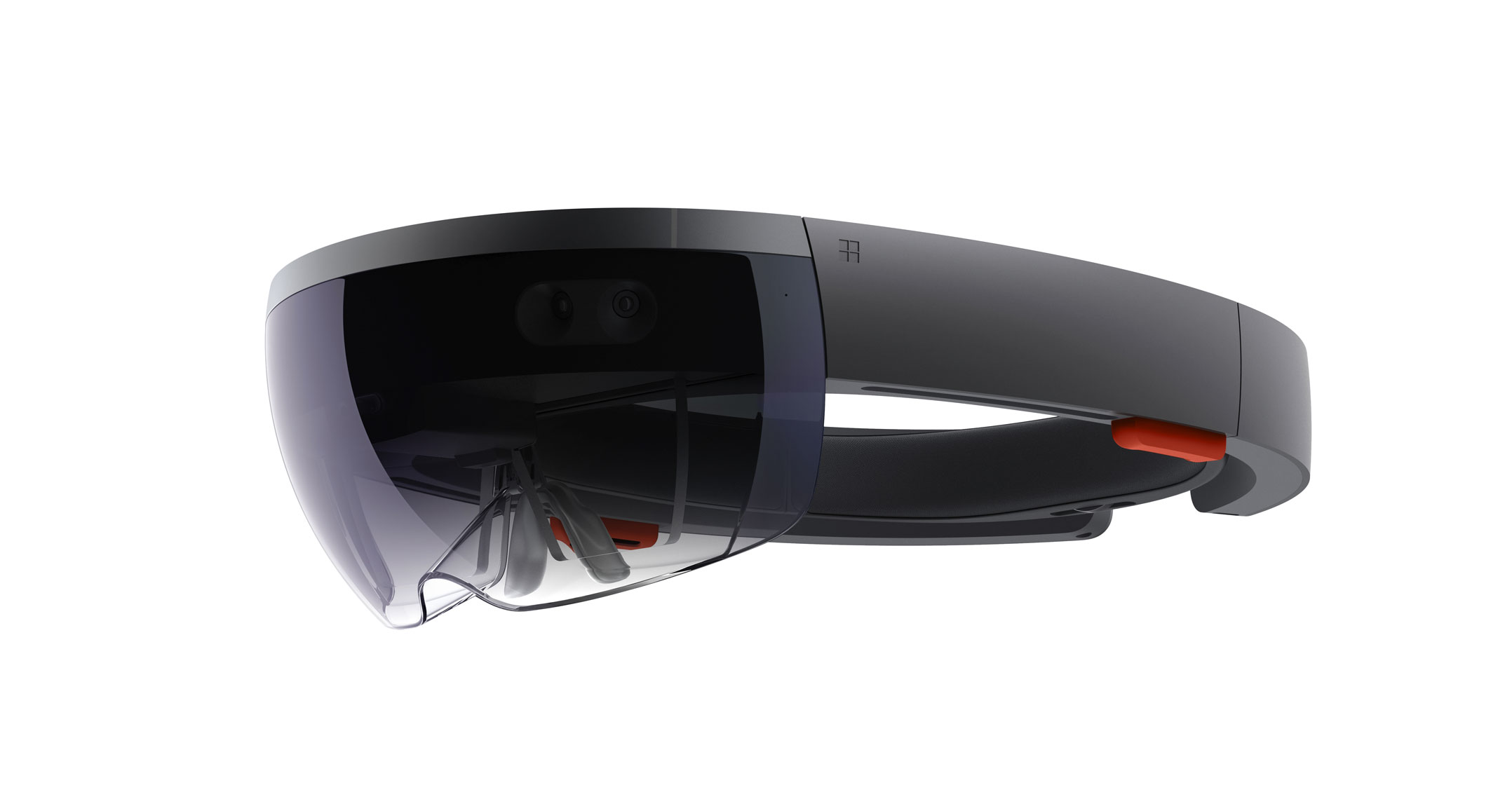
    Microsoft’s HoloLens

    [dropcap]T[/dropcap]echnology companies are keen to bring artificial intelligence features to phones and augmented reality goggles — the ability show mechanics how to fix an engine, say, or tell tourists what they are seeing and hearing in their own language.

    But there’s one big challenge: how to manage the vast quantities of data that make such feats possible without making the devices too slow or draining the battery in minutes and wrecking the user experience.

    Microsoft says it has the answer with a chip design for its HoloLens goggles — an extra AI processor that analyses what the user sees and hears right there on the device rather than wasting precious microseconds sending the data back to the cloud.

    The new processor, a version of the company’s existing Holographic Processing Unit, is being unveiled at an event in Honolulu, Hawaii, on Monday. The chip is under development and will be included in the next version of HoloLens; the company didn’t provide a date.

    The rapid development of artificial intelligence has left some traditional chip makers facing real competition for the first time in over a decade

    This is one of the few times Microsoft is playing all roles (except manufacturing) in developing a new processor. The company says this is the first chip of its kind designed for a mobile device.

    Bringing chip making in-house is increasingly in vogue as companies conclude that off-the-shelf processors aren’t capable of fully unleashing the potential of AI.

    Apple is testing iPhone prototypes that include a chip designed to process AI, a person familiar with the work said in May. Google is on the second version of its own AI chips. To persuade people to buy the next generation of gadgets — phones, VR headsets, even cars — the experience will have to be lightning fast and seamless.

    Every device will have AI

    “The consumer is going to expect to have almost no lag and to do real-time processing,” says Jim McGregor, an analyst at Tirias Research. “For an autonomous car, you can’t afford the time to send it back to the cloud to make the decisions to avoid the crash, to avoid hitting a person. The amount of data coming out of autonomous vehicles is so tremendous you can’t send all of that to the cloud.” By 2025, he says, every device people interact with will have AI built in.

    For years, the central processing units built by Intel and others have provided enough oomph and smarts to power the world’s gadgets and servers. But the rapid development of artificial intelligence has left some traditional chip makers facing real competition for the first time in over a decade.

    The accelerating abilities of AI owe much to neural networks that mimic the human brain by analysing patterns and learning from them. The general-purpose chips used in PCs and servers aren’t designed to rapidly process multiple things at once, a requirement for AI software.

    Microsoft has been working on its own chips for a few years now.

    It built a motion-tracking processor for its Xbox Kinect videogame system. More recently, in an effort to take on Google and Amazon.com in cloud services, the company used customisable chips known as field programmable gate arrays to unleash its AI prowess on real-world challenges. Microsoft buys the chips from Altera, a subsidiary of Intel, and adapts them for its own purposes using software, an ability that’s unique to that type of chip.

    We’re taking this very seriously. Our aspiration is to be the number one AI cloud

    In a show of strength last year, Microsoft used thousands of these chips at once to translate all of English Wikipedia into Spanish — three billion words across five million articles — in less than a tenth of a second.

    Next Microsoft will let its cloud customers use these chips to speed up their own AI tasks — a service the company will make available sometime next year. Customers could use it to do things like recognise images from huge sets of data or use machine learning algorithms to predict customer purchasing patterns.

    “We’re taking this very seriously,” says Doug Burger, a distinguished engineer in Microsoft Research, who works on the company’s chip development strategy for the cloud. “Our aspiration is to be the number one AI cloud.”

    Microsoft has plenty of competition. Amazon also uses field programmable gate arrays and plans to use a new state-of-the-art chip design called Volta for AI built by Nvidia, which is now the leading maker of graphics processors used to train AI systems.

    Microsoft CEO Satya Nadella

    Meanwhile, Google has built it’s own AI semiconductors, called Tensor Processing Units, and is already letting customers use them. Creating chips in-house is expensive, but Microsoft says it has no choice because the technology is changing so fast it’s easy to get left behind.

    Moving this expertise from the cloud down to the device in a person’s hand or on their face is a key priority for Microsoft’s AI-focused CEO Satya Nadella. In a May speech he touted the idea of using AI to track industrial equipment, telling the user things like where to find a jackhammer, how to use it and generating a warning in case of unauthorised use or a chemical spill.

    The new HoloLens chip will make that and much more possible. Says Microsoft chief technology officer Kevin Scott: “We really do need custom silicon to help power some of the scenarios and applications that we are building.”  — Reported by Dina Bass and Ian King, (c) 2017 Bloomberg LP

    Follow TechCentral on Google News Add TechCentral as your preferred source on Google


    HoloLens Intel Microsoft Satya Nadella top
    WhatsApp YouTube
    Share. Facebook Twitter LinkedIn WhatsApp Telegram Email Copy Link
    Previous ArticleZuma likely to survive no-confidence vote
    Next Article No reason to fear bitcoin split

    Related Posts

    Why Africa's cloud needs more than one path

    Why Africa’s cloud needs more than one path

    23 July 2026
    Core opens Microsoft Surface reseller programme to South African SMEs - John Press

    Core opens Microsoft Surface reseller programme to South African SMEs

    17 July 2026
    The plan to stop AI from breaking the world - Google DeepMind CEO Demis Hassabis. Image: John Sears

    The plan to stop AI from breaking the world

    16 July 2026
    Company News
    Why Africa's cloud needs more than one path

    Why Africa’s cloud needs more than one path

    23 July 2026
    Samsung's new Galaxy Z series: foldables, perfected

    Samsung’s new Galaxy Z series: foldables, perfected

    22 July 2026
    Is your cloud PBX a hacker's back door? Centracom

    Is your cloud PBX a hacker’s back door?

    22 July 2026
    Opinion
    Selling vapour is corporate suicide in slow motion - Jannie van Zyl

    Selling vapour is corporate suicide in slow motion

    16 July 2026
    Brazil's online gambling crackdown is a lesson for South Africa

    How Amazon outmanoeuvred Starlink in South Africa

    15 July 2026
    The Popia problem with agentic AI - Herman Haasbroek

    The Popia problem with agentic AI

    14 July 2026

    Subscribe to Updates

    Get the best South African technology news and analysis delivered to your e-mail inbox every morning.

    Latest Posts
    Massive changes coming to Amazon Prime Video - Jeff Bezos

    Massive changes coming to Amazon Prime Video

    23 July 2026
    Why Africa's cloud needs more than one path

    Why Africa’s cloud needs more than one path

    23 July 2026
    Load shedding is over - and that's exposing a new energy crisis

    Load shedding is over – and that’s exposing a new energy crisis

    23 July 2026
    Fat bonuses at Telkom despite group missing own targets - Serame Taukobong

    Fat bonuses at Telkom despite group missing own targets

    23 July 2026
    © 2009 - 2026 NewsCentral Media
    Built and maintained by Chronon
    • Cookie policy (ZA)
    • TechCentral – privacy and Popia

    Type above and press Enter to search. Press Esc to cancel.

    Manage consent

    TechCentral uses cookies to enhance its offerings. Consenting to these technologies allows us to serve you better. Not consenting or withdrawing consent may adversely affect certain features and functions of the website.

    Functional Always active
    The technical storage or access is strictly necessary for the legitimate purpose of enabling the use of a specific service explicitly requested by the subscriber or user, or for the sole purpose of carrying out the transmission of a communication over an electronic communications network.
    Preferences
    The technical storage or access is necessary for the legitimate purpose of storing preferences that are not requested by the subscriber or user.
    Statistics
    The technical storage or access that is used exclusively for statistical purposes. The technical storage or access that is used exclusively for anonymous statistical purposes. Without a subpoena, voluntary compliance on the part of your Internet Service Provider, or additional records from a third party, information stored or retrieved for this purpose alone cannot usually be used to identify you.
    Marketing
    The technical storage or access is required to create user profiles to send advertising, or to track the user on a website or across several websites for similar marketing purposes.
    • Manage options
    • Manage services
    • Manage {vendor_count} vendors
    • Read more about these purposes
    View preferences
    • {title}
    • {title}
    • {title}