
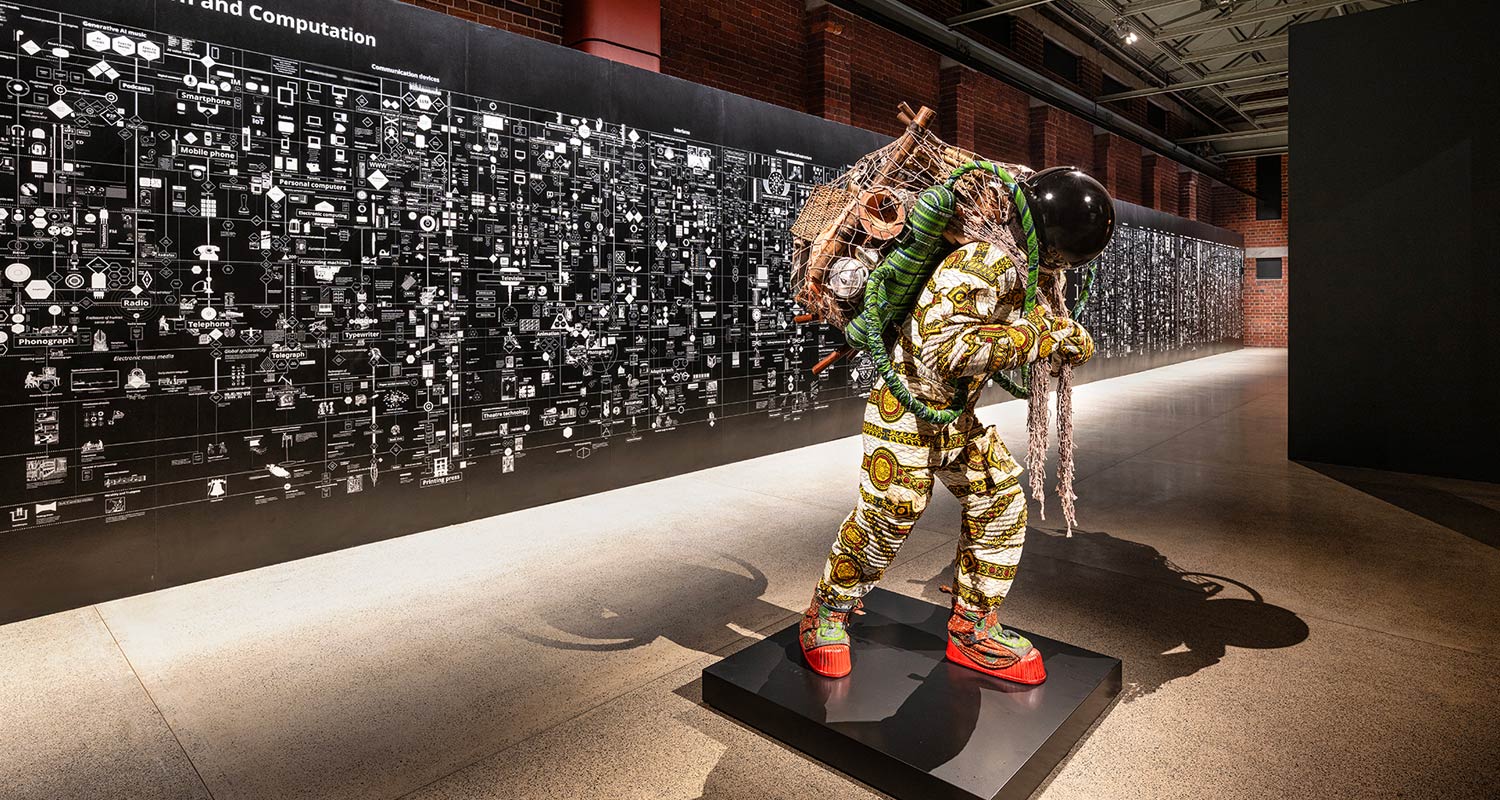
A vast map of how technology and power have evolved together since 1500, by AI researcher Kate Crawford and Serbian artist Vladan Joler, is on show in Johannesburg until 5 December.
Calculating Empires: A Genealogy of Technology and Power Since 1500 (2023) is the standout for technology watchers at Reverse Futures, an exhibition at the Joburg Contemporary Art Foundation (JCAF) in Forest Town. The show asks whether the future of AI and automation is being built on the same patterns of exploitation that shaped the past.
Reverse Futures opened on 26 June and is the third and final instalment of JCAF’s Worldmaking trilogy, after Ecospheres in 2024 and Structures in 2025. It brings together robotics, virtual reality and space-themed work by artists from South Africa, Kenya, Nigeria, Argentina, Lebanon, Serbia and elsewhere.
Crawford, author of Atlas of AI, and Joler describe their work as “a large-scale research visualisation exploring how technical and social structures co-evolved over five centuries”, tracing “technological patterns of colonialism, militarisation, automation and enclosure since 1500”.
The online version lets you zoom through the history of technologies from the telephone to the internet. Hundreds of drawings and texts are arranged with time on the vertical axis, starting with the 16th century at the base, and systems ranging “from algorithms to architecture, bodies to borders” running across it.
“These practices of past empires are now echoed in the highly concentrated technology and military industries of the 21st century,” Crawford and Joler said, warning that the industrial transformations in AI are concentrating power into even fewer hands. “In order to have a future, we must first confront our past.”
Robots, astronauts and caves
Argentine artist Paula Gaetano Adi’s Guanaquerx is billed as the “first robot to cross the Andes”, re-enacting José de San Martín’s 1817 revolutionary expedition from Argentina into Chile.
In front of Calculating Empires stands Yinka Shonibare’s Refugee Astronaut X (2024), which JCAF describes as “an African astronaut searching for a habitable world”. Installations by Traci Kwaai, Georgia Munnik and Gaetano Adi take visitors underwater to hear the voices of the Kalk Bay community and into “the contradictory smells of Johannesburg”.
The show’s title comes from Nairobi architectural practice Cave_bureau, whose installation Shimoni Slave Cave (2022-2023) traces slavery in Kenyan caves. Cave_bureau coined the term “reverse futurism” to address the effects of colonialism in Africa, and Kenya specifically. The Future Observatory Journal describes it as “the understanding that for a future to exist we need to undo the mistakes of the past”.
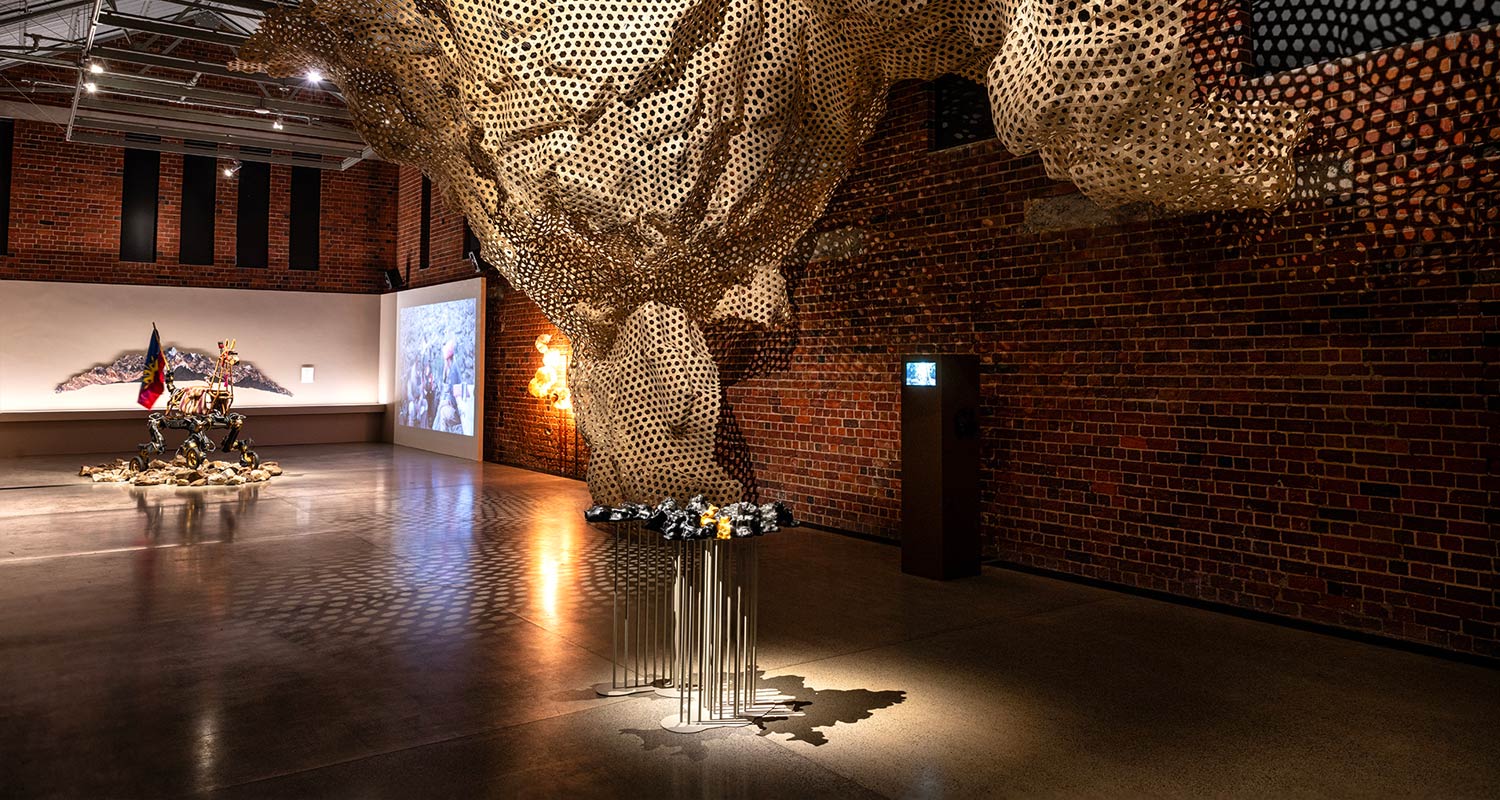
JCAF argues that ideas of the future are dominated by narratives and technologies rooted in the West, often cast as utopian or dystopian in Hollywood science fiction. For many in the global South, it says, the future “is not distant but rooted in the present”.
Curator Clive Kellner, JCAF’s executive director, said the exhibition engages with technology “from a local vantage, asking fundamentally humane questions about the world we inhabit”.
“How might we imagine a better world not built on power and extraction, but one that enables us to think about our future in South Africa as part of a continuum of community, environmental care and historical learning?” he asks.
The exhibition comes as South Africa redrafts its national AI policy, with the question of who will benefit from the technology still unresolved. – © 2026 NewsCentral Media


