Close Menu
TechCentralTechCentral

    Subscribe to the newsletter

    Get the best South African technology news and analysis delivered to your e-mail inbox every morning.

    Facebook X (Twitter) YouTube LinkedIn
    WhatsApp Facebook X (Twitter) LinkedIn YouTube
    TechCentralTechCentral
    • News
      Every electric car you can buy in South Africa in early 2026, ranked by price

      Every electric car you can buy in South Africa in early 2026, ranked by price

      6 February 2026
      From stocks to crypto, markets reel as AI doubts grow

      From stocks to crypto, markets reel as AI doubts grow

      6 February 2026
      South Africa deepens China ties as US trade tensions escalate

      South Africa deepens China ties as US trade tensions escalate

      6 February 2026
      Big changes at Lesaka as Bank Zero deal nears completion - Lincoln Mali

      Big changes at Lesaka as Bank Zero deal nears completion

      6 February 2026
      South Africa's stablecoin silence is becoming a policy failure

      South Africa’s stablecoin silence is becoming a policy failure

      6 February 2026
    • World
      AI won't replace software, says Nvidia CEO amid market rout - Jensen Huang

      AI won’t replace software, says Nvidia CEO amid market rout

      4 February 2026
      Apple acquires audio AI start-up Q.ai

      Apple acquires audio AI start-up Q.ai

      30 January 2026
      SpaceX IPO may be largest in history

      SpaceX IPO may be largest in history

      28 January 2026
      Nvidia throws AI at the weather

      Nvidia throws AI at weather forecasting

      27 January 2026
      Debate erupts over value of in-flight Wi-Fi

      Debate erupts over value of in-flight Wi-Fi

      26 January 2026
    • In-depth
      How liberalisation is rewiring South Africa's power sector

      How liberalisation is rewiring South Africa’s power sector

      21 January 2026
      The top-performing South African tech shares of 2025

      The top-performing South African tech shares of 2025

      12 January 2026
      Digital authoritarianism grows as African states normalise internet blackouts

      Digital authoritarianism grows as African states normalise internet blackouts

      19 December 2025
      TechCentral's South African Newsmakers of 2025

      TechCentral’s South African Newsmakers of 2025

      18 December 2025
      Black Friday goes digital in South Africa as online spending surges to record high

      Black Friday goes digital in South Africa as online spending surges to record high

      4 December 2025
    • TCS
      TCS+ | How Cloud On Demand is helping SA businesses succeed in the cloud - Xhenia Rhode, Dion Kalicharan

      TCS+ | Cloud On Demand and Consnet: inside a real-world AWS partner success story

      30 January 2026
      Watts & Wheels S1E3: 'BYD's Corolla Cross challenger'

      Watts & Wheels S1E3: ‘BYD’s Corolla Cross challenger’

      30 January 2026
      Watts & Wheels S1E3: 'BYD's Corolla Cross challenger'

      Watts & Wheels S1E2: ‘China attacks, BMW digs in, Toyota’s sublime supercar’

      23 January 2026

      TCS+ | Why cybersecurity is becoming a competitive advantage for SA businesses

      20 January 2026
      Watts & Wheels S1E3: 'BYD's Corolla Cross challenger'

      Watts & Wheels: S1E1 – ‘William, Prince of Wheels’

      8 January 2026
    • Opinion
      South Africa's skills advantage is being overlooked at home - Richard Firth

      South Africa’s skills advantage is being overlooked at home

      29 January 2026
      Why Elon Musk's Starlink is a 'hard no' for me - Songezo Zibi

      Why Elon Musk’s Starlink is a ‘hard no’ for me

      26 January 2026
      South Africa's new fibre broadband battle - Duncan McLeod

      South Africa’s new fibre broadband battle

      20 January 2026
      AI moves from pilots to production in South African companies - Nazia Pillay SAP

      AI moves from pilots to production in South African companies

      20 January 2026
      South Africa's new fibre broadband battle - Duncan McLeod

      ANC’s attack on Solly Malatsi shows how BEE dogma trumps economic reality

      14 December 2025
    • Company Hubs
      • Africa Data Centres
      • AfriGIS
      • Altron Digital Business
      • Altron Document Solutions
      • Altron Group
      • Arctic Wolf
      • AvertITD
      • Braintree
      • CallMiner
      • CambriLearn
      • CYBER1 Solutions
      • Digicloud Africa
      • Digimune
      • Domains.co.za
      • ESET
      • Euphoria Telecom
      • Incredible Business
      • iONLINE
      • IQbusiness
      • Iris Network Systems
      • LSD Open
      • NEC XON
      • Netstar
      • Network Platforms
      • Next DLP
      • Ovations
      • Paracon
      • Paratus
      • Q-KON
      • SevenC
      • SkyWire
      • Solid8 Technologies
      • Telit Cinterion
      • Tenable
      • Vertiv
      • Videri Digital
      • Vodacom Business
      • Wipro
      • Workday
      • XLink
    • Sections
      • AI and machine learning
      • Banking
      • Broadcasting and Media
      • Cloud services
      • Contact centres and CX
      • Cryptocurrencies
      • Education and skills
      • Electronics and hardware
      • Energy and sustainability
      • Enterprise software
      • Financial services
      • Information security
      • Internet and connectivity
      • Internet of Things
      • Investment
      • IT services
      • Lifestyle
      • Motoring
      • Public sector
      • Retail and e-commerce
      • Satellite communications
      • Science
      • SMEs and start-ups
      • Social media
      • Talent and leadership
      • Telecoms
    • Events
    • Advertise
    TechCentralTechCentral
    Home » Reviews & Weekend » Battle of the phablets: Apple iPhone Xs Max vs Samsung Galaxy Note9

    Battle of the phablets: Apple iPhone Xs Max vs Samsung Galaxy Note9

    By Agency Staff13 September 2018
    Twitter LinkedIn Facebook WhatsApp Email Telegram Copy Link
    News Alerts
    WhatsApp
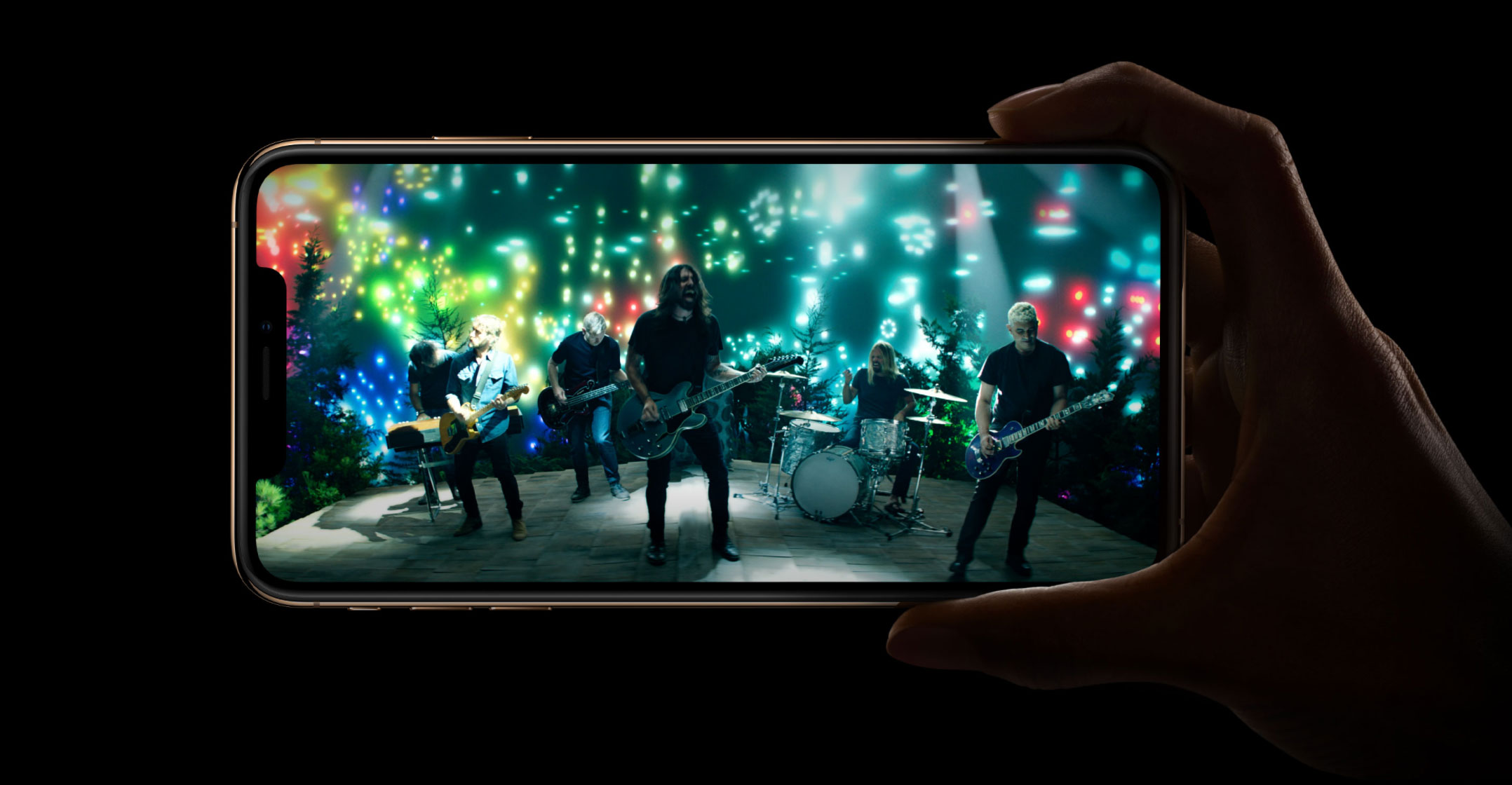
    The iPhone Xs Max starts at $1 099

    Apple introduced the world to its largest-ever smartphone Wednesday, the iPhone Xs Max. With a 6.5-inch screen, it dwarfs the 3.5-inch display on the original iPhone that Steve Jobs unveiled to the world in 2007. It’s also one of the biggest and most costly phones to hit the market, with prices starting at US$1 099.

    Onlookers will be forgiven for seeing the Max as a response to the popular Galaxy Note series made by Samsung Electronics. The latest in that line, the Galaxy Note9, was released in August and has a 6.4-inch screen.

    Compared side by side, the massive similarities obscure a number of notable differences.

    Samsung’s Note9 is the lighter of the two phones, weighing 201g compared to Apple’s 208g. But the iPhone is about 13% thinner. A big contributor to this difference is the inclusion of Samsung’s stylus, or S Pen, which is stored within the Note’s chassis.

    The so-called notch did little to harm sales of the iPhone X, which was the first Apple product to include it

    The accessory highlights one of the key differences between the two products, and for some consumers is more important than a fraction of an inch of screen size or depth. The S Pen can be used for handwriting, annotation and precise navigation around the Note’s interface. In Apple’s world, this is a luxury afforded only to iPad users for the time being.

    Another important difference concerns the “notch”. At the top of the iPhone’s screen is a small cut-out that houses the front-facing camera and other sensors. Some Android-powered phones have followed this trend but the Note9 hasn’t. Instead, Samsung’s screen is an uninterrupted rectangle.

    However, the so-called notch did little to harm sales of the iPhone X, which was the first Apple product to include it, and it’s an aspect that now differentiates two of the largest phones on the market. Behind the glass, each device uses a variation of the same screen technology — OLED, rather than LCD — which produces high-contrast images and deep black levels.

    Apple and Samsung’s models both include two camera lenses to the rear — one wide-angle, one telephoto — which capture pictures at a resolution of 12 megapixels. The setup lets users take sharp pictures from greater distances, or create a blurred background effect, known as bokeh, which historically was a quality confined to professional cameras. Both companies will argue their respective software and image processing technologies will produce better results, but to the majority of users the differences will be too little to sway a purchase alone.

    All-in on Face ID

    As smartphones have become our mobile wallets and airline boarding passes as well as products for communicating, biometric security has risen to become a major selling point. Samsung has continued to use fingerprint sensors along with options such as iris scanning and facial recognition to secure its devices. But Apple has gone all-in on its Face ID advanced facial-based authentication, and disposed of its Touch ID system and associated hardware button. The iPhone system presents a single solution to biometric security, and the technology has proven itself to be effective and accurate. Apple says the iPhone Xs Max will recognise faces faster that its previous products, which may be attractive to shoppers.

    Sometimes the answer to whether it’s worth moving from Samsung to Apple or vice versa is the same regardless of which phones are being considered: can you be bothered (or afford) to re-buy all your favourite apps? This is no less true with the Note9 and iPhone Xs Max. This alone may be a deal-breaker for many.

    But the iOS ecosystem has recently expanded its already well-regarded catalogue of apps to include advanced augmented-reality tools. You can measure furniture accurately thanks to the iPhone’s rear-facing camera array, and this has opened the door to home furnishing apps that can help users virtually place potential purchases in their homes. The larger screen on Apple’s new phone is likely to make this an even more attractive area of software and e-commerce to invest in, and it’s not something Android-powered devices can universally achieve the same results with.
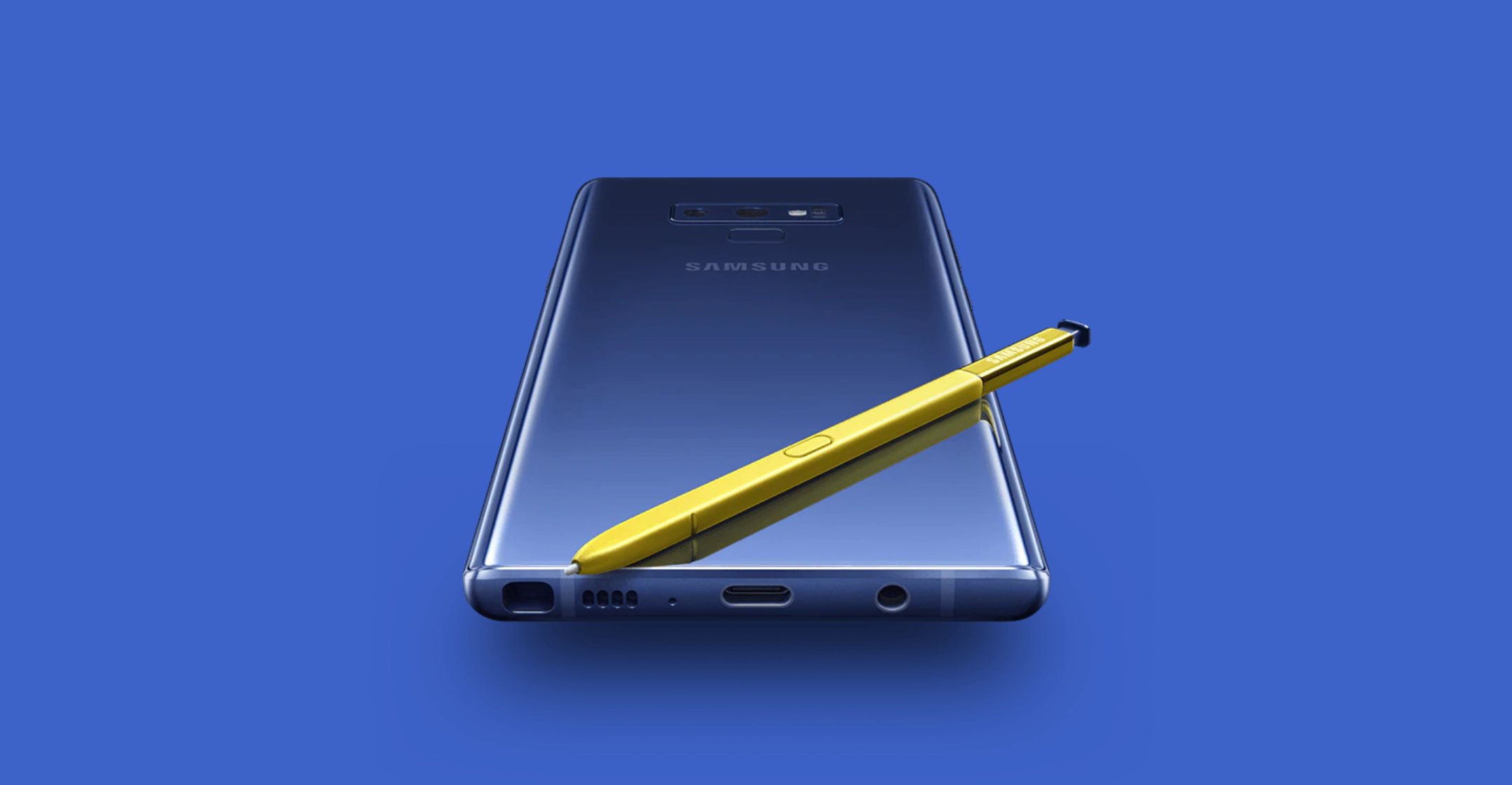
    The S Pen is a major advantage the Galaxy Note9 has over the iPhone Xs Max

    However, the Note9 can do something far removed from anything its rival can currently offer, which is to become — for all intents and purposes — a PC. Using a cable, the device can be connected to a monitor and run desktop applications as would be expected on a laptop. A mouse and keyboard can be hooked up via Bluetooth. It’s still Android, not Microsoft’s Windows, but that could be enough for some people who want one device to rule all working environments. It’s an innovative and powerful feature that Samsung executes well.

    One of the most controversial aspects of comparing an iPhone to an Android-powered device like the Note, is performance. There are huge numbers of variables, from the efficiency of the operating system itself and the speed and architecture of the hardware and memory, to the apps installed. But both Apple and Samsung’s flagships contain some of the most cutting-edge silicon available to mobile products, with specifications and raw horsepower that mirror – or exceed — those of many laptops. It’s because of this that Samsung’s desktop PC features, for example, are possible.

    To most users, the difference in speed and computing power between the iPhone Xs Max and the Note9 will be negligible

    Apple’s hardware/software ecosystem is tighter than Samsung’s. The Cupertino, California-based company designs its own hardware, its processors, the software operating system, and strictly ensures third-party developers stick to its guidelines when making apps for consumers. This has historically been seen to give iPhones an edge in terms of performance consistency.

    To the vast majority of users, however, the appreciable difference in speed and computing power between the iPhone Xs Max and the Note9 will be negligible at best. It wouldn’t be wise to base a buying decision on this alone.

    Samsung’s Galaxy Note9 starts at $1 000, while Apple’s iPhone Xs Max will cost $1 099. Higher memory storage capacity options will push these prices higher still. They’re expensive, and they’re powerful. They represent some of the most advanced developments in mobile computing and industrial design, and the differences between them are not going to be obvious to many casual shoppers.

    But the iPhone’s thinner design, and Apple’s focus on refining its software, imaging system and wider hardware ecosystem, may enhance its attraction to average consumers as well as some enterprise users. Samsung’s greater emphasis on pure productivity, with the inclusion of the S Pen stylus and connectivity to desktop monitors for a PC-like experience, may appeal more readily to power users.

    With Samsung and Apple’s latest top-of-the-line gadgets representing the pinnacle of their respective expertise, the user experience will be comparable, and a buying decision could well just come down to: “Do you want a gold one with a notch in the screen, or a purple one with a stylus?”  — Reported by Nate Lanxon, (c) 2018 Bloomberg LP


    Apple Galaxy Note9 iPhone Xs Max Samsung Samsung Galaxy Note9 top
    WhatsApp YouTube Follow on Google News Add as preferred source on Google
    Share. Facebook Twitter LinkedIn WhatsApp Telegram Email Copy Link
    Previous ArticleAston Martin to make first all-electric sedan – and the specs are insane
    Next Article Nothing magical about new iPhones, but for Apple it might not matter

    Related Posts

    Google goes from laggard to leader in AI

    Google goes from laggard to leader in AI

    5 February 2026
    China's Haier takes aim at Samsung, LG and Hisense in South Africa

    China’s Haier takes aim at Samsung, LG and Hisense in South Africa

    3 February 2026
    Apple acquires audio AI start-up Q.ai

    Apple acquires audio AI start-up Q.ai

    30 January 2026
    Company News
    The skills gap is a thinking gap: why South African employers can't find problem solvers

    The skills gap is a thinking gap: why SA employers can’t find problem solvers

    6 February 2026
    Vox Kiwi Wireless: fibre-like broadband for South African homes

    Vox Kiwi Wireless: fibre-like broadband for South African homes

    5 February 2026
    NEC XON achieves an African first with full Fortinet accreditation - Ian Kruger

    NEC XON achieves an African first with full Fortinet accreditation

    5 February 2026
    Opinion
    South Africa's skills advantage is being overlooked at home - Richard Firth

    South Africa’s skills advantage is being overlooked at home

    29 January 2026
    Why Elon Musk's Starlink is a 'hard no' for me - Songezo Zibi

    Why Elon Musk’s Starlink is a ‘hard no’ for me

    26 January 2026
    South Africa's new fibre broadband battle - Duncan McLeod

    South Africa’s new fibre broadband battle

    20 January 2026

    Subscribe to Updates

    Get the best South African technology news and analysis delivered to your e-mail inbox every morning.

    Latest Posts
    Every electric car you can buy in South Africa in early 2026, ranked by price

    Every electric car you can buy in South Africa in early 2026, ranked by price

    6 February 2026
    From stocks to crypto, markets reel as AI doubts grow

    From stocks to crypto, markets reel as AI doubts grow

    6 February 2026
    South Africa deepens China ties as US trade tensions escalate

    South Africa deepens China ties as US trade tensions escalate

    6 February 2026
    The skills gap is a thinking gap: why South African employers can't find problem solvers

    The skills gap is a thinking gap: why SA employers can’t find problem solvers

    6 February 2026
    © 2009 - 2026 NewsCentral Media
    • Cookie policy (ZA)
    • TechCentral – privacy and Popia

    Type above and press Enter to search. Press Esc to cancel.

    Manage consent

    TechCentral uses cookies to enhance its offerings. Consenting to these technologies allows us to serve you better. Not consenting or withdrawing consent may adversely affect certain features and functions of the website.

    Functional Always active
    The technical storage or access is strictly necessary for the legitimate purpose of enabling the use of a specific service explicitly requested by the subscriber or user, or for the sole purpose of carrying out the transmission of a communication over an electronic communications network.
    Preferences
    The technical storage or access is necessary for the legitimate purpose of storing preferences that are not requested by the subscriber or user.
    Statistics
    The technical storage or access that is used exclusively for statistical purposes. The technical storage or access that is used exclusively for anonymous statistical purposes. Without a subpoena, voluntary compliance on the part of your Internet Service Provider, or additional records from a third party, information stored or retrieved for this purpose alone cannot usually be used to identify you.
    Marketing
    The technical storage or access is required to create user profiles to send advertising, or to track the user on a website or across several websites for similar marketing purposes.
    • Manage options
    • Manage services
    • Manage {vendor_count} vendors
    • Read more about these purposes
    View preferences
    • {title}
    • {title}
    • {title}