
Close Menu
TechCentralTechCentral

    Subscribe to the newsletter

    Get the best South African technology news and analysis delivered to your e-mail inbox every morning.

    Facebook X (Twitter) YouTube LinkedIn
    WhatsApp Facebook X (Twitter) LinkedIn YouTube
    TechCentralTechCentral
    • News
      New rand stablecoin market opens into a potential regulatory wall

      New rand stablecoin market opens into a potential regulatory wall

      10 August 2026
      Simon Dingle

      ‘South Africa has to abolish exchange control’

      10 August 2026
      The most dangerous customer is the quiet one - Jannie van Zyl

      The most dangerous customer is the quiet one

      10 August 2026
      Eskom fixed the fleet and the customers left

      Eskom fixed the fleet and the customers left

      7 August 2026
      DStv chops channels as Canal+ leans harder on sport

      DStv chops channels as Canal+ leans harder on sport

      7 August 2026
    • World
      Meta AI will now tell parents if their teen is in crisis

      Meta AI will now tell parents if their teen is in crisis

      17 July 2026
      IBM shares crash 25% as AI upends software spending - Arvind Krishna

      IBM shares crash 25% as AI upends software spending

      15 July 2026
      Jony Ive's first OpenAI device: an AI smart speaker - Jony Ive and Sam Altman

      Jony Ive’s first OpenAI device: an AI smart speaker

      15 July 2026
      Stripe, Advent in talks to buy PayPal for $53-billion

      Stripe, Advent in talks to buy PayPal for $53-billion

      15 July 2026
      Memory crisis sends smartphone market into steep decline

      Memory crisis sends smartphone market into steep decline

      13 July 2026
    • In-depth
      The plan to stop AI from breaking the world - Google DeepMind CEO Demis Hassabis. Image: John Sears

      The plan to stop AI from breaking the world

      16 July 2026
      The internet has a Strait of Hormuz problem

      The internet has a Strait of Hormuz problem

      15 July 2026
      AI boom sparks rally, frenzy and fear

      AI boom sparks rally, frenzy and fear

      11 June 2026
      Every plug-in hybrid on sale in South Africa, ranked by price - Lamborghini Temerario

      Every plug-in hybrid on sale in South Africa, ranked by price

      7 June 2026
      What Wi-Fi 8 will mean for wireless networks

      What Wi-Fi 8 will mean for wireless networks

      1 June 2026
    • TCS
      TCS+ | Specops' Darren James on continuous trust in an AI world

      TCS+ | Specops’ Darren James on continuous trust in an AI world

      7 August 2026
      TCS+ | How AI is turning hardware into a subscription service - Shane van der Merwe Merchant West

      TCS+ | How AI is turning hardware into a subscription service

      6 August 2026
      TCS+ | Why South African workers must become supervisors of digital labour - Accelera Digital Group Cliff de Wit

      TCS+ | Why South African workers must become supervisors of digital labour

      31 July 2026
      TCS | Rapid deployment rules can't work without municipalities: ACT - Nomvuyiso Batyi

      TCS | Icasa’s rules skip the real bottleneck: ACT

      30 July 2026
      TCS+ | iStore Business on why Apple makes sense for SMEs - Sudesh Pillay and Tamia Nontsikelelo

      TCS+ | iStore Business on why Apple makes sense for SMEs

      30 July 2026
    • Opinion
      The author, Jannie van Zyl

      Selling vapour is corporate suicide in slow motion

      16 July 2026
      Brazil's online gambling crackdown is a lesson for South Africa

      How Amazon outmanoeuvred Starlink in South Africa

      15 July 2026
      The Popia problem with agentic AI - Herman Haasbroek

      The Popia problem with agentic AI

      14 July 2026
      The author, Fanie van Rooyen

      South Africa can still catch the AI wave – here’s how

      7 July 2026
      The author, Fanie van Rooyen

      The AI utopia South Africa can’t afford

      1 July 2026
    • Company Hubs
      • 1Stream
      • Africa Data Centres
      • AfriGIS
      • Altron Digital Business
      • Altron Document Solutions
      • Altron Group
      • Arctic Wolf
      • Ascent Technology
      • AvertITD
      • BBD
      • Braintree
      • CallMiner
      • CambriLearn
      • CM Telecom
      • Contactable
      • CYBER1 Solutions
      • Digicloud Africa
      • Digimune
      • Domains.co.za
      • ESET
      • Euphoria Telecom
      • HOSTAFRICA
      • Incredible Business
      • iONLINE
      • IQbusiness
      • Iris Network Systems
      • Kaspersky
      • LSD Open
      • Mitel
      • NEC XON
      • Netstar
      • Network Platforms
      • Next DLP
      • Ovations
      • Paracon
      • Paratus
      • Q-KON
      • SevenC
      • SkyWire
      • Solid8 Technologies
      • Telit Cinterion
      • Telviva
      • Tenable
      • Vertiv
      • Videri Digital
      • Vodacom Business
      • Vox
      • Wipro
      • Workday
      • XLink
    • Sections
      • AI and machine learning
      • Banking
      • Broadcasting and Media
      • Cloud services
      • Contact centres and CX
      • Cryptocurrencies
      • Education and skills
      • Electronics and hardware
      • Energy and sustainability
      • Enterprise software
      • Financial services
      • HealthTech
      • Information security
      • Internet and connectivity
      • Internet of Things
      • Investment
      • IT services
      • Lifestyle
      • Policy and regulation
      • Public sector
      • Retail and e-commerce
      • Satellite communications
      • Science
      • SMEs and start-ups
      • Social media
      • Talent and leadership
      • Telecoms
      • Watts & Wheels
    • Events
    • Advertise
    TechCentralTechCentral
    Home » Editor's pick » Behind vinyl’s unlikely comeback

    Behind vinyl’s unlikely comeback

    By The Conversation17 April 2015
    Twitter LinkedIn Facebook WhatsApp Email Telegram Copy Link
    News Alerts
    WhatsApp

    vinyl-640

    In a music buying industry now dominated by iTunes and music streaming services such as Spotify, Napster, Pandora and Jay-Z’s recently released Tidal, the CD and physical music store are reportedly in sharp (and potentially terminal) decline.

    But a curious development in music consumption has seen vinyl, the format ostensibly rendered extinct by the compact disc with its “perfect” digital sound, make an unlikely, but significant cultural and commercial comeback.

    In an era in which even digital album sales have fallen, vinyl has bucked the trend. In 2014, record sales grew by more than 50% to hit more than a million, the highest since 1996 – and the upward curve has continued in 2015.

    Of course, there were those who never lost faith in the format. Vinyl is at the heart of Record Store Day, an event created in 2007 when some 700 independent record stores in the US combined to celebrate music retailing and the passion for music collecting. Now also a firm fixture in the UK, on 18 April Record Store Day annually collaborates with musical artists to release special edition CDs and vinyl that are strictly exclusive to the day. The event is now even more buoyed in the wake of the renewed enthusiasm for tracks on wax.

    On one level, this resurgence could simply be the latest manifestation of a contemporary condition – what the music commentator Simon Reynolds dubs “retromania”. Old bands are reforming, new artists building their sounds and looks on classic acts, and enthusiasm for the fashions and cultural paraphernalia of the past is endemic. The revival of vinyl could be similarly motivated by mere nostalgia for the antithesis of digital streaming: large and fragile discs in cardboard sleeves that manifest a distinctly un-digital crackle when played on the similarly redundant technology of the record player.

    vinyl-280But nostalgia is arguably only part of the story. Because the demand for vinyl in the UK has been so pronounced it has recently spawned an official vinyl LP album and singles chart, launched on 13 April. Significantly, the first number one album of the chart was Future Hearts by the contemporary US pop/punk band, All Time Low. The majority of the Top Ten is similarly modern: Sufjan Stevens, Turbowolf, Nadine Shah and James Bay, but with a suitable nod to the old guard with the presence of Van Morrison.

    In a wider context, the highest-selling albums of 2015 so far do reflect a distinctive fusion of nostalgia, with classic albums by bands such as Led Zeppelin, Pink Floyd and Bob Dylan mixing with modern acts such as Arctic Monkeys, Noel Gallagher’s High Flying Birds and Royal Blood. But long-established established artists of the calibre of Madonna, Daft Punk, Björk and Jack White are also present within the resurgence and are releasing vinyl versions of their new albums. So, if nostalgia is not the sole driver for vinyl’s significant commercial comeback, what is?

    A major technological characteristic cited in the comeback of vinyl is its distinctive lack of audio cleanness and perfection — what fans call the “warmth” of the vinyl sound. This apparent audio feature is produced by the flaws inherent within analogue sound production, due to — as sound engineer Andreas Lubich explains — “distortion, and in the best case, harmonic distortion”.

    The sound of vinyl is also arguably more immersive. This is a factor explored by DJ, Colleen Murphy, who has set up a series of public listening events in a variety of locations chosen to maximise the acoustic impact of the music (including churches). LPs are played in their entirety, a key element in the contemporary pleasures of the format.

    The revolutionary design feature of CD players was their ability to enable listeners to skip tracks and reshuffle albums. Vinyl, on the other hand, was and is different. Track skipping is a tricky business and, due to the fragility of the discs, you run the risk of dropping the stylus and causing damage. Consequently, the album as a track-by-track experience (as intended by the artists and central to the listening experience of classic LPs like Dark Side of the Moon) has returned.

    Media artist Jesse England also subscribes to this sense of “reverence” for the complete album immersion — he goes as far as to describe record players as “altars” for music. He has even invented a vibrating plastic disc that enables people to play digital music (via Bluetooth) on any record player, giving it that distinctive imperfect analogue sheen.

    Similarly, the vinyl “renaissance” has led to the production of technological analogue/digital hybrids, such as portable attaché case-style record players that include USB ports for digitally recording vinyl, crackles and all.

    Vinyl not only sounds different, but it also has a possessive quality that intangible downloads and streaming lacks. As Simon Reynolds notes, the iPod looked set to do away with “record collecting in the traditional sense”, but collecting is actually an intrinsic part of vinyl’s allure. An LP is an object and one that comes with a certain “ritual” behaviour, from the opening of the sleeve and the gentle handling of the disc, to the aesthetic qualities of the cover and the inner sleeve designs with its artwork (often considered to be art and diminished on the smaller CD case) and printed lyrics.
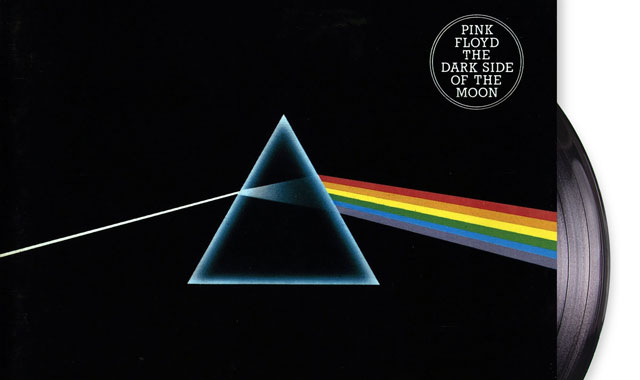
    pink-floyd-dsotm-640
    Pink Floyd’s 1973 classic Dark Side of the Moon on vinyl

    But it’s crucial to acknowledge that the significance of vinyl sales is not overstated. While the rise is undeniably impressive, it’s not that significant in terms of the units sold in digital formats. As Martin Talbot, CEO of Official Charts, acknowledges, the consumer base for vinyl is “still a niche audience”.

    This assessment also raises one of the most significant barriers to the triumphant return of vinyl: the manufacture of LPs. Given its near-obsolete status until comparatively recently, the technology required to manufacture vinyl has been difficult to access, given that very few factories produce records. Presses have been in short supply because they barely exist.

    As a recent Wall Street Journal feature reported, in 2014 90% of raw materials for vinyl production were produced by one company. This means that the future of vinyl production will require considerable investment from record companies in the re-production of expensive technology. Given the decline of the bricks-and-mortar record store within the retail landscape, distribution will also be a decisive consideration if the upsurge in demand for vinyl is to be a sustainable one.

    But to quote Martin Talbot again on the current magnitude of vinyl sales: “To grow at the rate it is, there’s clearly something happening here.” Many other industry experts agree. It seems that many music fans are set to continue putting the needle on the record, which is very good news for the future of Record Store Day.The Conversation

    • Lee Baron is principal lecturer in media and communication design at Northumbria University, Newcastle
    • This article was originally published on The Conversation

    Follow TechCentral on Google News Add TechCentral as your preferred source on Google


    WhatsApp YouTube
    Share. Facebook Twitter LinkedIn WhatsApp Telegram Email Copy Link
    Previous ArticleInside Eskom’s week from hell
    Next Article Brian Molefe to lead Eskom

    Related Posts

    New rand stablecoin market opens into a potential regulatory wall

    New rand stablecoin market opens into a potential regulatory wall

    10 August 2026
    Simon Dingle

    ‘South Africa has to abolish exchange control’

    10 August 2026
    The most dangerous customer is the quiet one - Jannie van Zyl

    The most dangerous customer is the quiet one

    10 August 2026
    Company News
    African Bank signs on as GEC+Africa 2026 partner

    African Bank signs on as GEC+Africa 2026 partner

    7 August 2026
    What a cloud review reveals about how a company actually runs - LSD Open

    What a cloud review reveals about how a company actually runs

    6 August 2026
    Manufacturing from a garage is now a realistic business plan - MaxLaser

    Manufacturing from a garage is now a realistic business plan

    6 August 2026
    Opinion
    The author, Jannie van Zyl

    Selling vapour is corporate suicide in slow motion

    16 July 2026
    Brazil's online gambling crackdown is a lesson for South Africa

    How Amazon outmanoeuvred Starlink in South Africa

    15 July 2026
    The Popia problem with agentic AI - Herman Haasbroek

    The Popia problem with agentic AI

    14 July 2026

    Subscribe to Updates

    Get the best South African technology news and analysis delivered to your e-mail inbox every morning.

    Latest Posts
    New rand stablecoin market opens into a potential regulatory wall

    New rand stablecoin market opens into a potential regulatory wall

    10 August 2026
    Simon Dingle

    ‘South Africa has to abolish exchange control’

    10 August 2026
    The most dangerous customer is the quiet one - Jannie van Zyl

    The most dangerous customer is the quiet one

    10 August 2026
    Eskom fixed the fleet and the customers left

    Eskom fixed the fleet and the customers left

    7 August 2026
    © 2009 - 2026 NewsCentral Media
    Built and maintained by Chronon
    • Cookie policy (ZA)
    • TechCentral – privacy and Popia

    Type above and press Enter to search. Press Esc to cancel.

    Manage consent

    TechCentral uses cookies to enhance its offerings. Consenting to these technologies allows us to serve you better. Not consenting or withdrawing consent may adversely affect certain features and functions of the website.

    Functional Always active
    The technical storage or access is strictly necessary for the legitimate purpose of enabling the use of a specific service explicitly requested by the subscriber or user, or for the sole purpose of carrying out the transmission of a communication over an electronic communications network.
    Preferences
    The technical storage or access is necessary for the legitimate purpose of storing preferences that are not requested by the subscriber or user.
    Statistics
    The technical storage or access that is used exclusively for statistical purposes. The technical storage or access that is used exclusively for anonymous statistical purposes. Without a subpoena, voluntary compliance on the part of your Internet Service Provider, or additional records from a third party, information stored or retrieved for this purpose alone cannot usually be used to identify you.
    Marketing
    The technical storage or access is required to create user profiles to send advertising, or to track the user on a website or across several websites for similar marketing purposes.
    • Manage options
    • Manage services
    • Manage {vendor_count} vendors
    • Read more about these purposes
    View preferences
    • {title}
    • {title}
    • {title}