Close Menu
TechCentralTechCentral

    Subscribe to the newsletter

    Get the best South African technology news and analysis delivered to your e-mail inbox every morning.

    Facebook X (Twitter) YouTube LinkedIn
    WhatsApp Facebook X (Twitter) LinkedIn YouTube
    TechCentralTechCentral
    • News
      Broadband Infraco in limbo

      Broadband Infraco in limbo

      11 February 2026
      Home affairs' R10 ID fee is forcing companies to rethink identity verification

      Standard Bank joins smart ID push with fee-free launch

      11 February 2026
      Zscaler assets seized from South African data centres

      Zscaler assets seized from South African data centres

      11 February 2026
      SA app wants to end guesswork in online grocery shopping - We Need Milk CEO Arjan van den Berg

      SA app wants to end guesswork in online grocery shopping

      11 February 2026
      Absa appoints M-Pesa boss to lead personal and private banking - Sitoyo Lopokoiyit

      Absa appoints M-Pesa boss to lead personal and private banking

      11 February 2026
    • World
      EU regulators take aim at WhatsApp

      EU regulators take aim at WhatsApp

      9 February 2026
      Musk hits brakes on Mars mission

      Musk hits brakes on Mars mission

      9 February 2026
      Crypto firm accidentally sends R700-billion in bitcoin to its users

      Crypto firm accidentally sends R700-billion in bitcoin to its users

      8 February 2026
      AI won't replace software, says Nvidia CEO amid market rout - Jensen Huang

      AI won’t replace software, says Nvidia CEO amid market rout

      4 February 2026
      Apple acquires audio AI start-up Q.ai

      Apple acquires audio AI start-up Q.ai

      30 January 2026
    • In-depth
      How liberalisation is rewiring South Africa's power sector

      How liberalisation is rewiring South Africa’s power sector

      21 January 2026
      The top-performing South African tech shares of 2025

      The top-performing South African tech shares of 2025

      12 January 2026
      Digital authoritarianism grows as African states normalise internet blackouts

      Digital authoritarianism grows as African states normalise internet blackouts

      19 December 2025
      TechCentral's South African Newsmakers of 2025

      TechCentral’s South African Newsmakers of 2025

      18 December 2025
      Black Friday goes digital in South Africa as online spending surges to record high

      Black Friday goes digital in South Africa as online spending surges to record high

      4 December 2025
    • TCS
      Watts & Wheels S1E4: 'We drive an electric Uber'

      Watts & Wheels S1E4: ‘We drive an electric Uber’

      10 February 2026
      TCS+ | How Cloud On Demand is helping SA businesses succeed in the cloud - Xhenia Rhode, Dion Kalicharan

      TCS+ | Cloud On Demand and Consnet: inside a real-world AWS partner success story

      30 January 2026
      Watts & Wheels S1E4: 'We drive an electric Uber'

      Watts & Wheels S1E3: ‘BYD’s Corolla Cross challenger’

      30 January 2026
      Watts & Wheels S1E4: 'We drive an electric Uber'

      Watts & Wheels S1E2: ‘China attacks, BMW digs in, Toyota’s sublime supercar’

      23 January 2026

      TCS+ | Why cybersecurity is becoming a competitive advantage for SA businesses

      20 January 2026
    • Opinion
      South Africa's skills advantage is being overlooked at home - Richard Firth

      South Africa’s skills advantage is being overlooked at home

      29 January 2026
      Why Elon Musk's Starlink is a 'hard no' for me - Songezo Zibi

      Why Elon Musk’s Starlink is a ‘hard no’ for me

      26 January 2026
      South Africa's new fibre broadband battle - Duncan McLeod

      South Africa’s new fibre broadband battle

      20 January 2026
      AI moves from pilots to production in South African companies - Nazia Pillay SAP

      AI moves from pilots to production in South African companies

      20 January 2026
      South Africa's new fibre broadband battle - Duncan McLeod

      ANC’s attack on Solly Malatsi shows how BEE dogma trumps economic reality

      14 December 2025
    • Company Hubs
      • Africa Data Centres
      • AfriGIS
      • Altron Digital Business
      • Altron Document Solutions
      • Altron Group
      • Arctic Wolf
      • AvertITD
      • Braintree
      • CallMiner
      • CambriLearn
      • CYBER1 Solutions
      • Digicloud Africa
      • Digimune
      • Domains.co.za
      • ESET
      • Euphoria Telecom
      • Incredible Business
      • iONLINE
      • IQbusiness
      • Iris Network Systems
      • LSD Open
      • NEC XON
      • Netstar
      • Network Platforms
      • Next DLP
      • Ovations
      • Paracon
      • Paratus
      • Q-KON
      • SevenC
      • SkyWire
      • Solid8 Technologies
      • Telit Cinterion
      • Tenable
      • Vertiv
      • Videri Digital
      • Vodacom Business
      • Wipro
      • Workday
      • XLink
    • Sections
      • AI and machine learning
      • Banking
      • Broadcasting and Media
      • Cloud services
      • Contact centres and CX
      • Cryptocurrencies
      • Education and skills
      • Electronics and hardware
      • Energy and sustainability
      • Enterprise software
      • Financial services
      • Information security
      • Internet and connectivity
      • Internet of Things
      • Investment
      • IT services
      • Lifestyle
      • Motoring
      • Public sector
      • Retail and e-commerce
      • Satellite communications
      • Science
      • SMEs and start-ups
      • Social media
      • Talent and leadership
      • Telecoms
    • Events
    • Advertise
    TechCentralTechCentral
    Home » Sections » Electronics and hardware » China’s Xi has few ways to respond to latest US tech crackdown

    China’s Xi has few ways to respond to latest US tech crackdown

    The US has sharpened its assault on China’s technology industry, an escalation that leaves Beijing with few options to retaliate.
    By Agency Staff18 December 2022
    Twitter LinkedIn Facebook WhatsApp Email Telegram Copy Link
    News Alerts
    WhatsApp
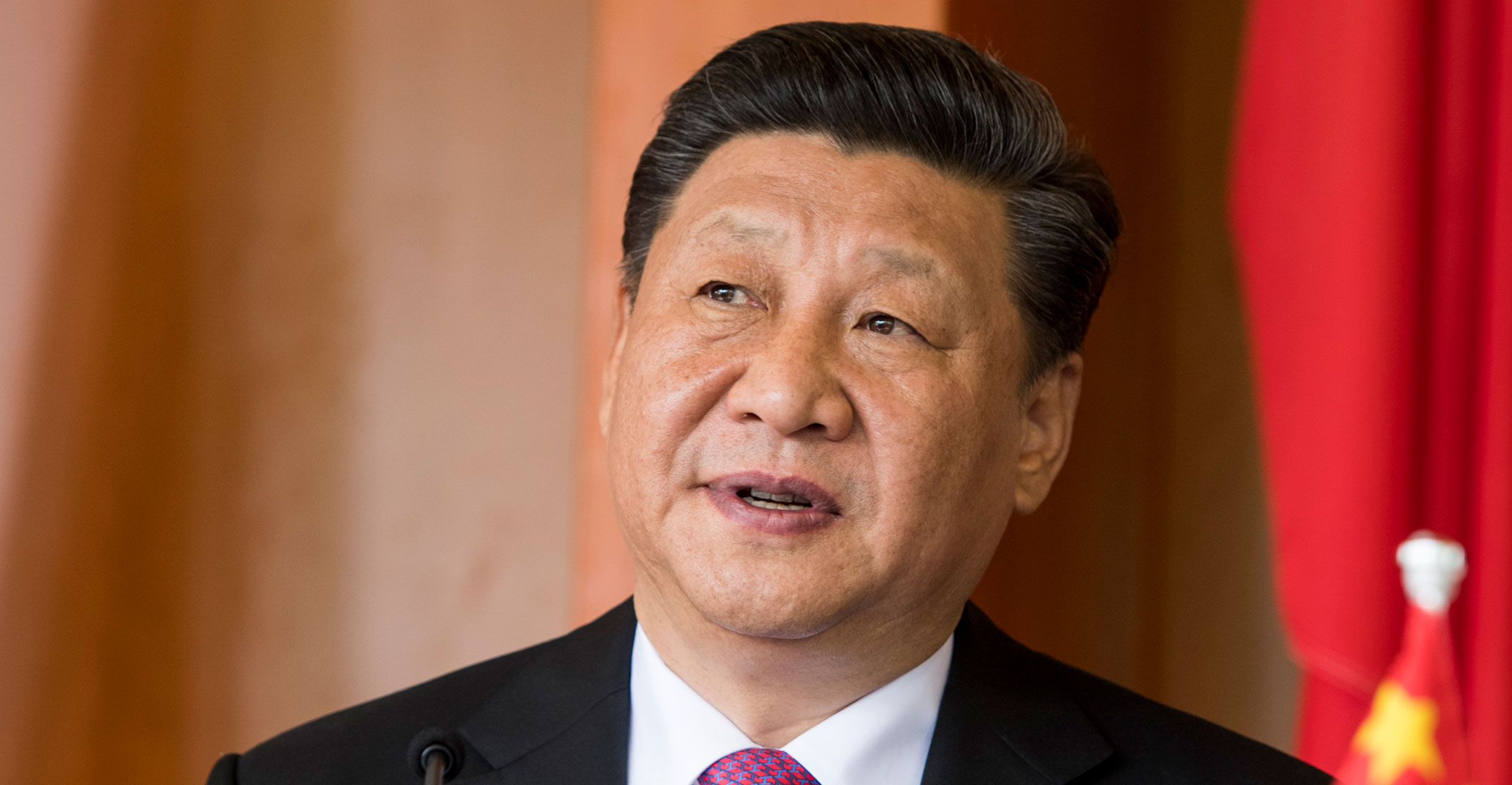
    Chinese President Xi Jinping

    The US has sharpened its assault on China’s technology industry with a flurry of export bans and stifling restrictions on companies, an escalation that leaves Beijing with few options to retaliate.

    Washington’s moves are part of a longer-term strategy to prevent China from dominating the industries of the future and arming its military with advanced weaponry, while also securing its tech supply chain by enticing chip makers to set up shop in the US.

    US President Joe Biden’s administration last week escalated those efforts to hobble its main geopolitical competitor, blacklisting dozens of Chinese tech firms, while signs emerged Japan and the Netherlands are aligning with US restrictions on selling crucial chip-making equipment to China, a major blow to Beijing’s ambitions to produce advanced semiconductors.

    China’s lack of good options is precisely why the US is striking hard and fast now with export controls

    In response, China has accused the US of protectionism, lodged a complaint with the World Trade Organisation and courted chip-making powerhouse South Korea, a key US ally. Beijing is also reportedly preparing a multibillion-dollar aid package for its semiconductor industry, a crucial sector for the global economy given the widespread use of chips in everything from cars and mobile phones to guided missiles.

    But China doesn’t have many options, or incentives, to go further.

    Similar to Beijing’s actions during the trade war with former President Donald Trump’s administration — when it failed to follow through on threats to add US companies to a so-called unreliable entities list — any moves to block American investment threatens an economy already reeling from President Xi Jinping’s zero-tolerance Covid policies, which are only now being rolled back.

    “China’s lack of good options is precisely why the US is striking hard and fast now with export controls,” said Reva Goujon, a director at the Rhodium Group who advises corporate clients on US-China relations and industrial policies.

    Eased

    The tech battle comes as US-China relations have eased since hitting a low point earlier this year following a visit to Taiwan by US house speaker Nancy Pelosi. After Biden and Xi met at the Group of 20 summit in Bali last month, the US watered down a legislative proposal that would’ve named Taiwan a “major non-Nato ally”, a sign that Washington is trying to avoid another showdown that risks derailing the relationship.

    Beijing’s response to the recent US moves on semiconductors has been “very reserved”, according to Henry Wang Huiyao, founder of the Centre for China and Globalisation, a policy research group in Beijing. The Biden-Xi talks and an upcoming visit to China by US secretary of state Antony Blinken have laid the groundwork for more understanding and hopefully some relaxation of sanctions, Wang added.

    The new actions unveiled this week — which follow export controls announced in October aimed at preventing China’s access to machines and knowhow to make high-end chips — placed a number of Chinese companies on a so-called entity list, requiring suppliers to get difficult-to-obtain US government licences.

    Among the most notable firms on that list is emerging chip equipment maker Shanghai Micro Electronics Equipment Group, or SMEE, which could stifle Beijing’s efforts to create next-generation semiconductors. The machines that make semiconductors are among the most complicated devices produced by humans and defy reverse engineering, making it difficult for China to develop its own domestic capabilities if it can’t get the equipment elsewhere.

    “Having SMEE on the entity list is a major blow for China’s chip sector,” said Martijn Rasser, a former analyst at the Central Intelligence Agency who’s now a senior fellow at the Centre for a New American Security think-tank.

    US President Joe Biden

    “It’s the one company that Beijing saw as having potential to produce advanced chip-making machines, which is essential for China to be a competitive force in the global semiconductor ecosystem,” he said. “Those hopes are now greatly diminished, if not dashed altogether.”

    Under the Biden restrictions, China is severely limited in its ability to buy those chip-making machines from abroad. The critical American gearmakers Applied Materials, Lam Research and KLA can no longer sell their advanced equipment to Chinese customers. But a complete blockade requires cooperation from Japan’s Tokyo Electron and Dutch lithography specialist ASML Holding.

    Those US efforts gathered momentum this week with Japan and the Netherlands nearing an agreement to join Washington in tightening controls over the export of up-to-date chip-making machinery to China. The two governments are considering a ban on the sale of machinery capable of fabricating chips that are at least three generations behind the latest advances available on the market, in line with the rules Washington set out in October.

    Also on the blacklist is China’s leading memory chip maker, Yangtze Memory Technologies, which was once close to a deal to supply Apple, and is a competitor to Samsung Electronics and Micron Technology for mobile phone and PC components.

    Even if China wins the WTO case, the US can veto any ruling by bringing it to the trade organisation’s appellate body, which the Trump administration paralysed in 2019.

    They can invest more, but the issues right now are not really a lack of resources. It’s these technological chokepoints they are still vulnerable to

    China’s best option may be to pour money into developing its own hi-tech chips. Beijing is preparing to unleash a $143-billion aid package for its chip industry, according to Reuters. But it’s not clear how much impact this will have, given the mixed results from the tens of billions that China has already funnelled into the sector.

    “They can invest more, but the issues right now are not really a lack of resources,” said Adam Segal, chair in emerging technologies and national security at the Council on Foreign Relations. “It’s these technological chokepoints they are still vulnerable to.”

    There’s a risk that unilateral actions could eventually alienate key US partners, said Jon Bateman, a senior fellow at the Carnegie Endowment for International Peace. Also, Beijing hasn’t yet shown a willingness to leverage its dominance of rare earth minerals or its role as a manufacturing hub because it “has more to lose than to gain”, he said, but that could change.

    “China has a lot of capability to retaliate but very limited willingness to do so thus far,” he said. “We may be surprised when that finally happens.”  — Iain Marlow and Emily Birnbaum, with Ian King, Bryce Baschuk and Rebecca Choong Wilkins, (c) 2022 Bloomberg LP


    Get TechCentral’s daily newsletter


    ASML Donald Trump Joe Biden Xi Jinping Yangtze Memory Technologies
    WhatsApp YouTube Follow on Google News Add as preferred source on Google
    Share. Facebook Twitter LinkedIn WhatsApp Telegram Email Copy Link
    Previous ArticleIs Binance too big to fail?
    Next Article Army deployed to four Eskom power stations

    Related Posts

    Investors can't get enough of ASML

    Investors can’t get enough of ASML

    27 January 2026
    Taiwan, US strike strategic AI and chip supply-chain pact - TSMC

    Taiwan, US strike strategic AI and chip supply-chain pact

    20 January 2026
    Nvidia's next AI chips are in full production - Jensen Huang

    Nvidia’s next AI chips are in full production

    6 January 2026
    Company News
    How NEC XON tackled identity risk for a major telco - Michael de Neuilly Rice

    How NEC XON tackled identity risk for a major telco

    11 February 2026

    Why Acer is the strategic choice for South Africa’s educational future

    11 February 2026
    Fyndae is building Africa's human verification layer for community security and collaboration

    Fyndae wants to turn lost-item recovery into Africa’s trust infrastructure

    11 February 2026
    Opinion
    South Africa's skills advantage is being overlooked at home - Richard Firth

    South Africa’s skills advantage is being overlooked at home

    29 January 2026
    Why Elon Musk's Starlink is a 'hard no' for me - Songezo Zibi

    Why Elon Musk’s Starlink is a ‘hard no’ for me

    26 January 2026
    South Africa's new fibre broadband battle - Duncan McLeod

    South Africa’s new fibre broadband battle

    20 January 2026

    Subscribe to Updates

    Get the best South African technology news and analysis delivered to your e-mail inbox every morning.

    Latest Posts
    Broadband Infraco in limbo

    Broadband Infraco in limbo

    11 February 2026
    Home affairs' R10 ID fee is forcing companies to rethink identity verification

    Standard Bank joins smart ID push with fee-free launch

    11 February 2026
    Zscaler assets seized from South African data centres

    Zscaler assets seized from South African data centres

    11 February 2026
    SA app wants to end guesswork in online grocery shopping - We Need Milk CEO Arjan van den Berg

    SA app wants to end guesswork in online grocery shopping

    11 February 2026
    © 2009 - 2026 NewsCentral Media
    • Cookie policy (ZA)
    • TechCentral – privacy and Popia

    Type above and press Enter to search. Press Esc to cancel.

    Manage consent

    TechCentral uses cookies to enhance its offerings. Consenting to these technologies allows us to serve you better. Not consenting or withdrawing consent may adversely affect certain features and functions of the website.

    Functional Always active
    The technical storage or access is strictly necessary for the legitimate purpose of enabling the use of a specific service explicitly requested by the subscriber or user, or for the sole purpose of carrying out the transmission of a communication over an electronic communications network.
    Preferences
    The technical storage or access is necessary for the legitimate purpose of storing preferences that are not requested by the subscriber or user.
    Statistics
    The technical storage or access that is used exclusively for statistical purposes. The technical storage or access that is used exclusively for anonymous statistical purposes. Without a subpoena, voluntary compliance on the part of your Internet Service Provider, or additional records from a third party, information stored or retrieved for this purpose alone cannot usually be used to identify you.
    Marketing
    The technical storage or access is required to create user profiles to send advertising, or to track the user on a website or across several websites for similar marketing purposes.
    • Manage options
    • Manage services
    • Manage {vendor_count} vendors
    • Read more about these purposes
    View preferences
    • {title}
    • {title}
    • {title}