Close Menu
TechCentralTechCentral

    Subscribe to the newsletter

    Get the best South African technology news and analysis delivered to your e-mail inbox every morning.

    Facebook X (Twitter) YouTube LinkedIn
    WhatsApp Facebook X (Twitter) LinkedIn YouTube
    TechCentralTechCentral
    • News
      Home affairs opens visa fast lane - with tech talent a top priority

      Home affairs opens visa fast lane – with tech talent a top priority

      21 July 2026
      Skills authority to probe MICT Seta leadership crisis - Buti Manamela

      Skills authority to probe MICT Seta leadership crisis

      21 July 2026
      Mastercard bets billions on the tech that could eat its lunch - Prakriti Singh

      Mastercard bets billions on the tech that could eat its lunch

      21 July 2026
      From care homes to production lines, the robots are coming

      From care homes to production lines, the robots are coming

      21 July 2026
      Remote work in South Africa hits record high

      Remote work in South Africa hits record high

      21 July 2026
    • World
      Meta AI will now tell parents if their teen is in crisis

      Meta AI will now tell parents if their teen is in crisis

      17 July 2026
      IBM shares crash 25% as AI upends software spending - Arvind Krishna

      IBM shares crash 25% as AI upends software spending

      15 July 2026
      Jony Ive's first OpenAI device: an AI smart speaker - Jony Ive and Sam Altman

      Jony Ive’s first OpenAI device: an AI smart speaker

      15 July 2026
      Stripe, Advent in talks to buy PayPal for $53-billion

      Stripe, Advent in talks to buy PayPal for $53-billion

      15 July 2026
      Memory crisis sends smartphone market into steep decline

      Memory crisis sends smartphone market into steep decline

      13 July 2026
    • In-depth
      The plan to stop AI from breaking the world - Google DeepMind CEO Demis Hassabis. Image: John Sears

      The plan to stop AI from breaking the world

      16 July 2026
      The internet has a Strait of Hormuz problem

      The internet has a Strait of Hormuz problem

      15 July 2026
      AI boom sparks rally, frenzy and fear

      AI boom sparks rally, frenzy and fear

      11 June 2026
      Every plug-in hybrid on sale in South Africa, ranked by price - Lamborghini Temerario

      Every plug-in hybrid on sale in South Africa, ranked by price

      7 June 2026
      What Wi-Fi 8 will mean for wireless networks

      What Wi-Fi 8 will mean for wireless networks

      1 June 2026
    • TCS
      Watts & Wheels S1E7: 'Ferrari's EV breaks the internet'

      Watts & Wheels S1E7: ‘Ferrari’s EV breaks the internet’

      8 July 2026
      TCS+ | How Tracker is turning vehicle data into business strategy - Silvia Schollenberger

      TCS+ | How Tracker is turning vehicle data into business strategy

      1 July 2026
      TCS+ | IBM Bob: an AI-powered 'development partner' for the enterprise - David Spurway

      TCS+ | IBM Bob: an AI-powered development partner for the enterprise

      30 June 2026
      Watts & Wheels S1E6: 'A flawless Alfa and a bakkie that divides'

      Watts & Wheels S1E6: ‘A flawless Alfa and a bakkie that divides’

      17 June 2026
      Watts & Wheels S1E6: 'A flawless Alfa and a bakkie that divides'

      Watts & Wheels S1E5: ‘A Bentley of the bush and a car that swims’

      8 June 2026
    • Opinion
      Selling vapour is corporate suicide in slow motion - Jannie van Zyl

      Selling vapour is corporate suicide in slow motion

      16 July 2026
      Brazil's online gambling crackdown is a lesson for South Africa

      How Amazon outmanoeuvred Starlink in South Africa

      15 July 2026
      The Popia problem with agentic AI - Herman Haasbroek

      The Popia problem with agentic AI

      14 July 2026
      The author, Fanie van Rooyen

      South Africa can still catch the AI wave – here’s how

      7 July 2026
      The author, Fanie van Rooyen

      The AI utopia South Africa can’t afford

      1 July 2026
    • Company Hubs
      • 1Stream
      • Africa Data Centres
      • AfriGIS
      • Altron Digital Business
      • Altron Document Solutions
      • Altron Group
      • Arctic Wolf
      • Ascent Technology
      • AvertITD
      • BBD
      • Braintree
      • CallMiner
      • CambriLearn
      • CM Telecom
      • Contactable
      • CYBER1 Solutions
      • Digicloud Africa
      • Digimune
      • Domains.co.za
      • ESET
      • Euphoria Telecom
      • HOSTAFRICA
      • Incredible Business
      • iONLINE
      • IQbusiness
      • Iris Network Systems
      • Kaspersky
      • LSD Open
      • Mitel
      • NEC XON
      • Netstar
      • Network Platforms
      • Next DLP
      • Ovations
      • Paracon
      • Paratus
      • Q-KON
      • SevenC
      • SkyWire
      • Solid8 Technologies
      • Telit Cinterion
      • Telviva
      • Tenable
      • Vertiv
      • Videri Digital
      • Vodacom Business
      • Wipro
      • Workday
      • XLink
    • Sections
      • AI and machine learning
      • Banking
      • Broadcasting and Media
      • Cloud services
      • Contact centres and CX
      • Cryptocurrencies
      • Education and skills
      • Electronics and hardware
      • Energy and sustainability
      • Enterprise software
      • Financial services
      • HealthTech
      • Information security
      • Internet and connectivity
      • Internet of Things
      • Investment
      • IT services
      • Lifestyle
      • Policy and regulation
      • Public sector
      • Retail and e-commerce
      • Satellite communications
      • Science
      • SMEs and start-ups
      • Social media
      • Talent and leadership
      • Telecoms
      • Watts & Wheels
    • Events
    • Advertise
    TechCentralTechCentral
    Home » In-depth » Big Blue: a century in the making

    Big Blue: a century in the making

    By Editor15 June 2011
    Twitter LinkedIn Facebook WhatsApp Email Telegram Copy Link
    News Alerts
    WhatsApp
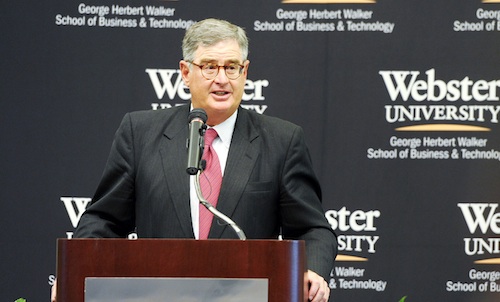
    IBM's current CEO, Sam Palmisano

    Founded in 1911, IBM is 100 years old on 16 June. TechCentral senior journalist Craig Wilson traces the rise and fall and rise of Big Blue.

    IBM was the result of a merger of four companies, engineered by a prominent financier, Charles Flint. Until 1924, the company traded as the Computer Tabulating Recording (CTR) Corp, one of the four companies that had merged in 1911. As the name suggests, the company’s primary business then was the design and manufacture of punch cards and associated machinery.

    Punch cards not only allowed employers to keep a close eye on their staff, and become a workplace stereotype in the process, but they were the first automated method of collecting data.

    IBM’s advances in punch cards would lead to more accurate census taking, better inventory keeping during World War 2, and eventually the related developments in automation that would lead to the mainframe and personal computers.

    Today, IBM employs more than 400 000 people, its branding is universally recognisable and it continues to hold more patents than any other US-based technology company. IBM has eight research laboratories worldwide, and between them, its employees have earned five Nobel prizes, four Turing awards, five National Medals of Technology, and five National Medals of Science.
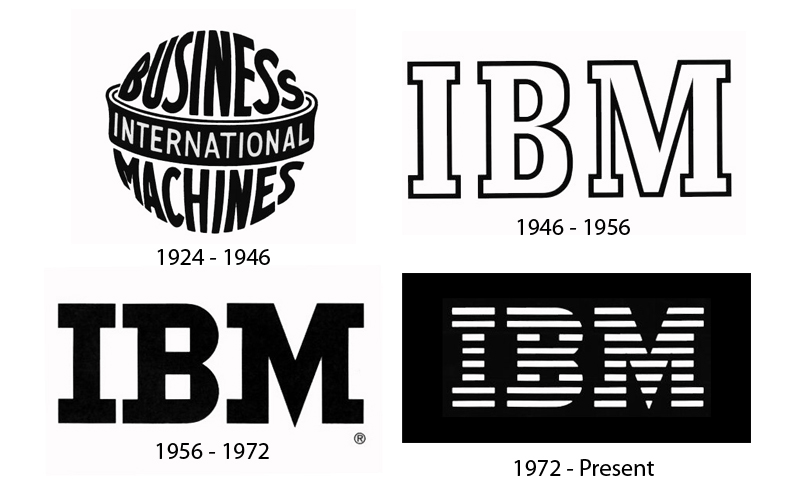
    IBM branding since 1924

    Sam Palmisano is the current CEO, but he’s only the most recent in a string of illustrious leaders. Perhaps the most famous was Thomas Watson Sr. Aside from being at the helm for 42 years, he turned the term “THINK” into the company’s mantra-cum-slogan, pioneered the “open-door policy” that saw the value in keeping management approachable, and pioneered the previously unheard of notions of employee benefits like paid leave.

    Watson Sr is also credited with initiating the corporate culture and values that IBM continues to profess. Aside from looking after his own employees, Watson also emphasised the importance of corporate social responsibility.

    During the Great Depression, rather than downsize, Watson invested heavily in technical development and education, actually growing IBM’s workforce. It was a gamble, but one that paid off. IBM has proved to be a company not averse to large gambles and, as with all gamblers, it hasn’t always won.

    The move from mechanical to electronic means of handling data was a gamble that paid off. By the end of the 1950s, 4 000 of the 6 000 computers in operation in the US were IBM machines.

    IBM was the first company to employ a black salesman in 1946, the first with an equal opportunities policy letter in 1953 (a year before Brown vs The Board of Education), the first to offer partner benefits to same-sex couples, and one of the first to self-legislate against corporate racial or sexual discrimination.

    On the technical front, IBM has been responsible for a long list of firsts. It built the first Chinese ideographic character typewriter. In 1956, Arthur Samuel of IBM’s Poughkeepsie, New York laboratory programmed an IBM 704 to play checkers and “learn” from the games it played.
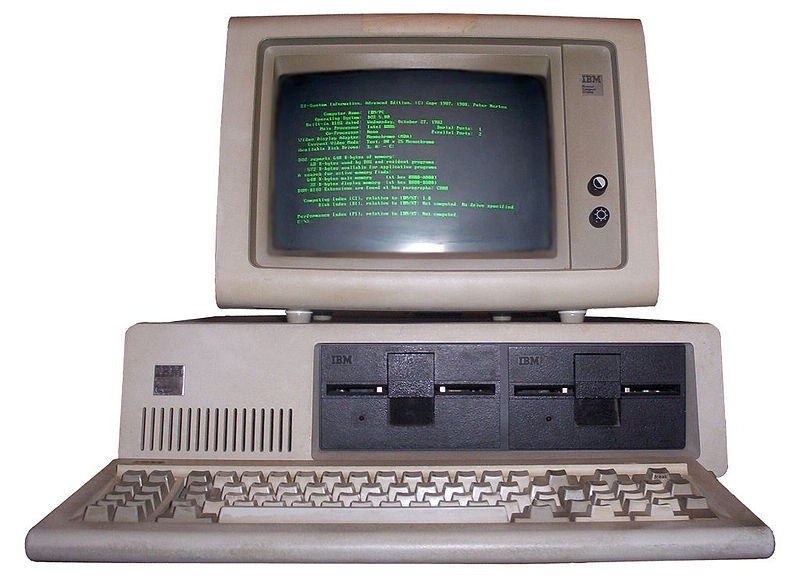
    An early IBM PC

    By 1964, IBM produced approximately 70% of all computers. Its System/360 products of the same year were the first with interchangeable software and peripherals. Its Selectric typewriters included “memory” and were the forerunners of contemporary word processing and desktop publishing.

    IBM’s mainframes ran American Airlines’ reservation system in the first system of its kind first to work over phone lines. IBM invented DRAM, arguably one of the most important aspects of personal computing.

    An IBM researcher, Benoit Mandelbrot, discovered fractal geometry. Its systems and people helped Nasa’s first moon landing, for 40 years the company was one of the most prominent sponsors of the Olympic Games, and in 1981 IBM’s PC won Time magazine’s person of the year award.

    Some of these successes can be attributed to decisions that must have seemed minor at the time. In 1969, the company split its hardware from its software and services. Before that, hardware had simply been bundled with software. Thus, essentially, IBM created the software industry.

    Of course, it hasn’t all been smooth sailing and innovations. IBM has survived antitrust cases, a failed foray into the copier market, and the almost fatal decision to outsource component manufacture to Microsoft and Intel in the early 1980s. IBM also survived the embarrassment of system problems at 1996 Olympic games and the 2001 controversy surrounding Edwin Black’s book that claimed links between the company and the Holocaust.
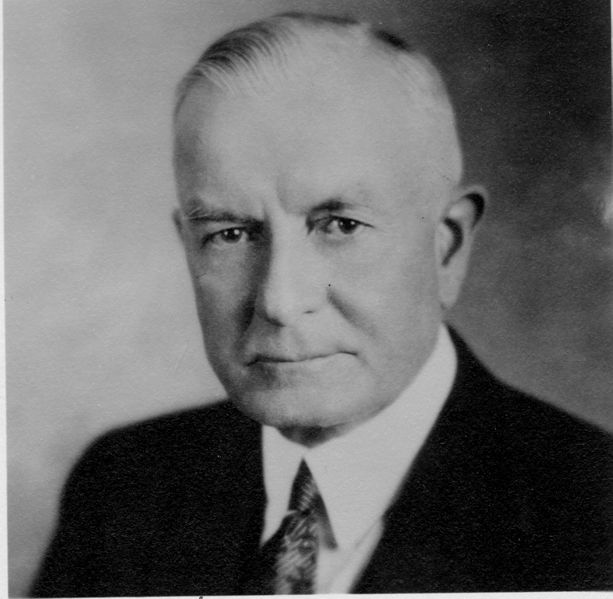
    Thomas Watson Sr

    By 1989, IBM’s earnings had dropped by a third. Four years later, it announced the largest single-year corporate loss in US history of US$8,1bn. IBM had become an overweight dinosaur that couldn’t compete with more agile, smaller companies. Furthermore, it had outsourced the very elements that could have kept it dominant, resulting in the Microsoft megalith.

    In 1993, for the first time in its history, IBM hired an outsider to lead it as CEO. His name was Lou Gerstner. He’d been chairman and CEO of RJR Nabisco for four years, and had previously spent 11 years as an executive at American Express. Within a year of his appointment, IBM was back in the black.

    Gerstner consolidated various arms of the company that had been split to fend off smaller, niche firms’ competitive advantage of small scale and the quick decision-making that comes with that. IBM’s software strategy also shifted focus to middleware – the vital software that connects operating systems to applications.

    More recently, IBM sold its PC division to Lenovo in 2005, and has largely vanished from the realm of personal computing. Arguably, there is a generation of children to whom the once ubiquitous blue logo is now a mystery.

    However, 100 years since it started, IBM continues to drive innovation and advancement, but that’s not what’s most impressive about it. What’s most impressive is that it survived, and continues today to thrive.

    IBM designed magnetic strips that are now the standard for bankcards, invented the floppy disk and the first portable (albeit 24kg) computer, patented the barcode and created barcode scanners, designed the predecessor of the modern ATM, pioneered computer speech recognition, created the hardware necessary for laser eye surgery, and introduced the TrackPoint cursor control device found in the centre of the iconic ThinkPad’s early keyboards.

    IBM’s Deep Blue supercomputer famously beat Garry Kasparov at chess and the company coined the term “eBusiness”. Today, IBM-designed chips are used in PlayStation 3, Xbox 360 and Wii game consoles.

    IBM also continues to regain ground in supercomputing with high-end machines based on scalable parallel processor technology. Most importantly, IBM continues to persevere and drive competition, even if it’s relinquished many crowns along the way.

    To survive 30 years in the fast-moving and cutthroat world of technology is a great achievement. To be able to celebrate a centenary puts IBM in a league of its own.  — Craig Wilson, TechCentral

    • Subscribe to our free daily newsletter
    • Follow us on Twitter or on Facebook

    Follow TechCentral on Google News Add TechCentral as your preferred source on Google


    WhatsApp YouTube
    Share. Facebook Twitter LinkedIn WhatsApp Telegram Email Copy Link
    Previous ArticleA new ball game for cricket’s Clive Rice
    Next Article Economy and class in sci-fi thriller Source Code

    Related Posts

    Home affairs opens visa fast lane - with tech talent a top priority

    Home affairs opens visa fast lane – with tech talent a top priority

    21 July 2026
    Skills authority to probe MICT Seta leadership crisis - Buti Manamela

    Skills authority to probe MICT Seta leadership crisis

    21 July 2026
    Mastercard bets billions on the tech that could eat its lunch - Prakriti Singh

    Mastercard bets billions on the tech that could eat its lunch

    21 July 2026
    Company News
    Cloud adoption is done. Execution is the new frontier - Cloud on Demand

    Cloud adoption is done. Execution is the new frontier

    21 July 2026
    Data poisoning in AI models: what businesses need to know - Domains.co.za

    Data poisoning in AI models: what businesses need to know

    21 July 2026
    The AI-led industrial revolution has begun - CallMiner Bruce McMahon

    The AI-led industrial revolution has begun

    20 July 2026
    Opinion
    Selling vapour is corporate suicide in slow motion - Jannie van Zyl

    Selling vapour is corporate suicide in slow motion

    16 July 2026
    Brazil's online gambling crackdown is a lesson for South Africa

    How Amazon outmanoeuvred Starlink in South Africa

    15 July 2026
    The Popia problem with agentic AI - Herman Haasbroek

    The Popia problem with agentic AI

    14 July 2026

    Subscribe to Updates

    Get the best South African technology news and analysis delivered to your e-mail inbox every morning.

    Latest Posts
    Home affairs opens visa fast lane - with tech talent a top priority

    Home affairs opens visa fast lane – with tech talent a top priority

    21 July 2026
    Skills authority to probe MICT Seta leadership crisis - Buti Manamela

    Skills authority to probe MICT Seta leadership crisis

    21 July 2026
    Mastercard bets billions on the tech that could eat its lunch - Prakriti Singh

    Mastercard bets billions on the tech that could eat its lunch

    21 July 2026
    From care homes to production lines, the robots are coming

    From care homes to production lines, the robots are coming

    21 July 2026
    © 2009 - 2026 NewsCentral Media
    Built and maintained by Chronon
    • Cookie policy (ZA)
    • TechCentral – privacy and Popia

    Type above and press Enter to search. Press Esc to cancel.

    Manage consent

    TechCentral uses cookies to enhance its offerings. Consenting to these technologies allows us to serve you better. Not consenting or withdrawing consent may adversely affect certain features and functions of the website.

    Functional Always active
    The technical storage or access is strictly necessary for the legitimate purpose of enabling the use of a specific service explicitly requested by the subscriber or user, or for the sole purpose of carrying out the transmission of a communication over an electronic communications network.
    Preferences
    The technical storage or access is necessary for the legitimate purpose of storing preferences that are not requested by the subscriber or user.
    Statistics
    The technical storage or access that is used exclusively for statistical purposes. The technical storage or access that is used exclusively for anonymous statistical purposes. Without a subpoena, voluntary compliance on the part of your Internet Service Provider, or additional records from a third party, information stored or retrieved for this purpose alone cannot usually be used to identify you.
    Marketing
    The technical storage or access is required to create user profiles to send advertising, or to track the user on a website or across several websites for similar marketing purposes.
    • Manage options
    • Manage services
    • Manage {vendor_count} vendors
    • Read more about these purposes
    View preferences
    • {title}
    • {title}
    • {title}