Close Menu
TechCentralTechCentral

    Subscribe to the newsletter

    Get the best South African technology news and analysis delivered to your e-mail inbox every morning.

    Facebook X (Twitter) YouTube LinkedIn
    WhatsApp Facebook X (Twitter) LinkedIn YouTube
    TechCentralTechCentral
    • News
      Home affairs opens visa fast lane - with tech talent a top priority

      Home affairs opens visa fast lane – with tech talent a top priority

      21 July 2026
      Skills authority to probe MICT Seta leadership crisis - Buti Manamela

      Skills authority to probe MICT Seta leadership crisis

      21 July 2026
      Mastercard bets billions on the tech that could eat its lunch - Prakriti Singh

      Mastercard bets billions on the tech that could eat its lunch

      21 July 2026
      From care homes to production lines, the robots are coming

      From care homes to production lines, the robots are coming

      21 July 2026
      Remote work in South Africa hits record high

      Remote work in South Africa hits record high

      21 July 2026
    • World
      Meta AI will now tell parents if their teen is in crisis

      Meta AI will now tell parents if their teen is in crisis

      17 July 2026
      IBM shares crash 25% as AI upends software spending - Arvind Krishna

      IBM shares crash 25% as AI upends software spending

      15 July 2026
      Jony Ive's first OpenAI device: an AI smart speaker - Jony Ive and Sam Altman

      Jony Ive’s first OpenAI device: an AI smart speaker

      15 July 2026
      Stripe, Advent in talks to buy PayPal for $53-billion

      Stripe, Advent in talks to buy PayPal for $53-billion

      15 July 2026
      Memory crisis sends smartphone market into steep decline

      Memory crisis sends smartphone market into steep decline

      13 July 2026
    • In-depth
      The plan to stop AI from breaking the world - Google DeepMind CEO Demis Hassabis. Image: John Sears

      The plan to stop AI from breaking the world

      16 July 2026
      The internet has a Strait of Hormuz problem

      The internet has a Strait of Hormuz problem

      15 July 2026
      AI boom sparks rally, frenzy and fear

      AI boom sparks rally, frenzy and fear

      11 June 2026
      Every plug-in hybrid on sale in South Africa, ranked by price - Lamborghini Temerario

      Every plug-in hybrid on sale in South Africa, ranked by price

      7 June 2026
      What Wi-Fi 8 will mean for wireless networks

      What Wi-Fi 8 will mean for wireless networks

      1 June 2026
    • TCS
      Watts & Wheels S1E7: 'Ferrari's EV breaks the internet'

      Watts & Wheels S1E7: ‘Ferrari’s EV breaks the internet’

      8 July 2026
      TCS+ | How Tracker is turning vehicle data into business strategy - Silvia Schollenberger

      TCS+ | How Tracker is turning vehicle data into business strategy

      1 July 2026
      TCS+ | IBM Bob: an AI-powered 'development partner' for the enterprise - David Spurway

      TCS+ | IBM Bob: an AI-powered development partner for the enterprise

      30 June 2026
      Watts & Wheels S1E6: 'A flawless Alfa and a bakkie that divides'

      Watts & Wheels S1E6: ‘A flawless Alfa and a bakkie that divides’

      17 June 2026
      Watts & Wheels S1E6: 'A flawless Alfa and a bakkie that divides'

      Watts & Wheels S1E5: ‘A Bentley of the bush and a car that swims’

      8 June 2026
    • Opinion
      Selling vapour is corporate suicide in slow motion - Jannie van Zyl

      Selling vapour is corporate suicide in slow motion

      16 July 2026
      Brazil's online gambling crackdown is a lesson for South Africa

      How Amazon outmanoeuvred Starlink in South Africa

      15 July 2026
      The Popia problem with agentic AI - Herman Haasbroek

      The Popia problem with agentic AI

      14 July 2026
      The author, Fanie van Rooyen

      South Africa can still catch the AI wave – here’s how

      7 July 2026
      The author, Fanie van Rooyen

      The AI utopia South Africa can’t afford

      1 July 2026
    • Company Hubs
      • 1Stream
      • Africa Data Centres
      • AfriGIS
      • Altron Digital Business
      • Altron Document Solutions
      • Altron Group
      • Arctic Wolf
      • Ascent Technology
      • AvertITD
      • BBD
      • Braintree
      • CallMiner
      • CambriLearn
      • CM Telecom
      • Contactable
      • CYBER1 Solutions
      • Digicloud Africa
      • Digimune
      • Domains.co.za
      • ESET
      • Euphoria Telecom
      • HOSTAFRICA
      • Incredible Business
      • iONLINE
      • IQbusiness
      • Iris Network Systems
      • Kaspersky
      • LSD Open
      • Mitel
      • NEC XON
      • Netstar
      • Network Platforms
      • Next DLP
      • Ovations
      • Paracon
      • Paratus
      • Q-KON
      • SevenC
      • SkyWire
      • Solid8 Technologies
      • Telit Cinterion
      • Telviva
      • Tenable
      • Vertiv
      • Videri Digital
      • Vodacom Business
      • Wipro
      • Workday
      • XLink
    • Sections
      • AI and machine learning
      • Banking
      • Broadcasting and Media
      • Cloud services
      • Contact centres and CX
      • Cryptocurrencies
      • Education and skills
      • Electronics and hardware
      • Energy and sustainability
      • Enterprise software
      • Financial services
      • HealthTech
      • Information security
      • Internet and connectivity
      • Internet of Things
      • Investment
      • IT services
      • Lifestyle
      • Policy and regulation
      • Public sector
      • Retail and e-commerce
      • Satellite communications
      • Science
      • SMEs and start-ups
      • Social media
      • Talent and leadership
      • Telecoms
      • Watts & Wheels
    • Events
    • Advertise
    TechCentralTechCentral
    Home » Sections » Electronics and hardware » Buying a home telescope? Read this first

    Buying a home telescope? Read this first

    Seeing Saturn’s rings with your own eyes can be an “oh, wow” moment. But choosing the right telescope can be tricky.
    By The Conversation2 January 2024
    Twitter LinkedIn Facebook WhatsApp Email Telegram Copy Link
    News Alerts
    WhatsApp

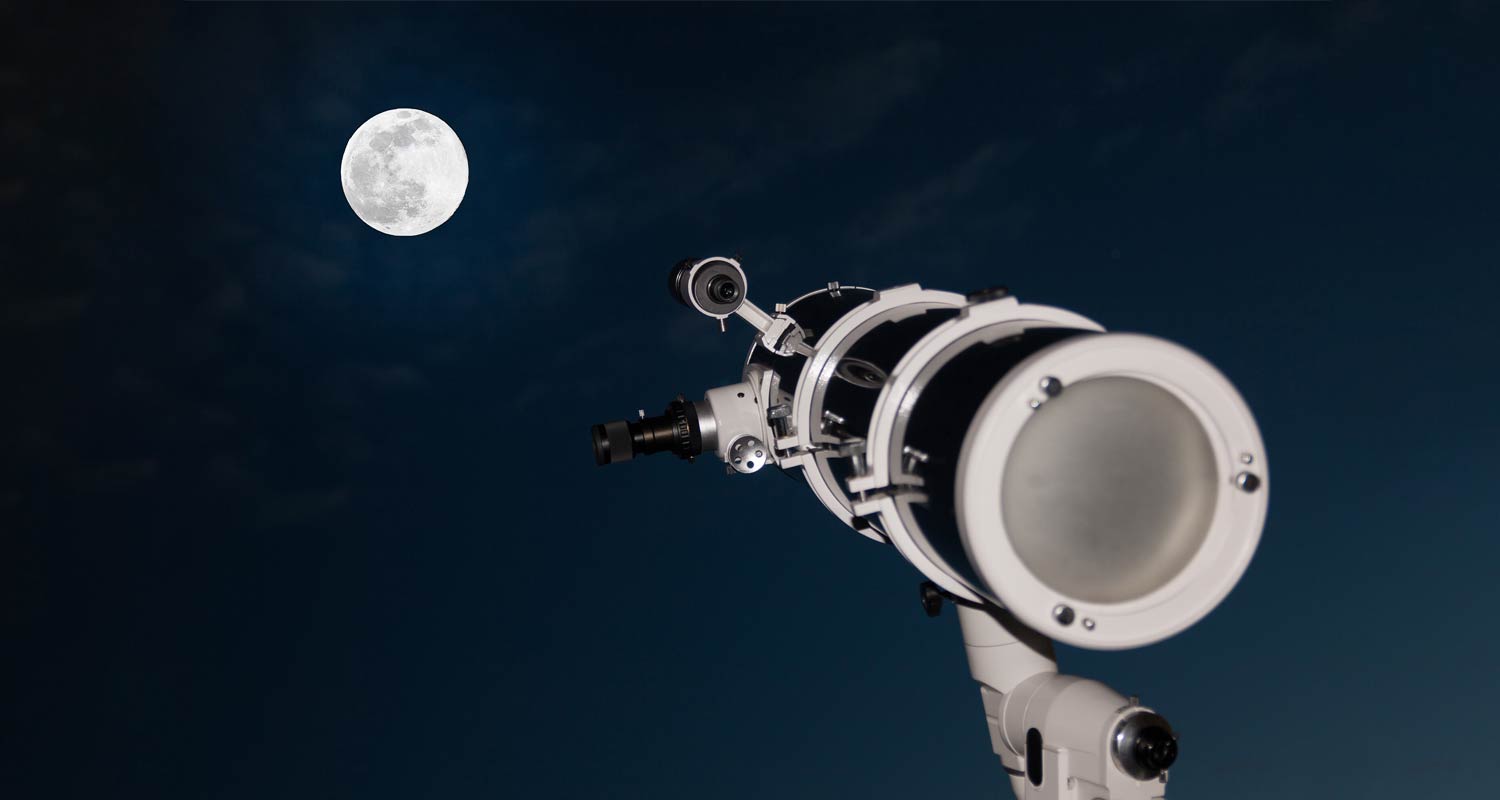
    While the unaided eye or binoculars can reveal much of the night sky, a telescope reveals so much more. Seeing Saturn’s rings or the moon’s craters with your own eyes can be an “oh, wow” moment.

    However, choosing the right telescope can be tricky. There are telescopes with lenses and telescopes with mirrors. Telescopes that are moved by hand and others that are electronically controlled. Telescopes also come in a range of sizes, with a trade-off between light-gathering power, portability and price.

    While there’s much to consider, changes in pricing and technology mean spectacular views of the universe are more accessible than just a decade ago.

    How big should the aperture be?

    Aperture is fundamental for telescopes. The bigger the light-collecting lens or mirror, the fainter the objects you can see. Double the aperture from 50mm to 100mm diameter, and the light-collecting area quadruples.

    The aperture also limits the level of detail you can see, due to the diffraction (interference) of light.

    Again, bigger is better – a larger aperture telescope will produce sharper images than a smaller aperture telescope of comparable design. Earth’s turbulent atmosphere also blurs images, which can limit the detail seen when the aperture is more than 150mm.

    Sometimes cheaper telescopes are advertised by magnification, but a small telescope with extreme magnification just makes blurry images bigger without revealing more detail.

    Refractor or reflector?

    Should you buy a telescope with a refracting lens or a reflecting mirror? It depends what you want to look at, and your budget.

    Refracting telescopes: Refracting telescopes can be good for viewing objects on Earth and in the sky. Refracting telescopes with short focal lengths (where light is brought to a focus near the lens) can be quite compact and good for low magnification views, which is great for sweeping across dark country skies.

    However, there are catches. While 70mm aperture refracting telescopes can be quite affordable, bigger refractor telescopes are often more expensive than comparable reflecting telescopes.

    Read: Rock collected by Apollo 17 astronaut reveals true age of the moon

    Refracting telescopes also suffer from chromatic aberration – where different colours aren’t brought to a common focus – and this is particularly noticeable at high magnification when stars get coloured halos. This can be mitigated using complex lens designs, but that adds to the cost.

    Reflecting telescopes: Reflecting telescopes use mirrors to focus light. These tend to be larger and don’t suffer from chromatic aberration.

    Dobsonian telescopes have a simple Newtonian optical design and wooden mounts, and are a very cost-effective (if sometimes bulky) option for larger apertures. Schmidt-Cassegrain and Maksutov telescopes, which use a combination of lenses and mirrors, are more compact (a big plus), but also more complex and expensive.
    How do I find things in the sky? Depends on the mount

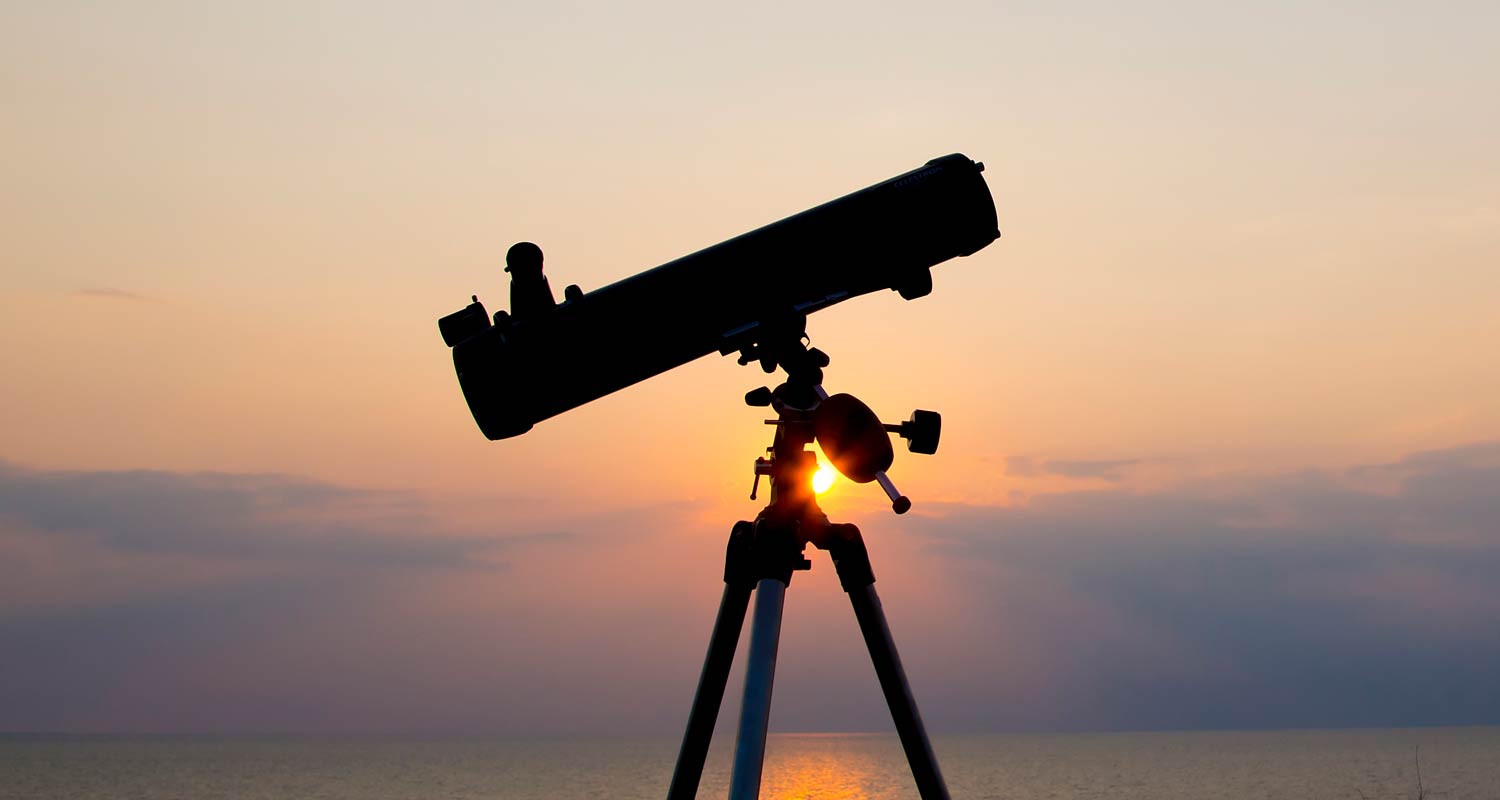
    Want to look at a celestial object? You will need to point your telescope in the right direction, keep it steady, and follow the object as it moves across the sky (due to Earth’s rotation).

    To do this, a telescope needs a mount, which is often sold with the telescope but can also be bought separately. Mounts fall into two broad categories:

    • Equatorial mounts have an axis aligned with Earth’s axis, so a single motor can compensate for Earth’s rotation. These mounts were essential for taking long exposure images with telescopes prior to computers and tend to be relatively heavy.
    • Alt-azimuth mounts have a vertical and a horizontal axis (how a camera is mounted on a tripod, for example), and tend to be cheaper and lighter than equatorial mounts. With the advent of cheap computing, they can now be used to automatically point at and track celestial objects.

    To point a telescope at celestial objects you can move it manually or have electronics assist you, including “goto” mounts with motors that shift the telescope for you.

    A completely manual telescope will be cheaper than a telescope with automation, but you will need to navigate the sky yourself.

    Electronic assistance for navigating the sky is rapidly evolving and getting cheaper. Many telescopes on the market now use GPS and a smartphone app, which simplifies the process and makes everything more portable.

    Do I need a finder scope?

    Regardless of how you point your telescope, having a 30-50mm aperture auxiliary “finder” scope can be useful for small telescopes and essential for larger telescopes.

    Large telescopes typically view a tiny patch of the sky, which makes finding your way tricky. A finder scope with a wider view and crosshairs simplifies things. Even telescopes with goto electronics often need to be calibrated with bright stars and locating them is easier with a finder scope.

    What about the eyepiece?

    An essential part of most telescopes is the eyepiece you look through. Sometimes decent telescopes are sold with quite cheap eyepieces, but it can be relatively inexpensive to upgrade to a better one.

    A good start is a low-magnification eyepiece for sweeping views, and a high-magnification eyepiece for planets.

    Plössl eyepieces are affordable and provide good views. More complex eyepieces that provide better views are also available, and far cheaper than they once were.

    If you want to look at the sun, you must get a specially designed solar filter. Never point a telescope (including the finder scope) at the sun without filters – it can permanently damage eyes and shatter lenses.

    What if I want to take astro photos?

    Taking basic astronomical photos has become much easier with smartphones. While you can hold a phone to the telescope eyepiece for a photo of the Moon or a planet, you will get better results with an adapter that holds your phone securely in place.

    Of course, better images can be taken with astronomy-specific cameras that can take very short exposures (for planets) or very long exposures (for fainter nebulae and galaxies). For long exposures, automatic tracking of celestial objects is essential, and that adds to a telescope’s price.
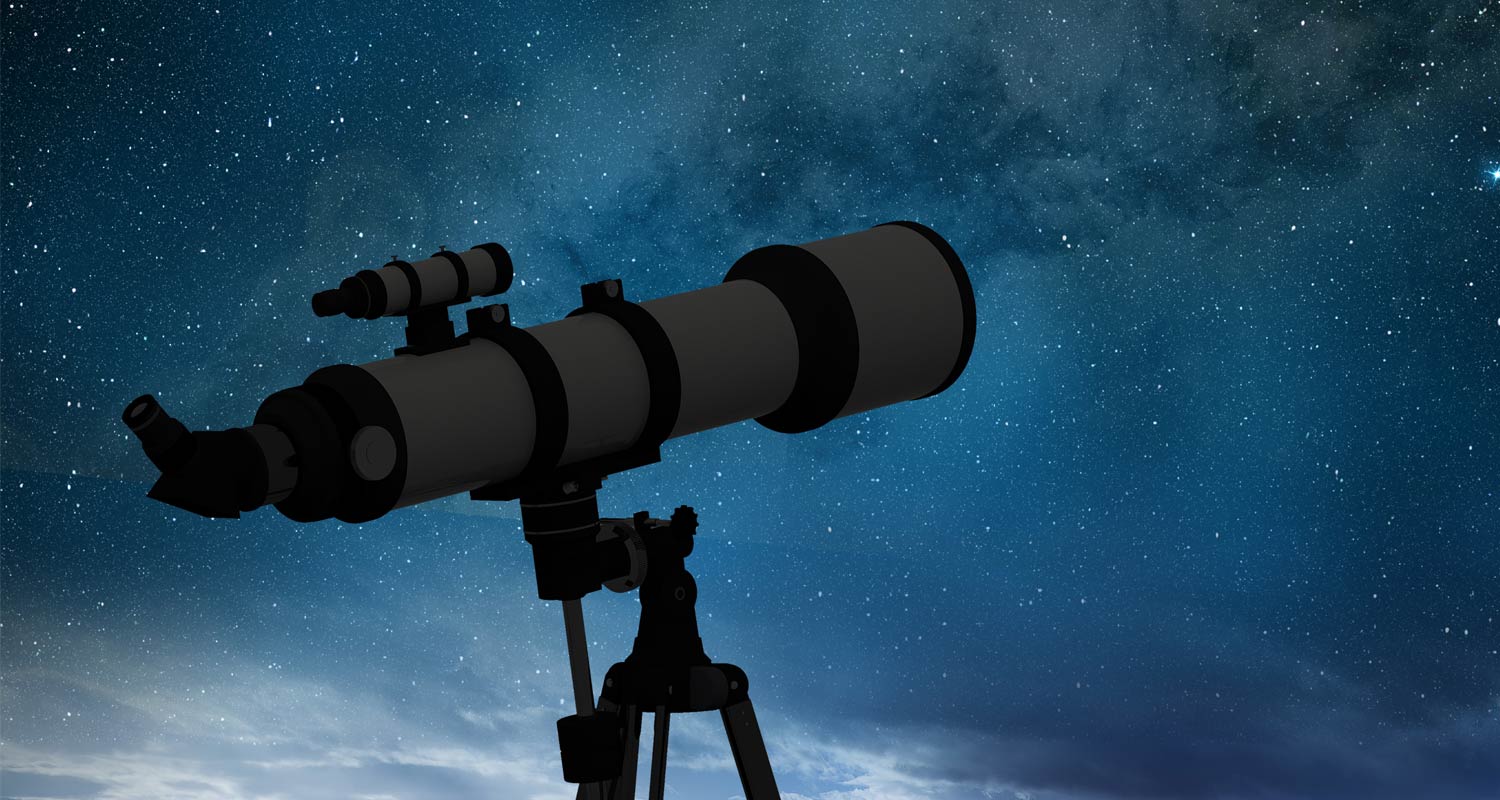
    Smart telescopes are a relatively recent addition to the market. These goto telescopes have no eyepieces and only capture images electronically. As modern detectors are more sensitive than our eyes, they can capture quite spectacular images with a relatively small portable telescope, even when there’s light pollution.

    However, you do lose the experience of seeing the universe directly with your own eyes through the eyepiece.

    Try before you buy

    If there’s a local amateur astronomical society, you can sign up or attend a star party. There should be plenty of telescopes, and owners happy to wax lyrical about them.

    A specialist shop can also give a direct experience of a telescope: its size and how it works (with limitations during daytime). For example, you may find a telescope is too bulky or technical for your needs.

    Online shopping can save money, but may have less customer support than a local shop. You could also snap up a bargain buying second hand, and a seller may allow you to test their telescope on the moon and planets before buying.

    Read: Scientists discover universe is awash in gravitational waves

    There’s a lot to take on board before buying a telescope. Aperture, size, cost and other factors need to be considered. But there are many good options out there, and with a good choice you can see some wondrous things. And perhaps have an “oh, wow” moment.The Conversation

    • The author, Michael JI Brown, is associate professor in astronomy, Monash University
    • This article is republished from The Conversation under a Creative Commons licence

    Get breaking news alerts from TechCentral on WhatsApp

    Follow TechCentral on Google News Add TechCentral as your preferred source on Google


    WhatsApp YouTube
    Share. Facebook Twitter LinkedIn WhatsApp Telegram Email Copy Link
    Previous ArticleKusile unit 5 synced to the grid
    Next Article Tech megacaps’ extraordinary 2023

    Related Posts

    Home affairs opens visa fast lane - with tech talent a top priority

    Home affairs opens visa fast lane – with tech talent a top priority

    21 July 2026
    Skills authority to probe MICT Seta leadership crisis - Buti Manamela

    Skills authority to probe MICT Seta leadership crisis

    21 July 2026
    Mastercard bets billions on the tech that could eat its lunch - Prakriti Singh

    Mastercard bets billions on the tech that could eat its lunch

    21 July 2026
    Company News
    Cloud adoption is done. Execution is the new frontier - Cloud on Demand

    Cloud adoption is done. Execution is the new frontier

    21 July 2026
    Data poisoning in AI models: what businesses need to know - Domains.co.za

    Data poisoning in AI models: what businesses need to know

    21 July 2026
    The AI-led industrial revolution has begun - CallMiner Bruce McMahon

    The AI-led industrial revolution has begun

    20 July 2026
    Opinion
    Selling vapour is corporate suicide in slow motion - Jannie van Zyl

    Selling vapour is corporate suicide in slow motion

    16 July 2026
    Brazil's online gambling crackdown is a lesson for South Africa

    How Amazon outmanoeuvred Starlink in South Africa

    15 July 2026
    The Popia problem with agentic AI - Herman Haasbroek

    The Popia problem with agentic AI

    14 July 2026

    Subscribe to Updates

    Get the best South African technology news and analysis delivered to your e-mail inbox every morning.

    Latest Posts
    Home affairs opens visa fast lane - with tech talent a top priority

    Home affairs opens visa fast lane – with tech talent a top priority

    21 July 2026
    Skills authority to probe MICT Seta leadership crisis - Buti Manamela

    Skills authority to probe MICT Seta leadership crisis

    21 July 2026
    Mastercard bets billions on the tech that could eat its lunch - Prakriti Singh

    Mastercard bets billions on the tech that could eat its lunch

    21 July 2026
    From care homes to production lines, the robots are coming

    From care homes to production lines, the robots are coming

    21 July 2026
    © 2009 - 2026 NewsCentral Media
    Built and maintained by Chronon
    • Cookie policy (ZA)
    • TechCentral – privacy and Popia

    Type above and press Enter to search. Press Esc to cancel.

    Manage consent

    TechCentral uses cookies to enhance its offerings. Consenting to these technologies allows us to serve you better. Not consenting or withdrawing consent may adversely affect certain features and functions of the website.

    Functional Always active
    The technical storage or access is strictly necessary for the legitimate purpose of enabling the use of a specific service explicitly requested by the subscriber or user, or for the sole purpose of carrying out the transmission of a communication over an electronic communications network.
    Preferences
    The technical storage or access is necessary for the legitimate purpose of storing preferences that are not requested by the subscriber or user.
    Statistics
    The technical storage or access that is used exclusively for statistical purposes. The technical storage or access that is used exclusively for anonymous statistical purposes. Without a subpoena, voluntary compliance on the part of your Internet Service Provider, or additional records from a third party, information stored or retrieved for this purpose alone cannot usually be used to identify you.
    Marketing
    The technical storage or access is required to create user profiles to send advertising, or to track the user on a website or across several websites for similar marketing purposes.
    • Manage options
    • Manage services
    • Manage {vendor_count} vendors
    • Read more about these purposes
    View preferences
    • {title}
    • {title}
    • {title}