
Close Menu
TechCentralTechCentral

    Subscribe to the newsletter

    Get the best South African technology news and analysis delivered to your e-mail inbox every morning.

    Facebook X (Twitter) YouTube LinkedIn
    WhatsApp Facebook X (Twitter) LinkedIn YouTube
    TechCentralTechCentral
    • News
      The AI reckoning arrives at South Africa's universities

      The AI reckoning arrives at South Africa’s universities

      3 July 2026
      A degree is no longer enough

      A degree is no longer enough

      3 July 2026
      South Africa's IoT opportunity is smaller than it looks - and already taken

      South Africa’s IoT opportunity is smaller than it looks – and already taken

      3 July 2026
      SA business grows even as optimism sinks to five-year low

      SA business grows even as optimism sinks to five-year low

      3 July 2026
      New rules on how operators can cut off your dormant Sim

      New rules on how operators can cut off your dormant Sim

      2 July 2026
    • World

      SK Hynix ends Samsung’s 26-year reign at the top

      22 June 2026
      Google on the hook for what its AI tells users, court rules

      Google on the hook for what its AI tells users, court rules

      15 June 2026
      How Russians juggle VPNs to outwit the Kremlin

      How Russians juggle VPNs to outwit the Kremlin

      15 June 2026
      Amazon CEO flagged Anthropic AI risks to Washington - Andy Jassy

      Amazon CEO flagged Anthropic AI risks to Washington

      14 June 2026
      Trouble at Xbox

      Trouble at Xbox

      11 June 2026
    • In-depth
      AI boom sparks rally, frenzy and fear

      AI boom sparks rally, frenzy and fear

      11 June 2026
      Every plug-in hybrid on sale in South Africa, ranked by price - Lamborghini Temerario

      Every plug-in hybrid on sale in South Africa, ranked by price

      7 June 2026
      What Wi-Fi 8 will mean for wireless networks

      What Wi-Fi 8 will mean for wireless networks

      1 June 2026
      Alfa's electric rebel - Alfa Romeo Junior Elettrica Veloce

      Alfa’s electric rebel

      29 April 2026
      Africa switches on as Europe dims the lights

      Africa switches on as Europe dims the lights

      9 April 2026
    • TCS
      TCS+ | How Tracker is turning vehicle data into business strategy - Silvia Schollenberger

      TCS+ | How Tracker is turning vehicle data into business strategy

      1 July 2026
      TCS+ | IBM Bob: an AI-powered 'development partner' for the enterprise - David Spurway

      TCS+ | IBM Bob: an AI-powered development partner for the enterprise

      30 June 2026
      Watts & Wheels S1E6: 'A flawless Alfa and a bakkie that divides'

      Watts & Wheels S1E6: ‘A flawless Alfa and a bakkie that divides’

      17 June 2026
      Watts & Wheels S1E6: 'A flawless Alfa and a bakkie that divides'

      Watts & Wheels S1E5: ‘A Bentley of the bush and a car that swims’

      8 June 2026
      TCS | Charge's R1.8-billion bet on an off-grid EV future - Charge chairman Joubert Roux

      TCS | Charge’s R1.8-billion bet on an off-grid EV future

      18 May 2026
    • Opinion
      The author, Jannie van Zyl

      South Africa’s broadband future is being decided in orbit, not in Pretoria

      30 June 2026
      The author, Pambos Soteriades

      The pivot South Africa’s MVNOs cannot afford to miss

      23 June 2026
      Brazil's online gambling crackdown is a lesson for South Africa

      Brazil’s online gambling crackdown is a lesson for South Africa

      22 June 2026
      Finish the job Mandela started - Farzam Ehsani

      Finish the job Mandela started

      18 June 2026
      The author, Fanie van Rooyen

      The US just showed it can switch off our AI

      17 June 2026
    • Company Hubs
      • 1Stream
      • Africa Data Centres
      • AfriGIS
      • Altron Digital Business
      • Altron Document Solutions
      • Altron Group
      • Arctic Wolf
      • Ascent Technology
      • AvertITD
      • BBD
      • Braintree
      • CallMiner
      • CambriLearn
      • CM Telecom
      • Contactable
      • CYBER1 Solutions
      • Digicloud Africa
      • Digimune
      • Domains.co.za
      • ESET
      • Euphoria Telecom
      • HOSTAFRICA
      • Incredible Business
      • iONLINE
      • IQbusiness
      • Iris Network Systems
      • Kaspersky
      • LSD Open
      • Mitel
      • NEC XON
      • Netstar
      • Network Platforms
      • Next DLP
      • Ovations
      • Paracon
      • Paratus
      • Q-KON
      • SevenC
      • SkyWire
      • Solid8 Technologies
      • Telit Cinterion
      • Telviva
      • Tenable
      • Vertiv
      • Videri Digital
      • Vodacom Business
      • Wipro
      • Workday
      • XLink
    • Sections
      • AI and machine learning
      • Banking
      • Broadcasting and Media
      • Cloud services
      • Contact centres and CX
      • Cryptocurrencies
      • Education and skills
      • Electronics and hardware
      • Energy and sustainability
      • Enterprise software
      • Financial services
      • HealthTech
      • Information security
      • Internet and connectivity
      • Internet of Things
      • Investment
      • IT services
      • Lifestyle
      • Motoring
      • Policy and regulation
      • Public sector
      • Retail and e-commerce
      • Satellite communications
      • Science
      • SMEs and start-ups
      • Social media
      • Talent and leadership
      • Telecoms
    • Events
    • Advertise
    TechCentralTechCentral
    Home » In-depth » Why cash is still king in the digital age

    Why cash is still king in the digital age

    By Leonid Bershidsky27 June 2017
    Twitter LinkedIn Facebook WhatsApp Email Telegram Copy Link
    News Alerts
    WhatsApp

    [dropcap]W[/dropcap]e don’t have to like the way technology is changing the world. Given the technological disruption that’s happening everywhere, it’s reasonable to expect a little Luddite pushback. The growing share of cash in advanced economies might fall in that category.

    Economists rarely admit they don’t understand something related to their area of expertise. But Daniel Gros, director of the Centre for European Policy Studies, a Brussels think-tank, did so in a fresh paper for the European parliament. He called the increasing cash-to-economic output ratios a “mystery”.

    Isn’t cash supposed to be going obsolete with all the modern payment methods, from debit and credit cards to the latest fintech apps? Well, it’s not, except in Sweden and Denmark, where conscious efforts are being made to create cashless societies.

    If governments want to eliminate cash, they should also promote the spread of cryptocurrencies

    There are a couple potential explanations here. Since the use of cash in payments isn’t growing — cashless transactions increased globally to US$617bn last year from $60bn in 2010 — it might be logical to assume banknotes are used as a savings medium in the era of near-zero interest rates. But, according to Gros, no correlation between rates and the cash-to-GDP ratio has been found.

    Gros pointed out that in the euro area, €500 bills make up a decreasing share of the cash in circulation and the share of €50 bills is rapidly increasing; that’s too small a denomination to keep large savings in. And in any case, keeping big amounts of money in cash is unsafe, inconvenient and subject to crippling regulation when one wants to spend it, not to mention abrupt moves such as India’s clumsy demonetisation last year.

    Shadow economy

    More cash could also be associated with a growing shadow economy. But the informal sector is shrinking everywhere, and the share of cash relative to GDP has increased the most in Japan, where the shadow economy is small, only about 10% of GDP.

    One could also argue that a lot of dollars and euros are used outside their domestic circulation areas. But that wouldn’t explain cash growth in Hungary or the Czech Republic — no one uses the forint or the koruna outside their home countries.

    I have argued that if governments want to eliminate cash — and, theoretically, they’d all like to, if only to shrink the black market and complicate terrorist funding — they should also promote the spread of cryptocurrencies such as Bitcoin. These are anonymous enough but still somewhat easier to trace than cash, striking a good balance between letting people trade privately, without supervision, and making criminal activity riskier and more difficult. That, however, was the argument of a habitual early adopter of every kind of new technology. Most people aren’t like that, and I know I’m also changing as I grow older.
    I miss the more durable, heavier, lower-tech objects of 20 or 30 years ago. The best car I’ve ever owned was a Land Rover Defender, which had barely any electronics in it. Three years ago, my family gave away all the books that filled our apartment and switched to e-books — but now my younger daughter shows a clear preference for dead-tree books, and I find a guilty pleasure in handling them when I read to her. Clearly, Amazon is on to something with its expanding chain of brick-and-mortar bookstores. They are different from traditional ones in that they stock and display books according to their performance in the company’s online store, but Amazon appears to cherish the physical interaction with customers, who, in turn, miss the tactile aspect of real-world browsing.

    It’s easier to use a service like Apple Pay or a plastic card than traditional money. But there’s an old, pre-digital magic to cash

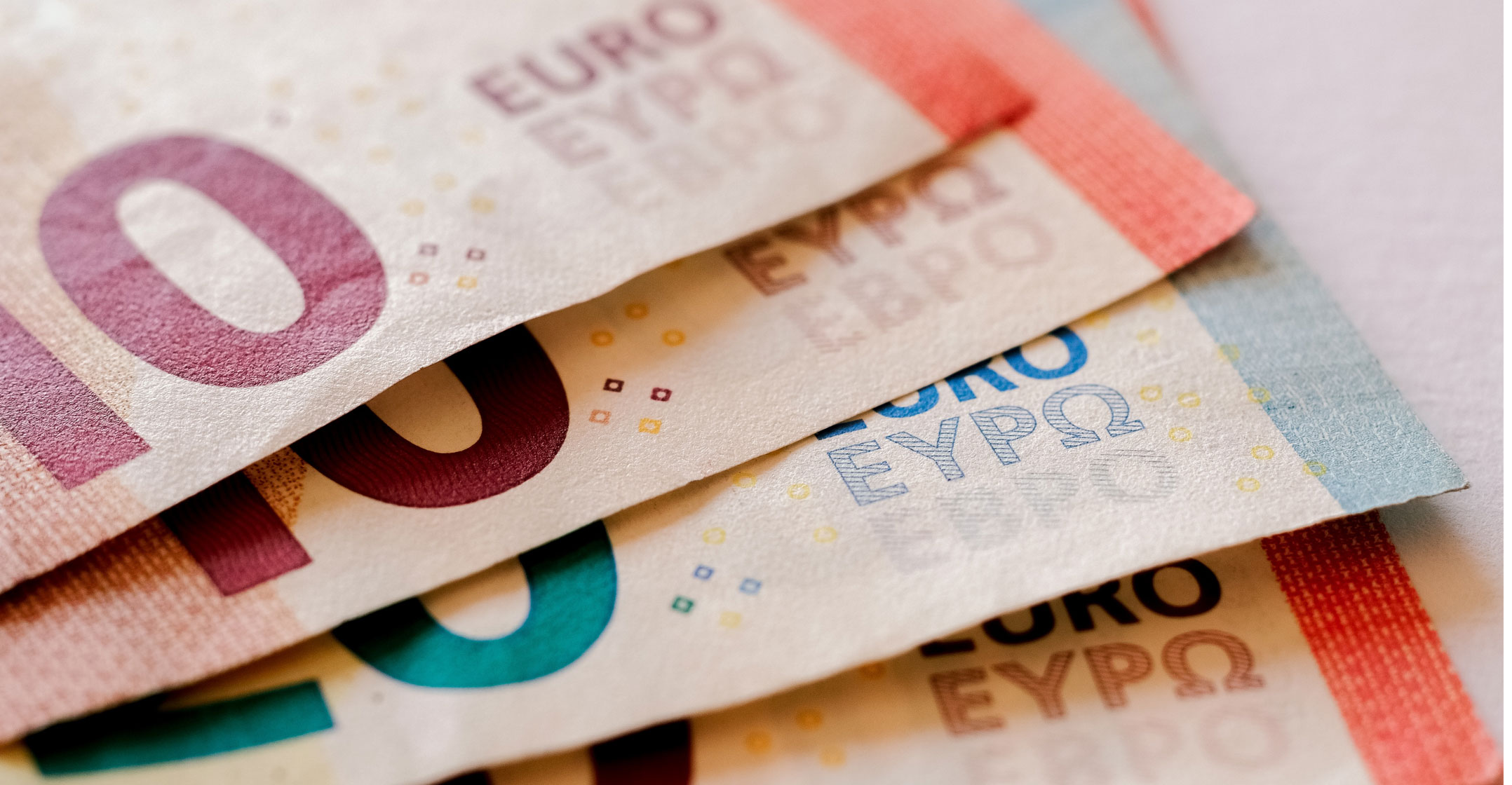
    It’s easier to use a service like Apple Pay or a plastic card than traditional money. But there’s an old, pre-digital magic to cash. There’s something of a ritual to counting out bills or to folding them to put in a wallet. There’s also a physical reaction: a 2012 study found that people salivate at the sight of cash because we’re conditioned to feel its attraction. Using cash also increases one’s emotional investment in a purchase. I remember hesitating in a Kathmandu shop that sold traditional tangka paintings: the price seemed too high. So the seller urged me to pay with a credit card. “Easy money, plastic money,” he said. The tangka over my desk at home reminds me of the episode every time I look at it.

    In Germany, where I live, a majority of transactions are still conducted in cash. “One shouldn’t forget that trust in a currency begins with cash,” Carl-Ludwig Thiele, a member of the board at at Germany’s central bank, said in a speech earlier this year. He meant the pre-digital, material quality of cash money. The euro banknotes are a highly visible symbol of the united Europe project, one that gives rise to strong emotions.

    I have no proof that people are hoarding more cash because of an attachment to the retreating physical world, to the kind of ancient convenience that doesn’t require a charged battery or Internet access. But other reasonable explanations have been rejected. It’s intriguing to think that human nature might be rebelling against the technological revolution in this quiet but fundamental way. Perhaps as technology becomes more invasive and aggressive, it will mount more such counterattacks.  — (c) 2017 Bloomberg LP

    Follow TechCentral on Google News Add TechCentral as your preferred source on Google


    Leonid Bershidsky top
    WhatsApp YouTube
    Share. Facebook Twitter LinkedIn WhatsApp Telegram Email Copy Link
    Previous ArticleBitcoin, ether lead cryptocurrency slide
    Next Article Eskom defies logic by threatening renewables

    Related Posts

    18GW in unplanned breakdowns cripple Eskom

    2 November 2021

    Nersa kicks the Karpowership can down the road

    13 September 2021

    If you think South African load shedding is bad, try Zimbabwe’s

    13 September 2021
    Company News
    Powertel, Paratus Zimbabwe switch on new digital highway

    Powertel, Paratus Zimbabwe switch on new digital highway

    3 July 2026
    Mitel Workflow Studio wins global remote-work innovation award

    Mitel Workflow Studio wins global remote-work innovation award

    3 July 2026
    The data sovereignty rules African and EU firms can't ignore - BBD Software

    The data sovereignty rules African and EU firms can’t ignore

    2 July 2026
    Opinion
    The author, Jannie van Zyl

    South Africa’s broadband future is being decided in orbit, not in Pretoria

    30 June 2026
    The author, Pambos Soteriades

    The pivot South Africa’s MVNOs cannot afford to miss

    23 June 2026
    Brazil's online gambling crackdown is a lesson for South Africa

    Brazil’s online gambling crackdown is a lesson for South Africa

    22 June 2026

    Subscribe to Updates

    Get the best South African technology news and analysis delivered to your e-mail inbox every morning.

    Latest Posts
    Powertel, Paratus Zimbabwe switch on new digital highway

    Powertel, Paratus Zimbabwe switch on new digital highway

    3 July 2026
    The AI reckoning arrives at South Africa's universities

    The AI reckoning arrives at South Africa’s universities

    3 July 2026
    Mitel Workflow Studio wins global remote-work innovation award

    Mitel Workflow Studio wins global remote-work innovation award

    3 July 2026
    A degree is no longer enough

    A degree is no longer enough

    3 July 2026
    © 2009 - 2026 NewsCentral Media
    Built and maintained by Chronon
    • Cookie policy (ZA)
    • TechCentral – privacy and Popia

    Type above and press Enter to search. Press Esc to cancel.

    Manage consent

    TechCentral uses cookies to enhance its offerings. Consenting to these technologies allows us to serve you better. Not consenting or withdrawing consent may adversely affect certain features and functions of the website.

    Functional Always active
    The technical storage or access is strictly necessary for the legitimate purpose of enabling the use of a specific service explicitly requested by the subscriber or user, or for the sole purpose of carrying out the transmission of a communication over an electronic communications network.
    Preferences
    The technical storage or access is necessary for the legitimate purpose of storing preferences that are not requested by the subscriber or user.
    Statistics
    The technical storage or access that is used exclusively for statistical purposes. The technical storage or access that is used exclusively for anonymous statistical purposes. Without a subpoena, voluntary compliance on the part of your Internet Service Provider, or additional records from a third party, information stored or retrieved for this purpose alone cannot usually be used to identify you.
    Marketing
    The technical storage or access is required to create user profiles to send advertising, or to track the user on a website or across several websites for similar marketing purposes.
    • Manage options
    • Manage services
    • Manage {vendor_count} vendors
    • Read more about these purposes
    View preferences
    • {title}
    • {title}
    • {title}