Close Menu
TechCentralTechCentral

    Subscribe to the newsletter

    Get the best South African technology news and analysis delivered to your e-mail inbox every morning.

    Facebook X (Twitter) YouTube LinkedIn
    WhatsApp Facebook X (Twitter) LinkedIn YouTube
    TechCentralTechCentral
    • News
      Eskom lifts load reduction for 140 000 customers

      Eskom lifts load reduction for 140 000 customers

      8 February 2026
      AI chatbots are coming to Apple CarPlay

      AI chatbots are coming to Apple CarPlay

      8 February 2026
      South Africa's stablecoin silence is becoming a policy failure

      South Africa’s stablecoin silence is becoming a policy failure

      6 February 2026
      Every electric car you can buy in South Africa in early 2026, ranked by price

      Every electric car you can buy in South Africa in early 2026, ranked by price

      6 February 2026
      From stocks to crypto, markets reel as AI doubts grow

      From stocks to crypto, markets reel as AI doubts grow

      6 February 2026
    • World
      Crypto firm accidentally sends R700-billion in bitcoin to its users

      Crypto firm accidentally sends R700-billion in bitcoin to its users

      8 February 2026
      AI won't replace software, says Nvidia CEO amid market rout - Jensen Huang

      AI won’t replace software, says Nvidia CEO amid market rout

      4 February 2026
      Apple acquires audio AI start-up Q.ai

      Apple acquires audio AI start-up Q.ai

      30 January 2026
      SpaceX IPO may be largest in history

      SpaceX IPO may be largest in history

      28 January 2026
      Nvidia throws AI at the weather

      Nvidia throws AI at weather forecasting

      27 January 2026
    • In-depth
      How liberalisation is rewiring South Africa's power sector

      How liberalisation is rewiring South Africa’s power sector

      21 January 2026
      The top-performing South African tech shares of 2025

      The top-performing South African tech shares of 2025

      12 January 2026
      Digital authoritarianism grows as African states normalise internet blackouts

      Digital authoritarianism grows as African states normalise internet blackouts

      19 December 2025
      TechCentral's South African Newsmakers of 2025

      TechCentral’s South African Newsmakers of 2025

      18 December 2025
      Black Friday goes digital in South Africa as online spending surges to record high

      Black Friday goes digital in South Africa as online spending surges to record high

      4 December 2025
    • TCS
      TCS+ | How Cloud On Demand is helping SA businesses succeed in the cloud - Xhenia Rhode, Dion Kalicharan

      TCS+ | Cloud On Demand and Consnet: inside a real-world AWS partner success story

      30 January 2026
      Watts & Wheels S1E3: 'BYD's Corolla Cross challenger'

      Watts & Wheels S1E3: ‘BYD’s Corolla Cross challenger’

      30 January 2026
      Watts & Wheels S1E3: 'BYD's Corolla Cross challenger'

      Watts & Wheels S1E2: ‘China attacks, BMW digs in, Toyota’s sublime supercar’

      23 January 2026

      TCS+ | Why cybersecurity is becoming a competitive advantage for SA businesses

      20 January 2026
      Watts & Wheels S1E3: 'BYD's Corolla Cross challenger'

      Watts & Wheels: S1E1 – ‘William, Prince of Wheels’

      8 January 2026
    • Opinion
      South Africa's skills advantage is being overlooked at home - Richard Firth

      South Africa’s skills advantage is being overlooked at home

      29 January 2026
      Why Elon Musk's Starlink is a 'hard no' for me - Songezo Zibi

      Why Elon Musk’s Starlink is a ‘hard no’ for me

      26 January 2026
      South Africa's new fibre broadband battle - Duncan McLeod

      South Africa’s new fibre broadband battle

      20 January 2026
      AI moves from pilots to production in South African companies - Nazia Pillay SAP

      AI moves from pilots to production in South African companies

      20 January 2026
      South Africa's new fibre broadband battle - Duncan McLeod

      ANC’s attack on Solly Malatsi shows how BEE dogma trumps economic reality

      14 December 2025
    • Company Hubs
      • Africa Data Centres
      • AfriGIS
      • Altron Digital Business
      • Altron Document Solutions
      • Altron Group
      • Arctic Wolf
      • AvertITD
      • Braintree
      • CallMiner
      • CambriLearn
      • CYBER1 Solutions
      • Digicloud Africa
      • Digimune
      • Domains.co.za
      • ESET
      • Euphoria Telecom
      • Incredible Business
      • iONLINE
      • IQbusiness
      • Iris Network Systems
      • LSD Open
      • NEC XON
      • Netstar
      • Network Platforms
      • Next DLP
      • Ovations
      • Paracon
      • Paratus
      • Q-KON
      • SevenC
      • SkyWire
      • Solid8 Technologies
      • Telit Cinterion
      • Tenable
      • Vertiv
      • Videri Digital
      • Vodacom Business
      • Wipro
      • Workday
      • XLink
    • Sections
      • AI and machine learning
      • Banking
      • Broadcasting and Media
      • Cloud services
      • Contact centres and CX
      • Cryptocurrencies
      • Education and skills
      • Electronics and hardware
      • Energy and sustainability
      • Enterprise software
      • Financial services
      • Information security
      • Internet and connectivity
      • Internet of Things
      • Investment
      • IT services
      • Lifestyle
      • Motoring
      • Public sector
      • Retail and e-commerce
      • Satellite communications
      • Science
      • SMEs and start-ups
      • Social media
      • Talent and leadership
      • Telecoms
    • Events
    • Advertise
    TechCentralTechCentral
    Home » Opinion » Alison Gillwald » Digital equality: South Africa still has a long way to go

    Digital equality: South Africa still has a long way to go

    By Alison Gillwald7 March 2020
    Twitter LinkedIn Facebook WhatsApp Email Telegram Copy Link
    News Alerts
    WhatsApp
    The author, Alison Gillwald, says free “lifeline” data won’t reduce digital inequality

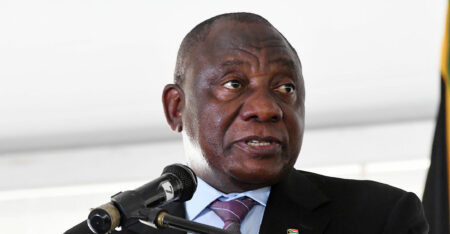
    In Cyril Ramaphosa’s state of the nation address earlier this month, the president highlighted the fact that the Competition Commission had instructed mobile operators to adjust their pricing in a bid to reduce digital inequality in the country. He referred positively to interventions aimed at mitigating inequality.

    These are likely to have mixed outcomes.

    The commission’s decision to force mobile operators to remove the “poverty premium” on low-denomination, prepaid mobile bundles has been widely welcomed as something the telecommunications regulator should have done years ago.

    A large number of the beneficiaries of the lifeline service who are capable of paying for the service will get the welfare benefit

    The “poverty premium” refers to the fact that poor people pay more than wealthier people for data. This happens in two ways. Firstly, prepaid data in South Africa costs way more than post-paid or contract data per megabyte. Logically, the price for it should be lower because it’s being paid up front, but it isn’t. Secondly, the price of low-volume, small-value bundles, typically purchased by poor people, compared with the high-volume packages, usually purchased by wealthier users, are highly discounted.

    Even if this may, arguably, inhibit the kind of product innovation that brought people online by offering micro-products, the intervention in the market is warranted on public interest grounds. And it is likely to have the intended outcome of making data more affordable for the poor.

    The president also referred to the free “lifeline” data package — a certain amount of data daily at no cost, proposed by the commission. The premise for this is much like the free basic water policy in the country which gives household 6 000l before charges kick in.

    ‘Free data for all’

    The “lifeline” package was hailed on public talk shows as “free data for all”.

    But adopting this in the far more complex telecoms infrastructure market is likely to produce some unintended consequences. In particular, it won’t reduce digital inequality. In practice the “free” lifeline data package will be given to everyone with a prepaid Sim card (85% of the data market) as the administrative costs of identifying the needy to provide the subsidy to is too high.

    This will produce a classical free-rider problem. A large number of the beneficiaries of the lifeline service who are capable of paying for the service will get the welfare benefit.

    There is also considerable evidence that the costs of mandatory user subsidies are transferred to end users’ prices. Levies like this are not paid from operator surpluses. Instead, they are built into the cost of services. Unless tightly monitored and regulated, this in turn drives up the price of services for users.

    From a public interest policy perspective, cross-subsidisation is justifiable if the subsidy and cost allocation is transparent. And if the increased cost being paid by those online, for example, is used to subsidise the extension of networks or services to get the rest of the population online. This is what happened in classical universal service regulation to get networks extended into remote areas.

    But the lifeline subsidy does not bring more people online. It subsidises the cost of data for those who are already online — rich and poor. The lifeline subsidy may enable those who are already connected through smart devices to use data more optimally to enjoy the benefits of being connected, such as financial inclusion, information gathering and job-seeking, but it does not assist with bringing the 50% of South Africans who are offline, online.

    There are alternative ways of subsidising data and bringing people online. One example is providing free public Wi-Fi at all public buildings

    The commission focused on the negative impact of data prices on consumers. And there is certainly evidence that price affects usage — in South Africa usage is way below the average in similar-sized economies with less inequitable income distribution.

    In the Research ICT Africa After Access 2018 survey of 10 African countries, including South Africa, non-users said that the price of smart devices was at primary reason for people not being connected. For those that were connected the cost of data was identified as the reason for their sub-optimal use.

    This shows that reducing data prices without attending to the cost of the devices (and other problems once people are connected, such as the lack of digital literacy) does not redress digital inequality.

    Mirrored online

    There are other reasons, too. Analysis of the 2018 survey shows that access and use of the Internet, across all countries, including South Africa, is determined by education and the corollary indicator of income. The survey showed that education, income and locational inequalities are simply being mirrored online — arguably amplified — as the economic and social value of being digitally networked increases exponentially.

    There are alternative ways of subsidising data and bringing people online. One example is providing free public Wi-Fi at all public buildings. This would enable those who were unable to pay for airtime to go online by accessing a public Wi-Fi point. This was proposed in the South African broadband plan, SA Connect, but was never implemented in the manner and scale intended.

    With successful Wi-Fi initiatives at city level, price-sensitive users are increasingly supplementing the purchases of their low-denomination bundles with public Wi-Fi. In the 2018 After Access survey, in South Africa 32% of Internet users indicated that they used public Wi-Fi at least once a month.

    Policy needs to address the underlying human development challenges if people are to be equitably brought online

    Of course, those who could afford data services would also be able to access the free Wi-Fi. But they wouldn’t get in automatically. They would need to make the effort of getting to a free public access point, which price-sensitive users do.

    Another option is zero-rating public interest services. “Zero-rating” is when no price is charged for the data used to access and use an application or website. This is proposed by the commission for government, educational and other public interest websites.

    But this is sub-optimal. Ideally, zero rating such sites should be in addition to some free public Wi-Fi. The poor should also be afforded choice and the benefits of access to the open Internet.

    Policy needs to address the underlying human development challenges if people are to be equitably brought online as well as enabled to shift from meagre passive consumption, to transaction-cost-reducing online activities, and even to enhancing their well-being and livelihoods.

    Policies that don’t address these challenges will simply perpetuate existing inequalities.The Conversation

    • Written by Alison Gillwald, adjunct professor, Nelson Mandela School of Public Governance, University of Cape Town
    • This article is republished from The Conversation under a Creative Commons licence


    Alison Gillwald Competition Commission Cyril Ramaphosa top
    WhatsApp YouTube Follow on Google News Add as preferred source on Google
    Share. Facebook Twitter LinkedIn WhatsApp Telegram Email Copy Link
    Previous ArticleTech festival SXSW is cancelled
    Next Article Coronavirus: Second South African case confirmed

    Related Posts

    BMW South Africa warns EV policy paralysis is stalling investment - Peter van Binsbergen

    BMW South Africa warns EV policy paralysis is stalling investment

    29 January 2026
    Digital IDs will launch before year-end, government says - Maropene Ramokgopa

    Digital IDs will launch before year-end, government says

    23 January 2026
    Tribunal clears Vumatel's takeover of Herotel - with conditions

    Tribunal clears Vumatel’s takeover of Herotel – with conditions

    23 December 2025
    Company News
    The skills gap is a thinking gap: why South African employers can't find problem solvers

    The skills gap is a thinking gap: why SA employers can’t find problem solvers

    6 February 2026
    Vox Kiwi Wireless: fibre-like broadband for South African homes

    Vox Kiwi Wireless: fibre-like broadband for South African homes

    5 February 2026
    NEC XON achieves an African first with full Fortinet accreditation - Ian Kruger

    NEC XON achieves an African first with full Fortinet accreditation

    5 February 2026
    Opinion
    South Africa's skills advantage is being overlooked at home - Richard Firth

    South Africa’s skills advantage is being overlooked at home

    29 January 2026
    Why Elon Musk's Starlink is a 'hard no' for me - Songezo Zibi

    Why Elon Musk’s Starlink is a ‘hard no’ for me

    26 January 2026
    South Africa's new fibre broadband battle - Duncan McLeod

    South Africa’s new fibre broadband battle

    20 January 2026

    Subscribe to Updates

    Get the best South African technology news and analysis delivered to your e-mail inbox every morning.

    Latest Posts
    Eskom lifts load reduction for 140 000 customers

    Eskom lifts load reduction for 140 000 customers

    8 February 2026
    Crypto firm accidentally sends R700-billion in bitcoin to its users

    Crypto firm accidentally sends R700-billion in bitcoin to its users

    8 February 2026
    AI chatbots are coming to Apple CarPlay

    AI chatbots are coming to Apple CarPlay

    8 February 2026
    South Africa's stablecoin silence is becoming a policy failure

    South Africa’s stablecoin silence is becoming a policy failure

    6 February 2026
    © 2009 - 2026 NewsCentral Media
    • Cookie policy (ZA)
    • TechCentral – privacy and Popia

    Type above and press Enter to search. Press Esc to cancel.

    Manage consent

    TechCentral uses cookies to enhance its offerings. Consenting to these technologies allows us to serve you better. Not consenting or withdrawing consent may adversely affect certain features and functions of the website.

    Functional Always active
    The technical storage or access is strictly necessary for the legitimate purpose of enabling the use of a specific service explicitly requested by the subscriber or user, or for the sole purpose of carrying out the transmission of a communication over an electronic communications network.
    Preferences
    The technical storage or access is necessary for the legitimate purpose of storing preferences that are not requested by the subscriber or user.
    Statistics
    The technical storage or access that is used exclusively for statistical purposes. The technical storage or access that is used exclusively for anonymous statistical purposes. Without a subpoena, voluntary compliance on the part of your Internet Service Provider, or additional records from a third party, information stored or retrieved for this purpose alone cannot usually be used to identify you.
    Marketing
    The technical storage or access is required to create user profiles to send advertising, or to track the user on a website or across several websites for similar marketing purposes.
    • Manage options
    • Manage services
    • Manage {vendor_count} vendors
    • Read more about these purposes
    View preferences
    • {title}
    • {title}
    • {title}