
Close Menu
TechCentralTechCentral

    Subscribe to the newsletter

    Get the best South African technology news and analysis delivered to your e-mail inbox every morning.

    Facebook X (Twitter) YouTube LinkedIn
    WhatsApp Facebook X (Twitter) LinkedIn YouTube
    TechCentralTechCentral
    • News
      Luno cutting a fifth of its workforce - South Africa not spared

      Luno cutting a fifth of its workforce – South Africa not spared

      28 July 2026
      The tech master plan for the Cape Winelands Airport

      The tech master plan for the Cape Winelands Airport

      28 July 2026
      Canal+ concedes MultiChoice turnaround is not won - Maxime Saada

      Canal+ concedes MultiChoice turnaround is not won

      28 July 2026
      Canal+ bought out Showmax minority shareholder before killing it

      Canal+ bought out Showmax minority shareholder before killing it

      28 July 2026
      DStv's subscriber count has gone dark

      DStv’s subscriber count has gone dark

      28 July 2026
    • World
      Meta AI will now tell parents if their teen is in crisis

      Meta AI will now tell parents if their teen is in crisis

      17 July 2026
      IBM shares crash 25% as AI upends software spending - Arvind Krishna

      IBM shares crash 25% as AI upends software spending

      15 July 2026
      Jony Ive's first OpenAI device: an AI smart speaker - Jony Ive and Sam Altman

      Jony Ive’s first OpenAI device: an AI smart speaker

      15 July 2026
      Stripe, Advent in talks to buy PayPal for $53-billion

      Stripe, Advent in talks to buy PayPal for $53-billion

      15 July 2026
      Memory crisis sends smartphone market into steep decline

      Memory crisis sends smartphone market into steep decline

      13 July 2026
    • In-depth
      The plan to stop AI from breaking the world - Google DeepMind CEO Demis Hassabis. Image: John Sears

      The plan to stop AI from breaking the world

      16 July 2026
      The internet has a Strait of Hormuz problem

      The internet has a Strait of Hormuz problem

      15 July 2026
      AI boom sparks rally, frenzy and fear

      AI boom sparks rally, frenzy and fear

      11 June 2026
      Every plug-in hybrid on sale in South Africa, ranked by price - Lamborghini Temerario

      Every plug-in hybrid on sale in South Africa, ranked by price

      7 June 2026
      What Wi-Fi 8 will mean for wireless networks

      What Wi-Fi 8 will mean for wireless networks

      1 June 2026
    • TCS
      TCS+ | A smarter approach to cloud for South African businesses - Joel Chacko and Jonathan Oaker

      TCS+ | A smarter approach to cloud for South African businesses

      28 July 2026
      TCS | How Optasia lends billions to people banks can't see - Salvador Anglada

      TCS | How Optasia lends billions to people banks can’t see

      23 July 2026
      The rands-and-cents case for electric trucks - William Kelly Watts & Wheels with Wills

      The rands-and-cents case for electric trucks

      20 July 2026
      Watts & Wheels S1E7: 'Ferrari's EV breaks the internet'

      Watts & Wheels S1E7: ‘Ferrari’s EV breaks the internet’

      8 July 2026
      TCS | Pick n Pay's Enrico Ferigolli on Penny, the AI that shops for you

      TCS | Pick n Pay’s Enrico Ferigolli on Penny, the AI that shops for you

      2 July 2026
    • Opinion
      Selling vapour is corporate suicide in slow motion - Jannie van Zyl

      Selling vapour is corporate suicide in slow motion

      16 July 2026
      Brazil's online gambling crackdown is a lesson for South Africa

      How Amazon outmanoeuvred Starlink in South Africa

      15 July 2026
      The Popia problem with agentic AI - Herman Haasbroek

      The Popia problem with agentic AI

      14 July 2026
      The author, Fanie van Rooyen

      South Africa can still catch the AI wave – here’s how

      7 July 2026
      The author, Fanie van Rooyen

      The AI utopia South Africa can’t afford

      1 July 2026
    • Company Hubs
      • 1Stream
      • Africa Data Centres
      • AfriGIS
      • Altron Digital Business
      • Altron Document Solutions
      • Altron Group
      • Arctic Wolf
      • Ascent Technology
      • AvertITD
      • BBD
      • Braintree
      • CallMiner
      • CambriLearn
      • CM Telecom
      • Contactable
      • CYBER1 Solutions
      • Digicloud Africa
      • Digimune
      • Domains.co.za
      • ESET
      • Euphoria Telecom
      • HOSTAFRICA
      • Incredible Business
      • iONLINE
      • IQbusiness
      • Iris Network Systems
      • Kaspersky
      • LSD Open
      • Mitel
      • NEC XON
      • Netstar
      • Network Platforms
      • Next DLP
      • Ovations
      • Paracon
      • Paratus
      • Q-KON
      • SevenC
      • SkyWire
      • Solid8 Technologies
      • Telit Cinterion
      • Telviva
      • Tenable
      • Vertiv
      • Videri Digital
      • Vodacom Business
      • Vox
      • Wipro
      • Workday
      • XLink
    • Sections
      • AI and machine learning
      • Banking
      • Broadcasting and Media
      • Cloud services
      • Contact centres and CX
      • Cryptocurrencies
      • Education and skills
      • Electronics and hardware
      • Energy and sustainability
      • Enterprise software
      • Financial services
      • HealthTech
      • Information security
      • Internet and connectivity
      • Internet of Things
      • Investment
      • IT services
      • Lifestyle
      • Policy and regulation
      • Public sector
      • Retail and e-commerce
      • Satellite communications
      • Science
      • SMEs and start-ups
      • Social media
      • Talent and leadership
      • Telecoms
      • Watts & Wheels
    • Events
    • Advertise
    TechCentralTechCentral
    Home » Sections » Energy and sustainability » Multilateral wheeling will define the next phase of South Africa’s energy transition

    Multilateral wheeling will define the next phase of South Africa’s energy transition

    For independent power producers, grid access on paper does not automatically translate into real-world access.
    By Gerjo Hoffman2 March 2026
    Twitter LinkedIn Facebook WhatsApp Email Telegram Copy Link
    News Alerts
    WhatsApp
    Multilateral wheeling could transform South Africa's electricity market - Gerjo Hoffman
    The author, Open Access Energy’s Gerjo Hoffman

    South Africa’s energy transition is entering an exciting new chapter. The key question is whether the market can successfully adopt and implement the new rules.

    Regulatory reform has opened the electricity grid to private participation, marking a significant shift in how power can be generated and traded.

    But for independent power producers (IPPs), access on paper does not automatically translate into real-world access. The ability to reach multiple buyers, transact efficiently and get paid accurately is fast becoming the next defining challenge.

    To expand market access, IPPs will need to shift towards one-to-many trading models

    IPPs are now firmly embedded in South Africa’s energy future, and selling power to a single off-taker works well for mining houses and large industrial customers. However, this one-to-one model is reaching saturation: around 80% of the 5.7GW currently under construction is already contracted, leaving the remaining 6.37GW of projects in development at least 24 to 36 months from delivery and increasingly constrained by grid capacity, with no remaining capacity in key provinces.

    To expand market access and serve smaller-demand customers, IPPs will need to shift towards one-to-many trading models, overcoming the operational, commercial and settlement complexities that have so far limited broader participation.

    Multilateral wheeling

    This is where multilateral wheeling comes into play. By allowing a generator to sell electricity to many buyers through existing grid infrastructure, multilateral wheeling promises to expand market access and inject much-needed flexibility into electricity trading. The idea itself is not new. What is new is the urgency to make it function at scale and work reliably.

    At its core, multilateral wheeling reshapes how electricity is traded. Instead of power flowing through rigid, one-to-one contracts, supply and demand can connect dynamically across the grid.

    However, the viability of this model depends less on policy permission and more on execution. Without the right operational foundations, complexity quickly becomes a barrier rather than a driver of breakthroughs.

    Read: Solar, wind and smart grids – the tech transforming SA’s mining sector

    Accuracy is one of the biggest fault lines. Effective wheeling depends on precise matching of generation and consumption, trusted metering data and transparent reconciliation across multiple parties. When these processes are inconsistent, manual or opaque, risk increases for producers, buyers and the system as a whole.

    And risk erodes confidence.

    Confidence is the invisible infrastructure of a functioning electricity market. Buyers need certainty that the power they contract will be delivered. Producers need assurance that the settlement will be accurate and timely. Without this shared confidence, participation stalls and scale remains elusive.
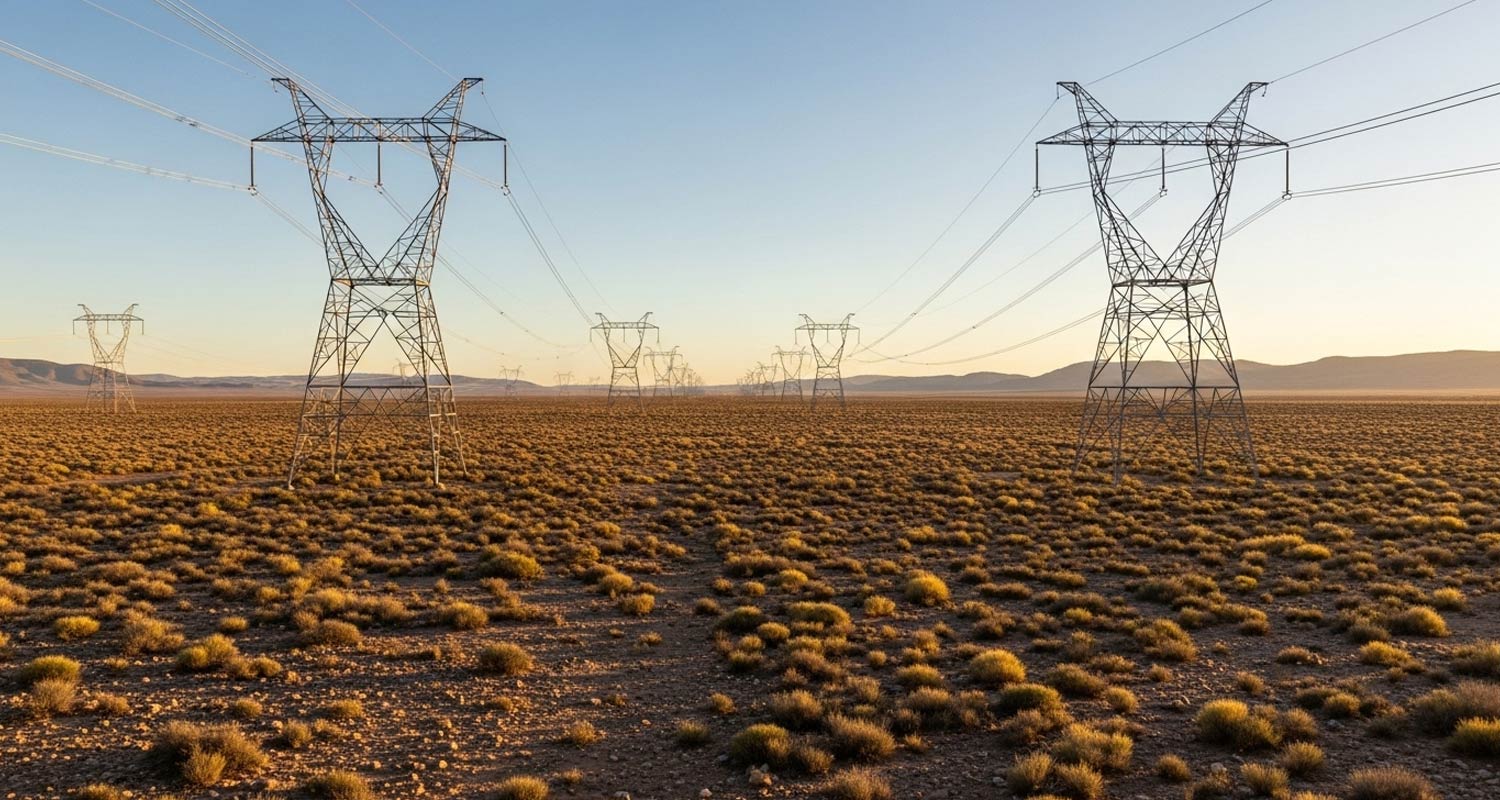
    electricity pylons

    This is why standardisation matters. In a fragmented trading environment, inconsistent commercial terms and unclear settlement mechanisms slow decisions and increase friction. Standardised approaches create transparency, enable comparison and lower the threshold for engaging with multiple counterparties.

    As corporates, industrial users and municipalities increasingly seek energy solutions that are not only alternative but also more affordable, IPPs need practical ways to diversify revenue and reduce dependence on single off-takers.

    Multilateral wheeling offers that pathway, but only if it is underpinned by systems that support trust, reliability and repeatability.

    The next phase is about translating reform into real transactions

    Policy reform has laid the foundation by opening access to the grid. The next phase is about translating reform into real transactions. That requires an ecosystem built for accuracy, transparency and confidence at every stage of the trade.

    When executed well, multilateral wheeling can unlock greater choice for both producers and buyers. It can support more competitive procurement, deepen market liquidity and accelerate the transition to a more resilient energy system.

    Read: Batteries move to the centre of South Africa’s energy transition

    Ultimately, South Africa’s electricity future will be shaped not only by who can generate power, but by how confidently that power can be traded. Building that confidence is no longer optional; it is the difference between reform that looks good on paper and a market that actually works.

    We must embrace multilateral wheeling underpinned by accurate, standardised trading processes to expand market access and build confidence in every transaction.

    • The author, Gerjo Hoffman, is CEO of Open Access Energy

    Get breaking news from TechCentral on WhatsApp. Sign up here.

    Follow TechCentral on Google News Add TechCentral as your preferred source on Google


    Gerjo Hoffman Open Access Energy
    WhatsApp YouTube
    Share. Facebook Twitter LinkedIn WhatsApp Telegram Email Copy Link
    Previous ArticleMTN Ghana delivers the goods as West Africa fires on all cylinders
    Next Article Policy at the edge: PCF’s AAA+ vouchers deliver predictable data spend

    Related Posts

    Eskom

    South African AI energy start-up in R32m funding round

    17 June 2025
    Company News
    Neill Nortje appointed as country manager of Paratus Zambia

    Neill Nortje appointed as country manager of Paratus Zambia

    28 July 2026
    iONLINE launches eSim for IoT to keep device fleets connected anywhere

    iONLINE launches eSim for IoT to keep device fleets connected anywhere

    28 July 2026
    Cybercriminals are hacking trust

    Cybercriminals are hacking trust

    27 July 2026
    Opinion
    Selling vapour is corporate suicide in slow motion - Jannie van Zyl

    Selling vapour is corporate suicide in slow motion

    16 July 2026
    Brazil's online gambling crackdown is a lesson for South Africa

    How Amazon outmanoeuvred Starlink in South Africa

    15 July 2026
    The Popia problem with agentic AI - Herman Haasbroek

    The Popia problem with agentic AI

    14 July 2026

    Subscribe to Updates

    Get the best South African technology news and analysis delivered to your e-mail inbox every morning.

    Latest Posts
    Luno cutting a fifth of its workforce - South Africa not spared

    Luno cutting a fifth of its workforce – South Africa not spared

    28 July 2026
    The tech master plan for the Cape Winelands Airport

    The tech master plan for the Cape Winelands Airport

    28 July 2026
    TCS+ | A smarter approach to cloud for South African businesses - Joel Chacko and Jonathan Oaker

    TCS+ | A smarter approach to cloud for South African businesses

    28 July 2026
    Neill Nortje appointed as country manager of Paratus Zambia

    Neill Nortje appointed as country manager of Paratus Zambia

    28 July 2026
    © 2009 - 2026 NewsCentral Media
    Built and maintained by Chronon
    • Cookie policy (ZA)
    • TechCentral – privacy and Popia

    Type above and press Enter to search. Press Esc to cancel.

    Manage consent

    TechCentral uses cookies to enhance its offerings. Consenting to these technologies allows us to serve you better. Not consenting or withdrawing consent may adversely affect certain features and functions of the website.

    Functional Always active
    The technical storage or access is strictly necessary for the legitimate purpose of enabling the use of a specific service explicitly requested by the subscriber or user, or for the sole purpose of carrying out the transmission of a communication over an electronic communications network.
    Preferences
    The technical storage or access is necessary for the legitimate purpose of storing preferences that are not requested by the subscriber or user.
    Statistics
    The technical storage or access that is used exclusively for statistical purposes. The technical storage or access that is used exclusively for anonymous statistical purposes. Without a subpoena, voluntary compliance on the part of your Internet Service Provider, or additional records from a third party, information stored or retrieved for this purpose alone cannot usually be used to identify you.
    Marketing
    The technical storage or access is required to create user profiles to send advertising, or to track the user on a website or across several websites for similar marketing purposes.
    • Manage options
    • Manage services
    • Manage {vendor_count} vendors
    • Read more about these purposes
    View preferences
    • {title}
    • {title}
    • {title}