Close Menu
TechCentralTechCentral

    Subscribe to the newsletter

    Get the best South African technology news and analysis delivered to your e-mail inbox every morning.

    Facebook X (Twitter) YouTube LinkedIn
    WhatsApp Facebook X (Twitter) LinkedIn YouTube
    TechCentralTechCentral
    • News
      Rogue AI agents are already loose inside big companies

      Rogue AI agents are already loose inside big companies

      23 September 2026
      Labat now says the law bars it from paying its maiden dividend

      Labat now says the law bars it from paying its maiden dividend

      23 September 2026

      Africa’s start-ups are building on Chinese AI

      23 September 2026
      London's IPO drought could be broken by an African fintech - Airtel Money

      London’s IPO drought could be broken by an African fintech

      23 September 2026
      Altron earnings climb as platforms carry the group

      Altron earnings climb as platforms carry the group

      23 September 2026
    • World
      Anthropic weighs new model launch to blunt OpenAI's Astra surge - Anthropic CEO Dario Amodei and OpenAI CEO Sam Altman

      Anthropic weighs new model launch to blunt OpenAI’s Astra surge

      21 September 2026
      Hackers hack hackers: ShinyHunters seizes cl0p's dark web site

      Hackers hack hackers as dark web feud erupts

      21 September 2026
      Film piracy malware is reaching corporate machines

      Film piracy malware is reaching corporate machines

      21 September 2026
      Crypto's big bet fails as US senate sinks Clarity Act

      Crypto’s big bet fails as US senate sinks Clarity Act

      16 September 2026
      'This is not circular': Jensen Huang defends $3.5-billion MediaTek deal

      ‘This is not circular’: Jensen Huang defends $3.5-billion MediaTek deal

      2 September 2026
    • In-depth
      Meta to the AI industry: slow down without us - Mark Zuckerberg

      Meta to the AI industry: slow down without us

      16 September 2026
      Google DeepMind CEO Demis Hassabis. Image: John Sears

      The plan to stop AI from breaking the world

      16 July 2026
      The internet has a Strait of Hormuz problem

      The internet has a Strait of Hormuz problem

      15 July 2026
      AI boom sparks rally, frenzy and fear

      AI boom sparks rally, frenzy and fear

      11 June 2026
      Every plug-in hybrid on sale in South Africa, ranked by price - Lamborghini Temerario

      Every plug-in hybrid on sale in South Africa, ranked by price

      7 June 2026
    • TCS
      TCS | Octotel's Trevor van Zyl on the fibre merger question

      TCS | Octotel’s Trevor van Zyl on the MetroFibre merger question

      16 September 2026
      Meet the CIO | Shoprite's Chris Shortt on what a supermarket becomes

      Meet the CIO | Shoprite’s Chris Shortt on what a supermarket becomes

      9 September 2026
      Rubicon's EV charging network is profitable - and growing fast - Watts & Wheels

      Rubicon’s EV charging network is profitable – and growing fast

      8 September 2026
      Winstone Jordaan on building a national EV charging network

      Winstone Jordaan on building a national EV charging network

      2 September 2026
      Watts & Wheels S1E8: 'Tesla lands in Africa, just not here'

      Watts & Wheels S1E8: ‘Tesla lands in Africa, just not here’

      24 August 2026
    • Opinion
      Regulating AI: apply the laws we have first - Dirk de Vos

      Regulating AI: apply the laws we have first

      21 September 2026
      The end is nigh, and the shares go on sale in October - Duncan McLeod

      The end is nigh, and the shares go on sale in October

      14 September 2026
      The fragile joint in the Capitec machine - Pambos Soteriades

      The R197-billion market the banks can’t reach

      25 August 2026
      South African tech's compounding debt problem - Jannie van Zyl

      Management consulting as we know it is over

      21 August 2026
      South African tech's compounding debt problem - Jannie van Zyl

      The most dangerous customer is the quiet one

      10 August 2026
    • Company Hubs
      • 1Stream
      • Africa Data Centres
      • AfriGIS
      • Altron Digital Business
      • Altron Document Solutions
      • Altron Group
      • Arctic Wolf
      • Ascent Technology
      • AvertITD
      • BBD
      • Braintree
      • CallMiner
      • CambriLearn
      • CM.com
      • Contactable
      • CYBER1 Solutions
      • Digicloud Africa
      • Digimune
      • Domains.co.za
      • ESET
      • Euphoria Telecom
      • HOSTAFRICA
      • Incredible Business
      • iONLINE
      • IQbusiness
      • Iris Network Systems
      • Kaspersky
      • LSD Open
      • Mitel
      • NEC XON
      • Netstar
      • Network Platforms
      • Next DLP
      • Ovations
      • Paracon
      • Paratus
      • Q-KON
      • SevenC
      • SkyWire
      • Solid8 Technologies
      • Telit Cinterion
      • Telviva
      • Tenable
      • Vertiv
      • Videri Digital
      • Vodacom Business
      • Vox
      • Wipro
      • Workday
      • XLink
    • Sections
      • AI and machine learning
      • Banking
      • Broadcasting and Media
      • Cloud services
      • Contact centres and CX
      • Cryptocurrencies
      • Education and skills
      • Electronics and hardware
      • Energy and sustainability
      • Enterprise software
      • Financial services
      • HealthTech
      • Information security
      • Internet and connectivity
      • Internet of Things
      • Investment
      • IT services
      • Lifestyle
      • Policy and regulation
      • Public sector
      • Retail and e-commerce
      • Satellite communications
      • Science
      • SMEs and start-ups
      • Social media
      • Talent and leadership
      • Telecoms
      • Watts & Wheels
    • Events
    • Advertise
    TechCentralTechCentral
    Home » Sections » Energy and sustainability » Batteries to move to the centre of South Africa’s energy transition
    Batteries to move to the centre of South Africa's energy transition
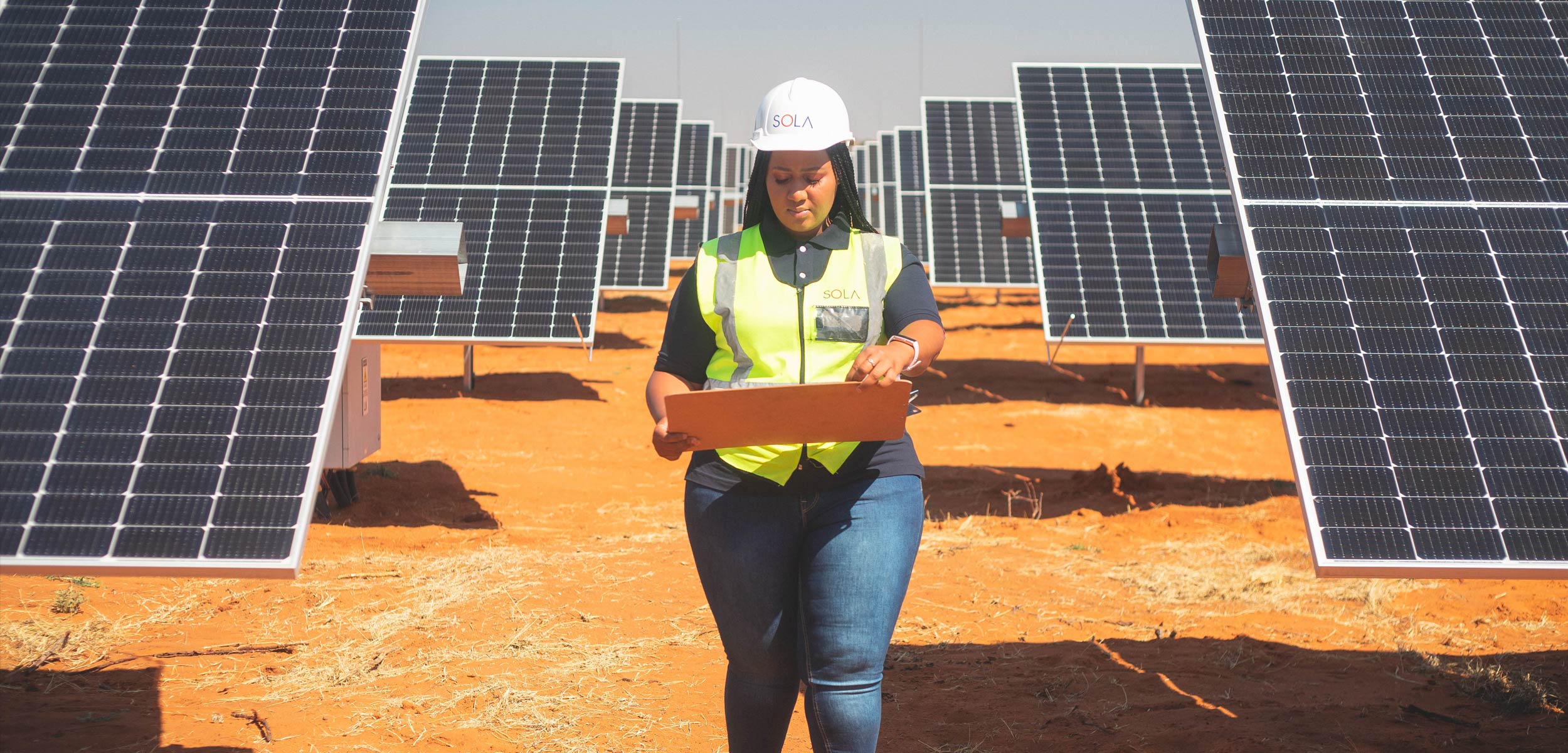
    Image: Sola Group

    Batteries to move to the centre of South Africa’s energy transition

    By Amy Musgrave22 January 2026

    South Africa’s renewable energy sector is entering a new phase in 2026. According to industry players, one of the emerging trends is how wind and solar are combined and stored.

    Falling battery costs, escalating electricity tariffs and mounting grid constraints are reshaping both public procurement and private investment strategies, pushing energy storage from the margins to the centre of the country’s power transition.

    The South African Photovoltaic Industry Association (Sapvia) views the growth of hybrid projects as a sign of the sector maturing. These projects combine two or more green energy sources, such as solar, wind or hydro, with energy storage (batteries) and, sometimes, backup generators.

    These projects set a precedent for future bid windows to prioritise firm capacity over simple energy delivery

    They provide a stable, dependable power supply, overcoming the intermittency of individual sources to deliver consistent energy around the clock, often at costs lower than fossil fuels.

    “Renewable energy is moving beyond simply adding variable generation to the grid; hybrid configurations that combine solar PV with battery storage (and in some cases wind) can provide dispatchable power and ancillary services that support grid stability,” Sapvia spokesman Frank Spencer told TechCentral.

    He said that hybrids are expected to play an expanding role across multiple market segments.

    Spencer said utility-scale hybrids under public procurement are demonstrating that solar-plus-storage can deliver firm capacity over extended dispatch windows. The Scatec Kenhardt cluster and the TotalEnergies Hydra project in the Northern Cape will provide dispatchable power for more than 16 hours a day, which is well beyond solar irradiance hours.

    Core component

    “These projects set a precedent for future bid windows to prioritise firm capacity over simple energy delivery,” he said.

    For private off-takers, such as businesses and industrial customers, adding storage to solar installations addresses peak-time tariff consumption, load shedding resilience and demand charge management.

    “We expect continued growth in behind-the-meter battery deployments paired with rooftop and ground-mount solar, not only among energy-intensive users seeking supply security, but also C&I (commercial and industrial) and residential customers. In some instances, these solutions can be more cost-effective than remaining connected to the grid, and thus grid defection is likely to grow on 2026,” Spencer said.

    Read: Ramokgopa bullish on energy outlook as new projects get green light

    As battery energy storage independent power producer procurement programme (BESIPPPP) projects come online and ancillary services market develops under the South African Wholesale Energy Market, hybrids will increasingly compete to provide auxiliary services such as frequency regulation, reserves and congestion management. They historically happen at thermal power plants.
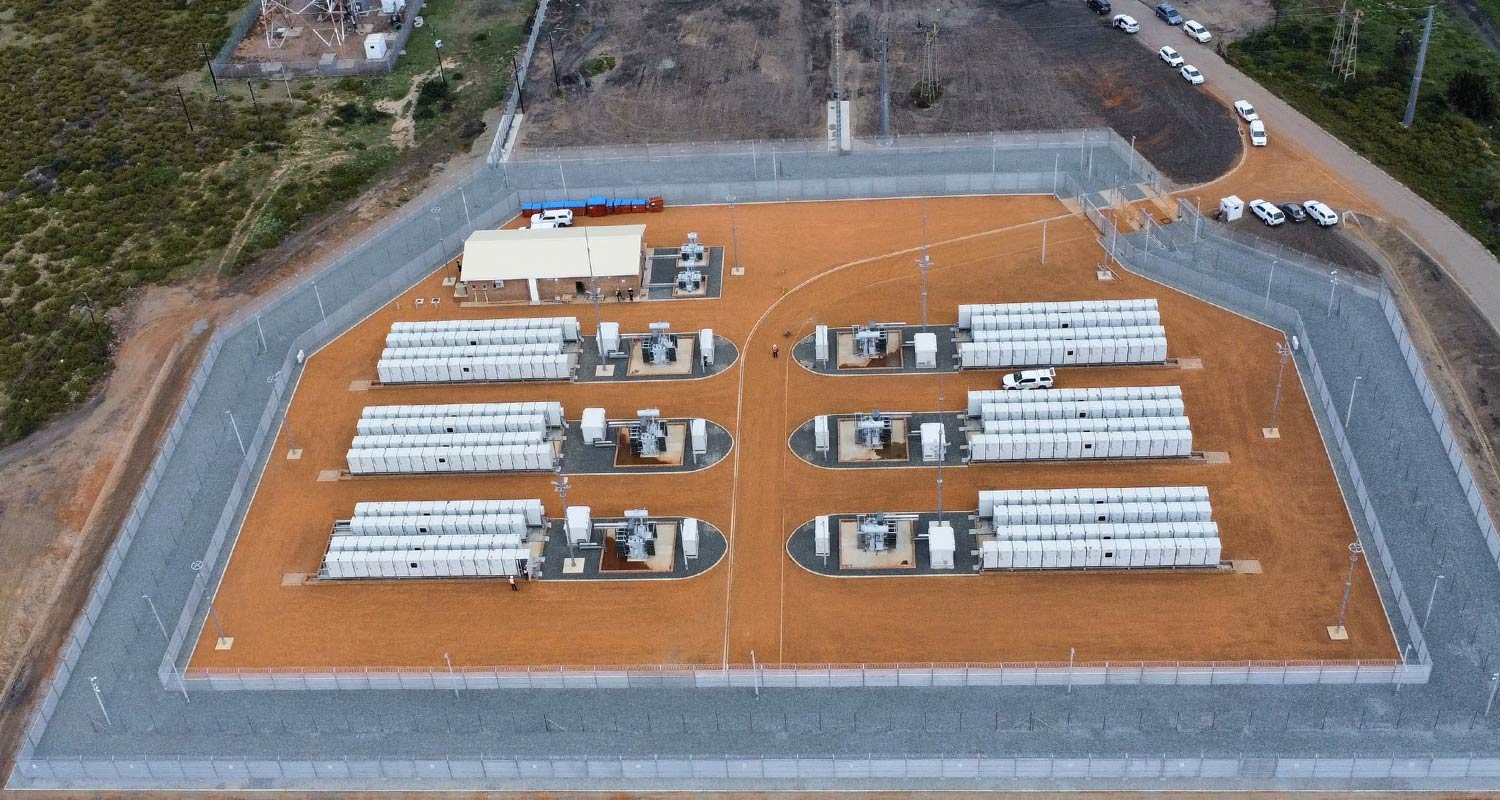
    An Eskom battery storage plant in the Western Cape. Image: Eskom
    An Eskom battery energy storage facility in the Western Cape. Image: Eskom

    Spencer said the broader significance is that hybrids reframe the value proposition of renewables: from energy only to energy-plus-capacity-plus-services. This positions solar PV not as a supplement to conventional generation, but as a core component of a reconfigured power system.

    This year will also see South Africa’s first standalone, utility-scale battery projects reach commercial operation under BESIPPPP.

    The Mulilo Oasis cluster (257MW/1 028MWh) is expected to reach commercial operation by late 2026, representing one of the largest grid-scale storage deployments on the continent. BESIPPPP bid window 2 achieved a 35% reduction in average pricing compared to the first bid window, reflecting both global cost trends and increased competition among developers.

    Utility-scale Bess capital costs outside China reached approximately $125/kWh by late 2025

    “Storage integration in 2026 will be shaped by a fundamental shift in economics. Global battery prices have fallen dramatically. Utility-scale Bess (battery energy storage system) capital costs outside China reached approximately US$125/kWh by late 2025, translating to a levelised cost of storage around $65/MWh for large, contracted projects.

    “At these price points, storage is no longer a premium add-on but an economically compelling component of energy systems across all market segments, particularly as Eskom and municipal tariffs continue to escalate well above inflation,” he said.

    On the trends for end-user consumption, so far the dominant model has been the procurement of daytime solar energy, either through wheeled power purchase agreements or behind-the-meter installations. This means that the reliance has been on Eskom or municipal supply for evening and overnight demand.

    Time-shifting

    In 2026, Sapvia expects this to change as storage costs fall and off-takers seek firmer, more dispatchable supply. While solar delivers power roughly from sunrise to sunset, many industrial operations run 24 hours.

    However, wind generation, particularly from coastal facilities, produces power across a broader time window, including evenings and nights, and often in peak hours.

    It said pairing solar and wind with contracted storage allows companies to shape their renewable supply to match actual load profiles, reducing residual grid dependence.

    Read: Billions flow into renewables as South Africa races to fix its grid

    “For energy-intensive users with sustainability commitments and grid-cost exposure, the value proposition of dispatchable renewable supply is increasingly compelling,” said Spencer.

    Across the commercial, industrial and residential segments, the more significant trend is the use of battery storage to time-shift solar generation into peak tariff periods. Solar produces power when tariffs are lowest (midday), while Eskom and municipal peak charges typically apply between 6am-9am and 5pm-9pm.
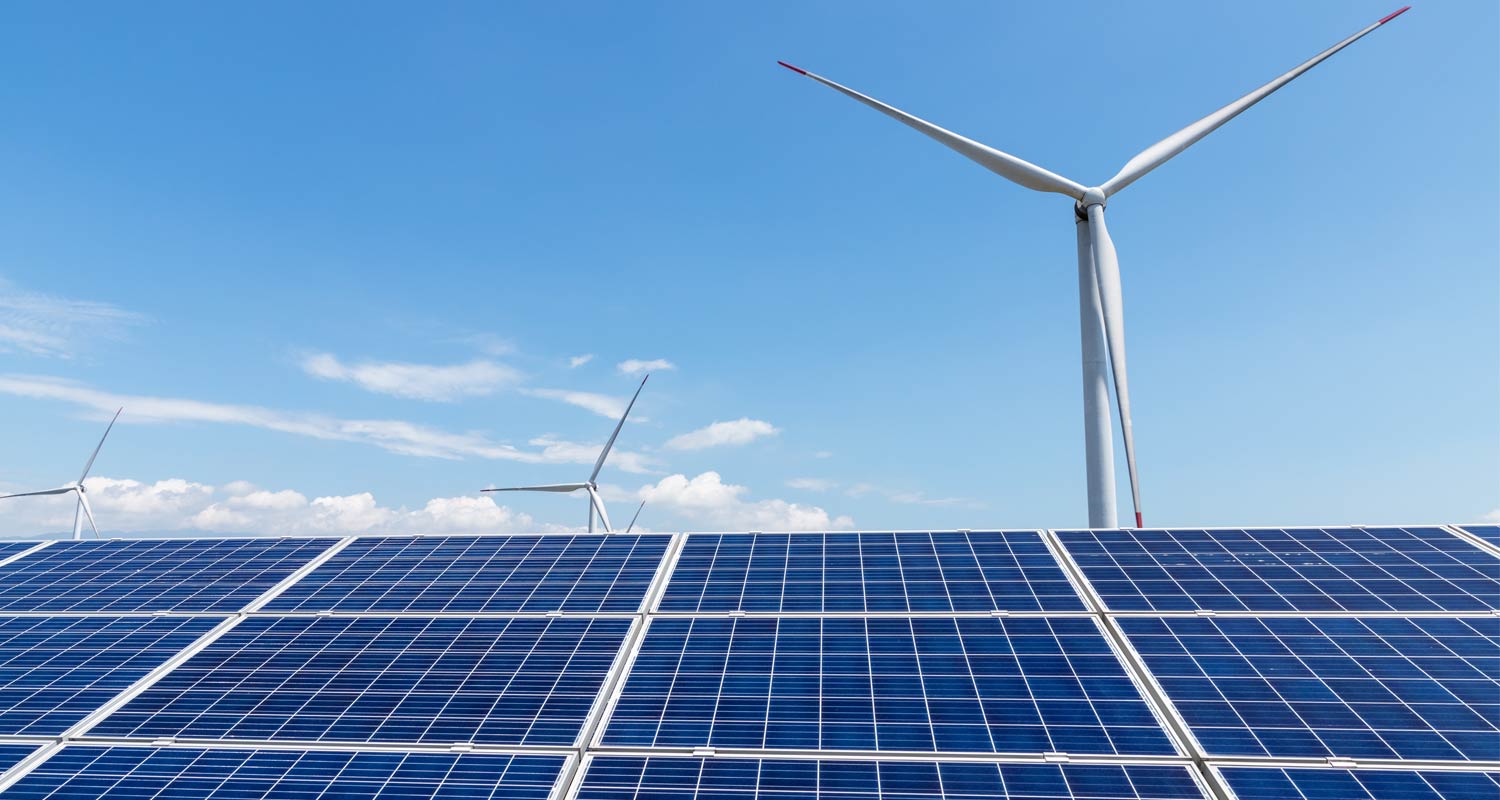
    Wind solar

    A battery system charged from solar during the day and discharged during peak periods captures the tariff differential, often more than R2/kWh, while also providing backup during outages.

    He said as battery costs continue to fall, this arbitrage model will become viable for a more diverse spectrum of customer segments.

    “Sapvia sees 2026 as the year this transition moves from early adoption to mainstream practice, driven by favourable storage economics, sustained tariff pressure and growing confidence in the technologies,” Spencer said. – © 2026 NewsCentral Media

    Get breaking news from TechCentral on WhatsApp. Sign up here.

    Add TechCentral as a preferred source on GoogleFollow TechCentral on Google NewsGet breaking news on WhatsApp


    Frank Spencer Sapvia
    WhatsApp YouTube
    Share. Facebook Twitter LinkedIn WhatsApp Telegram Email Copy Link
    Previous ArticleSouth African telescope solves mystery of ‘doomed’ giant star
    Next Article ByteDance clinches US TikTok deal

    Related Posts

    R1.5-billion to switch off the sun

    R1.5-billion to switch off the sun

    7 September 2026
    How liberalisation is rewiring South Africa's power sector

    How liberalisation is rewiring South Africa’s power sector

    21 January 2026
    Wind solar

    Big solar and energy storage projects going live across South Africa

    15 January 2026
    Company News
    The Courier Guy enhances customer engagement with Telviva

    The Courier Guy enhances customer engagement with Telviva

    23 September 2026
    Pinnacle takes its channel to Mauritius for TechScape 2026

    Pinnacle takes its channel to Mauritius for TechScape 2026

    23 September 2026
    Why true customer enablement starts on the inside - Backspace Technologies COO Graeme Thomson

    Why true customer enablement starts on the inside

    23 September 2026
    Opinion
    Regulating AI: apply the laws we have first - Dirk de Vos

    Regulating AI: apply the laws we have first

    21 September 2026
    The end is nigh, and the shares go on sale in October - Duncan McLeod

    The end is nigh, and the shares go on sale in October

    14 September 2026
    The fragile joint in the Capitec machine - Pambos Soteriades

    The R197-billion market the banks can’t reach

    25 August 2026

    Subscribe to Updates

    Get the best South African technology news and analysis delivered to your e-mail inbox every morning.

    Latest Posts
    The Courier Guy enhances customer engagement with Telviva

    The Courier Guy enhances customer engagement with Telviva

    23 September 2026
    Rogue AI agents are already loose inside big companies

    Rogue AI agents are already loose inside big companies

    23 September 2026
    Labat now says the law bars it from paying its maiden dividend

    Labat now says the law bars it from paying its maiden dividend

    23 September 2026
    Pinnacle takes its channel to Mauritius for TechScape 2026

    Pinnacle takes its channel to Mauritius for TechScape 2026

    23 September 2026
    © 2009 - 2026 NewsCentral Media
    Built and maintained by Chronon
    • Cookie policy (ZA)
    • TechCentral – privacy and Popia

    Type above and press Enter to search. Press Esc to cancel.

    Manage consent

    TechCentral uses cookies to enhance its offerings. Consenting to these technologies allows us to serve you better. Not consenting or withdrawing consent may adversely affect certain features and functions of the website.

    Functional Always active
    The technical storage or access is strictly necessary for the legitimate purpose of enabling the use of a specific service explicitly requested by the subscriber or user, or for the sole purpose of carrying out the transmission of a communication over an electronic communications network.
    Preferences
    The technical storage or access is necessary for the legitimate purpose of storing preferences that are not requested by the subscriber or user.
    Statistics
    The technical storage or access that is used exclusively for statistical purposes. The technical storage or access that is used exclusively for anonymous statistical purposes. Without a subpoena, voluntary compliance on the part of your Internet Service Provider, or additional records from a third party, information stored or retrieved for this purpose alone cannot usually be used to identify you.
    Marketing
    The technical storage or access is required to create user profiles to send advertising, or to track the user on a website or across several websites for similar marketing purposes.
    • Manage options
    • Manage services
    • Manage {vendor_count} vendors
    • Read more about these purposes
    View preferences
    • {title}
    • {title}
    • {title}
    🇿🇦 Sign up to the TechCentral newsletter