In the past few weeks alone, we’ve seen a series of reported breaches and cyber incidents affecting education institutions, technology providers and industry organisations in South Africa.
These incidents reinforce the hard truth many SMEs still underestimate: cybercriminals are no longer only targeting big enterprise. In many cases, smaller and mid-sized businesses are easier, faster and more profitable targets.
One of the most widely reported incidents recently involved a global breach linked to education platform provider Instructure, where institutions including Wits University, Stadio and Milpark were reportedly impacted through compromised cloud infrastructure and third-party systems.
At the same time, local technology wholesaler Esquire Technologies disclosed a breach affecting part of its API data-feed environment, highlighting how interconnected platforms and integrations can create risk exposure beyond a company’s primary systems.
What’s becoming increasingly clear is that most cyberattacks today are not highly sophisticated Hollywood-style hacks. They often begin with something surprisingly simple: a phishing e-mail, a stolen Microsoft 365 password, a fake invoice request, weak remote access controls or an employee clicking the wrong link.
Cybercriminals understand that people are often the easiest entry point into a business. Increasingly, attackers are also targeting backup environments directly, attempting to encrypt, delete or corrupt backup repositories before launching ransomware attacks.
The solution
As highlighted in recent guidance from Veeam around immutable backup architecture, modern backup strategies are no longer simply about storing copies of data. Businesses now need immutable backup environments, air-gapped storage and tested disaster recovery capabilities designed specifically for ransomware-era threats.
- Immutability ensures backup data cannot be altered, encrypted or deleted, even if attackers gain privileged administrator access.
- Air-gapped backups create additional isolation between production systems and backup repositories, helping prevent lateral movement during an attack.
- Combined with automated recovery testing, zero-trust access controls and clearly defined recovery processes, organisations dramatically improve their ability to restore operations quickly after a cyber incident.
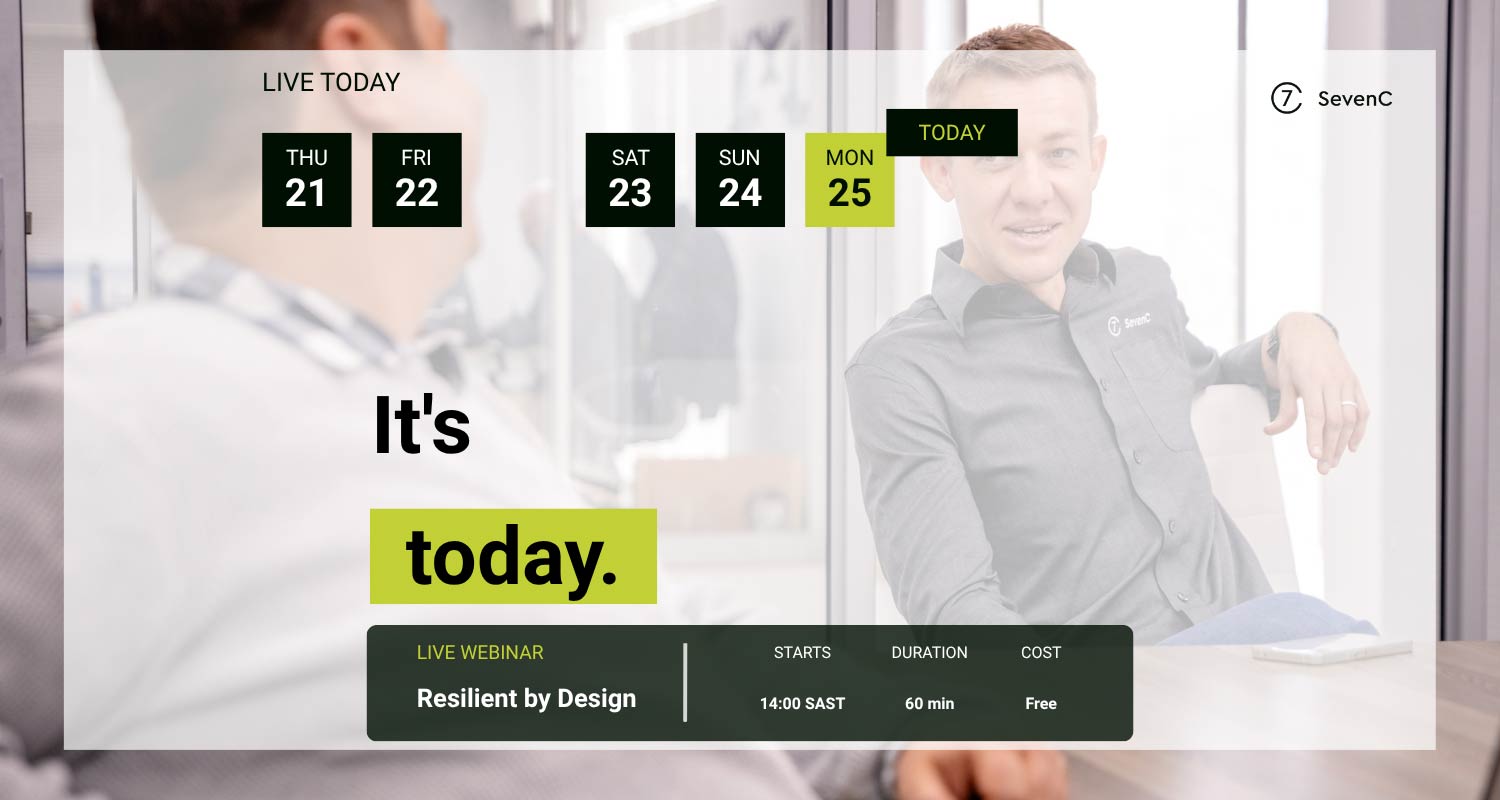
Join our online webinar, “Resilient by Design”, in partnership with Veeam, and come away with a 30-day starter plan with concrete steps you can take immediately to safeguard your business, whether you have an IT team or not. Click here to register.
For South African SMEs, the implications are significant. Downtime, operational disruption, reputational damage and data loss can cripple a business far faster than many owners realise. The challenge is compounded by hybrid working, growing cloud adoption and the increasing use of unmanaged personal devices.
Business owners should urgently focus on the fundamentals, which include the following:
- Multi-factor authentication (MFA)
- Endpoint monitoring and visibility
- Reliable backups, immutability and disaster recovery planning
- Patch management
- Cyber awareness training
- Managed detection and response (MDR)
Cybersecurity is absolutely about business continuity which is a leadership imperative. The businesses that thrive over the next decade will be the ones that treat cybersecurity as part of operational strategy and not just technical support.
We’re incredibly proud that SevenC is a Gold Veeam partner, and was recently recognised as the Sophos MSP Partner of the Year, reflecting both the strength of our cybersecurity capability and our commitment to helping South African businesses navigate the increasingly complex cybersecurity landscape, particularly within the SMME market.
We are here to secure your business. To discuss how your business can strengthen its cyber posture, connect with us here.
- The author, Graeme Millar, is MD at SevenC Managed IT Services
- Read more articles by SevenC on TechCentral
- This promoted content was paid for by the party concerned