Close Menu
TechCentralTechCentral

    Subscribe to the newsletter

    Get the best South African technology news and analysis delivered to your e-mail inbox every morning.

    Facebook X (Twitter) YouTube LinkedIn
    WhatsApp Facebook X (Twitter) LinkedIn YouTube
    TechCentralTechCentral
    • News
      Africa's most popular phones have a tracking problem

      Africa’s most popular phones have a tracking problem

      24 July 2026
      Vodacom taps UJ, AWS to build its AI talent pipeline - Vodacom Group CEO Shameel Joosub

      Vodacom taps UJ, AWS to build its AI talent pipeline

      24 July 2026
      Intel is back in the game - Intel CEO Lip-Bu Tan. Laure Andrillon/Reuters

      Intel is back in the game

      24 July 2026
      Fat bonuses at Telkom despite group missing own targets - Serame Taukobong

      Fat bonuses at Telkom despite group missing own targets

      23 July 2026
      Massive changes coming to Amazon Prime Video - Jeff Bezos

      Massive changes coming to Amazon Prime Video

      23 July 2026
    • World
      Meta AI will now tell parents if their teen is in crisis

      Meta AI will now tell parents if their teen is in crisis

      17 July 2026
      IBM shares crash 25% as AI upends software spending - Arvind Krishna

      IBM shares crash 25% as AI upends software spending

      15 July 2026
      Jony Ive's first OpenAI device: an AI smart speaker - Jony Ive and Sam Altman

      Jony Ive’s first OpenAI device: an AI smart speaker

      15 July 2026
      Stripe, Advent in talks to buy PayPal for $53-billion

      Stripe, Advent in talks to buy PayPal for $53-billion

      15 July 2026
      Memory crisis sends smartphone market into steep decline

      Memory crisis sends smartphone market into steep decline

      13 July 2026
    • In-depth
      The plan to stop AI from breaking the world - Google DeepMind CEO Demis Hassabis. Image: John Sears

      The plan to stop AI from breaking the world

      16 July 2026
      The internet has a Strait of Hormuz problem

      The internet has a Strait of Hormuz problem

      15 July 2026
      AI boom sparks rally, frenzy and fear

      AI boom sparks rally, frenzy and fear

      11 June 2026
      Every plug-in hybrid on sale in South Africa, ranked by price - Lamborghini Temerario

      Every plug-in hybrid on sale in South Africa, ranked by price

      7 June 2026
      What Wi-Fi 8 will mean for wireless networks

      What Wi-Fi 8 will mean for wireless networks

      1 June 2026
    • TCS
      TCS | How Optasia lends billions to people banks can't see - Salvador Anglada

      TCS | How Optasia lends billions to people banks can’t see

      23 July 2026
      The rands-and-cents case for electric trucks - William Kelly Watts & Wheels with Wills

      The rands-and-cents case for electric trucks

      20 July 2026
      Watts & Wheels S1E7: 'Ferrari's EV breaks the internet'

      Watts & Wheels S1E7: ‘Ferrari’s EV breaks the internet’

      8 July 2026
      TCS | Pick n Pay's Enrico Ferigolli on Penny, the AI that shops for you

      TCS | Pick n Pay’s Enrico Ferigolli on Penny, the AI that shops for you

      2 July 2026
      TCS+ | How Tracker is turning vehicle data into business strategy - Silvia Schollenberger

      TCS+ | How Tracker is turning vehicle data into business strategy

      1 July 2026
    • Opinion
      Selling vapour is corporate suicide in slow motion - Jannie van Zyl

      Selling vapour is corporate suicide in slow motion

      16 July 2026
      Brazil's online gambling crackdown is a lesson for South Africa

      How Amazon outmanoeuvred Starlink in South Africa

      15 July 2026
      The Popia problem with agentic AI - Herman Haasbroek

      The Popia problem with agentic AI

      14 July 2026
      The author, Fanie van Rooyen

      South Africa can still catch the AI wave – here’s how

      7 July 2026
      The author, Fanie van Rooyen

      The AI utopia South Africa can’t afford

      1 July 2026
    • Company Hubs
      • 1Stream
      • Africa Data Centres
      • AfriGIS
      • Altron Digital Business
      • Altron Document Solutions
      • Altron Group
      • Arctic Wolf
      • Ascent Technology
      • AvertITD
      • BBD
      • Braintree
      • CallMiner
      • CambriLearn
      • CM Telecom
      • Contactable
      • CYBER1 Solutions
      • Digicloud Africa
      • Digimune
      • Domains.co.za
      • ESET
      • Euphoria Telecom
      • HOSTAFRICA
      • Incredible Business
      • iONLINE
      • IQbusiness
      • Iris Network Systems
      • Kaspersky
      • LSD Open
      • Mitel
      • NEC XON
      • Netstar
      • Network Platforms
      • Next DLP
      • Ovations
      • Paracon
      • Paratus
      • Q-KON
      • SevenC
      • SkyWire
      • Solid8 Technologies
      • Telit Cinterion
      • Telviva
      • Tenable
      • Vertiv
      • Videri Digital
      • Vodacom Business
      • Vox
      • Wipro
      • Workday
      • XLink
    • Sections
      • AI and machine learning
      • Banking
      • Broadcasting and Media
      • Cloud services
      • Contact centres and CX
      • Cryptocurrencies
      • Education and skills
      • Electronics and hardware
      • Energy and sustainability
      • Enterprise software
      • Financial services
      • HealthTech
      • Information security
      • Internet and connectivity
      • Internet of Things
      • Investment
      • IT services
      • Lifestyle
      • Policy and regulation
      • Public sector
      • Retail and e-commerce
      • Satellite communications
      • Science
      • SMEs and start-ups
      • Social media
      • Talent and leadership
      • Telecoms
      • Watts & Wheels
    • Events
    • Advertise
    TechCentralTechCentral
    Home » Sections » Investment » The biggest thing missing from the state of the nation address

    The biggest thing missing from the state of the nation address

    The president's clarity of electricity reform was welcome but his silence on de-industrialisation was alarming.
    By Busi Mavuso16 February 2026
    Twitter LinkedIn Facebook WhatsApp Email Telegram Copy Link
    News Alerts
    WhatsApp
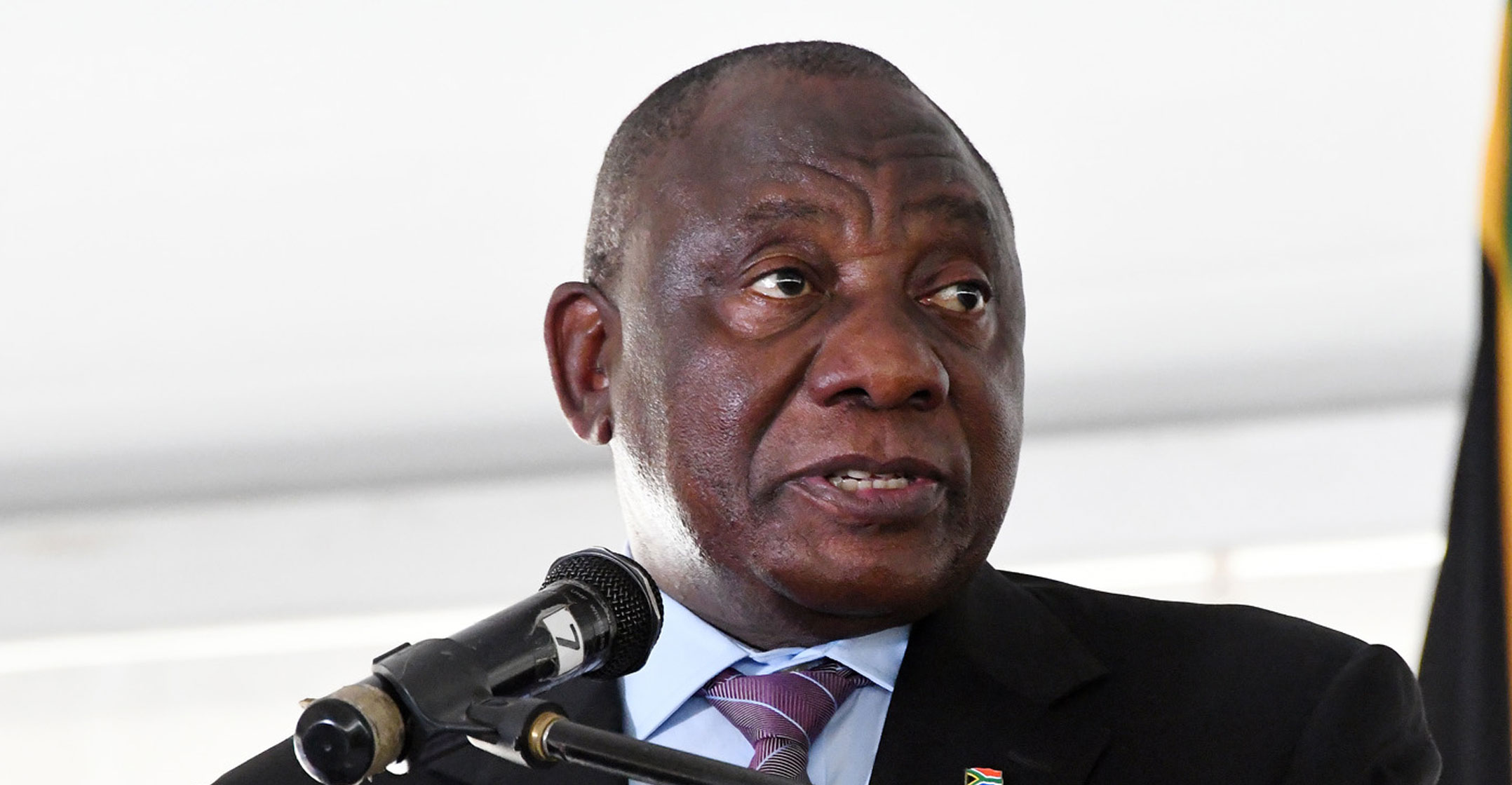
    The biggest thing missing from the state of the nation address - Cyril Ramaphosa
    President Cyril Ramaphosa. Image: GCIS

    As the dust settles from Thursday night’s state of the nation address, attention must turn to the rapid implementation of what President Cyril Ramaphosa announced and to addressing what was left unsaid.

    There was much to welcome. Most important was the clarity the president brought to the future of our electricity transmission system. The independent Transmission System Operator will own and operate transmission assets and run the electricity market. This resolves the policy confusion that emerged in mid-December when the energy minister published an unbundling strategy proposing that transmission assets remain with Eskom rather than transfer to the TSO.

    The dedicated task team that the president will establish under the National Electricity Crisis Committee provides the right mechanism to manage the complex transition and ensure there are no missteps. The result will be a resilient electricity system that drives the investment urgently needed in grid expansion and future generation capacity.

    Government must act urgently finalise the new energy vehicle policy to enable manufacturers to transition

    This resolution demonstrates the value of direct engagement. After we flagged concerns in January, energy minister Kgosientsho Ramokgopa met with me within a day. His director-general followed up the following week with substantive discussions. I am grateful to the minister and the president for taking our concerns seriously and moving quickly to provide clarity. The uncertainty that emerged in December was affecting investor confidence. Thursday’s announcement removes that cloud.

    The president’s speech also outlined ambitious steps on water infrastructure and criminal justice capacity to tackle organised crime. These are critical priorities that deserve support and scrutiny as implementation begins.

    What was missing

    But it would be remiss not to address what was missing. The biggest omission was any strategy to tackle the rapid de-industrialisation we are facing. We need a decisive response to the destruction of manufacturing capacity that took decades to build and remains key to employment creation.

    The scale of the crisis is stark. In the automotive sector, tyre manufacturers Bridgestone closed its Port Elizabeth plant in 2020, and Goodyear announced the closure of its Kariega tyre plant last year. Component manufacturers producing safety belts, airbags and other critical parts have scaled back or closed: 13 closures in the past two years according to Naacam, with more expected.

    Read: Toyota SA CEO: NEV inaction will cost South Africa its motoring industry

    Nissan is selling its Rosslyn plant. Volkswagen has warned of uncertainty over jobs at its Kariega facility. Beyond the automotive sector, British American Tobacco South Africa announced it will close its Heidelberg plant by the end of 2026, following the destruction of the legitimate market by illicit cigarettes.

    The common thread is competition from low-cost imports, including from China, that undercut local manufacturers. Chinese vehicle models alone now account for 22% of imports. Yet the president’s speech offered no plan to address this.

    The author, Business Leadership South Africa CEO Busi Mavuso
    The author, Business Leadership South Africa CEO Busi Mavuso

    Government must act urgently:

    • Finalise the new energy vehicle policy to enable manufacturers to transition to electric and hybrid production for export markets.
    • Deploy anti-dumping measures where imports, some argue, are being sold below cost.
    • Review tariff structures to protect local manufacturing while avoiding damage to local assemblers.
    • Intensify enforcement against illicit trade destroying legitimate businesses. We cannot afford to wait for more factory closures to force action. That day is coming if government doesn’t work with industry right now.

    The president did briefly reference strengthening capacity for trade negotiations and expanding missions abroad to drive economic policy. This is necessary, but let’s be clear about the challenge. South Africa maintains an extensive diplomatic network – one of the largest for a country our size – but the problem is effectiveness, not scale.

    Too many ambassadorial posts have been treated as rewards for loyal or difficult cadres rather than positions requiring serious economic and trade expertise. Many missions in substantial economies have been left without ambassadors or high commissioners for extended periods. Being South Africa’s chief representative in a country must carry the weight it deserves.

    With the US disrupting established trading relationships, South Africa must diversify export markets

    A serious professionalisation effort is needed. Our diplomats must be equipped to advance South Africa’s economic interests, identify market opportunities and negotiate agreements that serve our industrialisation agenda. This requires a partnership with business. Business Leadership South Africa stands ready to help identify priority markets, connect South African exporters with potential customers and provide input on trade negotiations. We’ve seen in countries like Vietnam and South Korea how business-government collaboration on trade delivers results.

    International economic relations have never been as important as now. With the US disrupting established trading relationships, South Africa must diversify export markets and build partnerships on our own terms. Every trade agreement must be evaluated against clear criteria:

    • Does it support industrialisation?
    • Does it create quality employment?
    • Does it build export capacity?

    Our manufacturing industries must be on a path to becoming globally competitive champions through export-led growth, not permanently sheltered from competition. And our international agreements must be laser-focused on what matters – our economy and the jobs it can create and support.

    Immediate action

    The electricity reform clarity shows what a focused government-business partnership achieves when both sides commit to solving problems. We resolved policy confusion in weeks through direct engagement. We must apply that same urgency to manufacturing.

    Read: Ramaphosa presses ahead with Eskom break-up

    The automotive crisis, the illicit economy destroying legitimate businesses and the need for effective trade diplomacy all demand immediate action. The state of the nation address delivered progress on electricity. Now we need a matching commitment to protecting and building industrial capacity – because without manufacturing, we cannot achieve the employment-creating growth South Africa desperately needs.

    • Busi Mavuso is CEO of Business Leadership South Africa

    Follow TechCentral on Google News Add TechCentral as your preferred source on Google


    BLSA Busi Mavuso Business Leadership South Africa Cyril Ramaphosa
    WhatsApp YouTube
    Share. Facebook Twitter LinkedIn WhatsApp Telegram Email Copy Link
    Previous ArticleThe battle for Warner Bros may be far from over
    Next Article South African CISOs are facing a burnout epidemic

    Related Posts

    Load shedding is over - and that's exposing a new energy crisis

    Load shedding is over – and that’s exposing a new energy crisis

    23 July 2026
    South Africa's newfound economic resilience

    South Africa’s newfound economic resilience

    20 July 2026
    Trading rules near as Eskom tools up to compete - Dan Marokane

    Trading rules near as Eskom tools up to compete

    13 July 2026
    Company News
    Why Europe is turning to South Africa for cross-border innovation - BBD Software

    Why Europe is turning to South Africa for cross-border innovation

    24 July 2026
    Green dashboards, stalled change: the CIO's blind spot - Change Logic Marchant van den Heever

    Green dashboards, stalled change: the CIO’s blind spot

    24 July 2026
    Why Africa's cloud needs more than one path - Africa Data Centres

    Why Africa’s cloud needs more than one path

    23 July 2026
    Opinion
    Selling vapour is corporate suicide in slow motion - Jannie van Zyl

    Selling vapour is corporate suicide in slow motion

    16 July 2026
    Brazil's online gambling crackdown is a lesson for South Africa

    How Amazon outmanoeuvred Starlink in South Africa

    15 July 2026
    The Popia problem with agentic AI - Herman Haasbroek

    The Popia problem with agentic AI

    14 July 2026

    Subscribe to Updates

    Get the best South African technology news and analysis delivered to your e-mail inbox every morning.

    Latest Posts
    Africa's most popular phones have a tracking problem

    Africa’s most popular phones have a tracking problem

    24 July 2026
    Vodacom taps UJ, AWS to build its AI talent pipeline - Vodacom Group CEO Shameel Joosub

    Vodacom taps UJ, AWS to build its AI talent pipeline

    24 July 2026
    Intel is back in the game - Intel CEO Lip-Bu Tan. Laure Andrillon/Reuters

    Intel is back in the game

    24 July 2026
    Why Europe is turning to South Africa for cross-border innovation - BBD Software

    Why Europe is turning to South Africa for cross-border innovation

    24 July 2026
    © 2009 - 2026 NewsCentral Media
    Built and maintained by Chronon
    • Cookie policy (ZA)
    • TechCentral – privacy and Popia

    Type above and press Enter to search. Press Esc to cancel.

    Manage consent

    TechCentral uses cookies to enhance its offerings. Consenting to these technologies allows us to serve you better. Not consenting or withdrawing consent may adversely affect certain features and functions of the website.

    Functional Always active
    The technical storage or access is strictly necessary for the legitimate purpose of enabling the use of a specific service explicitly requested by the subscriber or user, or for the sole purpose of carrying out the transmission of a communication over an electronic communications network.
    Preferences
    The technical storage or access is necessary for the legitimate purpose of storing preferences that are not requested by the subscriber or user.
    Statistics
    The technical storage or access that is used exclusively for statistical purposes. The technical storage or access that is used exclusively for anonymous statistical purposes. Without a subpoena, voluntary compliance on the part of your Internet Service Provider, or additional records from a third party, information stored or retrieved for this purpose alone cannot usually be used to identify you.
    Marketing
    The technical storage or access is required to create user profiles to send advertising, or to track the user on a website or across several websites for similar marketing purposes.
    • Manage options
    • Manage services
    • Manage {vendor_count} vendors
    • Read more about these purposes
    View preferences
    • {title}
    • {title}
    • {title}