Close Menu
TechCentralTechCentral

    Subscribe to the newsletter

    Get the best South African technology news and analysis delivered to your e-mail inbox every morning.

    Facebook X (Twitter) YouTube LinkedIn
    WhatsApp Facebook X (Twitter) LinkedIn YouTube
    TechCentralTechCentral
    • News
      SA experts split on whether the singularity has begun

      SA experts split on whether the singularity has begun

      3 August 2026
      South Africa's hybrid boom is masking a flat electric car market

      South Africa’s hybrid boom is masking a flat electric car market

      3 August 2026
      SABC+ scales up

      SABC+ scales up

      3 August 2026
      The Post Office has fixed its books but not its business

      The Post Office has fixed its books but not its business

      3 August 2026
      SA companies could face cross-border crypto ban

      SA companies could face cross-border crypto ban

      3 August 2026
    • World
      Meta AI will now tell parents if their teen is in crisis

      Meta AI will now tell parents if their teen is in crisis

      17 July 2026
      IBM shares crash 25% as AI upends software spending - Arvind Krishna

      IBM shares crash 25% as AI upends software spending

      15 July 2026
      Jony Ive's first OpenAI device: an AI smart speaker - Jony Ive and Sam Altman

      Jony Ive’s first OpenAI device: an AI smart speaker

      15 July 2026
      Stripe, Advent in talks to buy PayPal for $53-billion

      Stripe, Advent in talks to buy PayPal for $53-billion

      15 July 2026
      Memory crisis sends smartphone market into steep decline

      Memory crisis sends smartphone market into steep decline

      13 July 2026
    • In-depth
      The plan to stop AI from breaking the world - Google DeepMind CEO Demis Hassabis. Image: John Sears

      The plan to stop AI from breaking the world

      16 July 2026
      The internet has a Strait of Hormuz problem

      The internet has a Strait of Hormuz problem

      15 July 2026
      AI boom sparks rally, frenzy and fear

      AI boom sparks rally, frenzy and fear

      11 June 2026
      Every plug-in hybrid on sale in South Africa, ranked by price - Lamborghini Temerario

      Every plug-in hybrid on sale in South Africa, ranked by price

      7 June 2026
      What Wi-Fi 8 will mean for wireless networks

      What Wi-Fi 8 will mean for wireless networks

      1 June 2026
    • TCS
      TCS+ | Why South African workers must become supervisors of digital labour - Accelera Digital Group Cliff de Wit

      TCS+ | Why South African workers must become supervisors of digital labour

      31 July 2026
      TCS | Rapid deployment rules can't work without municipalities: ACT - Nomvuyiso Batyi

      TCS | Icasa’s rules skip the real bottleneck: ACT

      30 July 2026
      TCS+ | iStore Business on why Apple makes sense for SMEs - Sudesh Pillay and Tamia Nontsikelelo

      TCS+ | iStore Business on why Apple makes sense for SMEs

      30 July 2026
      TCS+ | A smarter approach to cloud for South African businesses - Joel Chacko and Jonathan Oaker

      TCS+ | A smarter approach to cloud for South African businesses

      28 July 2026
      TCS | How Optasia lends billions to people banks can't see - Salvador Anglada

      TCS | How Optasia lends billions to people banks can’t see

      23 July 2026
    • Opinion
      The author, Jannie van Zyl

      Selling vapour is corporate suicide in slow motion

      16 July 2026
      Brazil's online gambling crackdown is a lesson for South Africa

      How Amazon outmanoeuvred Starlink in South Africa

      15 July 2026
      The Popia problem with agentic AI - Herman Haasbroek

      The Popia problem with agentic AI

      14 July 2026
      The author, Fanie van Rooyen

      South Africa can still catch the AI wave – here’s how

      7 July 2026
      The author, Fanie van Rooyen

      The AI utopia South Africa can’t afford

      1 July 2026
    • Company Hubs
      • 1Stream
      • Africa Data Centres
      • AfriGIS
      • Altron Digital Business
      • Altron Document Solutions
      • Altron Group
      • Arctic Wolf
      • Ascent Technology
      • AvertITD
      • BBD
      • Braintree
      • CallMiner
      • CambriLearn
      • CM Telecom
      • Contactable
      • CYBER1 Solutions
      • Digicloud Africa
      • Digimune
      • Domains.co.za
      • ESET
      • Euphoria Telecom
      • HOSTAFRICA
      • Incredible Business
      • iONLINE
      • IQbusiness
      • Iris Network Systems
      • Kaspersky
      • LSD Open
      • Mitel
      • NEC XON
      • Netstar
      • Network Platforms
      • Next DLP
      • Ovations
      • Paracon
      • Paratus
      • Q-KON
      • SevenC
      • SkyWire
      • Solid8 Technologies
      • Telit Cinterion
      • Telviva
      • Tenable
      • Vertiv
      • Videri Digital
      • Vodacom Business
      • Vox
      • Wipro
      • Workday
      • XLink
    • Sections
      • AI and machine learning
      • Banking
      • Broadcasting and Media
      • Cloud services
      • Contact centres and CX
      • Cryptocurrencies
      • Education and skills
      • Electronics and hardware
      • Energy and sustainability
      • Enterprise software
      • Financial services
      • HealthTech
      • Information security
      • Internet and connectivity
      • Internet of Things
      • Investment
      • IT services
      • Lifestyle
      • Policy and regulation
      • Public sector
      • Retail and e-commerce
      • Satellite communications
      • Science
      • SMEs and start-ups
      • Social media
      • Talent and leadership
      • Telecoms
      • Watts & Wheels
    • Events
    • Advertise
    TechCentralTechCentral
    Home » In-depth » Driverless car revolution just a decade away

    Driverless car revolution just a decade away

    By The Conversation9 August 2015
    Twitter LinkedIn Facebook WhatsApp Email Telegram Copy Link
    News Alerts
    WhatsApp
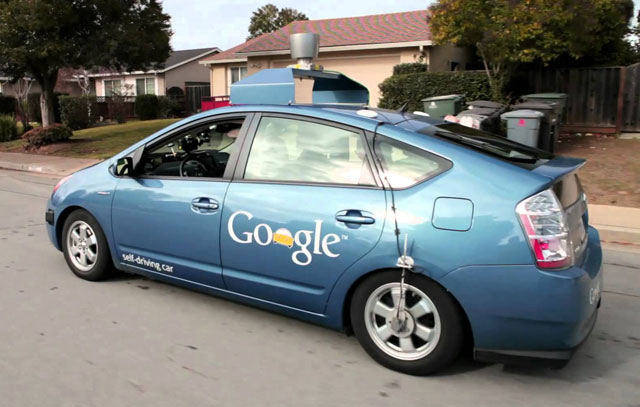
    Google prototype
    Google prototype

    The dawn of driverless cars is almost upon us. Governments around the world are rapidly legalising the use of driverless vehicles on their roads and are working towards overcoming regulatory difficulties associated with their large-scale introduction. Meanwhile, some of the largest technology and automotive corporations in the world are investing heavily in driverless technologies. Many people in the industry seem certain that the largest revolution in personal transport since the invention of the car itself is less than a decade away.

    Whether this technology will ever mean we can give up all responsibility for driving is unclear. But the shift towards driverless cars won’t just mean a change in the way we drive. It will undoubtedly have other implications for car owners, authorities and ultimately all of us.

    While the large-scale introduction of fully driverless consumer vehicles appears to be around a decade away, the current generation of new cars is already highlighting some of the potential challenges. For example, in recent demonstrations funded by large car manufacturers, security experts were able to “hack” the on-board computers of ordinary vehicles and take control of braking, steering and engine functions, among other things. In one particularly alarming demonstration, a hacker was able to force the car to perform an emergency stop at high speed.

    This increasing reliance on computers in modern cars is itself a major and well-documented safety and security challenge, that will be significantly heightened by the nature of truly autonomous vehicles. In such cases, the fundamental fact is that all systems within the vehicle are under the control of a piece of sophisticated software which will always be vulnerable to malicious attack and malfunction.

    What’s more, unlike many current vehicles, this software is likely to be directly networked to other vehicles and systems. This in turn introduces a whole host of safety and security complications beyond those experienced in current cars. For example, the complexity of processing data about the road and location and behaviours of surrounding vehicles means that small errors in the design or operation of the software could lead to collisions or other dangerous behaviours that could have fatal results. And the potential to deliberately trigger such events is at the root of the security challenge.

    A further associated challenge is privacy, which believe may trump the security challenges from a regulatory perspective. This issue emerges from the fact that the software in control of driverless vehicles — much like the brains of human drivers — have a model of the vehicle they are controlling and a model of their environment.

    The environment model means each vehicle collects huge quantities of data about its surroundings, something that is particularly troubling from a privacy perspective. This data includes locations of other road users and pedestrians relative to the vehicle. Although the anonymous to a driverless vehicle, the potential to infer identities and other information (particularly of other vehicles through networked capabilities) is a privacy minefield.

    Black box for the road
    Yet if used responsibly, the power of this data could be used for a number of beneficial purposes. For instance, a commonly proposed use is for data to support police inquiries. In the event of an accident involving or within the vicinity of the vehicle, a driverless car could act as a black box with information of the incident recorded in unprecedented detail, which in turn could be used to support an investigation.

    More creative uses of the technologies in driverless cars could include the ability to supercharge “smart roads” with their networked capabilities by eliminating traffic jams and potentially even doing away with traffic lights and road signs altogether. They could also be used to gather information about road conditions, traffic or even weather or pollution.

    These same networked capabilities could also enable cars to foresee potential collisions and take steps to avoid an accident by actively keeping track of their surroundings including cars and hazards beyond the visual range of a human driver. One industry report has estimated wide-scale introduction of driverless cars could reduce accidents by up to 90%.

    Despite the potential benefits, there is always the potential for misuse. This is an ongoing challenge with powerful technologies more generally as they become increasingly ubiquitous in our everyday lives. Without adequate legislation and industry focus to preserve privacy and maintain the security and safety of the individual and the public generally, large-scale introduction of these vehicles could have severe implications. If these challenges can be resolved, however, the mainstream introduction of these vehicles could save hundreds of thousands of lives each year, while having countless other environmental and economic benefits.The Conversation

    • Mark Douthwaite is PhD candidate in high-integrity systems engineering at the University of York
    • This article was originally published on The Conversation

    Follow TechCentral on Google News Add TechCentral as your preferred source on Google


    WhatsApp YouTube
    Share. Facebook Twitter LinkedIn WhatsApp Telegram Email Copy Link
    Previous ArticleTech revolution sweeps healthcare sector
    Next Article Cwele must seize rare opportunity

    Related Posts

    SA experts split on whether the singularity has begun

    SA experts split on whether the singularity has begun

    3 August 2026
    South Africa's hybrid boom is masking a flat electric car market

    South Africa’s hybrid boom is masking a flat electric car market

    3 August 2026
    SABC+ scales up

    SABC+ scales up

    3 August 2026
    Company News
    Google Cloud, AI adoption gain momentum in Africa - Digicloud Africa

    Google Cloud, AI adoption gain momentum in Africa

    3 August 2026
    Domains.co.za launches self-hosted n8n VPS hosting

    Domains.co.za launches self-hosted n8n VPS hosting

    31 July 2026
    Smarter.tech '26 shows why smarter technology begins with context - Obsidian Systems

    Context is the missing piece in enterprise AI: Obsidian

    31 July 2026
    Opinion
    The author, Jannie van Zyl

    Selling vapour is corporate suicide in slow motion

    16 July 2026
    Brazil's online gambling crackdown is a lesson for South Africa

    How Amazon outmanoeuvred Starlink in South Africa

    15 July 2026
    The Popia problem with agentic AI - Herman Haasbroek

    The Popia problem with agentic AI

    14 July 2026

    Subscribe to Updates

    Get the best South African technology news and analysis delivered to your e-mail inbox every morning.

    Latest Posts
    SA experts split on whether the singularity has begun

    SA experts split on whether the singularity has begun

    3 August 2026
    South Africa's hybrid boom is masking a flat electric car market

    South Africa’s hybrid boom is masking a flat electric car market

    3 August 2026
    SABC+ scales up

    SABC+ scales up

    3 August 2026
    The Post Office has fixed its books but not its business

    The Post Office has fixed its books but not its business

    3 August 2026
    © 2009 - 2026 NewsCentral Media
    Built and maintained by Chronon
    • Cookie policy (ZA)
    • TechCentral – privacy and Popia

    Type above and press Enter to search. Press Esc to cancel.

    Manage consent

    TechCentral uses cookies to enhance its offerings. Consenting to these technologies allows us to serve you better. Not consenting or withdrawing consent may adversely affect certain features and functions of the website.

    Functional Always active
    The technical storage or access is strictly necessary for the legitimate purpose of enabling the use of a specific service explicitly requested by the subscriber or user, or for the sole purpose of carrying out the transmission of a communication over an electronic communications network.
    Preferences
    The technical storage or access is necessary for the legitimate purpose of storing preferences that are not requested by the subscriber or user.
    Statistics
    The technical storage or access that is used exclusively for statistical purposes. The technical storage or access that is used exclusively for anonymous statistical purposes. Without a subpoena, voluntary compliance on the part of your Internet Service Provider, or additional records from a third party, information stored or retrieved for this purpose alone cannot usually be used to identify you.
    Marketing
    The technical storage or access is required to create user profiles to send advertising, or to track the user on a website or across several websites for similar marketing purposes.
    • Manage options
    • Manage services
    • Manage {vendor_count} vendors
    • Read more about these purposes
    View preferences
    • {title}
    • {title}
    • {title}