
Close Menu
TechCentralTechCentral

    Subscribe to the newsletter

    Get the best South African technology news and analysis delivered to your e-mail inbox every morning.

    Facebook X (Twitter) YouTube LinkedIn
    WhatsApp Facebook X (Twitter) LinkedIn YouTube
    TechCentralTechCentral
    • News
      Schreiber suspends home affairs officials over fake AI references - Leon Schreiber

      Schreiber suspends home affairs officials over fake AI references

      30 April 2026
      South Africa headed to the polls in November

      South Africa headed to the polls in November

      30 April 2026
      Google humbles Big Tech's cloud heavyweights

      Google humbles Big Tech’s cloud heavyweights

      30 April 2026
      Logistics start-up Shiprazor pulls in R44-million seed round

      Logistics start-up Shiprazor pulls in R44-million seed round

      30 April 2026
      Why big IT projects in South Africa keep drifting off course

      Why big IT projects in South Africa keep drifting off course

      30 April 2026
    • World
      'It was my idea': Musk claims paternity of OpenAI - Elon Musk

      ‘It was my idea’: Musk claims paternity of OpenAI

      29 April 2026
      Pivotal week for US tech stocks

      Pivotal week for US tech stocks

      28 April 2026
      Worries over OpenAI's growth as Anthropic gains ground - Sam Altman. Shelby Tauber/Reuters

      Worries over OpenAI’s growth as Anthropic gains ground

      28 April 2026
      Taylor Swift trademarks her voice to fight AI fakes

      Taylor Swift trademarks her voice to fight AI fakes

      28 April 2026
      DeepSeek's long-awaited V4 model enters preview

      DeepSeek’s long-awaited V4 model enters preview

      24 April 2026
    • In-depth
      Alfa's electric rebel - Alfa Romeo Junior Elettrica Veloce

      Alfa’s electric rebel

      29 April 2026
      Africa switches on as Europe dims the lights

      Africa switches on as Europe dims the lights

      9 April 2026
      The biggest untapped EV market on Earth is hiding in plain sight

      The biggest untapped EV market on Earth is hiding in plain sight

      1 April 2026
      The R18-billion tech giant hiding in plain sight - Jens Montanana

      The R16-billion tech giant hiding in plain sight

      26 March 2026
      The last generation of coders

      The last generation of coders

      18 February 2026
    • TCS

      TCS+ | ‘The ISP for ISPs’: Vox’s shift to wholesale aggregator

      20 April 2026
      TCS | Werner Lindemann on how AI is rewriting the infosec rulebook

      TCS | Werner Lindemann on how AI is rewriting the infosec rulebook

      15 April 2026
      TCS | Donovan Marsh on AI and the future of filmmaking

      TCS | Donovan Marsh on AI and the future of filmmaking

      7 April 2026
      TCS+ | Vodacom Business moves to crack the SME tech gap - Andrew Fulton, Sannesh Beharie

      TCS+ | Vodacom Business moves to crack the SME tech gap

      7 April 2026
      TCS | MTN's Divysh Joshi on the strategy behind Pi - Divyesh Joshi

      TCS | MTN’s Divyesh Joshi on the strategy behind Pi

      1 April 2026
    • Opinion
      Free calls, dead voice and Shameel Joosub's Spanish ghost - Duncan McLeod

      Free calls, dead voice and Shameel Joosub’s Spanish ghost

      22 April 2026
      The conflict of interest at the heart of PayShap's slow adoption - Cheslyn Jacobs

      The conflict of interest at the heart of PayShap’s slow adoption

      26 March 2026
      South Africa's energy future hinges on getting wheeling right - Aishah Gire

      South Africa’s energy future hinges on getting wheeling right

      10 March 2026
      Free calls, dead voice and Shameel Joosub's Spanish ghost - Duncan McLeod

      Apple just dropped a bomb on the Windows world

      5 March 2026
      R230-million in the bag for Endeavor's third Harvest Fund - Alison Collier

      VC’s centre of gravity is shifting – and South Africa is in the frame

      3 March 2026
    • Company Hubs
      • 1Stream
      • Africa Data Centres
      • AfriGIS
      • Altron Digital Business
      • Altron Document Solutions
      • Altron Group
      • Arctic Wolf
      • Ascent Technology
      • AvertITD
      • BBD
      • Braintree
      • CallMiner
      • CambriLearn
      • Contactable
      • CYBER1 Solutions
      • Digicloud Africa
      • Digimune
      • Domains.co.za
      • ESET
      • Euphoria Telecom
      • HOSTAFRICA
      • Incredible Business
      • iONLINE
      • IQbusiness
      • Iris Network Systems
      • Kaspersky
      • LSD Open
      • Mitel
      • NEC XON
      • Netstar
      • Network Platforms
      • Next DLP
      • Ovations
      • Paracon
      • Paratus
      • Q-KON
      • SevenC
      • SkyWire
      • Solid8 Technologies
      • Telit Cinterion
      • Telviva
      • Tenable
      • Vertiv
      • Videri Digital
      • Vodacom Business
      • Wipro
      • Workday
      • XLink
    • Sections
      • AI and machine learning
      • Banking
      • Broadcasting and Media
      • Cloud services
      • Contact centres and CX
      • Cryptocurrencies
      • Education and skills
      • Electronics and hardware
      • Energy and sustainability
      • Enterprise software
      • Financial services
      • HealthTech
      • Information security
      • Internet and connectivity
      • Internet of Things
      • Investment
      • IT services
      • Lifestyle
      • Motoring
      • Policy and regulation
      • Public sector
      • Retail and e-commerce
      • Satellite communications
      • Science
      • SMEs and start-ups
      • Social media
      • Talent and leadership
      • Telecoms
    • Events
    • Advertise
    TechCentralTechCentral
    Home » Editor's pick » Drones help wage war on rhino poachers

    Drones help wage war on rhino poachers

    By The Conversation30 January 2015
    Twitter LinkedIn Facebook WhatsApp Email Telegram Copy Link
    News Alerts
    WhatsApp

    rhino-drone-640

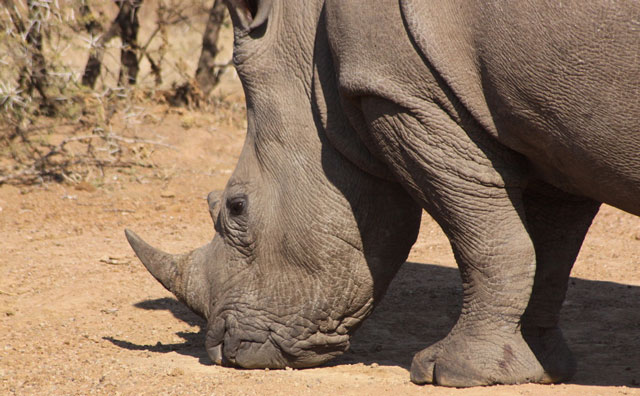
    In 2014, 1 215 rhinos were killed in South Africa for their horns, which end up in Asia as supposed cures for a variety of ailments. An estimated 30 000 African elephants were slaughtered last year for their tusks to be turned into trinkets. The world loses three rhinos a day and an elephant every 15 minutes. Simply stated, this is an unsustainable situation.

    Our team at the University of Maryland’s Institute for Advanced Computer Studies has created a new multifaceted approach to combat poaching in Africa and Asia. We devise analytical models of how animals, poachers and rangers simultaneously move through space and time by combining high-resolution satellite imagery with loads of big data — everything from moon phases, to weather, to previous poaching locations, to information from rhinos’ satellite ankle trackers — and then applying our own algorithms. We can predict where the key players are likely to be, so we can get smart about where to deploy rangers to best protect animals and thwart poachers.

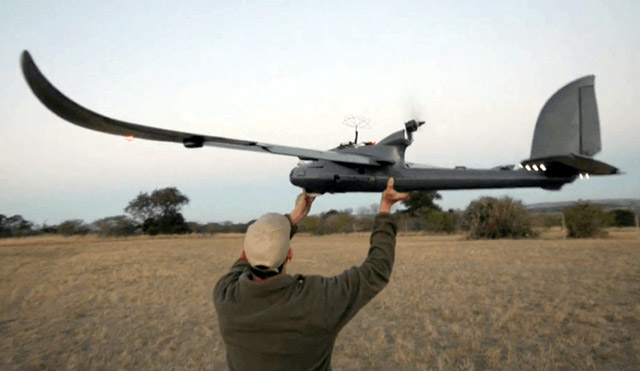
    The real game changer is our use of unmanned aerial vehicles (UAVs) or drones, which we have been flying in Africa since May 2013. We’ve found that drones, combined with other more established technology tools, can greatly reduce poaching — but only in those areas where rangers on the ground are at the ready to use our data.

    In the past 10 years, the poaching of elephants and rhinos has increased exponentially, primarily because it’s a very lucrative criminal business. Rhino horns can fetch more than US$500 000 or over $50 000/kg — this is more than the cost of any illegal narcotic — and a pair of elephant tusks can reach $125 000. Most of these illegal activities are run by Asian criminal syndicates and there are well-founded beliefs that some of these proceeds are being funnelled to political extremists in Africa.

    Technology is a marvellous tool but it must be the right solution for a particular problem. Engineering solutions that might work with the US military looking for people planting IEDs in Afghanistan will not necessarily work in the African bush, at night, searching for poachers. The most challenging question about how UAVs are used in Africa is when and where to fly them.

    Africa is too big to be simply launching small drones into the night sky with the hope of spotting rhinos or poachers by chance. This is where the analytical models come into play. Based on our models, we know, with near 90% certainty, where rhinos are likely to be on a particular night between 6.30pm and 8pm, prime time for killings. At the same time, by mathematically recreating the environment when previous poachings have occurred, we have a very good idea of when and where poachers are likely to strike.

    We don’t have to find poachers, we just need to know where the rhinos are likely to be.

    For example, a large proportion of poachings occur on the days around a full moon; it makes sense since that’s when poachers can easily see their prey. In one area where we have months of experience, we discovered that nearly every poaching occurred with 160m of a road. It’s simple. The poachers are driving the perimeter of the park in the late afternoon spotting animals near the park fence; they return just after sundown, kill the animal and drive away. We pile on the data, and the algorithms do the rest.

    Data informs rangers
    The key is that the satellites, the analytics and maths, and the UAVs are integrated into a solutions package. We crunch the data, and the model tells us precisely where we should deploy our rangers, on any specific night, so they will be in front of the rhinos and can intercept the poachers before they reach the target animal. After all, there’s no value in rangers patrolling parts of the park that these animals are unlikely to ever visit. The Kruger National Park is huge. Like a bank robber who robs banks because that’s where the money is, we want our rangers to be near the rhinos because that’s where the poaching is.

    On our first UAV flight in South Africa, the drone flew to our pre-determined spot and immediately found a female rhino and her calf; they were within 30m of a major road. We decided to circle the drone over the rhinos and within minutes a vehicle stopped at the park’s fence. Three individuals exited the car and began to climb the fence to kill the rhinos. Our rangers had been pre-deployed to the area and arrested the three poachers in under three minutes. This episode has been repeated dozens of times over the past 20 months.
    Threatened by poachers
    Threatened by poachers

    The most critical issue is not how far or how long a UAV can fly but how fast can a ranger be moved, in the bush at night, to successfully intercept poachers. The UAVs are simply our eyes in the night sky. Watching their live infrared video streams, we move our rangers as if they were chess pieces. Even with great maths, we have some variance and that means we might be 200m off a perfect positioning. The UAVs can see poachers at least 2km from the rhinos. So we have 45 minutes to move our people into the most optimal position — based on our real world trials on how quickly they can move through the bush at night.

    We’ve had hundreds of night flights with over 3 000 flight hours in the past 20 months and here is what we’ve learned. First, on the first few days after we begin operating in a new area, we arrest a number of poachers and they’re being prosecuted to the fullest extent of local laws.

    Second, our models are heuristic in that they are constantly learning and self-correcting, on the lookout for changes in the patterns they’ve identified. This is critical since poachers will try to change their behaviour once they learn that they are at an extremely high risk of apprehension. The sheer number of animals being killed shows us that, up until the UAVs take to the air, most poachers have been able to operate with impunity.

    The most important finding is that in every area where we have put our solutions package to work and the UAVs are flying, poaching stops within five to seven days. Period — it stops. The bad news is that the poachers are moving to regions where we are not operating. To really address the challenges of poaching in the region, all the nations in Southern Africa should be willing at least to test our system in their most critically endangered areas.The Conversation

    • Thomas Snitch is visiting professor in advanced computer studies at the University of Maryland
    • This article was originally published on The Conversation

    Follow TechCentral on Google News Add TechCentral as your preferred source on Google


    Thomas Snitch
    WhatsApp YouTube
    Share. Facebook Twitter LinkedIn WhatsApp Telegram Email Copy Link
    Previous ArticleWhen Facebook’s down, so are you
    Next Article Touch and go for weekend power
    Company News
    The breach is in the database - Ascent Technology Johan Lamberts

    The breach is in the database

    30 April 2026
    Hospitality sector embraces Google Workspace and Gemini to cut admin - Digicloud Africa, Rand Data Systems

    Hospitality sector embraces Google Workspace and Gemini to cut admin

    30 April 2026
    Paratus Mozambique powers 2026 Santa Maria fishing showdown

    Paratus Mozambique powers 2026 Santa Maria fishing showdown

    30 April 2026
    Opinion
    Free calls, dead voice and Shameel Joosub's Spanish ghost - Duncan McLeod

    Free calls, dead voice and Shameel Joosub’s Spanish ghost

    22 April 2026
    The conflict of interest at the heart of PayShap's slow adoption - Cheslyn Jacobs

    The conflict of interest at the heart of PayShap’s slow adoption

    26 March 2026
    South Africa's energy future hinges on getting wheeling right - Aishah Gire

    South Africa’s energy future hinges on getting wheeling right

    10 March 2026

    Subscribe to Updates

    Get the best South African technology news and analysis delivered to your e-mail inbox every morning.

    Latest Posts
    Schreiber suspends home affairs officials over fake AI references - Leon Schreiber

    Schreiber suspends home affairs officials over fake AI references

    30 April 2026
    South Africa headed to the polls in November

    South Africa headed to the polls in November

    30 April 2026
    Google humbles Big Tech's cloud heavyweights

    Google humbles Big Tech’s cloud heavyweights

    30 April 2026
    Logistics start-up Shiprazor pulls in R44-million seed round

    Logistics start-up Shiprazor pulls in R44-million seed round

    30 April 2026
    © 2009 - 2026 NewsCentral Media
    • Cookie policy (ZA)
    • TechCentral – privacy and Popia

    Type above and press Enter to search. Press Esc to cancel.

    Manage consent

    TechCentral uses cookies to enhance its offerings. Consenting to these technologies allows us to serve you better. Not consenting or withdrawing consent may adversely affect certain features and functions of the website.

    Functional Always active
    The technical storage or access is strictly necessary for the legitimate purpose of enabling the use of a specific service explicitly requested by the subscriber or user, or for the sole purpose of carrying out the transmission of a communication over an electronic communications network.
    Preferences
    The technical storage or access is necessary for the legitimate purpose of storing preferences that are not requested by the subscriber or user.
    Statistics
    The technical storage or access that is used exclusively for statistical purposes. The technical storage or access that is used exclusively for anonymous statistical purposes. Without a subpoena, voluntary compliance on the part of your Internet Service Provider, or additional records from a third party, information stored or retrieved for this purpose alone cannot usually be used to identify you.
    Marketing
    The technical storage or access is required to create user profiles to send advertising, or to track the user on a website or across several websites for similar marketing purposes.
    • Manage options
    • Manage services
    • Manage {vendor_count} vendors
    • Read more about these purposes
    View preferences
    • {title}
    • {title}
    • {title}

