
Close Menu
TechCentralTechCentral

    Subscribe to the newsletter

    Get the best South African technology news and analysis delivered to your e-mail inbox every morning.

    Facebook X (Twitter) YouTube LinkedIn
    WhatsApp Facebook X (Twitter) LinkedIn YouTube
    TechCentralTechCentral
    • News
      How a connectivity levy became a tax on telecoms

      How a connectivity levy became a tax on telecoms

      17 April 2026
      Wits project pits African creators against AI music's blind spots

      Wits project pits African creators against AI music’s blind spots

      17 April 2026
      Prosus offloads 4.5% of Delivery Hero to Uber for €270-million

      Prosus offloads 4.5% of Delivery Hero to Uber for €270-million

      17 April 2026
      Numsa digs in for 8% as Eskom wage pact splits unions

      Numsa digs in as Eskom wage pact splits unions

      17 April 2026
      Consumers get new weapon against direct marketing spam

      Consumers get new weapon against phone call spam

      16 April 2026
    • World
      Adobe bets on AI agents to fend off cheaper rivals

      Adobe bets on AI agents to fend off cheaper rivals

      16 April 2026
      Google poised to lose ad crown to Meta

      Google poised to lose ad crown to Meta

      14 April 2026
      Grand Theft Data - hackers hit Rockstar Games - Grand Theft Auto

      Grand Theft Data – hackers hit Rockstar Games

      14 April 2026
      UK PM Keir Starmer declares war on doomscrolling

      UK PM Keir Starmer declares war on doomscrolling

      13 April 2026
      Big Tech is going nuclear

      Big Tech is going nuclear

      10 April 2026
    • In-depth
      Africa switches on as Europe dims the lights

      Africa switches on as Europe dims the lights

      9 April 2026
      The biggest untapped EV market on Earth is hiding in plain sight

      The biggest untapped EV market on Earth is hiding in plain sight

      1 April 2026
      The R18-billion tech giant hiding in plain sight - Jens Montanana

      The R16-billion tech giant hiding in plain sight

      26 March 2026
      The last generation of coders

      The last generation of coders

      18 February 2026
      Sentech is in dire straits

      Sentech is in dire straits

      10 February 2026
    • TCS
      TCS | Werner Lindemann on how AI is rewriting the infosec rulebook

      TCS | Werner Lindemann on how AI is rewriting the infosec rulebook

      15 April 2026
      TCS | Donovan Marsh on AI and the future of filmmaking

      TCS | Donovan Marsh on AI and the future of filmmaking

      7 April 2026
      TCS+ | Vodacom Business moves to crack the SME tech gap - Andrew Fulton, Sannesh Beharie

      TCS+ | Vodacom Business moves to crack the SME tech gap

      7 April 2026
      TCS | MTN's Divysh Joshi on the strategy behind Pi - Divyesh Joshi

      TCS | MTN’s Divyesh Joshi on the strategy behind Pi

      1 April 2026
      Anoosh Rooplal

      TCS | Anoosh Rooplal on the Post Office’s last stand

      27 March 2026
    • Opinion
      The conflict of interest at the heart of PayShap's slow adoption - Cheslyn Jacobs

      The conflict of interest at the heart of PayShap’s slow adoption

      26 March 2026
      South Africa's energy future hinges on getting wheeling right - Aishah Gire

      South Africa’s energy future hinges on getting wheeling right

      10 March 2026
      Hold the doom: the case for a South African comeback - Duncan McLeod

      Apple just dropped a bomb on the Windows world

      5 March 2026
      R230-million in the bag for Endeavor's third Harvest Fund - Alison Collier

      VC’s centre of gravity is shifting – and South Africa is in the frame

      3 March 2026
      Hold the doom: the case for a South African comeback - Duncan McLeod

      Hold the doom: the case for a South African comeback

      26 February 2026
    • Company Hubs
      • 1Stream
      • Africa Data Centres
      • AfriGIS
      • Altron Digital Business
      • Altron Document Solutions
      • Altron Group
      • Arctic Wolf
      • Ascent Technology
      • AvertITD
      • BBD
      • Braintree
      • CallMiner
      • CambriLearn
      • CYBER1 Solutions
      • Digicloud Africa
      • Digimune
      • Domains.co.za
      • ESET
      • Euphoria Telecom
      • HOSTAFRICA
      • Incredible Business
      • iONLINE
      • IQbusiness
      • Iris Network Systems
      • Kaspersky
      • LSD Open
      • Mitel
      • NEC XON
      • Netstar
      • Network Platforms
      • Next DLP
      • Ovations
      • Paracon
      • Paratus
      • Q-KON
      • SevenC
      • SkyWire
      • Solid8 Technologies
      • Telit Cinterion
      • Telviva
      • Tenable
      • Vertiv
      • Videri Digital
      • Vodacom Business
      • Wipro
      • Workday
      • XLink
    • Sections
      • AI and machine learning
      • Banking
      • Broadcasting and Media
      • Cloud services
      • Contact centres and CX
      • Cryptocurrencies
      • Education and skills
      • Electronics and hardware
      • Energy and sustainability
      • Enterprise software
      • Financial services
      • HealthTech
      • Information security
      • Internet and connectivity
      • Internet of Things
      • Investment
      • IT services
      • Lifestyle
      • Motoring
      • Policy and regulation
      • Public sector
      • Retail and e-commerce
      • Satellite communications
      • Science
      • SMEs and start-ups
      • Social media
      • Talent and leadership
      • Telecoms
    • Events
    • Advertise
    TechCentralTechCentral
    Home » Sections » Cryptocurrencies » Explainer: How ethereum’s big overhaul will work

    Explainer: How ethereum’s big overhaul will work

    By Agency Staff15 August 2021
    Twitter LinkedIn Facebook WhatsApp Email Telegram Copy Link
    News Alerts
    WhatsApp

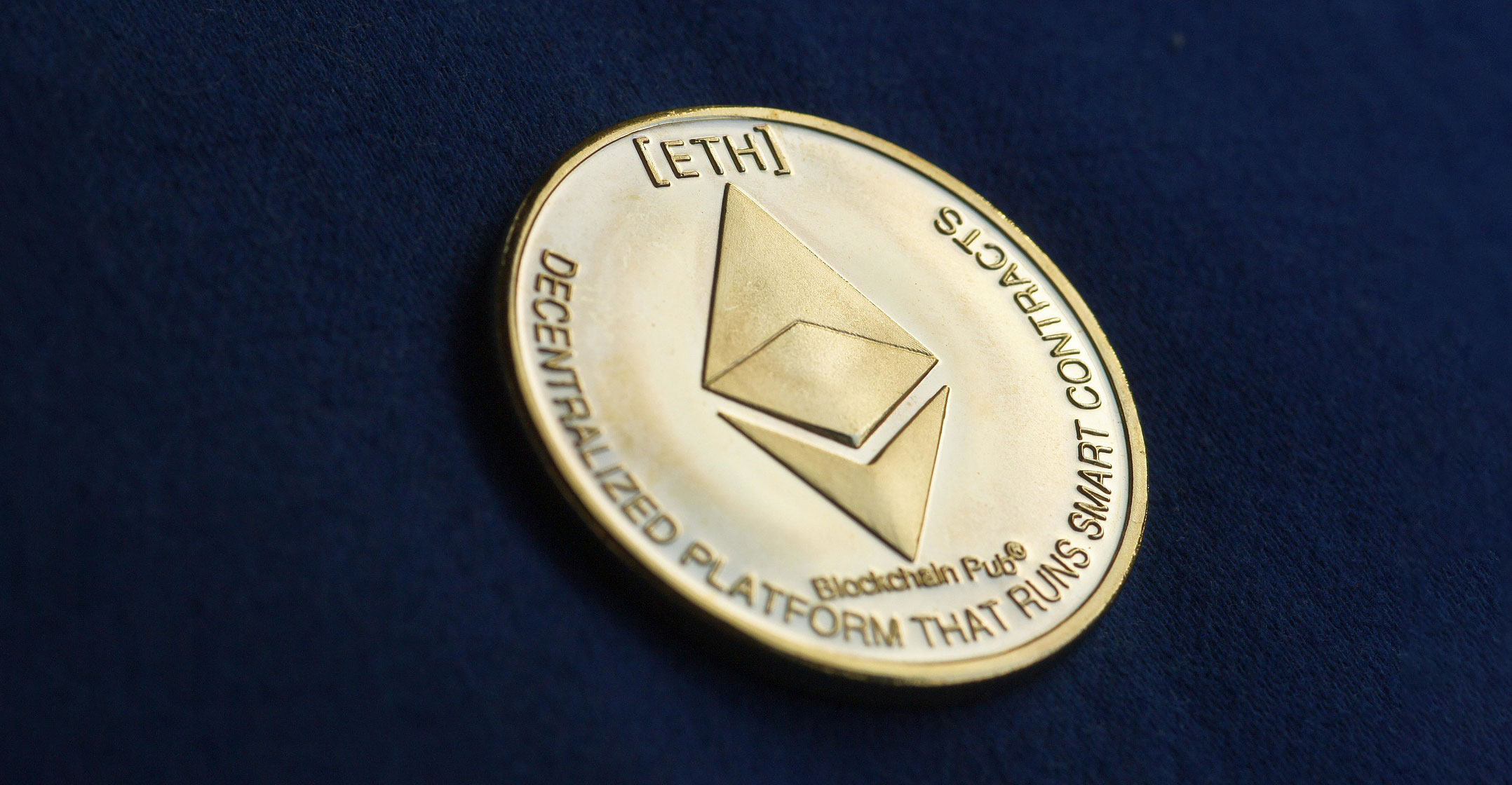
    Ethereum is making big changes. Perhaps the most important is the jettisoning of the “miners” who track and validate transactions on the the world’s most-used blockchain network. Miners are the heart of a system known as “proof of work”. It was pioneered by bitcoin and adopted by ethereum, and has come under increasing criticism for its environmental impact: Bitcoin miners now use as much electricity as some small nations. Along with being greener and faster, proponents say the switch, now planned to be phased in by early 2022, will illustrate another difference between ethereum and bitcoin: a willingness to change, and to see the network as a product of community as much as code.

    1. How are bitcoin and ethereum transactions tracked?

    Cryptocurrencies wouldn’t work without a new type of technology called blockchain that performs an old-fashioned function: maintaining a ledger of time-ordered transactions. What’s different from pen-and-paper records is that the ledger is shared on computers all around the world and operated not by a central authority, like a government or a bank, but by anyone who wants to take part. Satoshi Nakamoto is the mysterious and still-unknown creator of bitcoin and its blockchain. What Nakamoto accomplished through the proof-of-work system was solving the so-called double-spend problem that plagued earlier digital cash projects: Because the blockchain records every transaction on its network, someone trying to reuse a bitcoin that has already been spent would be easily caught.

    2. What is proof of work?

    Proof of work systems existed prior to Nakamoto’s 2008 bitcoin white paper, but the concept had never been put to such grand use. In bitcoin and ethereum today, transactions are grouped into “blocks” that are verified and published to a public “chain” every few minutes. The proof of work necessary to publish the latest block is done by miners whose computers perform millions of trial-and-error computations to change a given input into a required output. The first miner who succeeds in producing the required output shares it with the network, which checks to see if it works, and is rewarded for the effort with free cryptocurrency. The system also sets a floor of value on the coins — no one would invest the electricity, computer hardware and other expenses of mining unless coins are worth at least that amount.

    3. What are the problems with it?

    When bitcoin was barely known and worth pennies, mining was also cheap. But as its value rose, an arms race of a sort set in, as miners poured in resources in the quest to be the first to validate a block and win new coins. As a result, the system’s electricity usage is now enormous: Researchers at Cambridge University say that the bitcoin network’s annual electric bill often exceeds that of countries such as Chile and Bangladesh. This has led to calls from environmentally conscious investors, including cryptocurrency booster Elon Musk and others, to shun bitcoin and ethereum and any coins that use proof of work. It’s also led to a growing dominance by huge, centralised mining farms that’s antithetical to a system that was designed to be decentralised, since a blockchain could in theory be rewritten by a party that controlled a majority of mining power.

    4. What is proof of stake?

    The idea behind proof of stake is that the blockchain can be secured more simply if you give a group of people carrot-and-stick incentives to collaborate in checking and cross-checking transactions. It works like this:

    • Anyone who puts up, or stakes, 32 ether can take part. (Ether, the coin used to operate the ethereum system, reached values of over US$4 000 in May.)
    • People in that pool are chosen at random to be “validators” of a batch of transactions, a role that requires them to order the transactions and propose the resulting block to the network.
    • Validators share that new chunk of blockchain with a group of members of the pool who are chosen to be “attestors”. A minimum of 128 attestors are required for any given block procedure.
    • The attestors review the validator’s work and either accept it or reject it. If it’s accepted, both the validators and the attestors are given free ether.
    5. What are the system’s advantages?

    It’s thought that switching to proof of stake would cut ethereum’s energy use, estimated at 45 000GWh, by 99.9%. Like any other venture depending on cloud computing, its carbon footprint would then be only that of its servers. It also is expected to increase the network speed. That’s important for ethereum, which has ambitions of becoming a platform for a vast range of financial and commercial transactions. Currently, ethereum handles about 30 transactions per second. With sharding, Vitalik Buterin, the inventor of ethereum, thinks that could go to 100 000 per second.

    6. What are its downsides?

    In a proof-of-stake system, it would be harder than in a proof-of-work system for a group to gain control of the process, but it would still be possible: The more ether a person or group stakes, the better the chance of being chosen as a validator or attestor. Economic disincentives have been put in place to dissuade behaviour that is bad for the network. A validator that tries to manipulate the process could lose part of the 32 ether they have staked, for example. Wilson Withiam, a senior research analyst at Messari, a crypto research firm, who specialises in blockchain protocols, said the problem lies at the heart of the challenge of decentralised systems. “This is one of the most important questions going forward,” he said. “How do you help democratise the staking system?”

    7. How else is ethereum changing?

    The most recent change was called the London hard fork, which went into effect in early August. The biggest change to the underlying blockchain since 2015, the London hard fork included a fee-reduction feature called EIP 1559. The fee cut reduces the supply of ether as part of every transaction, creating the possibility that ethereum could become deflationary. As of mid-August, 3.2 ether per minute were being destroyed because of EIP 1559, according to tracking website ultrasound.money. That could put upward pressure on the price of ether going forward. Another change in the works is called sharding (mentioned earlier), which will divide the ethereum network into 64 geographic regions. Transactions within a shard would be processed separately, and the results would then be reconciled with a main network linked to all the other shards, making the overall network much faster.  — Reported by Matthew Leising, (c) 2021 Bloomberg LP

    Follow TechCentral on Google News Add TechCentral as your preferred source on Google


    Bitcoin ether Ethereum Satoshi Nakamoto top Vitalik Buterin
    WhatsApp YouTube
    Share. Facebook Twitter LinkedIn WhatsApp Telegram Email Copy Link
    Previous ArticleMusk says Starship orbital stack to be ready for flight within weeks
    Next Article Pakamile Pongwana, former Icasa CEO, passes away

    Related Posts

    Treasury moves to bring crypto under exchange-control rules

    Treasury moves to bring crypto under exchange-control rules

    25 February 2026
    Bitcoin faces another reckoning

    Bitcoin faces another reckoning

    6 February 2026
    Crypto markets reel as bitcoin slides

    Crypto markets reel as bitcoin slides

    5 February 2026
    Company News
    Fibre: the backbone of South Africa's digital health ecosystem - Mweb

    Fibre: the backbone of South Africa’s digital health ecosystem

    16 April 2026
    New man to accelerate wholesale connectivity in the DRC - Gaetan Soltesz, FAST Congo

    New man to accelerate wholesale connectivity in the DRC

    15 April 2026
    Avast Business and Avert IT Distribution rewrite the SMB cybersecurity playbook

    Avast Business and Avert IT Distribution rewrite the SMB cybersecurity playbook

    15 April 2026
    Opinion
    The conflict of interest at the heart of PayShap's slow adoption - Cheslyn Jacobs

    The conflict of interest at the heart of PayShap’s slow adoption

    26 March 2026
    South Africa's energy future hinges on getting wheeling right - Aishah Gire

    South Africa’s energy future hinges on getting wheeling right

    10 March 2026
    Hold the doom: the case for a South African comeback - Duncan McLeod

    Apple just dropped a bomb on the Windows world

    5 March 2026

    Subscribe to Updates

    Get the best South African technology news and analysis delivered to your e-mail inbox every morning.

    Latest Posts
    How a connectivity levy became a tax on telecoms

    How a connectivity levy became a tax on telecoms

    17 April 2026
    Wits project pits African creators against AI music's blind spots

    Wits project pits African creators against AI music’s blind spots

    17 April 2026
    Prosus offloads 4.5% of Delivery Hero to Uber for €270-million

    Prosus offloads 4.5% of Delivery Hero to Uber for €270-million

    17 April 2026
    Numsa digs in for 8% as Eskom wage pact splits unions

    Numsa digs in as Eskom wage pact splits unions

    17 April 2026
    © 2009 - 2026 NewsCentral Media
    • Cookie policy (ZA)
    • TechCentral – privacy and Popia

    Type above and press Enter to search. Press Esc to cancel.

    Manage consent

    TechCentral uses cookies to enhance its offerings. Consenting to these technologies allows us to serve you better. Not consenting or withdrawing consent may adversely affect certain features and functions of the website.

    Functional Always active
    The technical storage or access is strictly necessary for the legitimate purpose of enabling the use of a specific service explicitly requested by the subscriber or user, or for the sole purpose of carrying out the transmission of a communication over an electronic communications network.
    Preferences
    The technical storage or access is necessary for the legitimate purpose of storing preferences that are not requested by the subscriber or user.
    Statistics
    The technical storage or access that is used exclusively for statistical purposes. The technical storage or access that is used exclusively for anonymous statistical purposes. Without a subpoena, voluntary compliance on the part of your Internet Service Provider, or additional records from a third party, information stored or retrieved for this purpose alone cannot usually be used to identify you.
    Marketing
    The technical storage or access is required to create user profiles to send advertising, or to track the user on a website or across several websites for similar marketing purposes.
    • Manage options
    • Manage services
    • Manage {vendor_count} vendors
    • Read more about these purposes
    View preferences
    • {title}
    • {title}
    • {title}