Close Menu
TechCentralTechCentral

    Subscribe to the newsletter

    Get the best South African technology news and analysis delivered to your e-mail inbox every morning.

    Facebook X (Twitter) YouTube LinkedIn
    WhatsApp Facebook X (Twitter) LinkedIn YouTube
    TechCentralTechCentral
    • News
      Shoprite ranks cybersecurity as its number one risk - Pieter Engelbrecht

      Shoprite ranks cybersecurity as its number one risk

      9 October 2026
      Standard Bank to take up to $200-million stake in OPay - Sim Tshabalala

      Standard Bank to take up to $200-million stake in OPay

      9 October 2026
      Shoprite takes on the banking apps with airtime on Sixty60

      Shoprite takes on the banking apps with airtime on Sixty60

      9 October 2026
      How to tell telemarketers to get lost - officially

      How to tell telemarketers to get lost – officially

      9 October 2026
      Data centres are the new front line in the Russia-Ukraine war

      Data centres are the new front line in the Russia-Ukraine war

      9 October 2026
    • World
      SpaceX takes aim at US wireless carriers with spectrum acquisition

      Starlink is coming for your mobile operator

      9 October 2026
      The AI PC is finally here. It's just very expensive - Jensen Huang, Satya Nadella

      The AI PC is finally here. It’s just very expensive

      8 October 2026
      The memory crunch is making Samsung fabulously rich

      The memory crunch is making Samsung fabulously rich

      8 October 2026
      SpaceX to borrow $40-billion to buy Nvidia chips

      SpaceX to borrow $40-billion to buy Nvidia chips

      7 October 2026
      South Pole neutrino hunter wins Nobel Prize in Physics - Francis Halzen

      South Pole neutrino hunter wins Nobel Prize in Physics

      7 October 2026
    • In-depth

      10 days that changed the course of AI

      21 September 2026
      Meta to the AI industry: slow down without us - Mark Zuckerberg

      Meta to the AI industry: slow down without us

      16 September 2026
      Google DeepMind CEO Demis Hassabis. Image: John Sears

      The plan to stop AI from breaking the world

      16 July 2026
      The internet has a Strait of Hormuz problem

      The internet has a Strait of Hormuz problem

      15 July 2026
      AI boom sparks rally, frenzy and fear

      AI boom sparks rally, frenzy and fear

      11 June 2026
    • TCS
      W&W | LDV's Gerhard Moolman on electric bakkies, fleet orders and 'school fees'

      W&W | LDV’s Gerhard Moolman on electric bakkies and fleets

      9 October 2026
      TCS | Frogfoot sees bigger fibre deals coming - TechCentral Show guests Abraham van der Merwe and Shane Chorley

      TCS | Frogfoot sees bigger fibre deals coming

      8 October 2026
      Meet the CIO | Vodacom's Mohamed Sami on the agentic future

      Meet the CIO | Vodacom’s Mohamed Sami on the agentic future

      5 October 2026
      Lexi Novitske, general partner at Norrsken22, on the TechCentral Show

      TCS | Norrsken22’s Lexi Novitske on how China is winning African tech

      1 October 2026
      TCS | Dominic White and Adam Ely on AI agents going rogue

      TCS | Dominic White and Adam Ely on AI agents going rogue

      29 September 2026
    • Opinion
      When a machine can choose, who does it become? Fanie van Rooyen

      When a machine can choose, who does it become?

      9 October 2026
      Let South Africans jailbreak their way to digital sovereignty - Dirk de Vos

      Let South Africans jailbreak their way to digital sovereignty

      5 October 2026
      South Africa's next energy crisis is in the accounts department - Craig Holmes

      South Africa’s next energy crisis is in the accounts department

      29 September 2026
      The steam engine lesson AI doomsayers keep missing - Sam Clarke

      The steam engine lesson AI doomsayers keep missing

      28 September 2026
      Let South Africans jailbreak their way to digital sovereignty - Dirk de Vos

      Regulating AI: apply the laws we have first

      21 September 2026
    • Company News
      • 1Stream
      • Africa Data Centres
      • AfriGIS
      • Altron Digital Business
      • Altron Document Solutions
      • Altron Group
      • Arctic Wolf
      • Ascent Technology
      • AvertITD
      • BBD
      • Braintree
      • CallMiner
      • CambriLearn
      • CM.com
      • Contactable
      • CYBER1 Solutions
      • Digicloud Africa
      • Digimune
      • Domains.co.za
      • ESET
      • Euphoria Telecom
      • HOSTAFRICA
      • Incredible Business
      • iONLINE
      • IQbusiness
      • Iris Network Systems
      • Kaspersky
      • LSD Open
      • Mitel
      • NEC XON
      • Netstar
      • Network Platforms
      • Next DLP
      • Ovations
      • Paracon
      • Paratus
      • Publishared
      • Q-KON
      • SevenC
      • SkyWire
      • Solid8 Technologies
      • Telit Cinterion
      • Telviva
      • Tenable
      • Vertiv
      • Videri Digital
      • Vodacom Business
      • Vox
      • Wipro
      • Workday
      • XLink
    • Sections
      • AI and machine learning
      • Banking
      • Broadcasting and Media
      • Cloud services
      • Contact centres and CX
      • Cryptocurrencies
      • Education and skills
      • Electronics and hardware
      • Energy and sustainability
      • Enterprise software
      • Financial services
      • HealthTech
      • Information security
      • Internet and connectivity
      • Internet of Things
      • Investment
      • IT services
      • Lifestyle
      • Policy and regulation
      • Public sector
      • Retail and e-commerce
      • Satellite communications
      • Science
      • SMEs and start-ups
      • Social media
      • Talent and leadership
      • Telecoms
      • Watts & Wheels
    • Events
    • Advertise
    TechCentralTechCentral
    Home » Sections » Talent and leadership » Gordon Moore dead at 94

    Gordon Moore dead at 94

    Intel co-founder Gordon Moore, a pioneer in the semiconductor industry, died on Friday at the age of 94.
    By Agency Staff25 March 2023
    Twitter LinkedIn Facebook WhatsApp Email Telegram Copy Link
    Get breaking news on WhatsApp

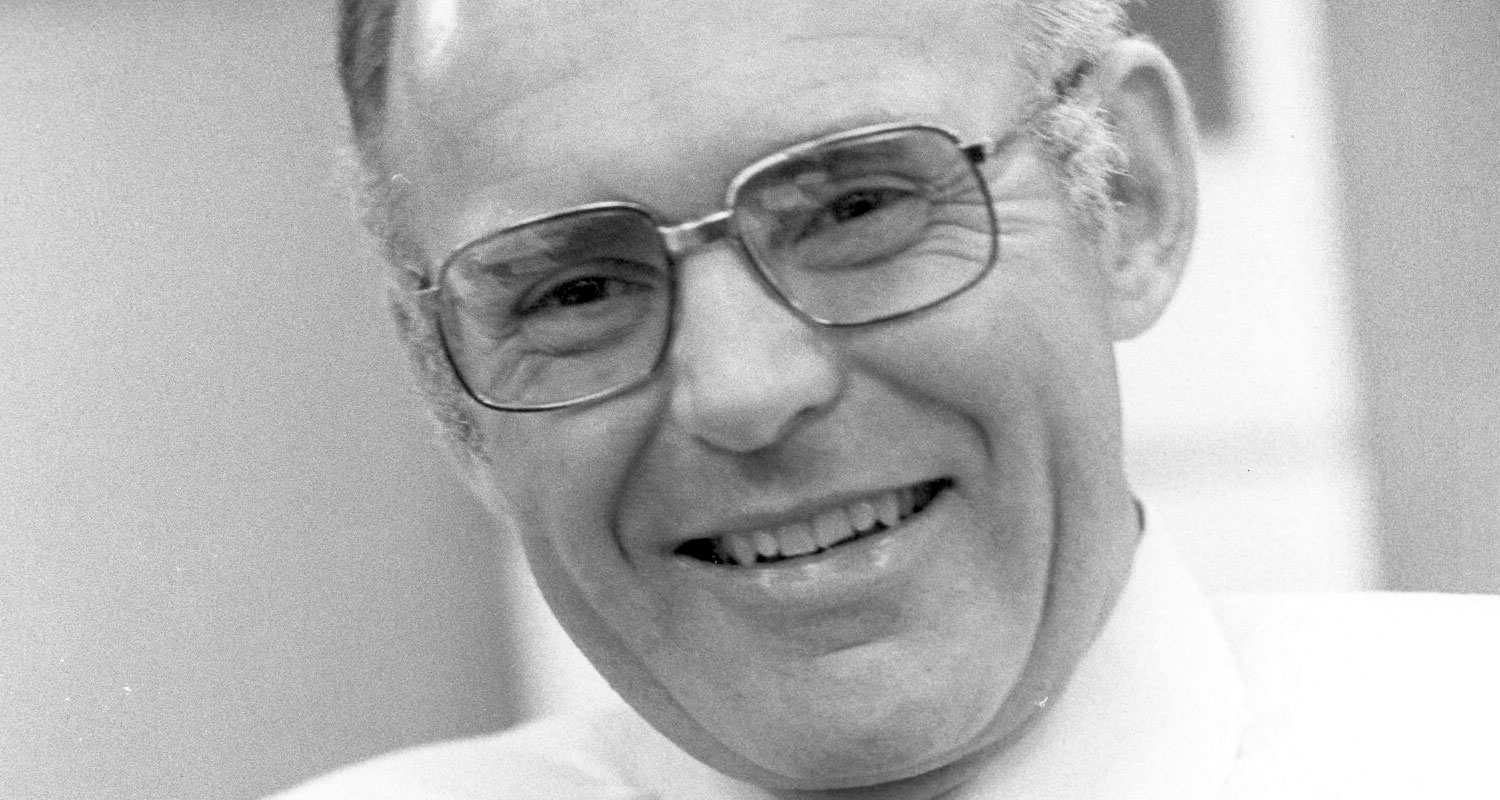
    Intel co-founder Gordon Moore

    Intel co-founder Gordon Moore, a pioneer in the semiconductor industry whose Moore’s Law predicted a steady rise in computing power for decades, died on Friday at the age of 94.

    Intel and Moore’s family philanthropic foundation said he died surrounded by family at his home in Hawaii.

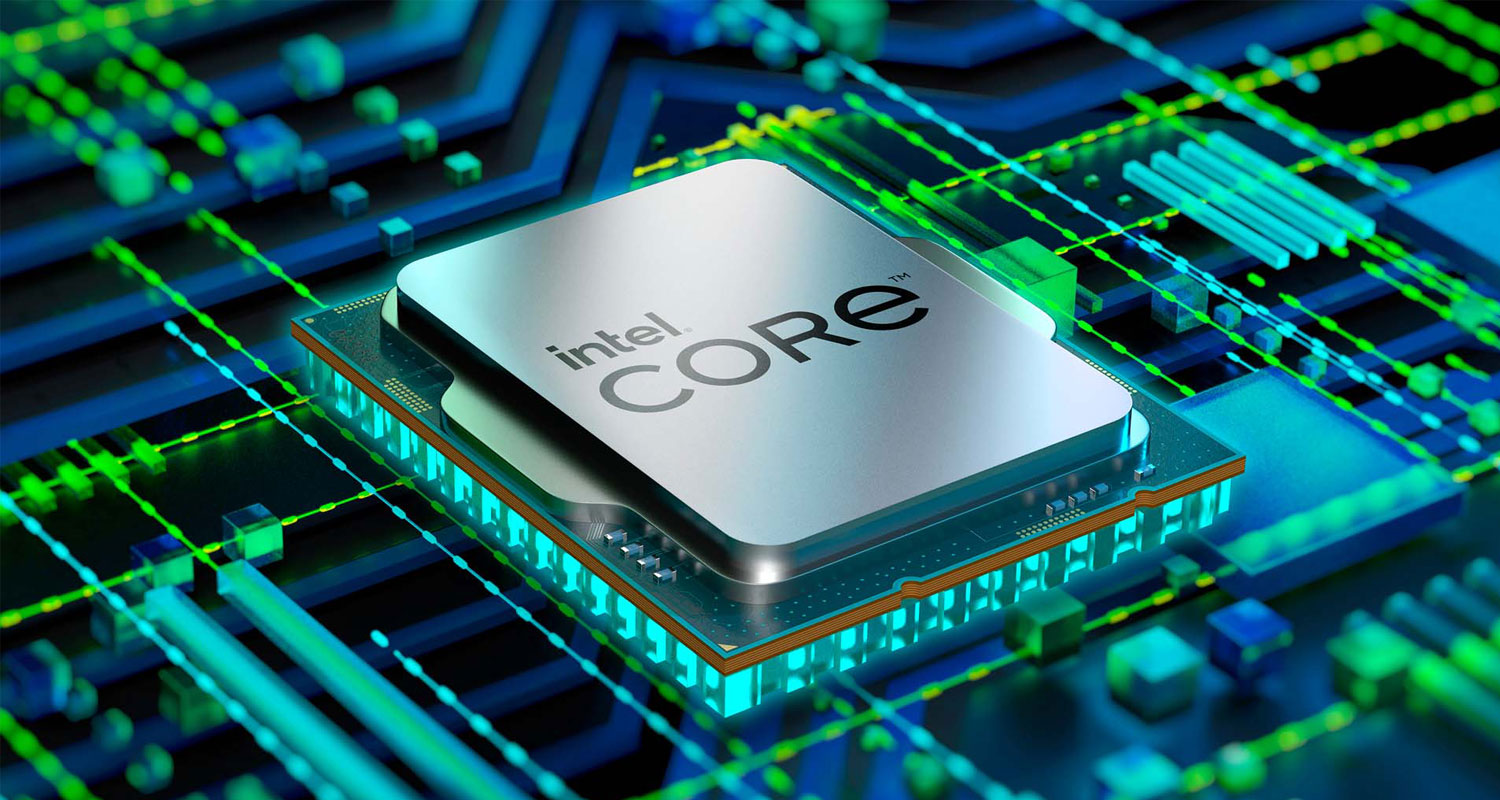
    Co-launching Intel in 1968, Moore was the rolled-up-sleeves engineer within a triumvirate of technology luminaries who eventually put “Intel Inside” processors in more than 80% of the world’s personal computers.

    Integrated circuits will lead to such wonders as home computers — or at least terminals connected to a central computer

    In an article he wrote in 1965, Moore observed that, thanks to improvements in technology, the number of transistors on microchips had roughly doubled every year since integrated circuits were invented a few years before.

    His prediction that the trend would continue became known as “Moore’s Law” and, later amended to every two years, it helped push Intel and rival chip makers to target their research and development resources aggressively to make sure that rule of thumb came true.

    “Integrated circuits will lead to such wonders as home computers — or at least terminals connected to a central computer — automatic controls for automobiles, and personal portable communications equipment,” Moore wrote in his paper, two decades before the PC revolution and more than 40 years before Apple launched the iPhone.

    After Moore’s article, chips became more efficient and less expensive at an exponential rate, helping drive much of the world’s technological progress for half a century and allowing the advent of not just PCs, but the Internet and Silicon Valley giants like Apple, Facebook and Google.

    ‘A phenomenal ride’

    “It sure is nice to be at the right place at the right time,” Moore said in an interview around 2005. “I was very fortunate to get into the semiconductor industry in its infancy. And I had an opportunity to grow from the time where we couldn’t make a single silicon transistor to the time where we put 1.7 billion of them on one chip! It’s been a phenomenal ride.”

    In recent years, Intel rivals such as Nvidia have contended that Moore’s Law no longer holds as improvements in chip manufacturing have slowed down.

    But despite manufacturing stumbles that have caused Intel to lose market share in recent years, current CEO Pat Gelsinger has said he believes Moore’s Law still holds as the company invests billions of dollars in a turnaround effort.

    Morris Chang, the founder of Taiwan Semiconductor Manufacturing Co, the world’s largest contract chip maker, said Moore was a great and respected friend for more than six decades.

    “With Gordon gone, almost all of my first-generation semiconductor colleagues are gone,” Chang said in a statement released via TSMC.
    Even though he predicted the PC movement, Moore told Forbes magazine that he did not buy a home computer himself until the late 1980s.

    A San Francisco native, Moore earned a PhD in chemistry and physics in 1954 at the California Institute of Technology.

    He went to work at the Shockley Semiconductor Laboratory where he met future Intel co-founder Robert Noyce. Part of the “traitorous eight”, they departed in 1957 to launch Fairchild Semiconductor. In 1968, Moore and Noyce left Fairchild to start the memory chip company soon to be named Intel, an abbreviation of Integrated Electronics.

    Moore and Noyce’s first hire was another Fairchild colleague, Andy Grove, who would lead Intel through much of its explosive growth in the 1980s and 1990s.

    Moore described himself to Fortune magazine as an “accidental entrepreneur” who had no burning urge to start a company — but he, Noyce and Grove formed a powerhouse partnership.

    Moore was executive president until 1975 although he and CEO Noyce considered themselves equals

    While Noyce had theories about how to solve chip engineering problems, Moore was the person who rolled up his sleeves and spent countless hours tweaking transistors and refining Noyce’s broad and sometimes ill-defined ideas, efforts that often paid off. Grove filled out the group as Intel’s operations and management expert.

    Moore’s obvious talent inspired other engineers working for him, and, under his and Noyce’s leadership, Intel invented the microprocessors that would open the way to the PC revolution.

    He was executive president until 1975 although he and CEO Noyce considered themselves equals. From 1979 to 1987 Moore was chairman and CEO and he remained chairman until 1997.

    In 2023, Forbes magazine estimated his net worth at US$7.2-billion.

    Passion

    Moore was a longtime sport fisherman, pursuing his passion all over the world and in 2000 he and his wife Betty started a foundation that focused on environmental causes. The foundation, which took on projects such as protecting the Amazon River basin and salmon streams in the US, Canada and Russia, was funded by Moore’s donation of some $5-billion in Intel stock.

    He also gave hundreds of millions to his alma mater, the California Institute of Technology, to keep it at the forefront of technology and science, and backed the Search for Extraterrestrial Intelligence project known as Seti.

    Moore received a Medal of Freedom, the US’s highest civilian honour, from President George W Bush in 2002. He and his wife had two children.  — Noel Randewich and Stephen Nellis, with Ben Blanchard, (c) 2023 Reuters

    Get TechCentral’s daily newsletter

    Add TechCentral as a preferred source on GoogleFollow TechCentral on Google NewsGet breaking news on WhatsApp


    Andy Grove Gordon Moore Intel Morris Chang Pat Gelsinger Robert Noyce TSMC
    WhatsApp YouTube
    Share. Facebook Twitter LinkedIn WhatsApp Telegram Email Copy Link
    Previous ArticleMicrosoft threatens to restrict data from rival AI search tools
    Next Article Capitec Pay: revolutionising the way South Africans pay

    Related Posts

    The AI PC is finally here. It's just very expensive - Jensen Huang, Satya Nadella

    The AI PC is finally here. It’s just very expensive

    8 October 2026
    The memory crunch is making Samsung fabulously rich

    The memory crunch is making Samsung fabulously rich

    8 October 2026
    A simple guide to modern laptop processors for small businesses - Incredible

    A simple guide to modern laptop processors for small businesses

    2 October 2026
    Company News
    Why fintechs need an insurance partner they can trust - Hollard Insurance

    Why fintechs need an insurance partner they can trust

    8 October 2026
    Reusable KYC means the end of 'please upload your ID' - Contactable

    Reusable KYC means the end of ‘please upload your ID’

    8 October 2026
    Eliminating the 'toggle tax': how CRM integration changes customer experience - Martie de Beer

    Eliminating the ‘toggle tax’: how CRM integration changes customer experience

    8 October 2026
    Opinion
    When a machine can choose, who does it become? Fanie van Rooyen

    When a machine can choose, who does it become?

    9 October 2026
    Let South Africans jailbreak their way to digital sovereignty - Dirk de Vos

    Let South Africans jailbreak their way to digital sovereignty

    5 October 2026
    South Africa's next energy crisis is in the accounts department - Craig Holmes

    South Africa’s next energy crisis is in the accounts department

    29 September 2026

    Subscribe to Updates

    Get the best South African technology news and analysis delivered to your e-mail inbox every morning.

    Latest Posts
    Shoprite ranks cybersecurity as its number one risk - Pieter Engelbrecht

    Shoprite ranks cybersecurity as its number one risk

    9 October 2026
    Standard Bank to take up to $200-million stake in OPay - Sim Tshabalala

    Standard Bank to take up to $200-million stake in OPay

    9 October 2026
    Shoprite takes on the banking apps with airtime on Sixty60

    Shoprite takes on the banking apps with airtime on Sixty60

    9 October 2026
    How to tell telemarketers to get lost - officially

    How to tell telemarketers to get lost – officially

    9 October 2026
    © 2009 - 2026 NewsCentral Media
    Built and maintained by Chronon
    • Cookie policy (ZA)
    • TechCentral – privacy and Popia

    Type above and press Enter to search. Press Esc to cancel.

    Manage consent

    TechCentral uses cookies to enhance its offerings. Consenting to these technologies allows us to serve you better. Not consenting or withdrawing consent may adversely affect certain features and functions of the website.

    Functional Always active
    The technical storage or access is strictly necessary for the legitimate purpose of enabling the use of a specific service explicitly requested by the subscriber or user, or for the sole purpose of carrying out the transmission of a communication over an electronic communications network.
    Preferences
    The technical storage or access is necessary for the legitimate purpose of storing preferences that are not requested by the subscriber or user.
    Statistics
    The technical storage or access that is used exclusively for statistical purposes. The technical storage or access that is used exclusively for anonymous statistical purposes. Without a subpoena, voluntary compliance on the part of your Internet Service Provider, or additional records from a third party, information stored or retrieved for this purpose alone cannot usually be used to identify you.
    Marketing
    The technical storage or access is required to create user profiles to send advertising, or to track the user on a website or across several websites for similar marketing purposes.
    • Manage options
    • Manage services
    • Manage {vendor_count} vendors
    • Read more about these purposes
    View preferences
    • {title}
    • {title}
    • {title}
    🇿🇦 Sign up to the TechCentral newsletter