Close Menu
TechCentralTechCentral

    Subscribe to the newsletter

    Get the best South African technology news and analysis delivered to your e-mail inbox every morning.

    Facebook X (Twitter) YouTube LinkedIn
    WhatsApp Facebook X (Twitter) LinkedIn YouTube
    TechCentralTechCentral
    • News
      Nedbank hires MTN's former tech chief as group CIO - Nikos Angelopoulos

      Nedbank hires MTN’s former tech chief as group CIO

      31 July 2026
      Eskom's diesel bill falls 86% as breakdowns hit eight-year low

      Eskom’s diesel bill falls 86% as breakdowns hit eight-year low

      31 July 2026
      Ramaphosa signs off on taking the grid away from Eskom

      Ramaphosa signs off on taking the grid away from Eskom

      31 July 2026
      Microsoft just had the biggest day in stock market history

      Microsoft just had the biggest day in stock market history

      31 July 2026
      MTN Nigeria's growth engine stalled in second quarter - Karl Toriola

      MTN Nigeria’s growth engine stalled in second quarter

      31 July 2026
    • World
      Meta AI will now tell parents if their teen is in crisis

      Meta AI will now tell parents if their teen is in crisis

      17 July 2026
      IBM shares crash 25% as AI upends software spending - Arvind Krishna

      IBM shares crash 25% as AI upends software spending

      15 July 2026
      Jony Ive's first OpenAI device: an AI smart speaker - Jony Ive and Sam Altman

      Jony Ive’s first OpenAI device: an AI smart speaker

      15 July 2026
      Stripe, Advent in talks to buy PayPal for $53-billion

      Stripe, Advent in talks to buy PayPal for $53-billion

      15 July 2026
      Memory crisis sends smartphone market into steep decline

      Memory crisis sends smartphone market into steep decline

      13 July 2026
    • In-depth
      The plan to stop AI from breaking the world - Google DeepMind CEO Demis Hassabis. Image: John Sears

      The plan to stop AI from breaking the world

      16 July 2026
      The internet has a Strait of Hormuz problem

      The internet has a Strait of Hormuz problem

      15 July 2026
      AI boom sparks rally, frenzy and fear

      AI boom sparks rally, frenzy and fear

      11 June 2026
      Every plug-in hybrid on sale in South Africa, ranked by price - Lamborghini Temerario

      Every plug-in hybrid on sale in South Africa, ranked by price

      7 June 2026
      What Wi-Fi 8 will mean for wireless networks

      What Wi-Fi 8 will mean for wireless networks

      1 June 2026
    • TCS
      TCS+ | Why South African workers must become supervisors of digital labour - Accelera Digital Group Cliff de Wit

      TCS+ | Why South African workers must become supervisors of digital labour

      31 July 2026
      TCS | Rapid deployment rules can't work without municipalities: ACT - Nomvuyiso Batyi

      TCS | Icasa’s rules skip the real bottleneck: ACT

      30 July 2026
      TCS+ | iStore Business on why Apple makes sense for SMEs - Sudesh Pillay and Tamia Nontsikelelo

      TCS+ | iStore Business on why Apple makes sense for SMEs

      30 July 2026
      TCS+ | A smarter approach to cloud for South African businesses - Joel Chacko and Jonathan Oaker

      TCS+ | A smarter approach to cloud for South African businesses

      28 July 2026
      TCS | How Optasia lends billions to people banks can't see - Salvador Anglada

      TCS | How Optasia lends billions to people banks can’t see

      23 July 2026
    • Opinion
      The author, Jannie van Zyl

      Selling vapour is corporate suicide in slow motion

      16 July 2026
      Brazil's online gambling crackdown is a lesson for South Africa

      How Amazon outmanoeuvred Starlink in South Africa

      15 July 2026
      The Popia problem with agentic AI - Herman Haasbroek

      The Popia problem with agentic AI

      14 July 2026
      The author, Fanie van Rooyen

      South Africa can still catch the AI wave – here’s how

      7 July 2026
      The author, Fanie van Rooyen

      The AI utopia South Africa can’t afford

      1 July 2026
    • Company Hubs
      • 1Stream
      • Africa Data Centres
      • AfriGIS
      • Altron Digital Business
      • Altron Document Solutions
      • Altron Group
      • Arctic Wolf
      • Ascent Technology
      • AvertITD
      • BBD
      • Braintree
      • CallMiner
      • CambriLearn
      • CM Telecom
      • Contactable
      • CYBER1 Solutions
      • Digicloud Africa
      • Digimune
      • Domains.co.za
      • ESET
      • Euphoria Telecom
      • HOSTAFRICA
      • Incredible Business
      • iONLINE
      • IQbusiness
      • Iris Network Systems
      • Kaspersky
      • LSD Open
      • Mitel
      • NEC XON
      • Netstar
      • Network Platforms
      • Next DLP
      • Ovations
      • Paracon
      • Paratus
      • Q-KON
      • SevenC
      • SkyWire
      • Solid8 Technologies
      • Telit Cinterion
      • Telviva
      • Tenable
      • Vertiv
      • Videri Digital
      • Vodacom Business
      • Vox
      • Wipro
      • Workday
      • XLink
    • Sections
      • AI and machine learning
      • Banking
      • Broadcasting and Media
      • Cloud services
      • Contact centres and CX
      • Cryptocurrencies
      • Education and skills
      • Electronics and hardware
      • Energy and sustainability
      • Enterprise software
      • Financial services
      • HealthTech
      • Information security
      • Internet and connectivity
      • Internet of Things
      • Investment
      • IT services
      • Lifestyle
      • Policy and regulation
      • Public sector
      • Retail and e-commerce
      • Satellite communications
      • Science
      • SMEs and start-ups
      • Social media
      • Talent and leadership
      • Telecoms
      • Watts & Wheels
    • Events
    • Advertise
    TechCentralTechCentral
    Home » Opinion » Cyril Ramaphosa » ‘Here’s our plan to end load shedding’: Cyril Ramaphosa

    ‘Here’s our plan to end load shedding’: Cyril Ramaphosa

    By Cyril Ramaphosa28 September 2020
    Twitter LinkedIn Facebook WhatsApp Email Telegram Copy Link
    News Alerts
    WhatsApp
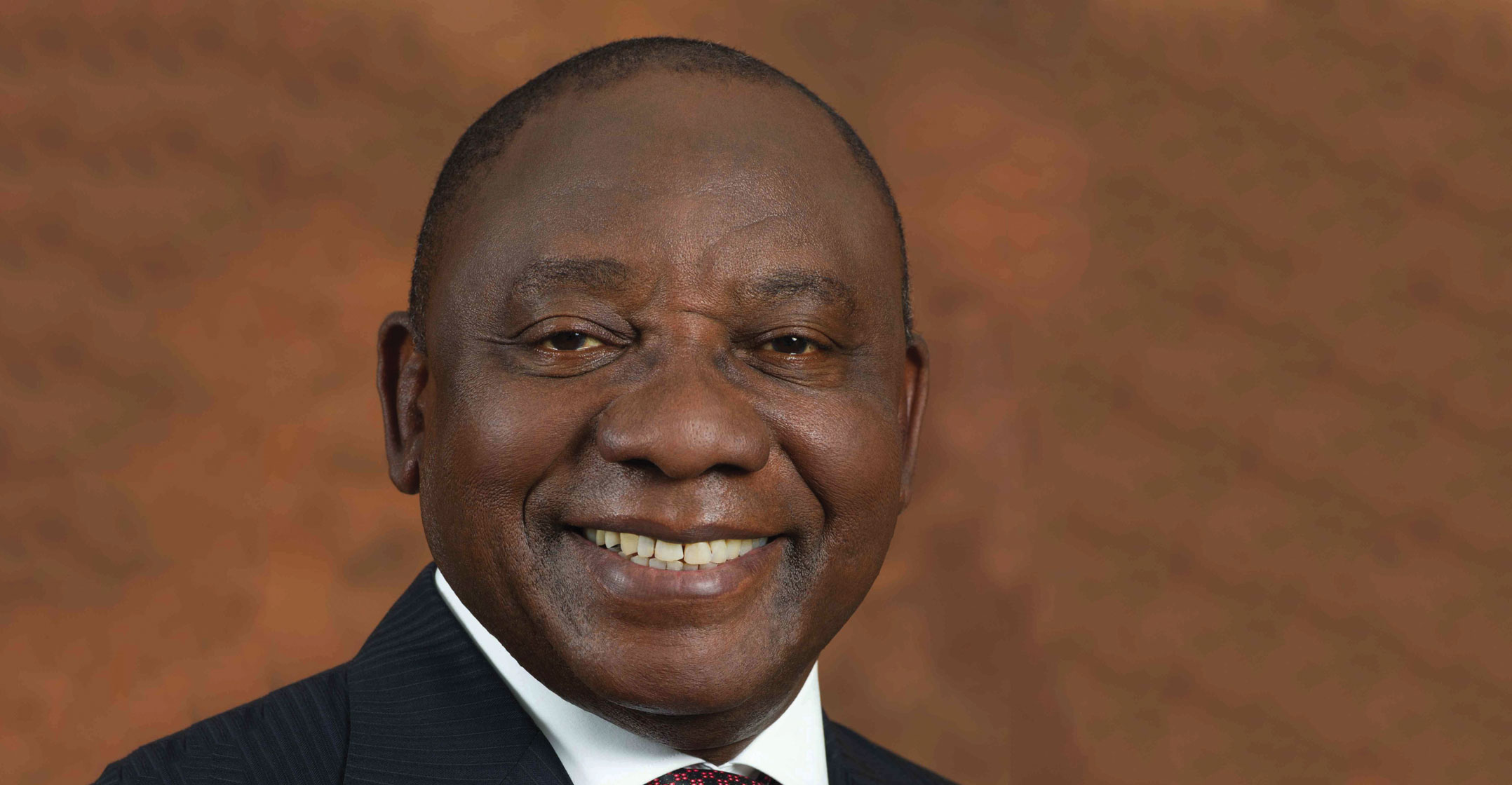
    Cyril Ramaphosa. Image: GCIS

    Every South African knows how important electricity is in our lives. When it is, available no one thinks about it. But when we have load shedding, everything just goes wrong in our lives at home, in our work environment and practically in every facet of our lives.

    As we know only too well, our energy security is precarious and load shedding imposes very high costs on our economy. Our fleet of coal-fired power stations is ageing, vulnerable to breakdowns and incurs significant maintenance costs.

    Reliable, secure and affordable energy supply is the lifeblood of any economy. To limit the impact of climate change, it is equally important that energy is sustainable and environmentally sound.

    As we know only too well, our energy security is precarious and load shedding imposes very high costs on our economy

    We have one of the most energy-intensive economies in the world. While our energy sources have become more diverse than before with the increasing inclusion of renewable energy sources, we remain heavily dependent on fossil fuels, mainly coal. We are also a water-stressed country and coal power generation consumes vast quantities of water.

    A government, we have decided that to grow our economy and attract investment, secure and sustainable energy supply is paramount. It is therefore vital that we significantly, and speedily, increase our electricity generation capacity.

    Clear intention

    Following the commitments we made in the state-of-the-nation address in February, government has now gazetted ministerial determinations that will enable the development of more than 11.8GW of additional power generation. To give a sense of the scale of this development, South Africa currently has in the region of over 30GW of electricity available on the national grid each day.

    This signals government’s clear intention to move ahead with one of the key reforms that is needed to unlock the growth of our economy and attract much-needed investment.

    This new energy will be procured from diverse sources, including solar, wind, gas, coal and storage. While meeting our energy needs well into the future, this new capacity will also help us meet our international obligations to reduce carbon emissions.
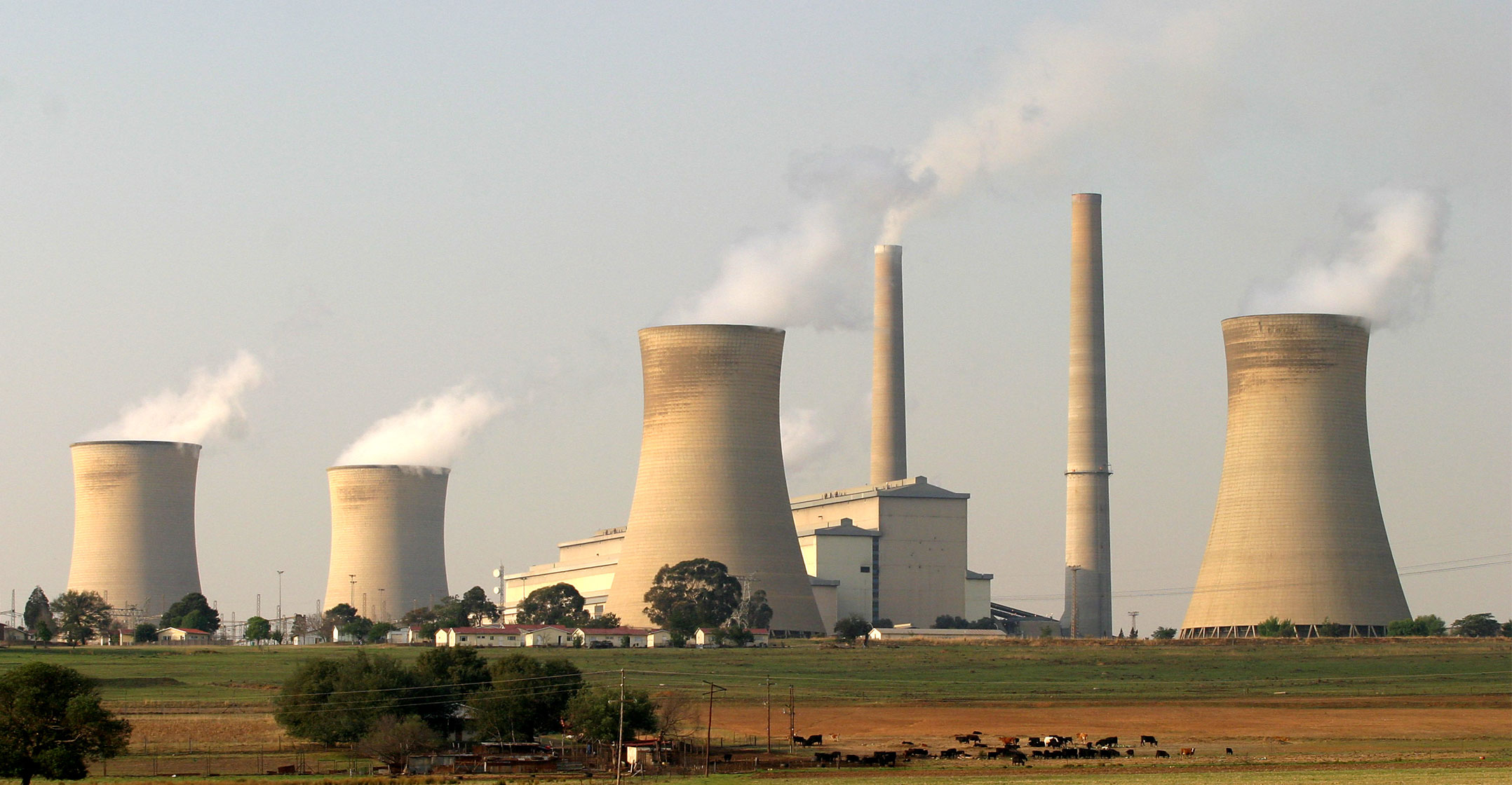
    This electricity will be procured through a transparent tendering process that prioritises competitiveness and cost-effectiveness. Most importantly, at a time when energy supply is severely constrained, new generation projects that can be connected to the grid as soon as possible will be prioritised. The next step, which will be following soon, is to initiate various procurement bidding windows including opening Bid Window 5 of the Renewable Energy Independent Power Producer Programme.

    This is in addition to the 2GW of emergency power that is being urgently sought through the Risk Mitigation Procurement Programme to meet the country’s current energy shortfall.

    In an effort to facilitate electricity self-generation and as part of the reform process, we have removed the licensing requirement for self-generation projects under 1MW. So far, 156 self-generation facilities under 1MW have been registered, with a total installed capacity of 72MW.

    For facilities that can generate above 1MW, energy regulator Nersa is improving its licensing processes to improve turnaround time

    For facilities that can generate above 1MW, energy regulator Nersa is improving its licensing processes to improve turnaround time. So far, five such facilities, with total installed capacity of 25MW, have been licensed. Further work is being undertaken to reform the regulatory environment to ensure that we make fuller use of the great potential in this country for self-generation among commercial and industrial users.

    As part of our regulatory reforms, draft amendments to regulations that would enable municipalities in good standing to procure their own power from independent power producers will soon be gazetted.

    Just transition

    Stabilising our state-owned enterprises is an important part of the reform process. In this regard, we are working to restore Eskom’s operational capabilities and restructure Eskom to fundamentally change the way in which we generate and transmit electricity in our country. Our vision is to lead South Africa though a just transition which ensures that as many people as possible benefit from the investment, growth and job creation that we can achieve through expanding our electricity generation capacity.

    We are making progress in overcoming the challenges that Eskom has been facing over a number of years. As part of the necessary restructuring process, separate governance structures in the form of boards have been appointed for the power utility’s generation, transmission and distribution divisions. Improvements are continuing in municipal debt collection. Despite recent challenges we have faced with load shedding, maintenance work is continuing at power stations.

    The concerns that have been raised about energy policy uncertainty are being addressed on an ongoing basis through the reform process that is at the centre of our national economic recovery effort.

    The progress we are making in the area of energy policy reform isn’t just critical to fixing the current power supply crisis. It will begin to reduce the impact of electricity interruptions on businesses. It will create investment possibilities – and upstream and downstream industrialisation opportunities – as we build new generation capacity and expand the electricity grid in the years ahead.

    That is why addressing and overcoming the financial, structural, managerial and operational challenges at Eskom has had to take place alongside fundamental structural reforms to assure the future of our energy supply.

    The crucial first step in this reform process was the release of the Integrated Resource Plan last year. The IRP updates the national energy forecast and provides a road map for our energy sector for the next decade.

    The procurement of power from independent producers will significantly increase investment in the sector

    It clearly outlines our energy mix, sets out key policy supply and demand decisions to support electricity infrastructure development, and paves the way for investment in low-carbon, climate change resilient energy sources and technologies.

    The latest developments I have highlighted here represent a huge, fundamental step forward in the implementation of our ambitious energy plan.

    Confidence

    The procurement of power from independent producers will significantly increase investment in the sector, particularly in renewables and gas. This will attract greater investment in energy and create much needed jobs, and spur business development and localisation.

    As we begin the long and difficult recovery from the coronavirus pandemic, we can draw encouragement, confidence and hope from the measures we are taking now to address our immediate electricity challenges and secure our energy supply well into the future.

    These and other economic reforms that will be undertaken in the months ahead will without any doubt establish a firm and enduring foundation for the return to growth and job creation that South Africa sorely needs.

    • Cyril Ramaphosa is president of South Africa

    Follow TechCentral on Google News Add TechCentral as your preferred source on Google


    Cyril Ramaphosa Eskom top
    WhatsApp YouTube
    Share. Facebook Twitter LinkedIn WhatsApp Telegram Email Copy Link
    Previous ArticleMicrosoft gets into 5G race with Azure cloud for operators
    Next Article US ratchets up pressure on Germany to ban Huawei

    Related Posts

    Eskom's diesel bill falls 86% as breakdowns hit eight-year low

    Eskom’s diesel bill falls 86% as breakdowns hit eight-year low

    31 July 2026
    Ramaphosa signs off on taking the grid away from Eskom

    Ramaphosa signs off on taking the grid away from Eskom

    31 July 2026
    Huawei Connect 2026: taking South African AI beyond pilots

    Huawei Connect 2026: taking South African AI beyond pilots

    29 July 2026
    Company News
    Domains.co.za launches self-hosted n8n VPS hosting

    Domains.co.za launches self-hosted n8n VPS hosting

    31 July 2026
    Smarter.tech '26 shows why smarter technology begins with context - Obsidian Systems

    Context is the missing piece in enterprise AI: Obsidian

    31 July 2026
    Huawei launches 12 intelligent transport solutions in South Africa - Sam Tang

    Huawei launches 12 intelligent transport solutions in South Africa

    30 July 2026
    Opinion
    The author, Jannie van Zyl

    Selling vapour is corporate suicide in slow motion

    16 July 2026
    Brazil's online gambling crackdown is a lesson for South Africa

    How Amazon outmanoeuvred Starlink in South Africa

    15 July 2026
    The Popia problem with agentic AI - Herman Haasbroek

    The Popia problem with agentic AI

    14 July 2026

    Subscribe to Updates

    Get the best South African technology news and analysis delivered to your e-mail inbox every morning.

    Latest Posts
    Nedbank hires MTN's former tech chief as group CIO - Nikos Angelopoulos

    Nedbank hires MTN’s former tech chief as group CIO

    31 July 2026
    Eskom's diesel bill falls 86% as breakdowns hit eight-year low

    Eskom’s diesel bill falls 86% as breakdowns hit eight-year low

    31 July 2026
    Ramaphosa signs off on taking the grid away from Eskom

    Ramaphosa signs off on taking the grid away from Eskom

    31 July 2026
    TCS+ | Why South African workers must become supervisors of digital labour - Accelera Digital Group Cliff de Wit

    TCS+ | Why South African workers must become supervisors of digital labour

    31 July 2026
    © 2009 - 2026 NewsCentral Media
    Built and maintained by Chronon
    • Cookie policy (ZA)
    • TechCentral – privacy and Popia

    Type above and press Enter to search. Press Esc to cancel.

    Manage consent

    TechCentral uses cookies to enhance its offerings. Consenting to these technologies allows us to serve you better. Not consenting or withdrawing consent may adversely affect certain features and functions of the website.

    Functional Always active
    The technical storage or access is strictly necessary for the legitimate purpose of enabling the use of a specific service explicitly requested by the subscriber or user, or for the sole purpose of carrying out the transmission of a communication over an electronic communications network.
    Preferences
    The technical storage or access is necessary for the legitimate purpose of storing preferences that are not requested by the subscriber or user.
    Statistics
    The technical storage or access that is used exclusively for statistical purposes. The technical storage or access that is used exclusively for anonymous statistical purposes. Without a subpoena, voluntary compliance on the part of your Internet Service Provider, or additional records from a third party, information stored or retrieved for this purpose alone cannot usually be used to identify you.
    Marketing
    The technical storage or access is required to create user profiles to send advertising, or to track the user on a website or across several websites for similar marketing purposes.
    • Manage options
    • Manage services
    • Manage {vendor_count} vendors
    • Read more about these purposes
    View preferences
    • {title}
    • {title}
    • {title}