

Close Menu
TechCentralTechCentral

    Subscribe to the newsletter

    Get the best South African technology news and analysis delivered to your e-mail inbox every morning.

    Facebook X (Twitter) YouTube LinkedIn
    WhatsApp Facebook X (Twitter) LinkedIn YouTube
    TechCentralTechCentral
    • News
      South Africa's data centre market ripe for consolidation - Joshua Smythwood

      South Africa’s data centre market ripe for consolidation

      10 February 2026
      Watts & Wheels S1E4: 'We drive an electric Uber'

      Watts & Wheels S1E4: ‘We drive an electric Uber’

      10 February 2026
      Online sales can't save Pick n Pay from Black Friday hangover

      Online sales can’t save Pick n Pay from Black Friday hangover

      10 February 2026
      A million reasons monopolies don't work

      A million reasons monopolies don’t work

      10 February 2026
      Dr Google, meet Dr Chatbot - neither is ready to see you now

      Dr Google, meet Dr Chatbot – neither is ready to see you now

      10 February 2026
    • World
      EU regulators take aim at WhatsApp

      EU regulators take aim at WhatsApp

      9 February 2026
      Musk hits brakes on Mars mission

      Musk hits brakes on Mars mission

      9 February 2026
      Crypto firm accidentally sends R700-billion in bitcoin to its users

      Crypto firm accidentally sends R700-billion in bitcoin to its users

      8 February 2026
      AI won't replace software, says Nvidia CEO amid market rout - Jensen Huang

      AI won’t replace software, says Nvidia CEO amid market rout

      4 February 2026
      Apple acquires audio AI start-up Q.ai

      Apple acquires audio AI start-up Q.ai

      30 January 2026
    • In-depth
      How liberalisation is rewiring South Africa's power sector

      How liberalisation is rewiring South Africa’s power sector

      21 January 2026
      The top-performing South African tech shares of 2025

      The top-performing South African tech shares of 2025

      12 January 2026
      Digital authoritarianism grows as African states normalise internet blackouts

      Digital authoritarianism grows as African states normalise internet blackouts

      19 December 2025
      TechCentral's South African Newsmakers of 2025

      TechCentral’s South African Newsmakers of 2025

      18 December 2025
      Black Friday goes digital in South Africa as online spending surges to record high

      Black Friday goes digital in South Africa as online spending surges to record high

      4 December 2025
    • TCS
      TCS+ | How Cloud On Demand is helping SA businesses succeed in the cloud - Xhenia Rhode, Dion Kalicharan

      TCS+ | Cloud On Demand and Consnet: inside a real-world AWS partner success story

      30 January 2026
      Watts & Wheels S1E4: 'We drive an electric Uber'

      Watts & Wheels S1E3: ‘BYD’s Corolla Cross challenger’

      30 January 2026
      Watts & Wheels S1E4: 'We drive an electric Uber'

      Watts & Wheels S1E2: ‘China attacks, BMW digs in, Toyota’s sublime supercar’

      23 January 2026

      TCS+ | Why cybersecurity is becoming a competitive advantage for SA businesses

      20 January 2026
      Watts & Wheels S1E4: 'We drive an electric Uber'

      Watts & Wheels: S1E1 – ‘William, Prince of Wheels’

      8 January 2026
    • Opinion
      South Africa's skills advantage is being overlooked at home - Richard Firth

      South Africa’s skills advantage is being overlooked at home

      29 January 2026
      Why Elon Musk's Starlink is a 'hard no' for me - Songezo Zibi

      Why Elon Musk’s Starlink is a ‘hard no’ for me

      26 January 2026
      South Africa's new fibre broadband battle - Duncan McLeod

      South Africa’s new fibre broadband battle

      20 January 2026
      AI moves from pilots to production in South African companies - Nazia Pillay SAP

      AI moves from pilots to production in South African companies

      20 January 2026
      South Africa's new fibre broadband battle - Duncan McLeod

      ANC’s attack on Solly Malatsi shows how BEE dogma trumps economic reality

      14 December 2025
    • Company Hubs
      • Africa Data Centres
      • AfriGIS
      • Altron Digital Business
      • Altron Document Solutions
      • Altron Group
      • Arctic Wolf
      • AvertITD
      • Braintree
      • CallMiner
      • CambriLearn
      • CYBER1 Solutions
      • Digicloud Africa
      • Digimune
      • Domains.co.za
      • ESET
      • Euphoria Telecom
      • Incredible Business
      • iONLINE
      • IQbusiness
      • Iris Network Systems
      • LSD Open
      • NEC XON
      • Netstar
      • Network Platforms
      • Next DLP
      • Ovations
      • Paracon
      • Paratus
      • Q-KON
      • SevenC
      • SkyWire
      • Solid8 Technologies
      • Telit Cinterion
      • Tenable
      • Vertiv
      • Videri Digital
      • Vodacom Business
      • Wipro
      • Workday
      • XLink
    • Sections
      • AI and machine learning
      • Banking
      • Broadcasting and Media
      • Cloud services
      • Contact centres and CX
      • Cryptocurrencies
      • Education and skills
      • Electronics and hardware
      • Energy and sustainability
      • Enterprise software
      • Financial services
      • Information security
      • Internet and connectivity
      • Internet of Things
      • Investment
      • IT services
      • Lifestyle
      • Motoring
      • Public sector
      • Retail and e-commerce
      • Satellite communications
      • Science
      • SMEs and start-ups
      • Social media
      • Talent and leadership
      • Telecoms
    • Events
    • Advertise
    TechCentralTechCentral
    Home » In-depth » How a global foundry is losing money in a chip boom

    How a global foundry is losing money in a chip boom

    By Tim Culpan6 October 2021
    Twitter LinkedIn Facebook WhatsApp Email Telegram Copy Link
    News Alerts
    WhatsApp
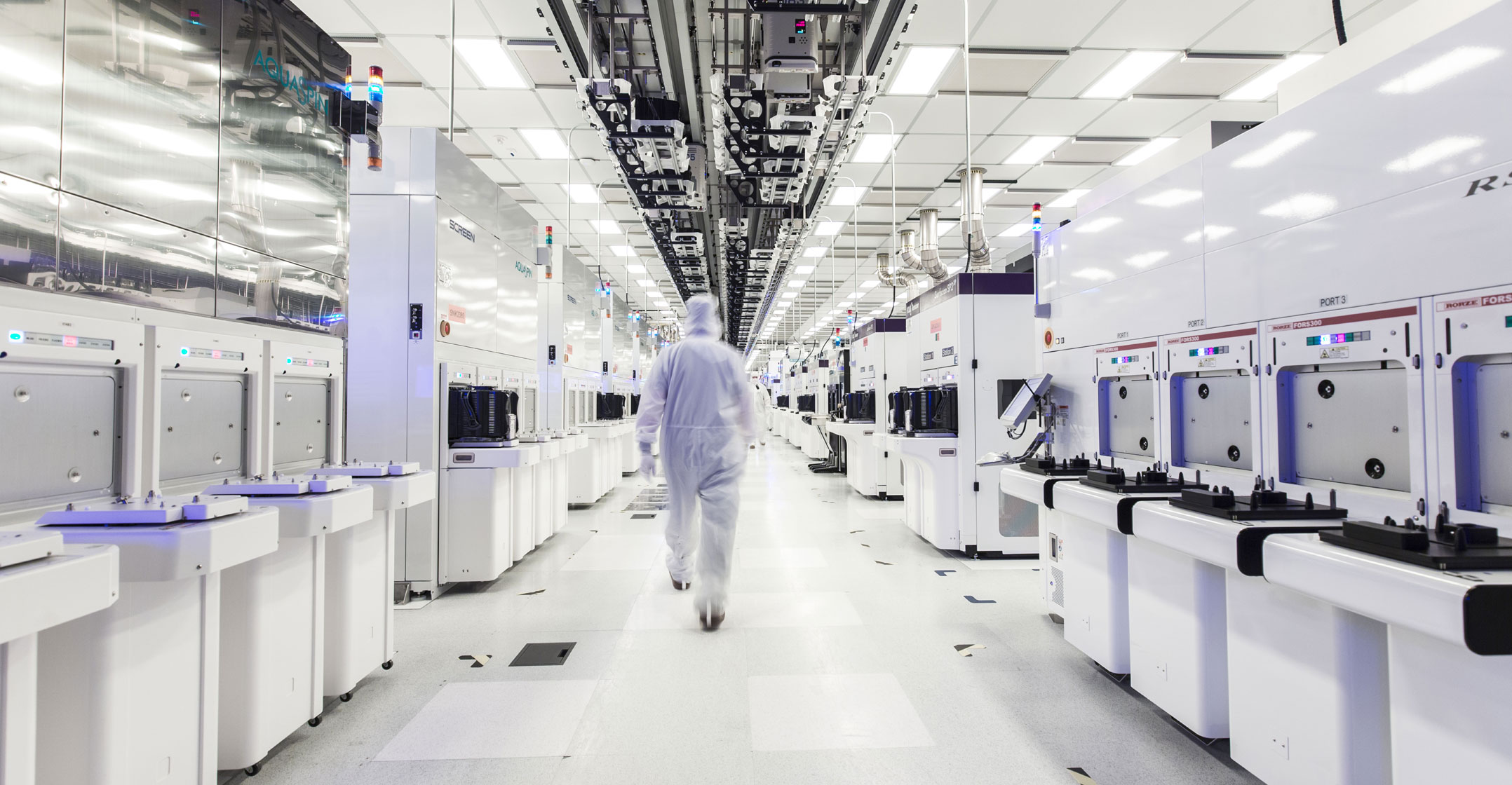
    Inside a GlobalFoundries fabrication plant. Image: GlobalFoundries

    The current state of the global semiconductor market has been alternatively labelled by car manufacturers, politicians and executives as a shortage, a crisis and even a squeeze. For the companies at the centre of it all, the only word to describe what we’re seeing is a chip boom. It’s inexplicable, then, that any company which ought to be bathing in profits could still be losing money.

    Enter GlobalFoundries. The New York-based company is the world’s third-largest contract chip maker and has just filed for a Nasdaq listing. With shares of leader TSMC more than doubling since the darkest days of the Covid-19 pandemic, and nearest rival United Microelectronics rising almost five-fold, investors ought to be clamouring over GlobalFoundries’ US$1-billion offering.

    Like its rivals, GlobalFoundries manufactures chips based on the designs of clients, most of which don’t have their own factories. Rather than land the most advanced orders for components like smartphone processors and graphics chips, the company in 2018 reorientated its strategy towards chasing down older product types — which it euphemistically calls “feature rich” — that include parts that convert sound and images to digital signals.

    Supplying older semiconductor products doesn’t attract the high prices commanded by TSMC

    Supplying older semiconductor products doesn’t attract the high prices commanded by TSMC, but they are much cheaper and easier to make. With modern cars lacking much-needed sensors, and even Apple noting the impact on iPad and iPhone sales, this ought to be a golden era for GlobalFoundries.

    But even with manufacturing lead times blowing out to a record 21 weeks and prices being pushed upward — clear signs that demand outstrips supply — the company still can’t manage to make a profit. Revenue fell 17% last year¹, a second consecutive decline, and operating loss margins deteriorated. From a potential market of around $54-billion in 2020, it captured just $4.9-billion. Although the bulk of the pandemic-inspired chip boom and shortage has transpired through 2021, the truth remains that this company shrank last year while the foundry sector climbed 23%.

    Peaks and troughs

    What’s of greater concern is that peaks and troughs are a natural aspect of this industry. New product categories such as PCs, notebook computers and smartphones all drove past expansions, with declines following when that growth period ended. This time we’re seeing a super cycle spurred by faster telecommunications networks, cloud computing and streaming content, and electronically equipped cars. That helped GlobalFoundries increase revenue 13% in the first half (TSMC grew 18%.) But even then, it still posted a $198-million loss.

    In its prospectus, the company crows about its clients’ increasing reliance on its services: “A key measure of our success as a differentiated technology partner is the mix of our revenue attributable to single-sourced business,” which it defines as “those that we believe can only be manufactured with our technology and cannot be manufactured elsewhere without significant customer redesigns”.

    But that customer addiction hasn’t translated into an ability to fill its factories or raise prices to the extent needed to cover costs.
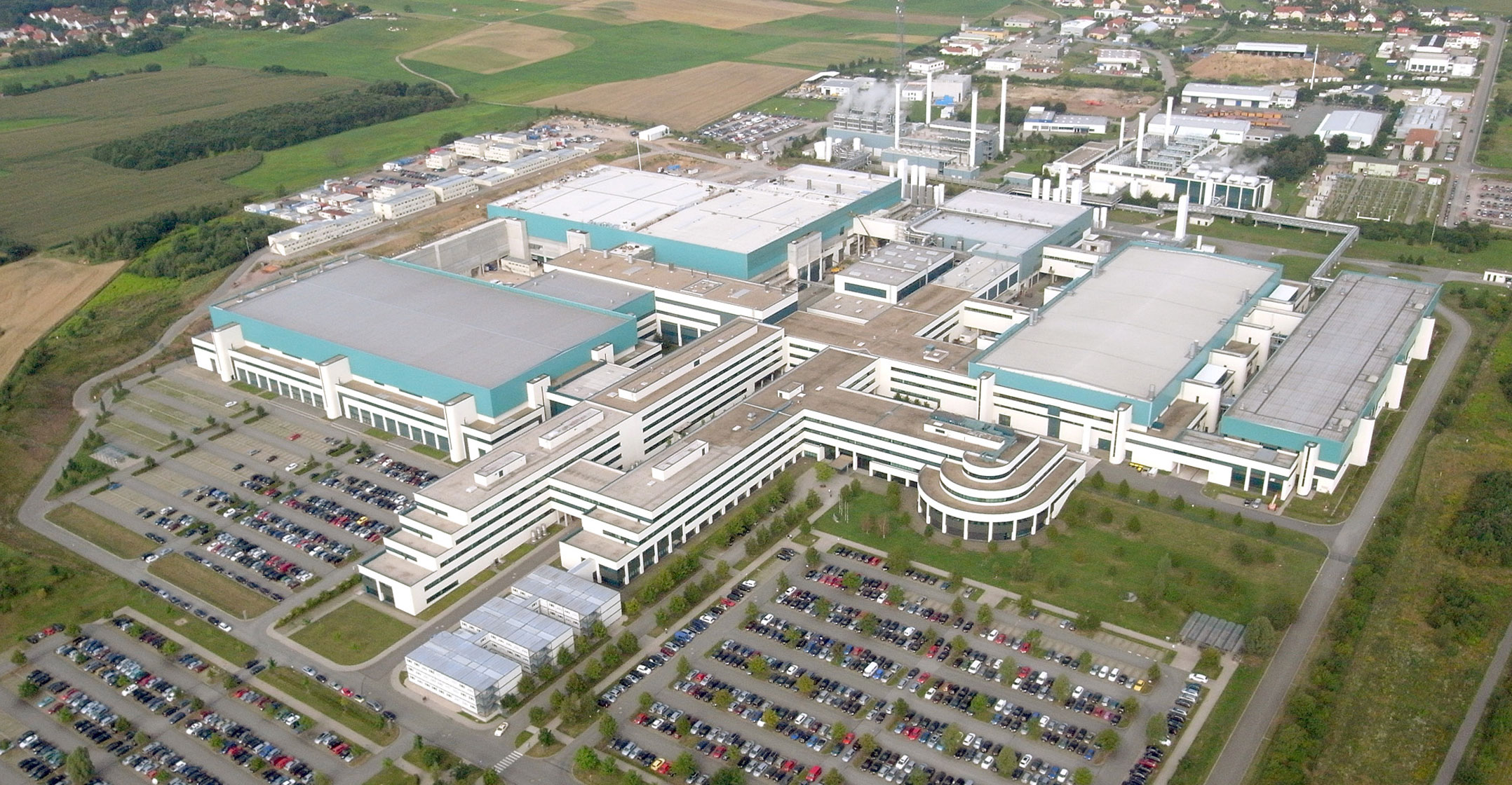
    A GlobalFoundries fab in Germany. Image: GlobalFoundries

    The single biggest expense for a chip foundry is the depreciation of equipment, which means that full or empty, the cost of those factories weighs on the bottom line. Over the past three years, capacity utilisation ranged from 70% to 84%, while a rule of thumb for the sector says that you need to hit at least 90% to break even. What you certainly don’t have when equipment lays idle is the negotiating power to ask clients to pay more. By contrast, TSMC is preparing to raise prices by as much as 20%.

    And this year may be the top of the current cycle. Although shortages remain, the bulk of the struggles are over and most industries are getting back to normal. The company, citing Gartner, estimates the foundry sector will climb an average 10.1% between 2019 and 2025. With last year coming in at 23% and this year heading for 12% — and TSMC taking most of that expansion for itself — there may not be a lot of momentum left to push GlobalFoundries into profitable territory. And if it does manage to pop its head above water, keeping it there may be a struggle.

    Seasonality, industry overcapacity, reductions in demand, and declines in average prices are all outlined in its filing under “risk factors”. If you want a playbook for how to lose money in a chip boom, just read GlobalFoundries’ prospectus.  — (c) 2021 Bloomberg LP

    ¹Part of the decline was due to a one-time change to how it recognizes revenue, though gross profit was also offset accordingly.



    GlobalFoundries TSMC
    WhatsApp YouTube Follow on Google News Add as preferred source on Google
    Share. Facebook Twitter LinkedIn WhatsApp Telegram Email Copy Link
    Previous Article‘Just not true’: Zuckerberg blasts Facebook critics
    Next Article Government can do more to support SA developers: minister

    Related Posts

    Investors can't get enough of ASML

    Investors can’t get enough of ASML

    27 January 2026
    Taiwan, US strike strategic AI and chip supply-chain pact - TSMC

    Taiwan, US strike strategic AI and chip supply-chain pact

    20 January 2026
    Intel launches Panther Lake, its next-gen PC chip

    Intel launches Panther Lake, its next-gen PC chip

    6 January 2026
    Company News
    Breaking down the data silos: why single views require collaboration - Altron Digital Business

    Breaking down the data silos: why single views require collaboration

    10 February 2026
    How Avast and Gen Digital are raising the bar in cybersecurity

    How Avast and Gen Digital are raising the bar in cybersecurity

    10 February 2026
    How mobile platforms are transforming online trading - Exness

    How mobile platforms are transforming online trading

    10 February 2026
    Opinion
    South Africa's skills advantage is being overlooked at home - Richard Firth

    South Africa’s skills advantage is being overlooked at home

    29 January 2026
    Why Elon Musk's Starlink is a 'hard no' for me - Songezo Zibi

    Why Elon Musk’s Starlink is a ‘hard no’ for me

    26 January 2026
    South Africa's new fibre broadband battle - Duncan McLeod

    South Africa’s new fibre broadband battle

    20 January 2026

    Subscribe to Updates

    Get the best South African technology news and analysis delivered to your e-mail inbox every morning.

    Latest Posts
    Breaking down the data silos: why single views require collaboration - Altron Digital Business

    Breaking down the data silos: why single views require collaboration

    10 February 2026
    South Africa's data centre market ripe for consolidation - Joshua Smythwood

    South Africa’s data centre market ripe for consolidation

    10 February 2026
    Watts & Wheels S1E4: 'We drive an electric Uber'

    Watts & Wheels S1E4: ‘We drive an electric Uber’

    10 February 2026
    Online sales can't save Pick n Pay from Black Friday hangover

    Online sales can’t save Pick n Pay from Black Friday hangover

    10 February 2026
    © 2009 - 2026 NewsCentral Media
    • Cookie policy (ZA)
    • TechCentral – privacy and Popia

    Type above and press Enter to search. Press Esc to cancel.

    Manage consent

    TechCentral uses cookies to enhance its offerings. Consenting to these technologies allows us to serve you better. Not consenting or withdrawing consent may adversely affect certain features and functions of the website.

    Functional Always active
    The technical storage or access is strictly necessary for the legitimate purpose of enabling the use of a specific service explicitly requested by the subscriber or user, or for the sole purpose of carrying out the transmission of a communication over an electronic communications network.
    Preferences
    The technical storage or access is necessary for the legitimate purpose of storing preferences that are not requested by the subscriber or user.
    Statistics
    The technical storage or access that is used exclusively for statistical purposes. The technical storage or access that is used exclusively for anonymous statistical purposes. Without a subpoena, voluntary compliance on the part of your Internet Service Provider, or additional records from a third party, information stored or retrieved for this purpose alone cannot usually be used to identify you.
    Marketing
    The technical storage or access is required to create user profiles to send advertising, or to track the user on a website or across several websites for similar marketing purposes.
    • Manage options
    • Manage services
    • Manage {vendor_count} vendors
    • Read more about these purposes
    View preferences
    • {title}
    • {title}
    • {title}