
Close Menu
TechCentralTechCentral

    Subscribe to the newsletter

    Get the best South African technology news and analysis delivered to your e-mail inbox every morning.

    Facebook X (Twitter) YouTube LinkedIn
    WhatsApp Facebook X (Twitter) LinkedIn YouTube
    TechCentralTechCentral
    • News
      Absa skips the MVNO route, partners with Vodacom instead

      Absa skips the MVNO route, partners with Vodacom instead

      23 November 2026
      Jensen Huang's China problem reaches the FBI. Steve Marcus/Reuters

      Jensen Huang reinstated as Nvidia CEO

      23 November 2026
      Shoprite 'definitely' wants to be a bigger mobile player - Pieter Engelbrecht

      Shoprite ‘definitely’ wants to be a bigger mobile player

      23 November 2026

      Shoprite buys into telecoms with R3.6-billion DNI deal

      23 November 2026
      Memory shortage drives up PC prices - and Mustek's profit

      Memory shortage drives up PC prices – and Mustek’s profit

      23 November 2026
    • World
      Critical Java bug could let hackers take over servers

      Critical Java bug could let hackers take over servers

      19 November 2026
      Nvidia shuts the door on a Jensen Huang comeback

      Nvidia shuts the door on a Jensen Huang comeback

      17 November 2026
      Could Jensen Huang return to Nvidia?

      Jensen Huang weighs a comeback at Nvidia

      16 November 2026
      Intel sued by shareholders over 29% share price plunge - Intel CEO Lip-Bu Tan. Laure Andrillon/Reuters

      Intel sued by shareholders over 29% share price plunge

      16 November 2026
      Microsoft 364

      Microsoft outage hits the world

      13 November 2026
    • In-depth
      Inside the 24 hours that broke Microsoft

      Inside the 24 hours that broke Microsoft

      16 November 2026
      Ducking hell: inside Apple's hidden list of words the iPhone won't suggest

      Ducking hell: inside Apple’s hidden list of words the iPhone won’t suggest

      6 November 2026
      Why investors are souring on Netflix

      Why investors are souring on Netflix

      22 October 2026

      10 days that changed the course of AI

      21 September 2026
      Meta to the AI industry: slow down without us - Mark Zuckerberg

      Meta to the AI industry: slow down without us

      16 September 2026
    • TCS
      Meet the CIO | Wits's Stanley Mpofu on taking campus Wi-Fi to malls and libraries

      Meet the CIO | Wits’s Stanley Mpofu on taking campus Wi-Fi to malls and libraries

      20 November 2026
      TCS | Piet le Roux on Sakeliga's fight with Icasa over BEE

      TCS | Piet le Roux on Sakeliga’s fight with Icasa over BEE

      13 November 2026
      W&W | The AA’s Bobby Ramagwede on a car industry running out of road

      W&W | The AA’s Bobby Ramagwede on a car industry running out of road

      12 November 2026
      TCS | Pick n Pay fights back in online grocery wars - Vince Viviers

      TCS | Pick n Pay fights back in online grocery wars

      11 November 2026
      TCS | Nomvuyiso Batyi on the battle over Sim registration - Nomvuyiso Batyi

      TCS | Nomvuyiso Batyi on the battle over Sim registration

      9 November 2026
    • Opinion
      Icasa's Sim rules need a privacy backstop - Lloyd Matthew and Heinz Vollmer

      Icasa’s Sim rules need a privacy backstop

      5 November 2026
      AI's boardroom honeymoon is over - Gary Stocks

      AI’s boardroom honeymoon is over

      22 October 2026
      Before South Africa licenses Starlink, it should look at Ukraine - Duncan McLeod

      Before South Africa licenses Starlink, it should look at Ukraine

      21 October 2026
      Nonkqubela Thathakahle Jordan-Dyani

      Why cybersecurity is now a national security issue for South Africa

      15 October 2026
      When a machine can choose, who does it become? Fanie van Rooyen

      When a machine can choose, who does it become?

      9 October 2026
    • Company News
      • 1Stream
      • Africa Data Centres
      • AfriGIS
      • Altron Digital Business
      • Altron Document Solutions
      • Altron Group
      • Arctic Wolf
      • Ascent Technology
      • AvertITD
      • BBD
      • Braintree
      • CallMiner
      • CambriLearn
      • CM.com
      • Contactable
      • CYBER1 Solutions
      • Digicloud Africa
      • Digimune
      • Domains.co.za
      • ESET
      • Euphoria Telecom
      • HOSTAFRICA
      • Incredible Business
      • iONLINE
      • IQbusiness
      • Iris Network Systems
      • Kaspersky
      • LSD Open
      • Mitel
      • NEC XON
      • Netstar
      • Network Platforms
      • Next DLP
      • Ovations
      • Paracon
      • Paratus
      • Publishared
      • Q-KON
      • SevenC
      • SkyWire
      • Solid8 Technologies
      • Telit Cinterion
      • Telviva
      • Tenable
      • Vertiv
      • Videri Digital
      • Vodacom Business
      • Vox
      • Wipro
      • Workday
      • XLink
    • Sections
      • AI and machine learning
      • Banking
      • Broadcasting and media
      • Cloud services
      • Contact centres and CX
      • Cryptocurrencies
      • Education and skills
      • Electronics and hardware
      • Energy and sustainability
      • Enterprise software
      • Fintech and payments
      • HealthTech
      • Information security
      • Internet and connectivity
      • Internet of things
      • Investment
      • IT services
      • Lifestyle
      • Policy and regulation
      • Public sector
      • Retail and e-commerce
      • Satellite communications
      • Science
      • SMEs and start-ups
      • Social media
      • Talent and leadership
      • Telecoms
      • Watts & Wheels
    • Events
    • Advertise
    TechCentralTechCentral
    Home » Sections » Electronics and hardware » How shortages of a $1 chip sparked a crisis in the global economy

    How shortages of a $1 chip sparked a crisis in the global economy

    By Agency Staff6 April 2021
    Twitter LinkedIn Facebook WhatsApp Email Telegram Copy Link
    Get breaking news on WhatsApp

    To understand why the US$450-billion semiconductor industry has lurched into crisis, a helpful place to start is a US$1 (R15) part called a display driver.

    Hundreds of different kinds of chips make up the global silicon industry, with the flashiest ones from Qualcomm and Intel going for $100 to more than $1 000 apiece. Those run powerful computers or the shiny smartphone in your pocket. A display driver is mundane by contrast: Its sole purpose is to convey basic instructions for illuminating the screen on your phone, monitor or navigation system.

    The trouble for the chip industry — and increasingly companies beyond tech, like car manufacturers — is that there aren’t enough display drivers to go around. Firms that make them can’t keep up with surging demand, so prices are spiking. That’s contributing to short supplies and increasing costs for LCD panels, essential components for making televisions and laptops, as well as cars, aeroplanes and high-end refrigerators.

    I have never seen anything like this in the past 20 years since our company’s founding

    “It’s not like you can just make do. If you have everything else, but you don’t have a display driver, then you can’t build your product,” says Stacy Rasgon, who covers the semiconductor industry for Sanford C Bernstein.

    Now the crunch in a handful of such seemingly insignificant parts — power management chips are also in short supply, for example — is cascading through the global economy. Car makers like Ford, Nissan and Volkswagen have already scaled back production, leading to estimates for more than $60-billion in lost revenue for the industry this year.

    Going to get worse

    The situation is likely to get worse before it gets better. A rare winter storm in Texas knocked out swathes of US production. A fire at a key Japan factory will shut the facility for a month. Samsung Electronics warned of a “serious imbalance” in the industry, while Taiwan’s TSMC said it can’t keep up with demand despite running factories at more than 100% of capacity.

    “I have never seen anything like this in the past 20 years since our company’s founding,” said Jordan Wu, co-founder and CEO of Himax Technologies, a leading supplier of display drivers. “Every application is short of chips.”

    The chip crunch was born out of an understandable miscalculation as the coronavirus pandemic hit last year. When Covid-19 began spreading from China to the rest of the world, many companies anticipated people would cut back as times got tough.
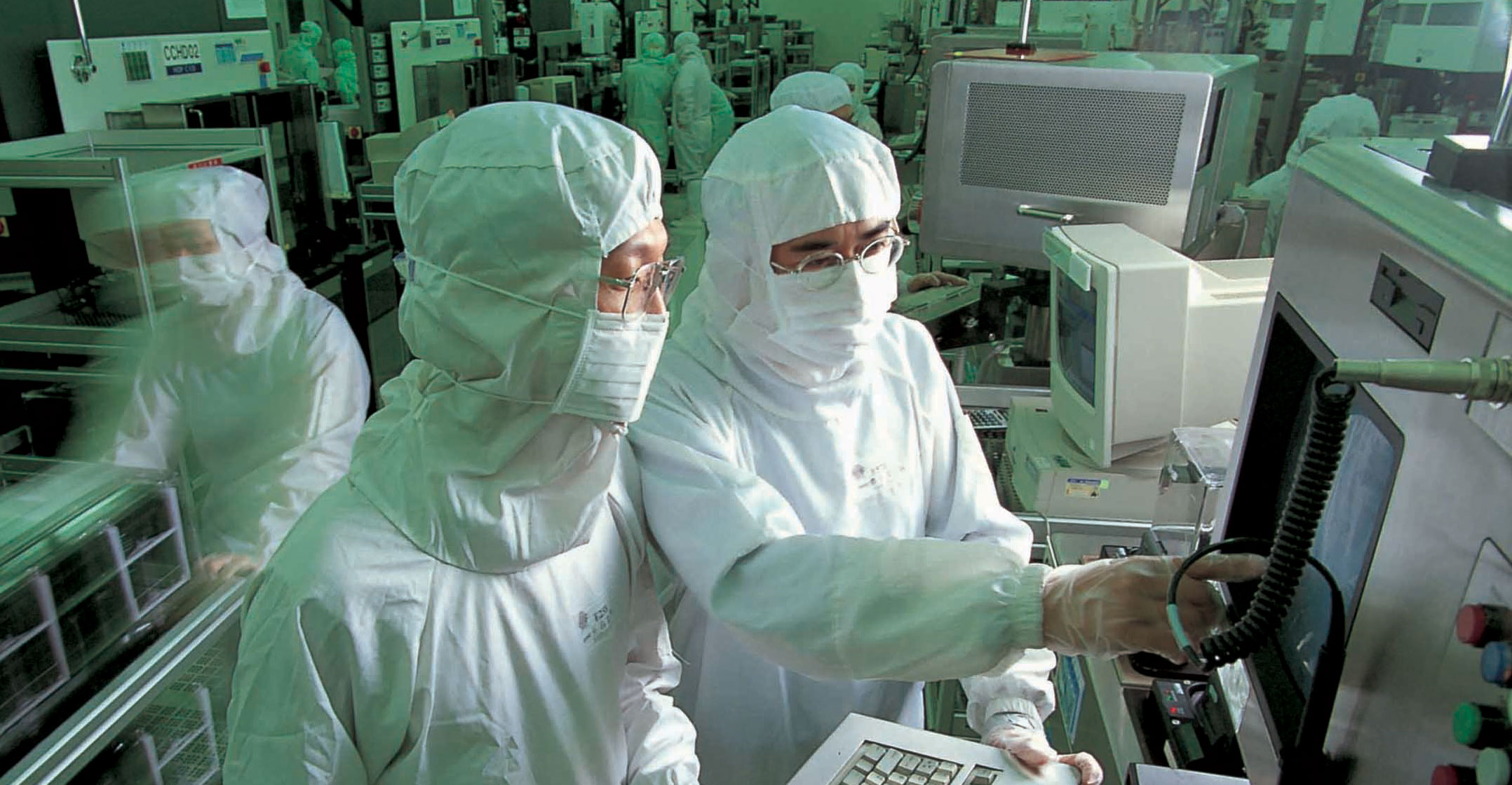
    Workers in a TSMC chip fabrication plant

    “I slashed all my projections. I was using the financial crisis as the model,” says Rasgon. “But demand was just really resilient.”

    People stuck at home started buying technology — and then kept buying. They purchased better computers and bigger displays so they could work remotely. They got their kids new laptops for distance learning. They scooped up 4K televisions, game consoles, milk frothers, air fryers and immersion blenders to make life under quarantine more palatable. The pandemic turned into an extended Black Friday online extravaganza.

    Car makers were blindsided. They shut factories during the lockdown while demand crashed because no one could get to showrooms. They told suppliers to stop shipping components, including the chips that are increasingly essential for cars.

    Automakers reopened factories and went hat in hand to chip makers like TSMC and Samsung. Their response? Back of the line

    Then, late last year, demand began to pick up. People wanted to get out and they didn’t want to use public transportation. Automakers reopened factories and went hat in hand to chip makers like TSMC and Samsung. Their response? Back of the line. They couldn’t make chips fast enough for their still-loyal customers.

    Himax’s Jordan Wu is in the middle of the tech industry’s tempest. On a recent March morning, the bespectacled 61-year-old agreed to meet at his Taipei office to discuss the shortages and why they are so challenging to resolve. He was so eager to talk that the interview was scheduled for the same morning it was requested, with two of his staff joining in person and another two dialling in by phone. He wore a mask throughout the interview, speaking carefully and articulately.

    Driver ICs

    Wu founded Himax in 2001 with his brother Biing-seng, now the company’s chairman. They started out making driver ICs (integrated circuits), as they’re known in the industry, for notebook computers and monitors. They went public in 2006 and grew with the computer industry, expanding into smartphones, tablets and touch screens. Their chips are now used in scores of products, from phones and televisions to cars.

    Wu explained that he can’t make more display drivers by pushing his workforce harder. Himax designs display drivers and then has them manufactured at a foundry like TSMC or United Microelectronics. His chips are made on what’s artfully called “mature node” technology, equipment at least a couple generations behind the cutting-edge processes. These machines etch lines in silicon at a width of 16 nanometers or more, compared to 5nm for high-end chips.​

    ​The bottleneck is that these mature chip-making lines are running flat out. Wu says the pandemic drove such strong demand that manufacturing partners can’t make enough display drivers for all the panels that go into computers, televisions and game consoles — plus all the new products that companies are putting screens into, like refrigerators, smart thermometers and car entertainment systems.

    There’s been a particular squeeze in driver ICs for automotive systems because they’re usually made on 8-inch silicon wafers, rather than more advanced 12-inch wafers. Sumco, one of the leading wafer manufacturers, reported production capacity for 8-inch equipment lines was about 5 000 wafers a month in 2020 — less than it was in 2017.

    No one is building more mature-node manufacturing lines because it doesn’t make economic sense. The existing lines are fully depreciated and fine-tuned for almost perfect yields, meaning basic display drivers can be made for less than a dollar and more advanced versions for not much more. Buying new equipment and starting off at lower yields would mean much higher expenses.

    “Building new capacity is too expensive,” Wu says. Peers like Novatek Microelectronics, also based in Taiwan, have the same constraints.

    The shortfall is showing up in a spike in LCD prices. A 50-inch LCD panel for televisions doubled in price between January 2020 and this March

    That shortfall is showing up in a spike in LCD prices. A 50-inch LCD panel for televisions doubled in price between January 2020 and this March. Bloomberg Intelligence’s Matthew Kanterman projects that LCD prices will keep rising at least until the third quarter. There is a “a dire shortage” of display driver chips, he said.

    Aggravating the situation is a lack of glass. Major glass makers reported accidents at their production sites, including a blackout at a Nippon Electric Glass’s factory in December and an explosion at AGC Fine Techno Korea’s factory in January. Production will likely remain constrained at least through the northern hemisphere summer this year, display consultancy DSCC co-founder Yoshio Tamura said.

    Price hikes

    On 1 April, I-O Data Device, a major Japanese computer peripherals maker, raised the price of its 26 LCD monitors by ¥5 000 on average, the biggest increase since they began selling the monitors two decades ago. A spokeswoman said the company can’t make any profit without the increases due to rising costs for components.

    All of this has been a boon to Himax’s business. Sales are surging and its stock price has tripled since November.

    But the CEO isn’t celebrating. His whole business is built around giving customers what they want, so his inability to meet their requests at such a critical time is frustrating. He doesn’t expect the crunch, especially for automotive components, to end any time soon.

    “We have not reached a position where we can see the light at the end of tunnel yet,” Wu said.  — Reported by Debby Wu and Takashi Mochizuki, (c) 2021 Bloomberg LP

    Add TechCentral as a preferred source on GoogleFollow TechCentral on Google NewsGet breaking news on WhatsApp


    Himax Himax Technologies Jordan Wu Novatek Microelectronics Samsung Stacy Rasgon top TSMC
    WhatsApp YouTube
    Share. Facebook Twitter LinkedIn WhatsApp Telegram Email Copy Link
    Previous ArticleUS car industry in cry for help amid chip supply crisis
    Next Article Facebook shares surge to record despite Apple risk

    Related Posts

    Memory shortage drives up PC prices - and Mustek's profit

    Memory shortage drives up PC prices – and Mustek’s profit

    23 November 2026
    Nvidia slams the door on Jensen Huang

    Nvidia slams the door on Jensen Huang

    18 November 2026
    Jensen Huang's China problem reaches the FBI. Steve Marcus/Reuters

    Jensen Huang’s China problem reaches the FBI

    10 November 2026
    Company News
    Broadband leaders at WBBA push for borderless fibre to power Africa's AI

    Broadband leaders at WBBA push for borderless fibre to power Africa’s AI

    23 November 2026
    2027: the year ID documents stop being enough

    2027: the year ID documents stop being enough

    19 November 2026
    Why banks' digital channels still leave customers stuck - BBD Software

    Why banks’ digital channels still leave customers stuck

    19 November 2026
    Opinion
    Icasa's Sim rules need a privacy backstop - Lloyd Matthew and Heinz Vollmer

    Icasa’s Sim rules need a privacy backstop

    5 November 2026
    AI's boardroom honeymoon is over - Gary Stocks

    AI’s boardroom honeymoon is over

    22 October 2026
    Before South Africa licenses Starlink, it should look at Ukraine - Duncan McLeod

    Before South Africa licenses Starlink, it should look at Ukraine

    21 October 2026

    Subscribe to Updates

    Get the best South African technology news and analysis delivered to your e-mail inbox every morning.

    Latest Posts
    Absa skips the MVNO route, partners with Vodacom instead

    Absa skips the MVNO route, partners with Vodacom instead

    23 November 2026
    Jensen Huang's China problem reaches the FBI. Steve Marcus/Reuters

    Jensen Huang reinstated as Nvidia CEO

    23 November 2026
    Shoprite 'definitely' wants to be a bigger mobile player - Pieter Engelbrecht

    Shoprite ‘definitely’ wants to be a bigger mobile player

    23 November 2026

    Shoprite buys into telecoms with R3.6-billion DNI deal

    23 November 2026
    © 2009 - 2026 NewsCentral Media
    Built and maintained by Chronon
    • Cookie policy (ZA)
    • TechCentral – privacy and Popia

    Type above and press Enter to search. Press Esc to cancel.

    Manage consent

    TechCentral uses cookies to enhance its offerings. Consenting to these technologies allows us to serve you better. Not consenting or withdrawing consent may adversely affect certain features and functions of the website.

    Functional Always active
    The technical storage or access is strictly necessary for the legitimate purpose of enabling the use of a specific service explicitly requested by the subscriber or user, or for the sole purpose of carrying out the transmission of a communication over an electronic communications network.
    Preferences
    The technical storage or access is necessary for the legitimate purpose of storing preferences that are not requested by the subscriber or user.
    Statistics
    The technical storage or access that is used exclusively for statistical purposes. The technical storage or access that is used exclusively for anonymous statistical purposes. Without a subpoena, voluntary compliance on the part of your Internet Service Provider, or additional records from a third party, information stored or retrieved for this purpose alone cannot usually be used to identify you.
    Marketing
    The technical storage or access is required to create user profiles to send advertising, or to track the user on a website or across several websites for similar marketing purposes.
    • Manage options
    • Manage services
    • Manage {vendor_count} vendors
    • Read more about these purposes
    View preferences
    • {title}
    • {title}
    • {title}
    🇿🇦 Sign up to the TechCentral newsletter