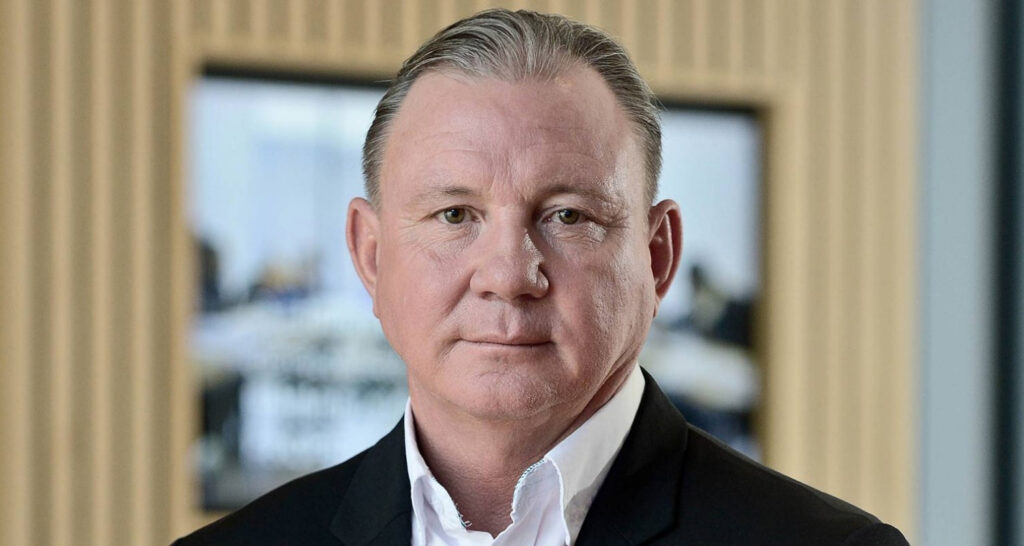
Shoprite CEO Pieter Engelbrecht has conceded that the retailer has struggled in mobile, as he explained why it is spending R3.6-billion to buy into telecoms and fintech group DNI.
“For us to start with a greenfield approach, it will just take way too long,” Engelbrecht told investors on a call on Monday. “We’re not familiar with the banking world, and we have not done a particularly good job in the cellular space.”
Shoprite announced on Monday that it would buy 40% of DNI, with options to take full ownership from year four, while Investec will take 19.99% of Shoprite Financial Services for about R1.9-billion. The R3.6-billion also buys a separate, direct 25% stake in 3G Mobile, a device distributor in the DNI group whose relationships with handset makers will give Shoprite a wider range of phones, according to the group’s presentation.
Engelbrecht said Shoprite “definitely” wants to be a bigger player in mobile. “Cellular is an inseparable part of life today,” he said, adding that financial services can’t be offered at scale without it. He described customers ordering a new phone online and having it delivered within an hour. K’nect, Shoprite’s virtual mobile network on Cell C, will stay, he said.
Asked by TechCentral why Shoprite was taking equity rather than simply signing a commercial deal, Engelbrecht said: “We’ve got skin in the game. It’s just so much better a partnership than an arm’s-length one.”
But he insisted that “Shoprite does not want to be a bank, and we still don’t want to be a bank”. Investec was chosen because its focus on wealthy clients made it “the least conflicting” of the banks Shoprite spoke to, he said. The banking agreement is not exclusive.
DNI opens its books
DNI, which is privately owned and little known outside the telecoms industry, began when its founder and executive chairman, Andrew Dunn, bundled Sim cards with bread deliveries to reach the informal market, CEO Ryan Noach said.
It gave a rare look at its finances on Monday. Its consolidated Ebitda was R1.2-billion in the year to June 2026, of which R945-million is attributable to DNI’s shareholders. Its stake in fibre operator Frogfoot and internet service provider Vox adds about R300-million more, Noach said. DNI expects revenue of more than R12-billion in the year to June 2027, and pre-tax profit is growing at 23% organically.
DNI has more than 4.2 million active Sim subscribers, and advanced more than R11-billion in handsets, data and airtime on credit in the past year, Noach said. Frogfoot and Vox pass more than 700 000 homes with fibre.
I would prefer people not to have this over-expectation. It will take a bit of time, so I’m going to ask please for a little bit of patience.
Shoprite CEO Pieter Engelbrecht
Frogfoot, in which DNI holds 18% directly and about 35% with its consortium, plans to pass about 360 000 new homes a year for the next three to four years, focusing on low-income areas. Only about 20% of those areas have fibre, Noach said, adding that Frogfoot has enough capital for the roll-out.
Engelbrecht warned investors not to expect quick results. Shoprite Financial Services still needs a CEO and boards, and Investec’s stake depends on regulatory approval of the banking partnership, expected around the middle of 2027.
“I would prefer people not to have this over-expectation,” he said. “It will take a bit of time, so I’m going to ask please for a little bit of patience.” – (c) 2026 NewsCentral Media