Close Menu
TechCentralTechCentral

    Subscribe to the newsletter

    Get the best South African technology news and analysis delivered to your e-mail inbox every morning.

    Facebook X (Twitter) YouTube LinkedIn
    WhatsApp Facebook X (Twitter) LinkedIn YouTube
    TechCentralTechCentral
    • News

      Hollard client data dumped on the dark web

      18 September 2026
      Vumatel operating profit jumps 57% as the Vodacom deal lands

      Vumatel operating profit jumps 57% as the Vodacom deal lands

      18 September 2026
      SA's two biggest MVNOs, two very different strategies - FNB Connect Capitec Connect

      Capitec and FNB are running the same MVNO playbook

      18 September 2026
      Solar and EVs in South Africa: what the numbers actually say

      Solar and EVs in South Africa: what the numbers actually say

      18 September 2026
      The AI that builds AI has gone from 1% to 26% in five months

      The AI that builds AI has gone from 1% to 26% in five months

      18 September 2026
    • World
      'This is not circular': Jensen Huang defends $3.5-billion MediaTek deal

      ‘This is not circular’: Jensen Huang defends $3.5-billion MediaTek deal

      2 September 2026
      AI-generated music banned from Australian charts

      AI-generated music banned from Australian charts

      26 August 2026
      Traders brace for a R4.5-trillion swing in Nvidia's value

      Traders brace for a R4.5-trillion swing in Nvidia’s value

      25 August 2026
      Russia building its own Starlink - and faster than expected - Vadym Skibitskyi

      Russia building its own Starlink – and faster than expected

      11 August 2026
      Meta AI will now tell parents if their teen is in crisis

      Meta AI will now tell parents if their teen is in crisis

      17 July 2026
    • In-depth
      Google DeepMind CEO Demis Hassabis. Image: John Sears

      The plan to stop AI from breaking the world

      16 July 2026
      The internet has a Strait of Hormuz problem

      The internet has a Strait of Hormuz problem

      15 July 2026
      AI boom sparks rally, frenzy and fear

      AI boom sparks rally, frenzy and fear

      11 June 2026
      Every plug-in hybrid on sale in South Africa, ranked by price - Lamborghini Temerario

      Every plug-in hybrid on sale in South Africa, ranked by price

      7 June 2026
      What Wi-Fi 8 will mean for wireless networks

      What Wi-Fi 8 will mean for wireless networks

      1 June 2026
    • TCS
      TCS | Octotel's Trevor van Zyl on the fibre merger question

      TCS | Octotel’s Trevor van Zyl on the MetroFibre merger question

      16 September 2026
      Meet the CIO | Shoprite's Chris Shortt on what a supermarket becomes

      Meet the CIO | Shoprite’s Chris Shortt on what a supermarket becomes

      9 September 2026
      Rubicon's EV charging network is profitable - and growing fast - Watts & Wheels

      Rubicon’s EV charging network is profitable – and growing fast

      8 September 2026
      Winstone Jordaan on building a national EV charging network

      Winstone Jordaan on building a national EV charging network

      2 September 2026
      Watts & Wheels S1E8: 'Tesla lands in Africa, just not here'

      Watts & Wheels S1E8: ‘Tesla lands in Africa, just not here’

      24 August 2026
    • Opinion
      The end is nigh, and the shares go on sale in October - Duncan McLeod

      The end is nigh, and the shares go on sale in October

      14 September 2026
      The fragile joint in the Capitec machine - Pambos Soteriades

      The R197-billion market the banks can’t reach

      25 August 2026
      South African tech's compounding debt problem - Jannie van Zyl

      Management consulting as we know it is over

      21 August 2026
      South African tech's compounding debt problem - Jannie van Zyl

      The most dangerous customer is the quiet one

      10 August 2026
      South African tech's compounding debt problem - Jannie van Zyl

      South African tech’s compounding debt problem

      29 July 2026
    • Company Hubs
      • 1Stream
      • Africa Data Centres
      • AfriGIS
      • Altron Digital Business
      • Altron Document Solutions
      • Altron Group
      • Arctic Wolf
      • Ascent Technology
      • AvertITD
      • BBD
      • Braintree
      • CallMiner
      • CambriLearn
      • CM.com
      • Contactable
      • CYBER1 Solutions
      • Digicloud Africa
      • Digimune
      • Domains.co.za
      • ESET
      • Euphoria Telecom
      • HOSTAFRICA
      • Incredible Business
      • iONLINE
      • IQbusiness
      • Iris Network Systems
      • Kaspersky
      • LSD Open
      • Mitel
      • NEC XON
      • Netstar
      • Network Platforms
      • Next DLP
      • Ovations
      • Paracon
      • Paratus
      • Q-KON
      • SevenC
      • SkyWire
      • Solid8 Technologies
      • Telit Cinterion
      • Telviva
      • Tenable
      • Vertiv
      • Videri Digital
      • Vodacom Business
      • Vox
      • Wipro
      • Workday
      • XLink
    • Sections
      • AI and machine learning
      • Banking
      • Broadcasting and Media
      • Cloud services
      • Contact centres and CX
      • Cryptocurrencies
      • Education and skills
      • Electronics and hardware
      • Energy and sustainability
      • Enterprise software
      • Financial services
      • HealthTech
      • Information security
      • Internet and connectivity
      • Internet of Things
      • Investment
      • IT services
      • Lifestyle
      • Policy and regulation
      • Public sector
      • Retail and e-commerce
      • Satellite communications
      • Science
      • SMEs and start-ups
      • Social media
      • Talent and leadership
      • Telecoms
      • Watts & Wheels
    • Events
    • Advertise
    TechCentralTechCentral
    Home » Science » How theoretical physics changed the world

    How theoretical physics changed the world

    By The Conversation14 February 2016
    Twitter LinkedIn Facebook WhatsApp Email Telegram Copy Link
    Get breaking news on WhatsApp

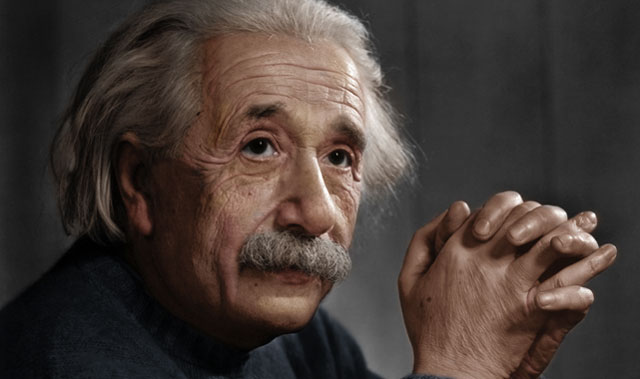
    Albert Einstein
    Albert Einstein

    You don’t have to be a scientist to get excited about breakthroughs in theoretical physics. Discoveries such as gravitational waves and the Higgs boson can inspire wonder at the complex beauty of the universe no matter how little you really understand them.

    But some people will always question why they should care about scientific advances that have no apparent impact on their daily life — and why we spend millions funding them. Sure, it’s amazing that we can study black holes thousands of light years away and that Einstein really was as much of a genius as we thought, but that won’t change the way most people live or work.

    Yet the reality is that purely theoretical studies in physics can sometimes lead to amazing changes in our society. In fact, several key pillars on which our modern society rests, from satellite communication to computers, were made possible by investigations that had no obvious application at the time.

    Quantum leap

    Around 100 years ago, quantum mechanics was a purely theoretical topic, developed only to understand certain properties of atoms. Its founding fathers, such as Werner Heisenberg and Erwin Schrödinger, had no applications in mind at all. They were simply driven by the quest to understand what our world is made of. Quantum mechanics states that you cannot observe a system without changing it fundamentally by your observation, and initially its effects to society were of a philosophical and not a practical nature.

    But today, quantum mechanics is the basis of our use of all semiconductors in computers and mobile phones. To build a modern semiconductor for use in a computer, you have to understand concepts such as the way electrons behave when atoms are held together in a solid material, something only described accurately by quantum mechanics. Without it, we would have been stuck using computers based on vacuum tubes.

    At a similar time as the key developments in quantum mechanics, Albert Einstein was attempting to better understand gravity, the dominating force of the universe. Rather than viewing gravity as a force between two bodies, he described it as a curving of space-time around each body, similar to how a rubber sheet will stretch if a heavy ball is placed on top of it. This was Einstein’s general theory of relativity.

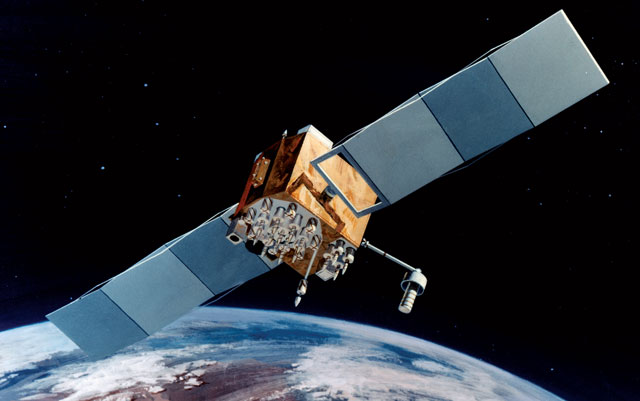
    Today the most common application of this theory is in GPS. To use signals from satellites to pinpoint your location you need to know the precise time the signal leaves the satellite and when it arrives on Earth. Einstein’s theory of general relativity means that the distance of a clock from the Earth’s centre of gravity affects how fast it ticks. And his theory of special relativity means that the speed a clock is moving at also affects its ticking speed.

    Without knowing how to adjust the clocks to take account of these effects, we wouldn’t be able to accurately use the satellite signals to determine our position on the ground. Despite his amazing brain, Einstein probably could not have imagined this application a century ago.

    Scientific culture

    Aside from the potential, eventual applications of doing fundamental research, there are also direct financial benefits. Most of the student and post-docs working on big research projects like the Large Hadron Collider will not stay in academia but move into industry. During their time in fundamental physics, they are educated at the highest existing technical level and then take their expertise into working companies. This is like educating car mechanics in Formula One racing teams.
    gps-640
    GPS … not possible without the general theory of relativity

    Despite these direct and indirect benefits, most theoretical physicists have a very different motive for their work. They simply want to improve humanity’s understanding of the universe. While this might not immediately impact everyone’s lives, I believe it is just as important a reason for pursuing fundamental research.

    This motivation may well have begun when humans first looked up at the night-sky in ancient times. They wanted to understand the world they lived and so spent time watching nature and creating theories about it, many of them involving gods or supernatural beings. Today we have made huge progress in our understanding of both stars and galaxies and, at the other end of the scale, of the tiny fundamental particles from which matter is built.

    It somehow seems that every new level of understanding we achieve comes in tandem with new, more fundamental questions. It is never enough to know what we now know. We always want to continue looking behind newly arising curtains. In that respect, I consider fundamental physics a basic part of human culture.

    Now we can wait curiously to find out what unforeseen spin-offs that discoveries such as the Higgs boson or gravitational waves might lead to in the long-term future. But we can also look forward to the new insights into the building blocks of nature that they will bring us and the new questions they will raise.The Conversation

    •  is deputy director, Institute for Particle Physics Phenomenology, Durham University
    • This article was originally published on The Conversation

    Add TechCentral as a preferred source on GoogleFollow TechCentral on Google NewsGet breaking news on WhatsApp


    Albert Einstein Alexander Lenz Erwin Schrödinger Werner Heisenberg
    WhatsApp YouTube
    Share. Facebook Twitter LinkedIn WhatsApp Telegram Email Copy Link
    Previous ArticleYes, a computer will steal your job
    Next Article Tribunal approves Altech Autopage mergers

    Related Posts

    Scientists discover universe is awash in gravitational waves

    29 June 2023

    The standard model of particle physics may be broken

    11 May 2022

    Phenomenon that baffled Einstein is captured in photo for first time

    14 July 2019
    Company News
    Support ended for SQL Server 2016 - and so did the Microsoft subsidy

    Support ended for SQL Server 2016 – and so did the Microsoft subsidy

    18 September 2026
    GovTech turns 20 - and sets out to build South Africa's digital future - GovTech 2026

    GovTech turns 20 and sets out to build South Africa’s digital future

    18 September 2026
    ITA presents LEO satellite solutions for the oil and gas sector - From left, Suzanette Cruz, account manager, sales B2B; Nuno de Oliveira, sales operations analyst, sales; and Andrea Aragão, marketing manager

    ITA presents LEO satellite solutions for the oil and gas sector

    18 September 2026
    Opinion
    The end is nigh, and the shares go on sale in October - Duncan McLeod

    The end is nigh, and the shares go on sale in October

    14 September 2026
    The fragile joint in the Capitec machine - Pambos Soteriades

    The R197-billion market the banks can’t reach

    25 August 2026
    South African tech's compounding debt problem - Jannie van Zyl

    Management consulting as we know it is over

    21 August 2026

    Subscribe to Updates

    Get the best South African technology news and analysis delivered to your e-mail inbox every morning.

    Latest Posts

    Hollard client data dumped on the dark web

    18 September 2026
    Vumatel operating profit jumps 57% as the Vodacom deal lands

    Vumatel operating profit jumps 57% as the Vodacom deal lands

    18 September 2026
    SA's two biggest MVNOs, two very different strategies - FNB Connect Capitec Connect

    Capitec and FNB are running the same MVNO playbook

    18 September 2026
    Solar and EVs in South Africa: what the numbers actually say

    Solar and EVs in South Africa: what the numbers actually say

    18 September 2026
    © 2009 - 2026 NewsCentral Media
    Built and maintained by Chronon
    • Cookie policy (ZA)
    • TechCentral – privacy and Popia

    Type above and press Enter to search. Press Esc to cancel.

    Manage consent

    TechCentral uses cookies to enhance its offerings. Consenting to these technologies allows us to serve you better. Not consenting or withdrawing consent may adversely affect certain features and functions of the website.

    Functional Always active
    The technical storage or access is strictly necessary for the legitimate purpose of enabling the use of a specific service explicitly requested by the subscriber or user, or for the sole purpose of carrying out the transmission of a communication over an electronic communications network.
    Preferences
    The technical storage or access is necessary for the legitimate purpose of storing preferences that are not requested by the subscriber or user.
    Statistics
    The technical storage or access that is used exclusively for statistical purposes. The technical storage or access that is used exclusively for anonymous statistical purposes. Without a subpoena, voluntary compliance on the part of your Internet Service Provider, or additional records from a third party, information stored or retrieved for this purpose alone cannot usually be used to identify you.
    Marketing
    The technical storage or access is required to create user profiles to send advertising, or to track the user on a website or across several websites for similar marketing purposes.
    • Manage options
    • Manage services
    • Manage {vendor_count} vendors
    • Read more about these purposes
    View preferences
    • {title}
    • {title}
    • {title}