
Close Menu
TechCentralTechCentral

    Subscribe to the newsletter

    Get the best South African technology news and analysis delivered to your e-mail inbox every morning.

    Facebook X (Twitter) YouTube LinkedIn
    WhatsApp Facebook X (Twitter) LinkedIn YouTube
    TechCentralTechCentral
    • News
      Eskom lifts load reduction for 140 000 customers

      Eskom lifts load reduction for 140 000 customers

      8 February 2026
      AI chatbots are coming to Apple CarPlay

      AI chatbots are coming to Apple CarPlay

      8 February 2026
      South Africa's stablecoin silence is becoming a policy failure

      South Africa’s stablecoin silence is becoming a policy failure

      6 February 2026
      Every electric car you can buy in South Africa in early 2026, ranked by price

      Every electric car you can buy in South Africa in early 2026, ranked by price

      6 February 2026
      From stocks to crypto, markets reel as AI doubts grow

      From stocks to crypto, markets reel as AI doubts grow

      6 February 2026
    • World
      Crypto firm accidentally sends R700-billion in bitcoin to its users

      Crypto firm accidentally sends R700-billion in bitcoin to its users

      8 February 2026
      AI won't replace software, says Nvidia CEO amid market rout - Jensen Huang

      AI won’t replace software, says Nvidia CEO amid market rout

      4 February 2026
      Apple acquires audio AI start-up Q.ai

      Apple acquires audio AI start-up Q.ai

      30 January 2026
      SpaceX IPO may be largest in history

      SpaceX IPO may be largest in history

      28 January 2026
      Nvidia throws AI at the weather

      Nvidia throws AI at weather forecasting

      27 January 2026
    • In-depth
      How liberalisation is rewiring South Africa's power sector

      How liberalisation is rewiring South Africa’s power sector

      21 January 2026
      The top-performing South African tech shares of 2025

      The top-performing South African tech shares of 2025

      12 January 2026
      Digital authoritarianism grows as African states normalise internet blackouts

      Digital authoritarianism grows as African states normalise internet blackouts

      19 December 2025
      TechCentral's South African Newsmakers of 2025

      TechCentral’s South African Newsmakers of 2025

      18 December 2025
      Black Friday goes digital in South Africa as online spending surges to record high

      Black Friday goes digital in South Africa as online spending surges to record high

      4 December 2025
    • TCS
      TCS+ | How Cloud On Demand is helping SA businesses succeed in the cloud - Xhenia Rhode, Dion Kalicharan

      TCS+ | Cloud On Demand and Consnet: inside a real-world AWS partner success story

      30 January 2026
      Watts & Wheels S1E3: 'BYD's Corolla Cross challenger'

      Watts & Wheels S1E3: ‘BYD’s Corolla Cross challenger’

      30 January 2026
      Watts & Wheels S1E3: 'BYD's Corolla Cross challenger'

      Watts & Wheels S1E2: ‘China attacks, BMW digs in, Toyota’s sublime supercar’

      23 January 2026

      TCS+ | Why cybersecurity is becoming a competitive advantage for SA businesses

      20 January 2026
      Watts & Wheels S1E3: 'BYD's Corolla Cross challenger'

      Watts & Wheels: S1E1 – ‘William, Prince of Wheels’

      8 January 2026
    • Opinion
      South Africa's skills advantage is being overlooked at home - Richard Firth

      South Africa’s skills advantage is being overlooked at home

      29 January 2026
      Why Elon Musk's Starlink is a 'hard no' for me - Songezo Zibi

      Why Elon Musk’s Starlink is a ‘hard no’ for me

      26 January 2026
      South Africa's new fibre broadband battle - Duncan McLeod

      South Africa’s new fibre broadband battle

      20 January 2026
      AI moves from pilots to production in South African companies - Nazia Pillay SAP

      AI moves from pilots to production in South African companies

      20 January 2026
      South Africa's new fibre broadband battle - Duncan McLeod

      ANC’s attack on Solly Malatsi shows how BEE dogma trumps economic reality

      14 December 2025
    • Company Hubs
      • Africa Data Centres
      • AfriGIS
      • Altron Digital Business
      • Altron Document Solutions
      • Altron Group
      • Arctic Wolf
      • AvertITD
      • Braintree
      • CallMiner
      • CambriLearn
      • CYBER1 Solutions
      • Digicloud Africa
      • Digimune
      • Domains.co.za
      • ESET
      • Euphoria Telecom
      • Incredible Business
      • iONLINE
      • IQbusiness
      • Iris Network Systems
      • LSD Open
      • NEC XON
      • Netstar
      • Network Platforms
      • Next DLP
      • Ovations
      • Paracon
      • Paratus
      • Q-KON
      • SevenC
      • SkyWire
      • Solid8 Technologies
      • Telit Cinterion
      • Tenable
      • Vertiv
      • Videri Digital
      • Vodacom Business
      • Wipro
      • Workday
      • XLink
    • Sections
      • AI and machine learning
      • Banking
      • Broadcasting and Media
      • Cloud services
      • Contact centres and CX
      • Cryptocurrencies
      • Education and skills
      • Electronics and hardware
      • Energy and sustainability
      • Enterprise software
      • Financial services
      • Information security
      • Internet and connectivity
      • Internet of Things
      • Investment
      • IT services
      • Lifestyle
      • Motoring
      • Public sector
      • Retail and e-commerce
      • Satellite communications
      • Science
      • SMEs and start-ups
      • Social media
      • Talent and leadership
      • Telecoms
    • Events
    • Advertise
    TechCentralTechCentral
    Home » World » India’s app ban threatens China’s rise as global tech power

    India’s app ban threatens China’s rise as global tech power

    By Agency Staff1 July 2020
    Twitter LinkedIn Facebook WhatsApp Email Telegram Copy Link
    News Alerts
    WhatsApp

    China over the past decade built an alternate online reality where Google and Facebook barely exist. Now its own largest tech corporations from Alibaba Group to Tencent are getting a taste of what a shutout feels like.

    India’s unprecedented decision to ban 59 of China’s largest apps is a warning to the country’s tech giants, who for years thrived behind a government-imposed Great Firewall that kept out many of America’s best-known Internet names. If India finds a way to carry out that threat, it may present a model for other countries from Europe to Southeast Asia that seek to curtail the pervasiveness of apps like ByteDance’s TikTok while safeguarding their citizens’ enormously valuable data.

    The surprise moratorium hit Chinese Internet companies just as they were beginning to make headway in the world’s fastest growing mobile arena, en route to going global and challenging American tech industry supremacy. TikTok had signed up 200 million users there, Xiaomi is the number-one smartphone brand, and Alibaba and Tencent have aggressively pushed their services.

    It will be increasingly difficult to separate Chinese tech firms from the CCP and China’s geopolitical ambitions

    But India’s policy jeopardises all those successes, and could have wider geopolitical consequences as the US seeks to rally countries to stop using Huawei Technologies for 5G networks. With China’s tech companies poised to become some of the most dominant in emerging industries like artificial intelligence, India’s actions may spur countries around the world to weigh the extent to which they let China gain user data — and potentially economic leverage in future disputes.

    “Techno-nationalism will manifest itself increasingly across all aspects of geopolitics: national security, economic competitiveness, even social values,” said Alex Capri, a Singapore-based research fellow at the Hinrich Foundation. “It will be increasingly difficult to separate Chinese tech firms from the CCP and China’s geopolitical ambitions. They will find themselves increasingly locked out.”

    Struggled

    Chinese Internet firms have struggled to replicate their online services beyond their home turf, even before Washington lawmakers began raising concerns about the wisdom of allowing the Asian country’s corporations — like ByteDance — to hoover up valuable personal data. India amplified those concerns by accusing apps including TikTok, Tencent’s WeChat, Alibaba’s UC Web and Baidu’s map and translation services of threatening its sovereignty and security.

    India’s prohibition provides further evidence that nations are using tech for to assert themselves geopolitically, following the Trump administration’s worldwide campaign to contain China and national champions like Huawei. That depends in part on how much Prime Minister Narendra Modi’s actions are motivated by domestic interests following the worst military clash between India and China in almost half a century.

    “Beijing should certainly worry that the impact of the deadly clash could push India toward the US,” said Zhang Baohui, director of the Centre for Asian Pacific Studies at Lingnan University. “But these recent economic measures by India may not by themselves concern Beijing too much as it understands that Modi’s government, facing rising domestic nationalism, has to do something to soothe the public sentiments and retain legitimacy.”
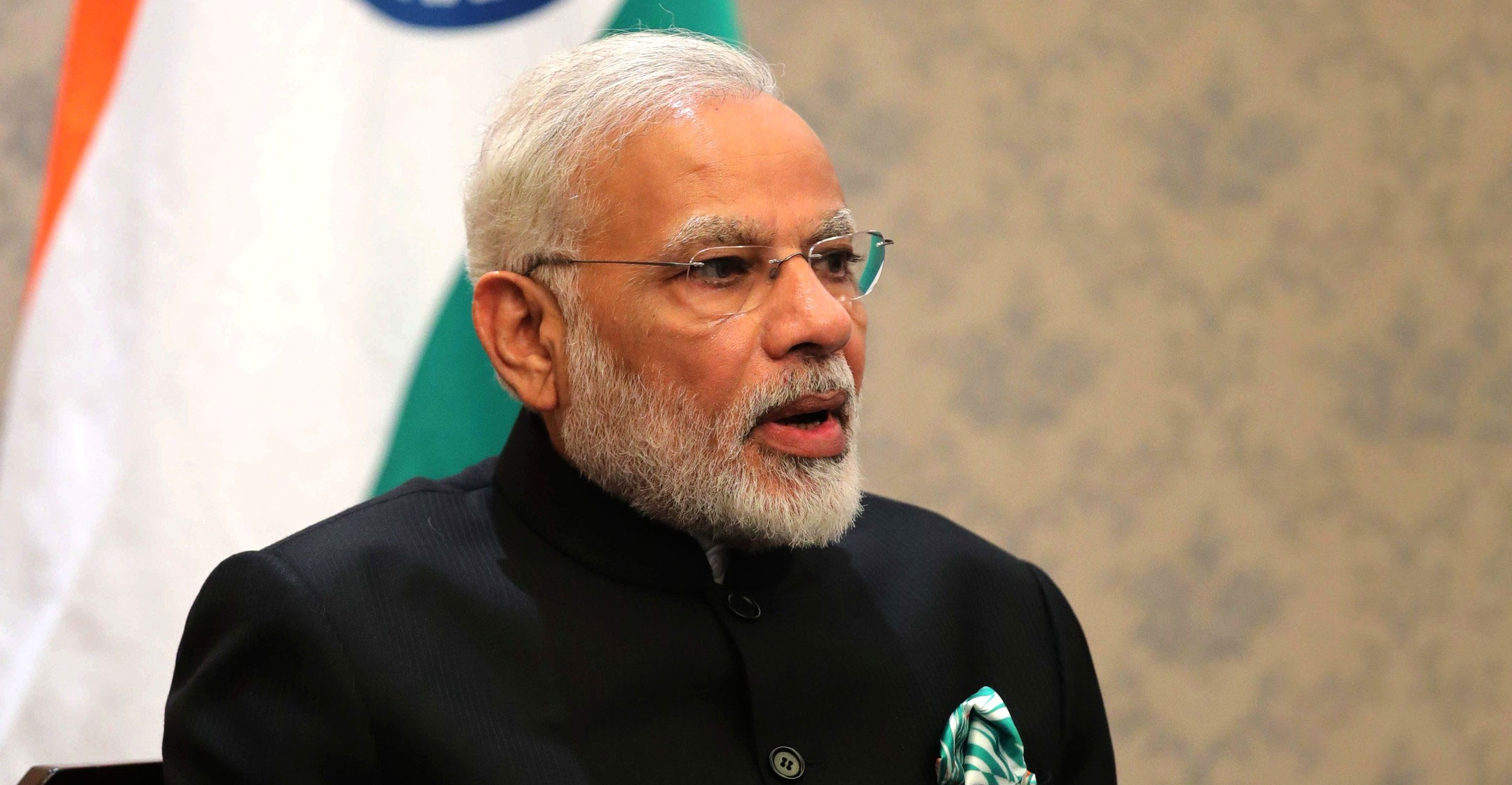
    Indian Prime Minister Narendra Modi

    It remains unclear how India will enforce its decision, given TikTok — for one — has already been downloaded by roughly one in six people. But it follows a series of steps to curb China’s presence in the country, demonstrating the administration’s hardened resolve since long-simmering tensions boiled over after a deadly Himalayan border clash that killed 20 Indian soldiers.

    The country’s government procurement website has barred purchases of Chinese-made goods. Authorities have asked the largest e-commerce companies, including Amazon.com and Walmart’s Flipkart, to start showing “country of origin” on goods sold. And India is said to be dragging its heels on clearing goods imported from China, stranding electronics at ports.

    “The Indian government thinks about governing the Internet in a very similar way to China, which is blanket bans, asserting national boundaries on the Internet and essentially carving out what would eventually become a version of the Indian Great Firewall,” said Dev Lewis, a research fellow at Digital Asia Hub in Shanghai. “Everyone’s struggling to deal with governing technology companies and apps, especially ones that cross borders. So when India takes a step like this, it sets a precedent for the things that you can do.”

    While Beijing is highly adept at economic coercion, in this case it has somewhat limited options to act in a reciprocal manner

    In terms of the immediate business consequences, ByteDance could be hardest hit. India is its biggest market with more than 200 million TikTok users. During a brief ban last year, the Chinese company estimated it was missing out on half a million dollars a day of revenue. In a statement posted to Twitter, TikTok India head Nikhil Gandhi said the company complies with all data privacy and security requirements under Indian law and has not shared any user information with any foreign government, including Beijing.

    India’s prohibition could also give American companies a possible edge over Chinese players in a rare global tech market that is both populous and not yet saturated. While WeChat never made it big in India, banning it may help shore up Facebook’s WhatsApp. Cutting out TikTok immediately gives YouTube a boost.

    ‘Strongly concerned’

    On Tuesday, ministry of foreign affairs spokesman Zhao Lijian said China was “strongly concerned” about India’s actions. “The Indian government has a responsibility to uphold the legitimate and legal rights of the international investors including Chinese ones,” he said.

    But for now, China doesn’t have many great options to retaliate.

    “While Beijing is highly adept at economic coercion, in this case it has somewhat limited options to act in a reciprocal manner,” analysts for the Eurasia Group wrote in a research note. “Bilateral trade is heavily weighted toward Chinese exports to India. Attempts to hurt India economically could blow back on Chinese companies.”  — (c) 2020 Bloomberg LP



    Alibaba Baidu ByteDance Huawei Narendra Modi Tencent TikTok top Xiaomi
    WhatsApp YouTube Follow on Google News Add as preferred source on Google
    Share. Facebook Twitter LinkedIn WhatsApp Telegram Email Copy Link
    Previous ArticleFacebook frustrates advertisers as boycott over hate speech kicks off
    Next Article US regulator declares Huawei, ZTE national security threats

    Related Posts

    Huawei turns 25 in South Africa, celebrates with major device discounts

    Huawei turns 25 in South Africa, celebrates with major device discounts

    30 January 2026
    Meta, TikTok, YouTube to stand trial on youth addiction claims

    Meta, TikTok, YouTube to stand trial on youth addiction claims

    27 January 2026
    ByteDance clinches US TikTok deal

    ByteDance clinches US TikTok deal

    23 January 2026
    Company News
    The skills gap is a thinking gap: why South African employers can't find problem solvers

    The skills gap is a thinking gap: why SA employers can’t find problem solvers

    6 February 2026
    Vox Kiwi Wireless: fibre-like broadband for South African homes

    Vox Kiwi Wireless: fibre-like broadband for South African homes

    5 February 2026
    NEC XON achieves an African first with full Fortinet accreditation - Ian Kruger

    NEC XON achieves an African first with full Fortinet accreditation

    5 February 2026
    Opinion
    South Africa's skills advantage is being overlooked at home - Richard Firth

    South Africa’s skills advantage is being overlooked at home

    29 January 2026
    Why Elon Musk's Starlink is a 'hard no' for me - Songezo Zibi

    Why Elon Musk’s Starlink is a ‘hard no’ for me

    26 January 2026
    South Africa's new fibre broadband battle - Duncan McLeod

    South Africa’s new fibre broadband battle

    20 January 2026

    Subscribe to Updates

    Get the best South African technology news and analysis delivered to your e-mail inbox every morning.

    Latest Posts
    Eskom lifts load reduction for 140 000 customers

    Eskom lifts load reduction for 140 000 customers

    8 February 2026
    Crypto firm accidentally sends R700-billion in bitcoin to its users

    Crypto firm accidentally sends R700-billion in bitcoin to its users

    8 February 2026
    AI chatbots are coming to Apple CarPlay

    AI chatbots are coming to Apple CarPlay

    8 February 2026
    South Africa's stablecoin silence is becoming a policy failure

    South Africa’s stablecoin silence is becoming a policy failure

    6 February 2026
    © 2009 - 2026 NewsCentral Media
    • Cookie policy (ZA)
    • TechCentral – privacy and Popia

    Type above and press Enter to search. Press Esc to cancel.

    Manage consent

    TechCentral uses cookies to enhance its offerings. Consenting to these technologies allows us to serve you better. Not consenting or withdrawing consent may adversely affect certain features and functions of the website.

    Functional Always active
    The technical storage or access is strictly necessary for the legitimate purpose of enabling the use of a specific service explicitly requested by the subscriber or user, or for the sole purpose of carrying out the transmission of a communication over an electronic communications network.
    Preferences
    The technical storage or access is necessary for the legitimate purpose of storing preferences that are not requested by the subscriber or user.
    Statistics
    The technical storage or access that is used exclusively for statistical purposes. The technical storage or access that is used exclusively for anonymous statistical purposes. Without a subpoena, voluntary compliance on the part of your Internet Service Provider, or additional records from a third party, information stored or retrieved for this purpose alone cannot usually be used to identify you.
    Marketing
    The technical storage or access is required to create user profiles to send advertising, or to track the user on a website or across several websites for similar marketing purposes.
    • Manage options
    • Manage services
    • Manage {vendor_count} vendors
    • Read more about these purposes
    View preferences
    • {title}
    • {title}
    • {title}