 Over the past four years, Lucas Joppa, Microsoft’s 37-year-old chief environmental officer, has dislocated and broken one shoulder, separated the other one, broken his right wrist, and also broken his left thumb. In early May, he was pretty sure his right thumb was broken, but his hand surgeon said it was a torn ligament. It’s not that he’s clumsy or reckless — he calculates that, given the amount of time he spends on a bike or skis, his “error rate” is about 0.08% — it’s just that he has a tendency not to look before he jumps.
It’s this tolerance for risk — and falling — that makes him well suited for the unprecedented task that lies ahead. In January, Microsoft pledged to be carbon negative (removing more carbon from the atmosphere than it emits) by 2030 and to spend US$1-billion on a climate investment fund, much of it aimed at bolstering carbon-removal tech, a nascent field with lots of big ideas but only a handful of companies that are trying it. It was a statement of intent more than a concrete plan. Right now none of this is possible. Joppa and his colleagues are all too aware they can’t wait to act until everything is certain. The fund plans to announce its first investment later this year.
“I jump a lot, and sometimes I fall. It’s going to happen. You have to be willing to accept the risk,” Joppa says. The trick, he adds, is skipping the jumps that could kill him if they go wrong. “I’m bringing that approach to everything.”
To avert climate disaster, the United Nations Intergovernmental Panel on Climate Change (IPCC) projects overall global warming must be kept below 1.5°C. It’s already at 1.16°C. Even the previously unimaginable scenario we’re now living through — worldwide lockdowns to stop the Covid-19 pandemic — isn’t lowering the concentration of carbon dioxide in the atmosphere. Global warming hasn’t slowed, and Joppa and a lot of others say it probably won’t without the rapid adoption of carbon-sucking technology that barely exists.
On a Thursday morning in April, Joppa logs on to his computer to address a video conference of 16 people who will help determine how and whether Microsoft can meet one of the most ambitious carbon-reduction goals set by any company.
“We’ve got a lot to do, not a lot of time to do it,” he tells the group.
Energy-guzzling
On the call are co-workers from his sustainability group, finance and business development officials who will consider investment opportunities, and experts in running Microsoft’s energy-guzzling global network of data centres. They’re joined by executives and climate scientists with Carbon Direct, a consulting company that will help Microsoft develop a 10-year plan for getting to carbon negative.
Elizabeth Willmott, Microsoft’s carbon expert, lays out the company’s requirements to offset its emissions. It wants to buy access to a menu of carbon-removal techniques that include planting kelp forests and machines that draw carbon from the air and store it underground. It’s looking for options that are lasting and verifiable. Oh, and Joppa wants to do this on the cheap, paying companies $20/ton, a fraction of what many of the options currently cost. It’s not because Microsoft doesn’t have the money for pricier options. Rather, one of its key goals is to force the innovation that enables prices to drop to a level others — without Microsoft’s $137.6-billion cash pile — can afford.
“I often refer to our climate innovation fund as the self-awareness fund. We could just pay for this, but if you just use money to solve your problems, that represents an extreme lack of self-awareness to everybody else’s ability to do this,” Joppa tells the others on the call.
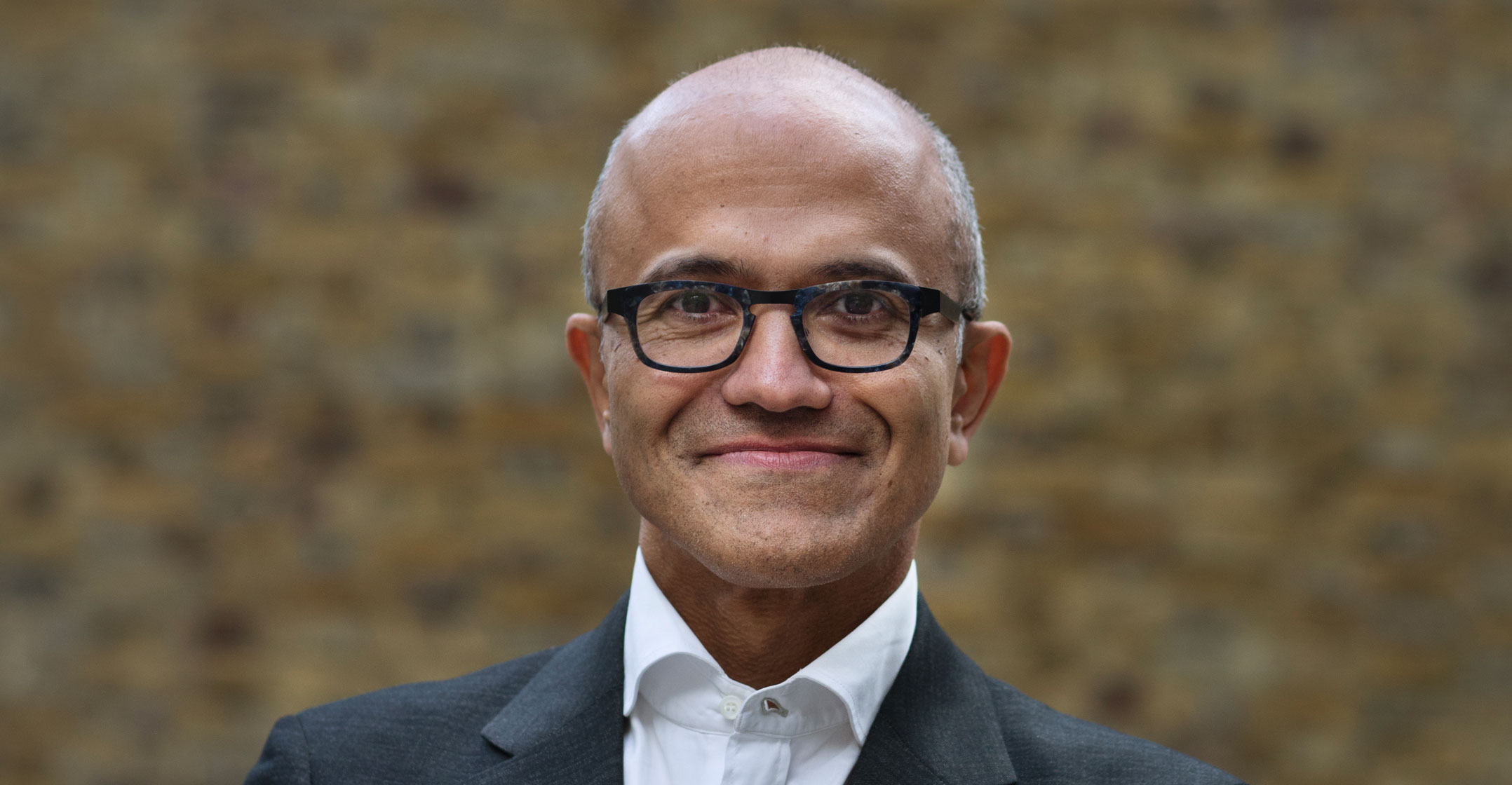
Microsoft’s approach has won praise from climate scientists for its ambition. But the company also counts some of the worst emitters — oil and gas giants such as Chevron and Exxon Mobil — among its customers, selling them software and gear they use to increase oil and gas extractions. A 19 May Greenpeace report called out Microsoft and Amazon.com for “connections to some of the world’s dirtiest oil companies for the explicit purpose of getting more oil and gas out of the ground and onto the market faster and cheaper”.
Microsoft is attempting to counter this incongruity with unproven removal ideas, says Nives Dolsak, a professor of sustainability science at the University of Washington. “Their strategy is, ‘We are banking on uncertain technology that will reduce carbon from the air, and if that works out, that allows us to put certain future additional carbon into the air,’” she says.
Joppa has heard this criticism before. It’s the biggest complaint Microsoft gets on its climate strategy. Oil and gas companies need to be part of the climate and energy solution, he says. It doesn’t make sense to cut ties.
As the company leaps headlong into its plan, among the many risks it must consider are the early and unproven technology and its high prices, Joppa says, as well as the rapid pace of climate change and the small window to arrest it. “We have got to go out and make some bets on technologies that don’t exist, on technologies that are too expensive, and on markets that aren’t mature enough,” he says. “They will never be cheap enough, they will never be scaled high enough, and they will never be mature enough unless a Microsoft comes in right now and starts pushing.”
Joppa grew up in rural Wisconsin in the US and met his wife, Jamie, in second grade. School bored him until he took a college course called Extinction of Species and then threw himself into studying ecology. After a Peace Corps stint in Malawi and a doctorate he earned in three years, he began work at Microsoft’s research arm, much to the horror of some colleagues. One professor told him, “Lucas, you could have been somebody!”
Obvious choice
During almost 11 years at Microsoft, Joppa has worked to apply computing power to the Earth’s challenges. He came up with AI for Earth in 2016, a programme that grants software to companies working on environmental projects. When the company’s sustainability work became a part of Microsoft’s legal department and Joppa moved with it, his nature-themed tattoos peeking out of a T-shirt stood out among a sea of khaki and button-downs. But when Microsoft decided to name its first chief environmental officer in 2018, Joppa’s scientific background and ability to work with employees from various disciplines made him the obvious choice, says Microsoft president Brad Smith.
Since 2012, the company has taxed its own business units for the carbon they emit and put the proceeds into buying carbon credits and running sustainability programmes, making it one of the earlier companies to take such a step. Last spring, it doubled its internal carbon tax and said it would lobby for national carbon-pricing policies.
But customers kept asking Microsoft to do more, and employees were also pushing. In September, rival Amazon pledged to be carbon neutral by 2040, and Microsoft felt pressure to step up its own commitment, Smith says. At a meeting in November, Joppa used dire projections from the IPCC as a way to create urgency for Microsoft CEO Satya Nadella and his executive team. The world can emit only 420 more gigatons of CO2 to have a 66% chance of avoiding catastrophic warming, Joppa explained, and at the current rate that’s only a decade away.
 He returned with instructions to come up with a bold proposal. Along with the finance department, the team worked frenetically over the holidays on the maths behind going carbon negative. “It was one thing to have the goal. It was another thing to know whether we could achieve it,” Smith says. Chief financial officer Amy Hood committed $1-billion for an idea she’d had: the climate investment fund.
Microsoft opted for an unprecedented pledge to clean up all direct and electrical emissions since its 1975 founding by 2050. Its promise to become carbon negative by 2030 includes not only direct emissions from its buildings, data centres and fleet of campus vehicles, but also something called Scope 3 emissions. These are more indirect, harder to calculate, and far larger. It means taking responsibility for the energy that gamers use when they play Xbox videogames, for example. Microsoft doesn’t count oil and gas customers’ use of its software for drilling and exploration in Scope 3.
The staff who handle Microsoft’s purchases from suppliers are working on standards for those companies to measure what they emit and planning to add incentives to spur them to do better. Microsoft also plans to work with customers on how they can be greener, which includes helping oil and gas customers with clean energy programs, Joppa says.
In the past couple of years, more than 40 tech companies have set targets for limiting emissions, but Microsoft’s plans to be carbon negative by 2030 and wipe out historical emissions are the most aggressive. There are only a handful of businesses that have said they’ll be carbon negative within 10 years, including furniture maker Ikea and tax software provider Intuit. Panasonic says it will be carbon negative by 2050. Payments start-up Stripe has begun spending $1-million/year funding negative-emissions projects.
Microsoft’s investment fund is also unusual, but its goals are similar to those of a fund led by co-founder Bill Gates, who remains an adviser to the company and has met with Joppa and other Microsoft executives to share ideas. Gates is chairman of Breakthrough Energy Ventures, a $1-billion fund with investors such as Amazon founder Jeff Bezos, Virgin Group boss Richard Branson and Michael Bloomberg, founder and majority owner of Bloomberg. There are ongoing conversations between Microsoft and the fund about possible partnerships on investments, says Jonah Goldman, MD at Gates Ventures, a private investment office for Gates. Both entities share an understanding that carbon removal is a different type of investment, and it’s important to have companies like Microsoft backing technology that isn’t an obvious short-term moneymaker.
Apollo mission
After an event in January to announce their big plans, Joppa and his team celebrated with a carbon-themed playlist featuring Billy Joel’s We Didn’t Start the Fire and Heat Wave by Martha Reeves and the Vandellas, then got to work figuring out how to make the promises a reality.
Joppa has been reading a book on the Apollo mission to put a man on the moon, and he told his wife how jealous it made him. “They had this pure thing that brought business and science and research and engineering all together, and you could just focus on it obsessively,” he says. Jamie answered: “What are you talking about? That’s what you have to do.”
On the banks of Howe Sound in British Columbia, a fan the size of a delivery truck slurps carbon out of the atmosphere. It’s part of a factory run by a company called Carbon Engineering, and it’s considered one of the most promising in the field of “direct air capture”, the segment of the carbon-capture industry that sounds the most like science fiction. Gates was an early investor in the company. Basically fans, or “injectors”, connect the air with chemicals that bond with the carbon and remove it. Right now it’s highly inefficient and expensive, with prices anywhere from $250 to $1 000/ton. Microsoft is banking on the price going down and volume going up.
Another direct-air-capture start-up, Climeworks, has its massive fans set up in Zurich, where the captured CO2 is used to grow plants in a greenhouse. Climeworks operates three plants, but they’re only removing hundreds of tons in a year. The industry is young. In fact, the three leading companies together can’t pull a million tons of carbon out of the air a year, while data centres of the kind Microsoft and Amazon operate are estimated to produce more than 300 times that.
“Direct air capture is like the Saturn V rocket for the moonshot,” Smith says. “If someone can perfect that, it’s going to just change the equation.” Another carbon-removal technique is bio-energy with carbon capture and storage, or BECCS, which is basically growing plants to absorb carbon and then burning that biomass for power and sequestering the resulting emissions underground. The UK’s biggest power plant, in North Yorkshire, has a pilot project using the technology. It’s the first working example of BECCS, and it captures less than a ton of carbon dioxide a day.
When it comes to machines that successfully remove carbon from the atmosphere today, that’s about it.
By Microsoft’s account of its emissions, it needs to buy credits to remove about two million tons of CO2 next year — and six million by 2030, even though new emissions will be cut by more than half by then. There are other large companies interested in buying credits to offset their carbon sins, too. But there will not be enough carbon-removal tech credits for everyone to offset their emissions. In the near term, Microsoft plans to buy more natural carbon credits that go toward things such as planting trees before switching to tech.
In July, Microsoft will begin to solicit bids for its carbon-removal business. Its interest, along with that of Stripe, Shopify and others, should help fuel investment in new projects, says Deepika Nagabhushan, programme director for decarbonised fossil energy at the Clean Air Task Force, which is tracking some 26 potential carbon-capture projects. But it won’t make a difference overnight. “Even if Microsoft announces today that they are going to buy a certain number of credits from a direct-air-capture project, it’s going to take a couple of years for a project to even develop.”
Harder
On Joppa’s conference call, the team from Carbon Direct reminds Microsoft that the low price will make their short-term goals harder. Julio Friedmann, Carbon Direct’s chief scientist, notes most of the available projects in BECCS and direct air capture cost many times Microsoft’s $20/ton budget. And other companies need to offer investment funds like Microsoft’s. “You can do a lot with a billion, but you cannot create a gigaton-scale industry with a billion dollars, no matter how smart and savvy the investments are,” Friedmann, who’s also a researcher at the Centre on Global Energy Policy at Columbia University, says in an interview.
The price is also lower than many experts have modelled for the economic damage each ton of carbon is likely to cause.
But Joppa wants to use Microsoft’s purchasing power and its investments to push the price down to a level other buyers can afford. If carbon-capture tech is something only the Microsofts of the world can afford, he worries that the world will fail to contain warming. “Markets work because we make them work,” he says. They work because people put in positive incentives and help juice supply and demand. “You don’t just wish it to be so, and it happens.”
 Microsoft expects to make mistakes both in investments and carbon-removal choices. Willmott, the carbon expert of the group, says the company wants to be transparent about its successes and failures so others can learn from them.
The coronavirus-induced shutdown has made Joppa more certain that radical action is needed quickly. CO2 emissions are down — about 8% of the estimated total for the year will never be emitted, according to the International Energy Agency. Although that’s not enough to make a dent in overall warming, the slowdown has led to cleaner air and clearer skies, and confinement has made the outdoors a welcome respite.
“I hope there’s something lasting about it,” he says. “We’ve given people now an experience with a healthier planet, and I hope that’s going to be hard to take away.”
There’s another risk in this whole project, of course — that time runs out. Is this plan achievable in the time we have? “It better be,” Joppa says. “I’m existentially worried about the cost of failure.” — Reported by Dina Bass, with assistance from Emily Chasan, Leslie Kaufman and Akshat Rathi, (c) 2020 Bloomberg LP