Close Menu
TechCentralTechCentral

    Subscribe to the newsletter

    Get the best South African technology news and analysis delivered to your e-mail inbox every morning.

    Facebook X (Twitter) YouTube LinkedIn
    WhatsApp Facebook X (Twitter) LinkedIn YouTube
    TechCentralTechCentral
    • News
      Home affairs opens visa fast lane - with tech talent a top priority

      Home affairs opens visa fast lane – with tech talent a top priority

      21 July 2026
      Skills authority to probe MICT Seta leadership crisis - Buti Manamela

      Skills authority to probe MICT Seta leadership crisis

      21 July 2026
      Mastercard bets billions on the tech that could eat its lunch - Prakriti Singh

      Mastercard bets billions on the tech that could eat its lunch

      21 July 2026
      From care homes to production lines, the robots are coming

      From care homes to production lines, the robots are coming

      21 July 2026
      Remote work in South Africa hits record high

      Remote work in South Africa hits record high

      21 July 2026
    • World
      Meta AI will now tell parents if their teen is in crisis

      Meta AI will now tell parents if their teen is in crisis

      17 July 2026
      IBM shares crash 25% as AI upends software spending - Arvind Krishna

      IBM shares crash 25% as AI upends software spending

      15 July 2026
      Jony Ive's first OpenAI device: an AI smart speaker - Jony Ive and Sam Altman

      Jony Ive’s first OpenAI device: an AI smart speaker

      15 July 2026
      Stripe, Advent in talks to buy PayPal for $53-billion

      Stripe, Advent in talks to buy PayPal for $53-billion

      15 July 2026
      Memory crisis sends smartphone market into steep decline

      Memory crisis sends smartphone market into steep decline

      13 July 2026
    • In-depth
      The plan to stop AI from breaking the world - Google DeepMind CEO Demis Hassabis. Image: John Sears

      The plan to stop AI from breaking the world

      16 July 2026
      The internet has a Strait of Hormuz problem

      The internet has a Strait of Hormuz problem

      15 July 2026
      AI boom sparks rally, frenzy and fear

      AI boom sparks rally, frenzy and fear

      11 June 2026
      Every plug-in hybrid on sale in South Africa, ranked by price - Lamborghini Temerario

      Every plug-in hybrid on sale in South Africa, ranked by price

      7 June 2026
      What Wi-Fi 8 will mean for wireless networks

      What Wi-Fi 8 will mean for wireless networks

      1 June 2026
    • TCS
      Watts & Wheels S1E7: 'Ferrari's EV breaks the internet'

      Watts & Wheels S1E7: ‘Ferrari’s EV breaks the internet’

      8 July 2026
      TCS+ | How Tracker is turning vehicle data into business strategy - Silvia Schollenberger

      TCS+ | How Tracker is turning vehicle data into business strategy

      1 July 2026
      TCS+ | IBM Bob: an AI-powered 'development partner' for the enterprise - David Spurway

      TCS+ | IBM Bob: an AI-powered development partner for the enterprise

      30 June 2026
      Watts & Wheels S1E6: 'A flawless Alfa and a bakkie that divides'

      Watts & Wheels S1E6: ‘A flawless Alfa and a bakkie that divides’

      17 June 2026
      Watts & Wheels S1E6: 'A flawless Alfa and a bakkie that divides'

      Watts & Wheels S1E5: ‘A Bentley of the bush and a car that swims’

      8 June 2026
    • Opinion
      Selling vapour is corporate suicide in slow motion - Jannie van Zyl

      Selling vapour is corporate suicide in slow motion

      16 July 2026
      Brazil's online gambling crackdown is a lesson for South Africa

      How Amazon outmanoeuvred Starlink in South Africa

      15 July 2026
      The Popia problem with agentic AI - Herman Haasbroek

      The Popia problem with agentic AI

      14 July 2026
      The author, Fanie van Rooyen

      South Africa can still catch the AI wave – here’s how

      7 July 2026
      The author, Fanie van Rooyen

      The AI utopia South Africa can’t afford

      1 July 2026
    • Company Hubs
      • 1Stream
      • Africa Data Centres
      • AfriGIS
      • Altron Digital Business
      • Altron Document Solutions
      • Altron Group
      • Arctic Wolf
      • Ascent Technology
      • AvertITD
      • BBD
      • Braintree
      • CallMiner
      • CambriLearn
      • CM Telecom
      • Contactable
      • CYBER1 Solutions
      • Digicloud Africa
      • Digimune
      • Domains.co.za
      • ESET
      • Euphoria Telecom
      • HOSTAFRICA
      • Incredible Business
      • iONLINE
      • IQbusiness
      • Iris Network Systems
      • Kaspersky
      • LSD Open
      • Mitel
      • NEC XON
      • Netstar
      • Network Platforms
      • Next DLP
      • Ovations
      • Paracon
      • Paratus
      • Q-KON
      • SevenC
      • SkyWire
      • Solid8 Technologies
      • Telit Cinterion
      • Telviva
      • Tenable
      • Vertiv
      • Videri Digital
      • Vodacom Business
      • Wipro
      • Workday
      • XLink
    • Sections
      • AI and machine learning
      • Banking
      • Broadcasting and Media
      • Cloud services
      • Contact centres and CX
      • Cryptocurrencies
      • Education and skills
      • Electronics and hardware
      • Energy and sustainability
      • Enterprise software
      • Financial services
      • HealthTech
      • Information security
      • Internet and connectivity
      • Internet of Things
      • Investment
      • IT services
      • Lifestyle
      • Policy and regulation
      • Public sector
      • Retail and e-commerce
      • Satellite communications
      • Science
      • SMEs and start-ups
      • Social media
      • Talent and leadership
      • Telecoms
      • Watts & Wheels
    • Events
    • Advertise
    TechCentralTechCentral
    Home » World » Intel’s CEO has had enough of Donald Trump

    Intel’s CEO has had enough of Donald Trump

    By Agency Staff16 August 2017
    Twitter LinkedIn Facebook WhatsApp Email Telegram Copy Link
    News Alerts
    WhatsApp
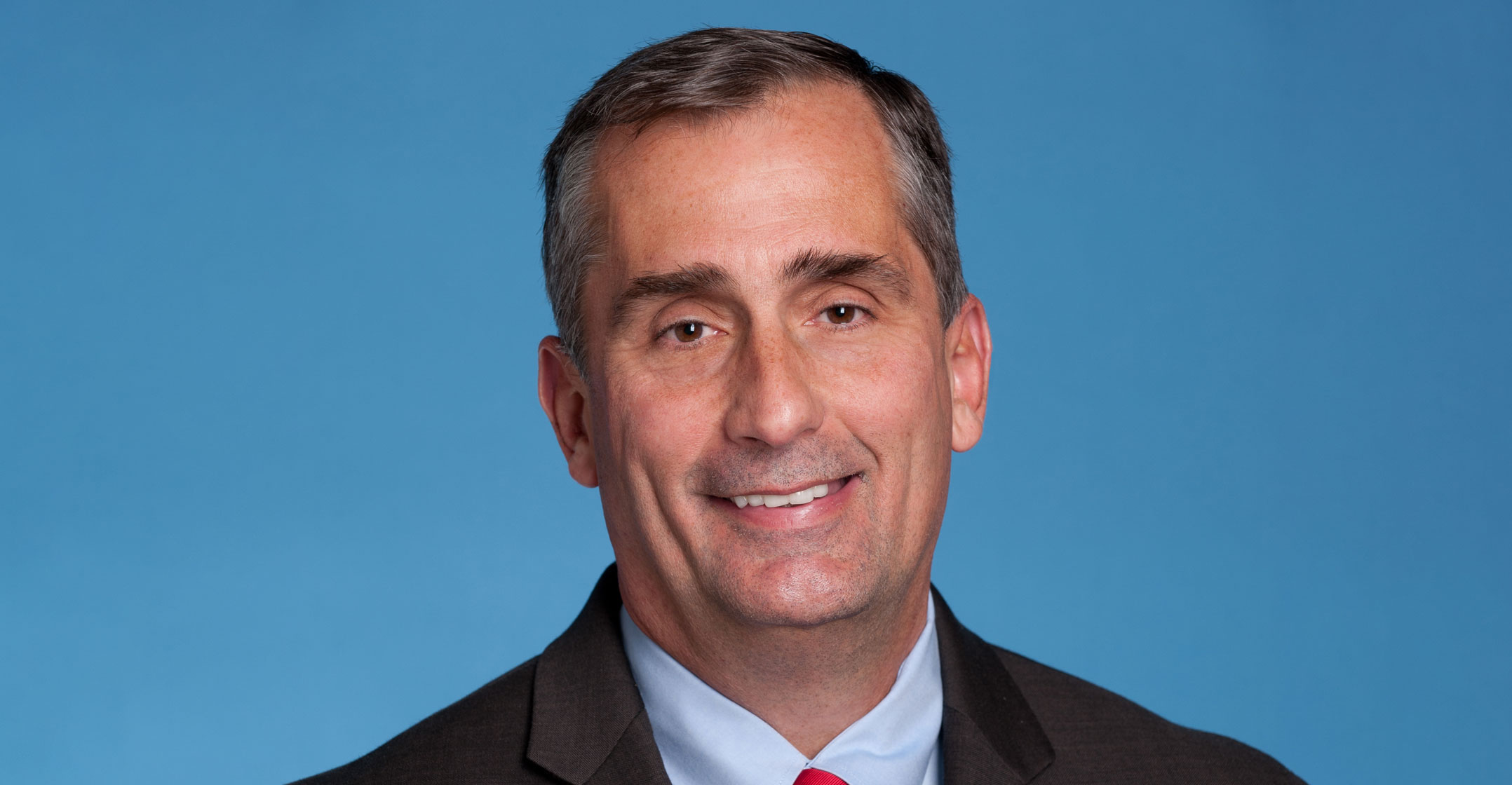
    Intel CEO Brian Krzanich

    For Intel CEO Brian Krzanich, the last straw was US President Donald Trump’s attack on Merck & Co CEO Ken Frazier.

    Krzanich has paid a price internally for maintaining a relationship with the Trump administration. He planned, then cancelled, a meeting at his home last July for then-candidate Trump. Earlier this year, he went to the White House to announce the completion of a factory and new jobs.

    The signs of support for Trump sparked criticism inside Intel aimed at its leader, according to people familiar with internal postings.

    In response, Krzanich was forced to explain that as the head of a manufacturing company, he needs to stay connected to those who set tax policy. Intel’s manufacturing is done mainly in the US. The availability of tax breaks is one of the key influences on whether the multibillion-dollar plants are economically viable.

    I resigned because I want to make progress, while many in Washington seem more concerned with attacking anyone who disagrees with them

    By Monday, the chip maker’s leader had seen enough. Like many others, Krzanich tweeted his frustration with the lack of forceful condemnation by political leaders of the white supremacy-related deadly violence in Charlottesville, Virginia. Then, late in the evening, he posted his resignation from the White House business panel on manufacturing.

    “I resigned because I want to make progress, while many in Washington seem more concerned with attacking anyone who disagrees with them,” Krzanich wrote. “My request — my plea — to everyone involved in our political system is this: set scoring political points aside and focus on what is best for the nation as a whole.”

    Krzanich’s decision came after Trump took to Twitter to harshly criticise Frazier and Merck for high drug prices and sending jobs overseas. Earlier, Frazier had stepped down from the White House panel as a “matter of personal conscience”.

    Doubts

    Krzanich’s withdrawal from the council was also related to his doubts about the effectiveness of the body itself, according to a person familiar with his thinking.

    Also contributing to Krzanich’s thinking: Intel on Tuesday published its latest report on efforts to hire a more diverse workforce — a plan that BK, as he’s known inside the company, has staked his reputation on, vowing to spend US$300m on activities including the sponsorship of minority and women-run start-ups.

    Intel, the world’s largest chip maker, was one of the first Silicon Valley companies to go public with a breakdown of the demographics of its workforce and Krzanich has set goals to bring the under-representation of minorities at least in line with the general employee pool in the US. The CEO, who has two daughters, has tied executive pay to progress on diversity and as well as creating the funds to invest in start-ups run by women and minorities.

    Technology companies have talked about diversity for years, but the data show that progress has been slow

    Intel is making progress in achieving its diversity goal, the company said in a mid-year update released on Tuesday. Women now make up 26% of its US employee workforce and minorities are about 13%, the company reported. Intel said it needs to hire 801 women and under-represented minorities for its 50 000-strong US workforce to match market availability, compared with a 2 300-employee diversity gap before the programme started in December 2014.

    Intel uses market availability as its standard to track diversity and inclusion at the company. Market availability measures how many skilled people exist in the external US labour market as well as Intel’s own internal market, according to the company.

    The biggest remaining gap is in representation of African Americans, which “is flat across all grades”, the company said. The shortfall in that category accounts for the majority of Intel’s overall deficit, according to the report. White males and Asian males fill 90% of Intel’s mid- to- senior technical grades.

    Donald Trump

    Intel’s CEO lauded the progress, but put more pressure on his employees. Intel is now aiming to match the diversity of its US workforce to the population as a whole by 2018, two years earlier than its original 2020 target.

    “Technology companies have talked about diversity for years, but the data show that progress has been slow,” Krzanich said in his introduction to the report. “We have made progress, as you’ll see in the numbers. But this is critical work, and we must accelerate it, especially in the areas where we haven’t come as far as we would like.”

    In the US, Intel has facilities in California, Arizona, Oregon and New Mexico, which gives it a more politically diverse workforce than other Silicon Valley companies.

    Krzanich won a small victory last year for Intel’s diversity effort, keeping hold of one of the highest-profile black female executive in the technology industry. Aicha Evans, who now reports to him as the company’s head of strategy, was persuaded to stay at the company after planning to resign while head of the mobile phone chip unit.  — Reported by Ian King, (c) 2017 Bloomberg LP

    Follow TechCentral on Google News Add TechCentral as your preferred source on Google


    Brian Krzanich Donald Trump Intel Ken Frazier
    WhatsApp YouTube
    Share. Facebook Twitter LinkedIn WhatsApp Telegram Email Copy Link
    Previous ArticleBitcoin is literally soaring into space
    Next Article MultiChoice debuts new DStv WiFi Connector

    Related Posts

    Xi pitches China as the world's AI liberator - Chinese President Xi Jinping waves as he arrives at the opening ceremony of the World AI Conference in Shanghai. Ng Han Guan/Reuters

    Xi pitches China as the world’s AI liberator

    17 July 2026
    Quantum computers are coming for bitcoin

    Quantum computers are coming for bitcoin

    9 July 2026
    IBM claims major chip breakthrough

    IBM claims major chip breakthrough

    25 June 2026
    Company News
    Cloud adoption is done. Execution is the new frontier - Cloud on Demand

    Cloud adoption is done. Execution is the new frontier

    21 July 2026
    Data poisoning in AI models: what businesses need to know - Domains.co.za

    Data poisoning in AI models: what businesses need to know

    21 July 2026
    The AI-led industrial revolution has begun - CallMiner Bruce McMahon

    The AI-led industrial revolution has begun

    20 July 2026
    Opinion
    Selling vapour is corporate suicide in slow motion - Jannie van Zyl

    Selling vapour is corporate suicide in slow motion

    16 July 2026
    Brazil's online gambling crackdown is a lesson for South Africa

    How Amazon outmanoeuvred Starlink in South Africa

    15 July 2026
    The Popia problem with agentic AI - Herman Haasbroek

    The Popia problem with agentic AI

    14 July 2026

    Subscribe to Updates

    Get the best South African technology news and analysis delivered to your e-mail inbox every morning.

    Latest Posts
    Home affairs opens visa fast lane - with tech talent a top priority

    Home affairs opens visa fast lane – with tech talent a top priority

    21 July 2026
    Skills authority to probe MICT Seta leadership crisis - Buti Manamela

    Skills authority to probe MICT Seta leadership crisis

    21 July 2026
    Mastercard bets billions on the tech that could eat its lunch - Prakriti Singh

    Mastercard bets billions on the tech that could eat its lunch

    21 July 2026
    From care homes to production lines, the robots are coming

    From care homes to production lines, the robots are coming

    21 July 2026
    © 2009 - 2026 NewsCentral Media
    Built and maintained by Chronon
    • Cookie policy (ZA)
    • TechCentral – privacy and Popia

    Type above and press Enter to search. Press Esc to cancel.

    Manage consent

    TechCentral uses cookies to enhance its offerings. Consenting to these technologies allows us to serve you better. Not consenting or withdrawing consent may adversely affect certain features and functions of the website.

    Functional Always active
    The technical storage or access is strictly necessary for the legitimate purpose of enabling the use of a specific service explicitly requested by the subscriber or user, or for the sole purpose of carrying out the transmission of a communication over an electronic communications network.
    Preferences
    The technical storage or access is necessary for the legitimate purpose of storing preferences that are not requested by the subscriber or user.
    Statistics
    The technical storage or access that is used exclusively for statistical purposes. The technical storage or access that is used exclusively for anonymous statistical purposes. Without a subpoena, voluntary compliance on the part of your Internet Service Provider, or additional records from a third party, information stored or retrieved for this purpose alone cannot usually be used to identify you.
    Marketing
    The technical storage or access is required to create user profiles to send advertising, or to track the user on a website or across several websites for similar marketing purposes.
    • Manage options
    • Manage services
    • Manage {vendor_count} vendors
    • Read more about these purposes
    View preferences
    • {title}
    • {title}
    • {title}