
Close Menu
TechCentralTechCentral

    Subscribe to the newsletter

    Get the best South African technology news and analysis delivered to your e-mail inbox every morning.

    Facebook X (Twitter) YouTube LinkedIn
    WhatsApp Facebook X (Twitter) LinkedIn YouTube
    TechCentralTechCentral
    • News
      Big Microsoft 365 price increases coming next year

      Big Microsoft price increases coming next year

      5 December 2025
      Vodacom to take control of Safaricom in R36-billion deal - Shameel Joosub

      Vodacom to take control of Safaricom in R36-billion deal

      4 December 2025
      Black Friday goes digital in South Africa as online spending surges to record high

      Black Friday goes digital in South Africa as online spending surges to record high

      4 December 2025
      BYD takes direct aim at Toyota with launch of sub-R500 000 Sealion 5 PHEV

      BYD takes direct aim at Toyota with launch of sub-R500 000 Sealion 5 PHEV

      4 December 2025
      'Get it now': Takealot in new instant deliveries pilot

      ‘Get it now’: Takealot in new instant deliveries pilot

      4 December 2025
    • World
      Amazon and Google launch multi-cloud service for faster connectivity

      Amazon and Google launch multi-cloud service for faster connectivity

      1 December 2025
      Google makes final court plea to stop US breakup

      Google makes final court plea to stop US breakup

      21 November 2025
      Bezos unveils monster rocket: New Glenn 9x4 set to dwarf Saturn V

      Bezos unveils monster rocket: New Glenn 9×4 set to dwarf Saturn V

      21 November 2025
      Tech shares turbocharged by Nvidia's stellar earnings

      Tech shares turbocharged by stellar Nvidia earnings

      20 November 2025
      Config file blamed for Cloudflare meltdown that disrupted the web

      Config file blamed for Cloudflare meltdown that disrupted the web

      19 November 2025
    • In-depth
      Jensen Huang Nvidia

      So, will China really win the AI race?

      14 November 2025
      Valve's Linux console takes aim at Microsoft's gaming empire

      Valve’s Linux console takes aim at Microsoft’s gaming empire

      13 November 2025
      iOCO's extraordinary comeback plan - Rhys Summerton

      iOCO’s extraordinary comeback plan

      28 October 2025
      Why smart glasses keep failing - no, it's not the tech - Mark Zuckerberg

      Why smart glasses keep failing – it’s not the tech

      19 October 2025
      BYD to blanket South Africa with megawatt-scale EV charging network - Stella Li

      BYD to blanket South Africa with megawatt-scale EV charging network

      16 October 2025
    • TCS
      TCS+ | How Cloud on Demand helps partners thrive in the AWS ecosystem - Odwa Ndyaluvane and Xenia Rhode

      TCS+ | How Cloud On Demand helps partners thrive in the AWS ecosystem

      4 December 2025
      TCS | MTN Group CEO Ralph Mupita on competition, AI and the future of mobile

      TCS | Ralph Mupita on competition, AI and the future of mobile

      28 November 2025
      TCS | Dominic Cull on fixing South Africa's ICT policy bottlenecks

      TCS | Dominic Cull on fixing South Africa’s ICT policy bottlenecks

      21 November 2025
      TCS | BMW CEO Peter van Binsbergen on the future of South Africa's automotive industry

      TCS | BMW CEO Peter van Binsbergen on the future of South Africa’s automotive industry

      6 November 2025
      TCS | Why Altron is building an AI factory - Bongani Andy Mabaso

      TCS | Why Altron is building an AI factory in Johannesburg

      28 October 2025
    • Opinion
      Your data, your hardware: the DIY AI revolution is coming - Duncan McLeod

      Your data, your hardware: the DIY AI revolution is coming

      20 November 2025
      Zero Carbon Charge founder Joubert Roux

      The energy revolution South Africa can’t afford to miss

      20 November 2025
      It's time for a new approach to government IT spend in South Africa - Richard Firth

      It’s time for a new approach to government IT spend in South Africa

      19 November 2025
      How South Africa's broken Rica system fuels murder and mayhem - Farhad Khan

      How South Africa’s broken Rica system fuels murder and mayhem

      10 November 2025
      South Africa's AI data centre boom risks overloading a fragile grid - Paul Colmer

      South Africa’s AI data centre boom risks overloading a fragile grid

      30 October 2025
    • Company Hubs
      • Africa Data Centres
      • AfriGIS
      • Altron Digital Business
      • Altron Document Solutions
      • Altron Group
      • Arctic Wolf
      • AvertITD
      • Braintree
      • CallMiner
      • CambriLearn
      • CYBER1 Solutions
      • Digicloud Africa
      • Digimune
      • Domains.co.za
      • ESET
      • Euphoria Telecom
      • Incredible Business
      • iONLINE
      • IQbusiness
      • Iris Network Systems
      • LSD Open
      • NEC XON
      • Netstar
      • Network Platforms
      • Next DLP
      • Ovations
      • Paracon
      • Paratus
      • Q-KON
      • SevenC
      • SkyWire
      • Solid8 Technologies
      • Telit Cinterion
      • Tenable
      • Vertiv
      • Videri Digital
      • Vodacom Business
      • Wipro
      • Workday
      • XLink
    • Sections
      • AI and machine learning
      • Banking
      • Broadcasting and Media
      • Cloud services
      • Contact centres and CX
      • Cryptocurrencies
      • Education and skills
      • Electronics and hardware
      • Energy and sustainability
      • Enterprise software
      • Financial services
      • Information security
      • Internet and connectivity
      • Internet of Things
      • Investment
      • IT services
      • Lifestyle
      • Motoring
      • Public sector
      • Retail and e-commerce
      • Satellite communications
      • Science
      • SMEs and start-ups
      • Social media
      • Talent and leadership
      • Telecoms
    • Events
    • Advertise
    TechCentralTechCentral
    Home » In-depth » It’s time to kill off the Sim card

    It’s time to kill off the Sim card

    By The Conversation5 March 2015
    Twitter LinkedIn Facebook WhatsApp Email Telegram Copy Link
    News Alerts
    WhatsApp

    Sim-card-640

    The small microchips known as “subscriber identity modules” or Sim cards that are required for mobile phones to log on to a phone network will soon be 25 years old. While mobile phones and network technology have progressed in leaps and bounds, Sim cards are still lodged in handsets.

    And they’re vulnerable too — it was claimed recently that US and UK intelligence agencies stole potentially millions of Sim card security keys which would allow spies to track users and eavesdrop on calls.

    Gemalto, the Dutch Sim card manufacturer that was reportedly the victim of an NSA and GCHQ attack, responded with assurances that little, if any, information was stolen. The firm stressed how important its products were to mobile phone security. But the reality is that Sim cards are now more of a drawback than a benefit.

    Sim cards were a useful feature when they came onto the market in 1991. At the time, mobile phones were bulky devices, usually mounted in cars or carried on a shoulder strap. They were often rented along with a car. A Sim would help customers quickly and easily transfer their phone number and contacts from one phone to the next, without the need to type in long identifiers and access codes each time. Having to enter access codes into a phone that was essentially shared also meant users might forget to delete them before returning the device. Storing the login details in a removable personal plastic card elegantly solved this problem.

    But the days of huge or rented car phones are gone, and today smartphones are lightweight, personal devices that we entrust with passwords to many sites and services — access to Wi-Fi, email, social networks, app stores and online shopping.

    The fact is that the Sim could have been replaced long ago with a simpler alternative: typing in a user identifier and password directly into the phone is an option — just as we do to access Wi-Fi. QR codes — the square, 3D barcodes — are a more convenient alternative for smartphones with cameras, where an app could read the details encoded in the QR straight from the camera.

    Modern cryptographic techniques mean that passwords no longer have to be very long. Password-authenticated key exchange (PAKE) techniques exist that use passwords as simple as a five-digit Pin to create highly secure encrypted connections that even the supercomputers of eavesdropping intelligence agencies cannot break. And thanks to e-mail and the Web, network operators today have much better mechanisms for keeping in touch with their users to inform them which devices are authorised. None of these options were available when the Sim was conceived in the late 1980s.

    Smartphone app stores like those from Apple and Google already make good use of modern authentication techniques. They could, today, be used to easily transfer all the functionality of a Sim into the phone using an app. All that’s needed is a new standard interface for mobile operating systems such as Android or iOS that would allow apps (software) to take over the functions of the Sim (hardware). Technically, a mobile network login is no more challenging than similar applications such as payment wallets, online banking, digital rights managed content, and so on.

    Vested interests
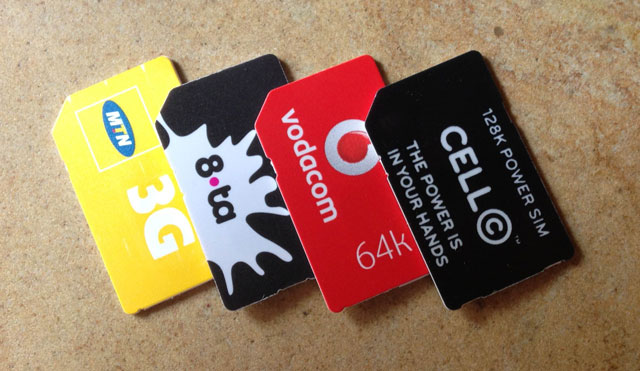
    Manufacturers are understandably against anything that would eliminate their business — an estimated 5,2bn Sim cards were sold in 2014. Many network operators are also wedded to the Sim because it allows them to lock customers to their network, preventing easy access to competitors.

    Modern Sims are tiny, difficult to access, and easy to lose once taken out of the phone. In fact, many users may not even know how to find or remove theirs, because it was inserted for them when they bought the phone. This inconvenience allows providers to charge high roaming fees when customers use their phone abroad, when using a local operator would be cheaper.
    sims-640
    Living on borrowed time?

    If the Sim were replaced with a password or extra software, users would be able to keep several pay-as-you-go subscriptions from different providers in their phone simultaneously, so they can easily switch to the most attractive rate depending on where they were. Apps that functioned as brokers could even negotiate which network to select based on best price automatically.

    Another obstacle, besides the Sim itself, that hinders customers from easily switching between network providers is the cumbersome procedure required to port a telephone number. This process was designed to ease switching contracts every few years, rather than to help a phone switch between networks automatically several times a day.

    But modern internet-based telephony has demonstrated that moving a telephone number between networks can be accomplished in seconds — the same needs to be implemented in mobile phone networks.

    Given that the Sim card and phone-number transfer are barriers preventing customers from fully gaining the benefits of market competition, regulators should watch out that vested interests are not able to undermine efforts to provide alternatives.

    The European Commission has long tried to improve mobile phone competition, mostly through price-control measures of roaming charges. Ditching the Sim would remove a major obstacle to competition, something that would likely generate market solutions to the problem of excess roaming charges without the need for further regulation from above.The Conversation

    • Markus Kuhn is senior lecturer in computer science at the University of Cambridge
    • This article was originally published on The Conversation


    GCHQ Gemalto Markus Kuhn NSA
    Subscribe to TechCentral Subscribe to TechCentral
    Share. Facebook Twitter LinkedIn WhatsApp Telegram Email Copy Link
    Previous ArticleAfrica data demand to underpin MTN growth
    Next Article MWeb unveils home fibre prices

    Related Posts

    NSA chief accuses China of ‘very aggressive’ hacking strategy

    31 May 2024
    Musk's xAI seeks funding at $18-billion valuation

    Warning that AI will lead to increase in cyberattacks

    24 January 2024
    China accuses US of hacking Huawei servers

    China accuses US of hacking Huawei servers

    20 September 2023
    Company News
    AI is not a technology problem - iqbusiness

    AI is not a technology problem – iqbusiness

    5 December 2025
    Telcos are sitting on a data gold mine - but few know what do with it - Phillip du Plessis

    Telcos are sitting on a data gold mine – but few know what do with it

    4 December 2025
    Unlock smarter computing with your surface Copilot+ PC

    Unlock smarter computing with your Surface Copilot+ PC

    4 December 2025
    Opinion
    Your data, your hardware: the DIY AI revolution is coming - Duncan McLeod

    Your data, your hardware: the DIY AI revolution is coming

    20 November 2025
    Zero Carbon Charge founder Joubert Roux

    The energy revolution South Africa can’t afford to miss

    20 November 2025
    It's time for a new approach to government IT spend in South Africa - Richard Firth

    It’s time for a new approach to government IT spend in South Africa

    19 November 2025

    Subscribe to Updates

    Get the best South African technology news and analysis delivered to your e-mail inbox every morning.

    Latest Posts
    Big Microsoft 365 price increases coming next year

    Big Microsoft price increases coming next year

    5 December 2025
    AI is not a technology problem - iqbusiness

    AI is not a technology problem – iqbusiness

    5 December 2025
    Vodacom to take control of Safaricom in R36-billion deal - Shameel Joosub

    Vodacom to take control of Safaricom in R36-billion deal

    4 December 2025
    Black Friday goes digital in South Africa as online spending surges to record high

    Black Friday goes digital in South Africa as online spending surges to record high

    4 December 2025
    © 2009 - 2025 NewsCentral Media
    • Cookie policy (ZA)
    • TechCentral – privacy and Popia

    Type above and press Enter to search. Press Esc to cancel.

    Manage consent

    TechCentral uses cookies to enhance its offerings. Consenting to these technologies allows us to serve you better. Not consenting or withdrawing consent may adversely affect certain features and functions of the website.

    Functional Always active
    The technical storage or access is strictly necessary for the legitimate purpose of enabling the use of a specific service explicitly requested by the subscriber or user, or for the sole purpose of carrying out the transmission of a communication over an electronic communications network.
    Preferences
    The technical storage or access is necessary for the legitimate purpose of storing preferences that are not requested by the subscriber or user.
    Statistics
    The technical storage or access that is used exclusively for statistical purposes. The technical storage or access that is used exclusively for anonymous statistical purposes. Without a subpoena, voluntary compliance on the part of your Internet Service Provider, or additional records from a third party, information stored or retrieved for this purpose alone cannot usually be used to identify you.
    Marketing
    The technical storage or access is required to create user profiles to send advertising, or to track the user on a website or across several websites for similar marketing purposes.
    • Manage options
    • Manage services
    • Manage {vendor_count} vendors
    • Read more about these purposes
    View preferences
    • {title}
    • {title}
    • {title}