Close Menu
TechCentralTechCentral

    Subscribe to the newsletter

    Get the best South African technology news and analysis delivered to your e-mail inbox every morning.

    Facebook X (Twitter) YouTube LinkedIn
    WhatsApp Facebook X (Twitter) LinkedIn YouTube
    TechCentralTechCentral
    • News
      'There are no adults in the room': the AI safety exodus

      ‘There are no adults in the room’: the AI safety exodus

      11 September 2026
      US in move to counter Huawei in Africa

      US in move to counter Huawei in Africa

      11 September 2026
      SAPS wants to deploy AI bodycams with facial recognition

      SAPS wants to deploy AI bodycams with facial recognition

      10 September 2026
      Lesaka's first profit comes as its merchant business goes backwards - Lincoln Mali

      Lesaka’s first profit comes as its merchant business goes backwards

      10 September 2026
      South Africa's electric car floodgates are opening

      South Africa’s electric car floodgates are opening

      10 September 2026
    • World
      'This is not circular': Jensen Huang defends $3.5-billion MediaTek deal

      ‘This is not circular’: Jensen Huang defends $3.5-billion MediaTek deal

      2 September 2026
      AI-generated music banned from Australian charts

      AI-generated music banned from Australian charts

      26 August 2026
      Traders brace for a R4.5-trillion swing in Nvidia's value

      Traders brace for a R4.5-trillion swing in Nvidia’s value

      25 August 2026
      Russia building its own Starlink - and faster than expected - Vadym Skibitskyi

      Russia building its own Starlink – and faster than expected

      11 August 2026
      Meta AI will now tell parents if their teen is in crisis

      Meta AI will now tell parents if their teen is in crisis

      17 July 2026
    • In-depth
      Google DeepMind CEO Demis Hassabis. Image: John Sears

      The plan to stop AI from breaking the world

      16 July 2026
      The internet has a Strait of Hormuz problem

      The internet has a Strait of Hormuz problem

      15 July 2026
      AI boom sparks rally, frenzy and fear

      AI boom sparks rally, frenzy and fear

      11 June 2026
      Every plug-in hybrid on sale in South Africa, ranked by price - Lamborghini Temerario

      Every plug-in hybrid on sale in South Africa, ranked by price

      7 June 2026
      What Wi-Fi 8 will mean for wireless networks

      What Wi-Fi 8 will mean for wireless networks

      1 June 2026
    • TCS
      Meet the CIO | Shoprite's Chris Shortt on what a supermarket becomes

      Meet the CIO | Shoprite’s Chris Shortt on what a supermarket becomes

      9 September 2026
      Rubicon's EV charging network is profitable - and growing fast - Watts & Wheels

      Rubicon’s EV charging network is profitable – and growing fast

      8 September 2026
      Winstone Jordaan on building a national EV charging network

      Winstone Jordaan on building a national EV charging network

      2 September 2026
      Watts & Wheels S1E8: 'Tesla lands in Africa, just not here'

      Watts & Wheels S1E8: ‘Tesla lands in Africa, just not here’

      24 August 2026
      TCS | Herotel CEO Van Zyl Botha on beating Starlink to South Africa

      TCS | Herotel CEO Van Zyl Botha on beating Starlink to South Africa

      14 August 2026
    • Opinion
      The fragile joint in the Capitec machine - Pambos Soteriades

      The R197-billion market the banks can’t reach

      25 August 2026
      South African tech's compounding debt problem - Jannie van Zyl

      Management consulting as we know it is over

      21 August 2026
      South African tech's compounding debt problem - Jannie van Zyl

      The most dangerous customer is the quiet one

      10 August 2026
      South African tech's compounding debt problem - Jannie van Zyl

      South African tech’s compounding debt problem

      29 July 2026
      The fragile joint in the Capitec machine - Pambos Soteriades

      Best network, worst vibes: the puzzle of SA telecoms

      20 July 2026
    • Company Hubs
      • 1Stream
      • Africa Data Centres
      • AfriGIS
      • Altron Digital Business
      • Altron Document Solutions
      • Altron Group
      • Arctic Wolf
      • Ascent Technology
      • AvertITD
      • BBD
      • Braintree
      • CallMiner
      • CambriLearn
      • CM.com
      • Contactable
      • CYBER1 Solutions
      • Digicloud Africa
      • Digimune
      • Domains.co.za
      • ESET
      • Euphoria Telecom
      • HOSTAFRICA
      • Incredible Business
      • iONLINE
      • IQbusiness
      • Iris Network Systems
      • Kaspersky
      • LSD Open
      • Mitel
      • NEC XON
      • Netstar
      • Network Platforms
      • Next DLP
      • Ovations
      • Paracon
      • Paratus
      • Q-KON
      • SevenC
      • SkyWire
      • Solid8 Technologies
      • Telit Cinterion
      • Telviva
      • Tenable
      • Vertiv
      • Videri Digital
      • Vodacom Business
      • Vox
      • Wipro
      • Workday
      • XLink
    • Sections
      • AI and machine learning
      • Banking
      • Broadcasting and Media
      • Cloud services
      • Contact centres and CX
      • Cryptocurrencies
      • Education and skills
      • Electronics and hardware
      • Energy and sustainability
      • Enterprise software
      • Financial services
      • HealthTech
      • Information security
      • Internet and connectivity
      • Internet of Things
      • Investment
      • IT services
      • Lifestyle
      • Policy and regulation
      • Public sector
      • Retail and e-commerce
      • Satellite communications
      • Science
      • SMEs and start-ups
      • Social media
      • Talent and leadership
      • Telecoms
      • Watts & Wheels
    • Events
    • Advertise
    TechCentralTechCentral
    Home » Sections » Watts & Wheels » Lithium players race for breakthrough to meet EV demand 

    Lithium players race for breakthrough to meet EV demand 

    Direct lithium extraction promises to be cheaper, faster and greener than traditional lithium production.
    By Agency Staff30 August 2023
    Twitter LinkedIn Facebook WhatsApp Email Telegram Copy Link
    Get breaking news on WhatsApp

    On the outskirts of El Dorado — heart of Arkansas’ 1920s oil boom — a company backed by Koch Industries is looking to dramatically speed up extraction of a battery metal essential to weaning the world off fossil fuels, while proving naysayers wrong in the process. 

    Standard Lithium is working on the breakthrough inside a white warehouse near a massive chemical factory run by Germany’s Lanxess that feeds brackish wastewater into the facility. A cluster of pipes and tanks in the demonstration plant turn brine into a lithium compound within days instead of the year or more that traditional recovery methods take. 

    The firm is among dozens of companies racing to commercialise technology to extract lithium directly from brine, ushering in a new source to supplement the hard rock mines and huge evaporation ponds that currently supply the battery metal to the world. The outcome of such efforts is set to shape the industry’s future, bringing either the promise of abundant supply or setbacks that sour investors for years.

    This way of mining lithium is being touted as the solution for boosting output while protecting the environment

    The advances are collectively known as direct lithium extraction, or DLE. They promise to be cheaper, faster and greener than traditional lithium production in South America, which holds about half of the world’s reserves of the silvery white metal. DLE would also unlock new supplies in North America, including recovering the metal out of the salty water produced by oil drilling. 

    “It’s an evolutionary step in the lithium industry,” Standard Lithium CEO Robert Mintak said in an interview. “If we’re going to have a supply chain that can meet the demands of the lithium industry, DLE will be one of the tools.” 

    All along the world’s EV supply chain, this new way of mining lithium is being touted as the solution for boosting output while protecting the environment. Billions of dollars are pouring into what Goldman Sachs Group calls “potential game-changing technology”, much like shale’s disruptive impact on the oil industry. 

    Still, some producers and industry experts are sounding caution. Despite a boom in testing and development, these techniques are relatively unproven at scale and perfecting them may take years. After all, Texan entrepreneur George Mitchell experimented with hydraulic fracturing for decades before finding the right method to economically extract shale gas. 

    Lithium’s record highs

    Lithium prices surged to record highs last year as growth in demand from the EV boom saw markets tighten. Prices have since fallen amid a steady stream of new output from Australia, though they remain elevated thanks to an upbeat outlook for EV growth. An expected shortfall from 2025 is driving start-ups, miners and even Big Oil to chase new ways to expand supply. 

    After years of intense testing and development work, the world is about to find out whether DLE works on a commercial scale.

    Oil-and-gas heavyweights like Exxon Mobil are creating businesses to extract lithium from oil field brine. Rio Tinto Group, the world’s second-biggest miner, is testing extraction methods in Argentina, where it’s developing a lithium project. Meanwhile, Koch and Chinese EV giant BYD are already marketing DLE technologies. 

    A handful of commercial projects are being built, including Eramet SA’s Centenario plant in Argentina, which aims to be fully operational by mid-2025. In China, Sunresin New Materials already operates such plants. 

    Much of the buzz can be attributed to growing scrutiny of mining’s environmental and social issues.

    For years, mines in Chile’s northern desert operated by SQM and Albemarle were seen as the cleanest and easiest way to produce the metal. They pump up vast amounts of brine from beneath a salt flat, which is then stored in giant ponds for more than a year. As the water evaporates, the resulting concentrate gets processed at nearby plants and sent to Chinese and Korean battery makers.
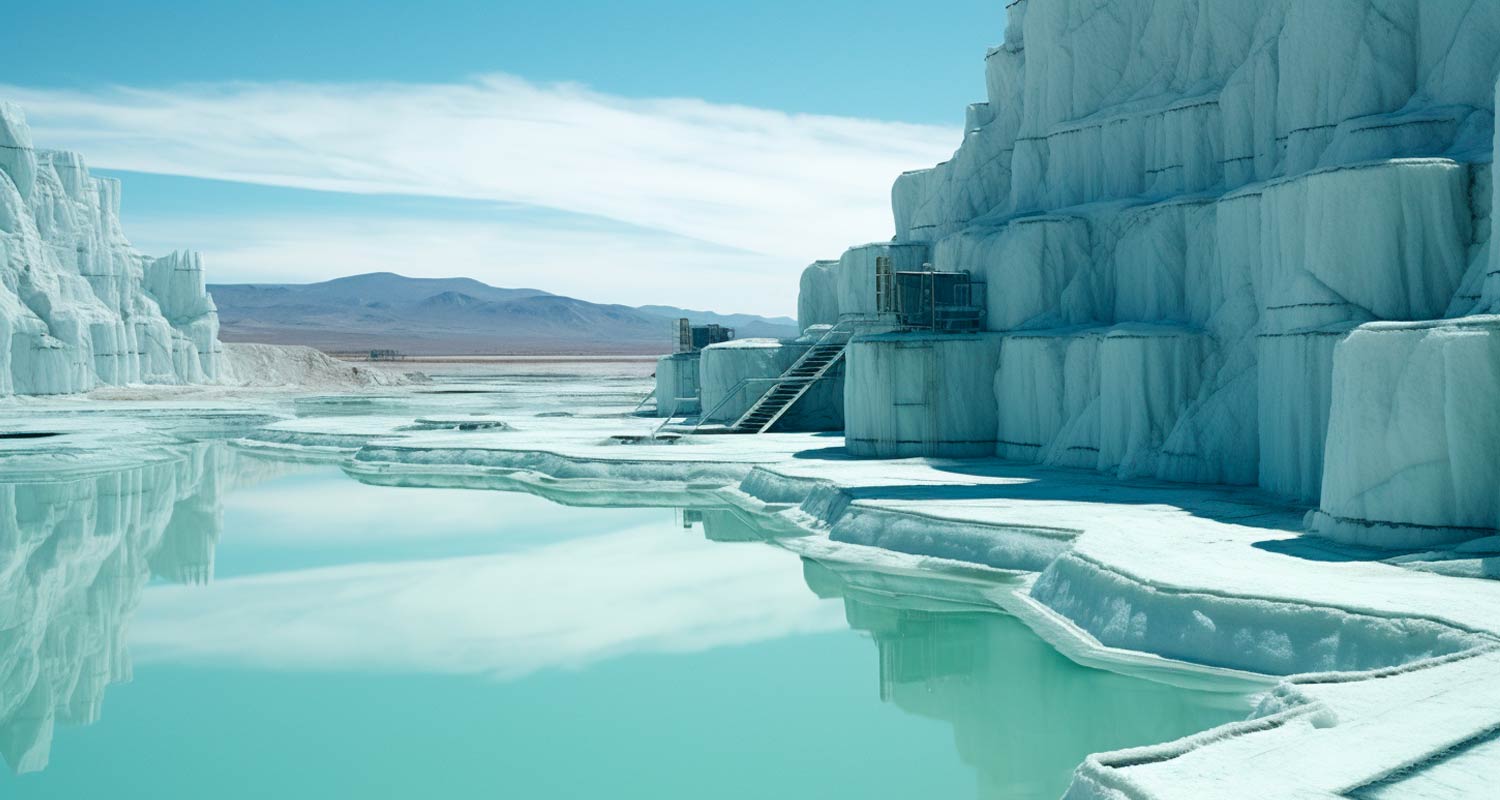
    As simple as it is profitable, that process uses far less fresh water, chemicals and energy than hard-rock mining as practised in top producer Australia. But the evaporation method means billions of litres of brine are vaporised in one of Earth’s most arid places, which some say is a threat to wildlife such as pink flamingos that inhabit its Mars-like landscape.

    DLE aims to solve such problems by using equipment like filters and membranes to strip out lithium directly and allow what’s left over to be returned to underground brine lakes. The process is much faster and uses less space than evaporation ponds. All that reduces the impact on fragile desert ecosystems — a palatable solution for automakers and their investors as well as local communities and governments. 

    Bolivia and Chile are making DLE a requirement to tap their lithium riches, a significant move given that the former has the world’s largest potential deposits and the latter has the most economically mineable reserves. 

    Goldman Sachs estimates that if 20% to 40% of Latin America’s brine projects use DLE, it could boost the region’s lithium output by about 35% from 2028 — or an 8% boost to global supply. 

    Still, the effects of reinjecting brine haven’t been properly studied, and DLE plant efficiencies need to be weighed alongside the need for more freshwater and energy than evaporation. The Salar Blanco project in Chile, for example, estimates it will use three to eight times more freshwater.

    The future of DLE technologies is still uncertain, and the long-term feasibility must be evaluated

    “The future of DLE technologies is still uncertain, and the long-term feasibility must be evaluated,” SQM said in a written response to Bloomberg questions. The world’s second largest producer is negotiating a new contract under Chile’s recently announced public-private model that includes a requirement for more sustainable practices.

    Joe Lowry, the veteran industry consultant dubbed Mr Lithium, sees DLE as a technique to unlock new sources in North America. But in South America, it should be seen as a way to enhance rather than replace the evaporation method, he said, estimating that less than 15% of global output will be through DLE in the next decade. 

    Meanwhile, several oil companies are putting their weight behind efforts to retrieve lithium from oil brine. Occidental Petroleum has said it’s exploring brine-based lithium extraction, while Imperial Oil has a 5% stake in Canadian miner E3 Lithium, which is testing DLE technology in Canada’s oil patch.

    Koch, the fuels-to-fertiliser powerhouse, sees direct extraction as a way to help feed a market that’s set to grow fivefold by 2030 as EV adoption accelerates. DLE is an “easy button, if you will, for the lithium industry to bring on a tremendous amount of supply in regions where you otherwise probably couldn’t”, said Garrett Krall, director of strategic initiatives at Koch Engineered Solutions. 

    Koch’s technology is on full display at Standard Lithium’s demonstration plant in El Dorado. Koch even invested US$100-million in the Canadian company, which plans to start building a commercial DLE facility by the Arkansas site in early 2025. CEO Mintak says he anticipates full production by 2026.
    For DLE sceptics, some smaller companies have become lightning rods for questions about the technology. Short-seller Blue Orca Capital voiced doubts on the viability of Standard Lithium’s technology in November 2021. About two months later, Hindenburg Research disclosed a short position on the stock in a report critical of the Vancouver-based firm. Standard Lithium called the reports false and misleading.

    At an industrial park in Santiago’s outskirts, Summit Nanotech is readying a facility to test brine from northern Chile. The Calgary-based firm uses a patented material to absorb the metal and is looking into reinjection methods, applying knowledge gleaned from Alberta’s oil fields. Direct extraction seems inevitable, given the large footprint of evaporation ponds and the community opposition they attract, geoscience director Stefan Walter said.

    “It’s going to take time,” he said. “It’s going to be difficult, it’s going to be capital intensive. But all new innovative technologies are kind of like that.”  — James Attwood and Yvonne Yue Li, © 2023 Bloomberg LP

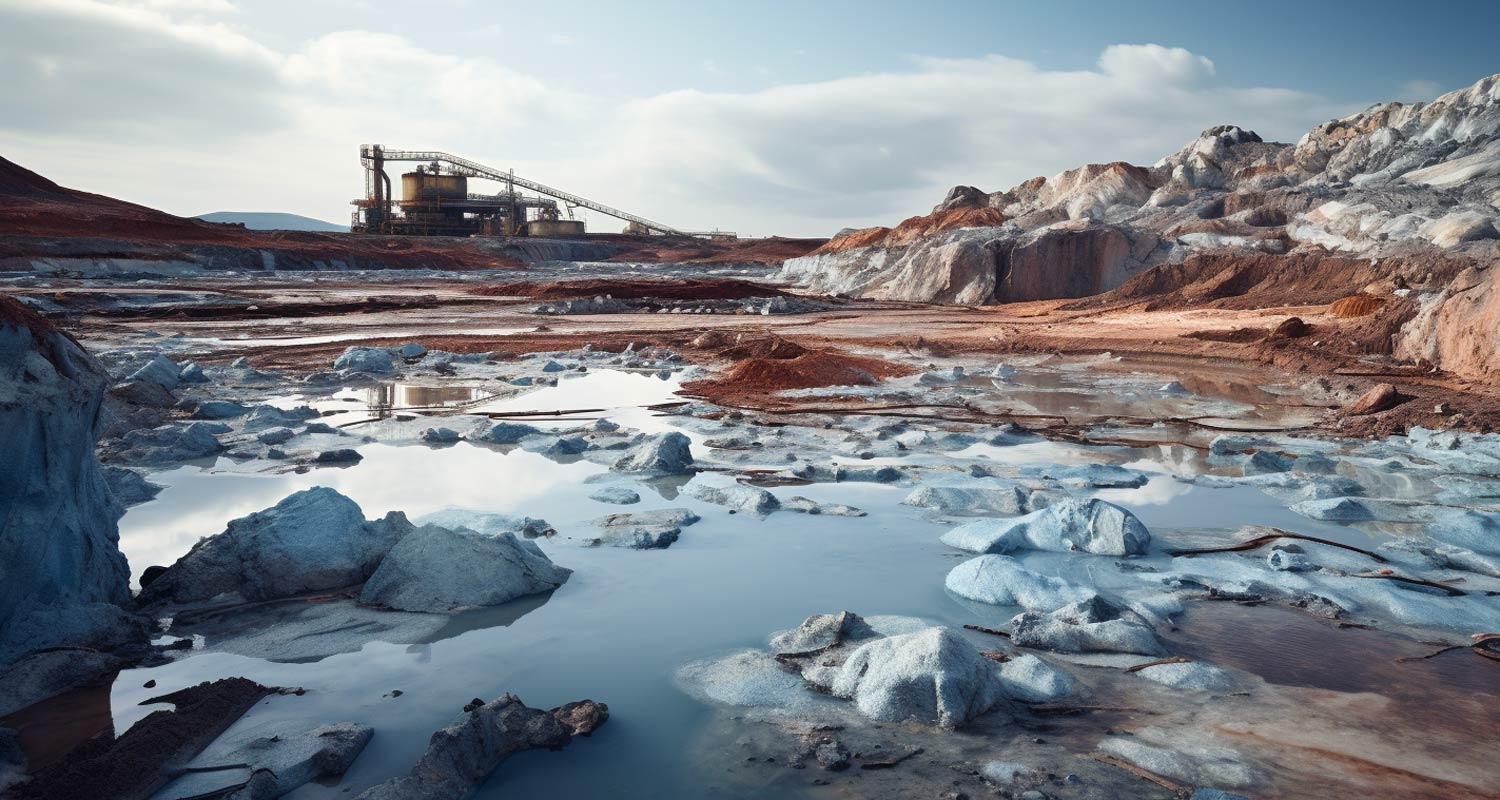
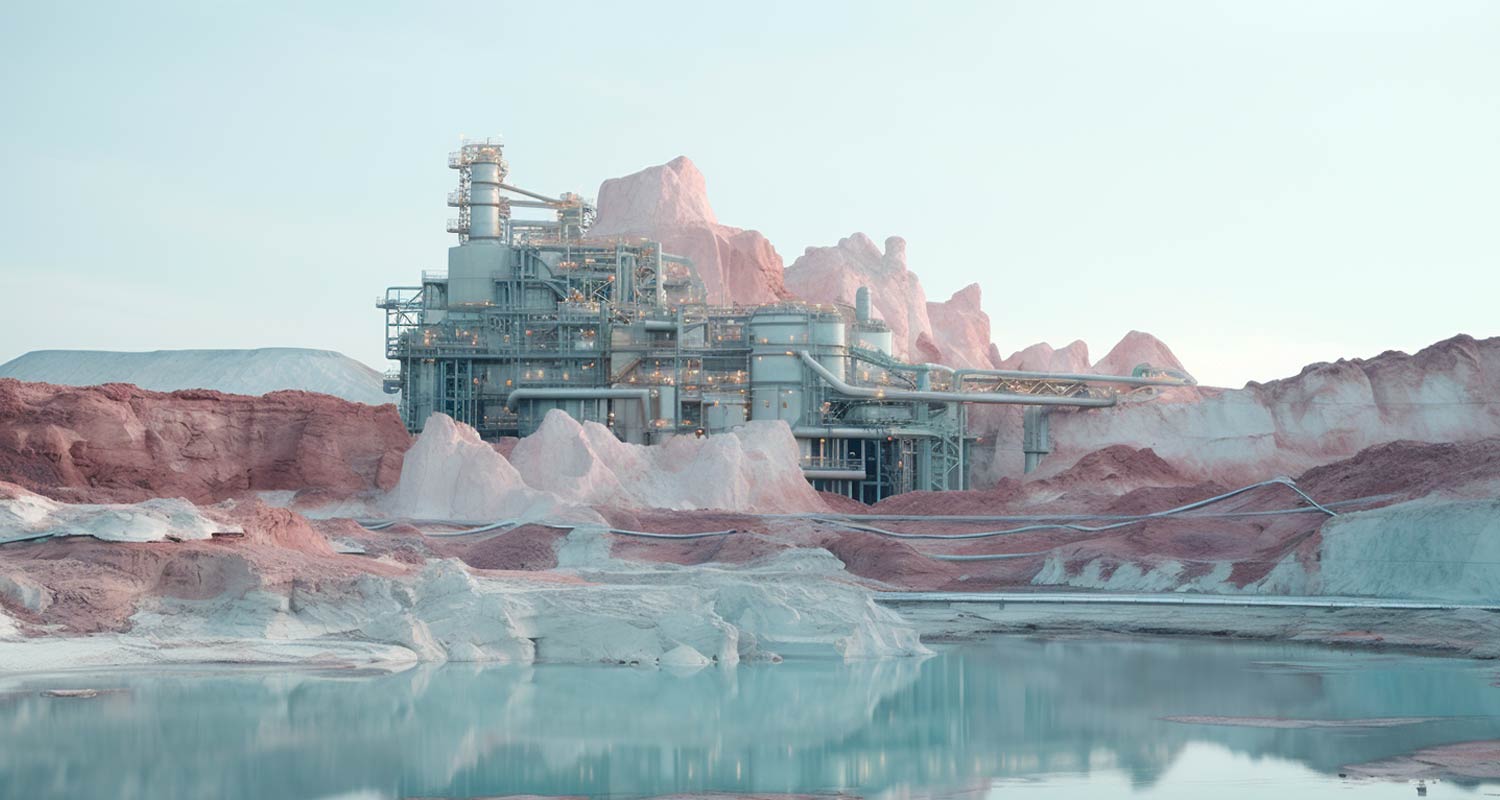
    • Images used to illustrate this article were generated in the Midjourney AI tool

    Get the latest tech news in your inbox at 5am daily

    Add TechCentral as a preferred source on GoogleFollow TechCentral on Google NewsGet breaking news on WhatsApp


    WhatsApp YouTube
    Share. Facebook Twitter LinkedIn WhatsApp Telegram Email Copy Link
    Previous ArticlePinnacle survey results: how SA businesses are managing hybrid work
    Next Article Public enterprises department to be shut down next year

    Related Posts

    'There are no adults in the room': the AI safety exodus

    ‘There are no adults in the room’: the AI safety exodus

    11 September 2026
    US in move to counter Huawei in Africa

    US in move to counter Huawei in Africa

    11 September 2026
    SAPS wants to deploy AI bodycams with facial recognition

    SAPS wants to deploy AI bodycams with facial recognition

    10 September 2026
    Company News
    Can an online school produce a scientist? CambriLearn has an independent answer

    Can an online school produce a scientist? CambriLearn has an independent answer

    9 September 2026
    The ASUS ExpertCenter Pro ET900N from Altron Arrow

    A petaflop on a desk – rethinking AI infrastructure for South Africa

    9 September 2026
    How dual-source technology is changing laser engraving

    How dual-source technology is changing laser engraving

    8 September 2026
    Opinion
    The fragile joint in the Capitec machine - Pambos Soteriades

    The R197-billion market the banks can’t reach

    25 August 2026
    South African tech's compounding debt problem - Jannie van Zyl

    Management consulting as we know it is over

    21 August 2026
    South African tech's compounding debt problem - Jannie van Zyl

    The most dangerous customer is the quiet one

    10 August 2026

    Subscribe to Updates

    Get the best South African technology news and analysis delivered to your e-mail inbox every morning.

    Latest Posts
    'There are no adults in the room': the AI safety exodus

    ‘There are no adults in the room’: the AI safety exodus

    11 September 2026
    US in move to counter Huawei in Africa

    US in move to counter Huawei in Africa

    11 September 2026
    SAPS wants to deploy AI bodycams with facial recognition

    SAPS wants to deploy AI bodycams with facial recognition

    10 September 2026
    Lesaka's first profit comes as its merchant business goes backwards - Lincoln Mali

    Lesaka’s first profit comes as its merchant business goes backwards

    10 September 2026
    © 2009 - 2026 NewsCentral Media
    Built and maintained by Chronon
    • Cookie policy (ZA)
    • TechCentral – privacy and Popia

    Type above and press Enter to search. Press Esc to cancel.

    Manage consent

    TechCentral uses cookies to enhance its offerings. Consenting to these technologies allows us to serve you better. Not consenting or withdrawing consent may adversely affect certain features and functions of the website.

    Functional Always active
    The technical storage or access is strictly necessary for the legitimate purpose of enabling the use of a specific service explicitly requested by the subscriber or user, or for the sole purpose of carrying out the transmission of a communication over an electronic communications network.
    Preferences
    The technical storage or access is necessary for the legitimate purpose of storing preferences that are not requested by the subscriber or user.
    Statistics
    The technical storage or access that is used exclusively for statistical purposes. The technical storage or access that is used exclusively for anonymous statistical purposes. Without a subpoena, voluntary compliance on the part of your Internet Service Provider, or additional records from a third party, information stored or retrieved for this purpose alone cannot usually be used to identify you.
    Marketing
    The technical storage or access is required to create user profiles to send advertising, or to track the user on a website or across several websites for similar marketing purposes.
    • Manage options
    • Manage services
    • Manage {vendor_count} vendors
    • Read more about these purposes
    View preferences
    • {title}
    • {title}
    • {title}