Close Menu
TechCentralTechCentral

    Subscribe to the newsletter

    Get the best South African technology news and analysis delivered to your e-mail inbox every morning.

    Facebook X (Twitter) YouTube LinkedIn
    WhatsApp Facebook X (Twitter) LinkedIn YouTube
    TechCentralTechCentral
    • News
      Eskom's profit doubles even as it sells less electricity - Mteto Nyati

      Eskom’s profit doubles even as it sells less electricity

      31 August 2026
      The R45-billion missing from Eskom's income statement

      The R45-billion missing from Eskom’s income statement

      31 August 2026
      Eskom is still counting irregular spending from years ago - Calib Cassim

      Eskom is still counting irregular spending from years ago

      31 August 2026
      Huawei is ramping up spending on R&D

      Huawei is ramping up spending on R&D

      31 August 2026
      Eskom and business lobby call a truce over grid reform - Mteto Nyati Busi Mavuso

      Eskom and business lobby call a truce over grid reform

      31 August 2026
    • World
      AI-generated music banned from Australian charts

      AI-generated music banned from Australian charts

      26 August 2026
      Traders brace for a R4.5-trillion swing in Nvidia's value

      Traders brace for a R4.5-trillion swing in Nvidia’s value

      25 August 2026
      Russia building its own Starlink - and faster than expected - Vadym Skibitskyi

      Russia building its own Starlink – and faster than expected

      11 August 2026
      Meta AI will now tell parents if their teen is in crisis

      Meta AI will now tell parents if their teen is in crisis

      17 July 2026
      IBM shares crash 25% as AI upends software spending - Arvind Krishna

      IBM shares crash 25% as AI upends software spending

      15 July 2026
    • In-depth
      Google DeepMind CEO Demis Hassabis. Image: John Sears

      The plan to stop AI from breaking the world

      16 July 2026
      The internet has a Strait of Hormuz problem

      The internet has a Strait of Hormuz problem

      15 July 2026
      AI boom sparks rally, frenzy and fear

      AI boom sparks rally, frenzy and fear

      11 June 2026
      Every plug-in hybrid on sale in South Africa, ranked by price - Lamborghini Temerario

      Every plug-in hybrid on sale in South Africa, ranked by price

      7 June 2026
      What Wi-Fi 8 will mean for wireless networks

      What Wi-Fi 8 will mean for wireless networks

      1 June 2026
    • TCS
      Watts & Wheels S1E8: 'Tesla lands in Africa, just not here'

      Watts & Wheels S1E8: ‘Tesla lands in Africa, just not here’

      24 August 2026
      Meet the CIO | Discovery's Derek Wilcocks on AI, guardrails and growth

      Meet the CIO | Derek Wilcocks on how AI personalised Vitality

      13 August 2026
      TCS | Money just became native to the internet - Steven Boykey Sidley

      TCS | Money just became native to the internet – Steven Boykey Sidley

      12 August 2026
      TCS+ | Specops' Darren James on continuous trust in an AI world

      TCS+ | Specops’ Darren James on continuous trust in an AI world

      7 August 2026
      TCS+ | How AI is turning hardware into a subscription service - Shane van der Merwe Merchant West

      TCS+ | How AI is turning hardware into a subscription service

      6 August 2026
    • Opinion
      The fragile joint in the Capitec machine - Pambos Soteriades

      The R197-billion market the banks can’t reach

      25 August 2026
      South African tech's compounding debt problem - Jannie van Zyl

      Management consulting as we know it is over

      21 August 2026
      South African tech's compounding debt problem - Jannie van Zyl

      The most dangerous customer is the quiet one

      10 August 2026
      South African tech's compounding debt problem - Jannie van Zyl

      South African tech’s compounding debt problem

      29 July 2026
      The fragile joint in the Capitec machine - Pambos Soteriades

      Best network, worst vibes: the puzzle of SA telecoms

      20 July 2026
    • Company Hubs
      • 1Stream
      • Africa Data Centres
      • AfriGIS
      • Altron Digital Business
      • Altron Document Solutions
      • Altron Group
      • Arctic Wolf
      • Ascent Technology
      • AvertITD
      • BBD
      • Braintree
      • CallMiner
      • CambriLearn
      • CM.com
      • Contactable
      • CYBER1 Solutions
      • Digicloud Africa
      • Digimune
      • Domains.co.za
      • ESET
      • Euphoria Telecom
      • HOSTAFRICA
      • Incredible Business
      • iONLINE
      • IQbusiness
      • Iris Network Systems
      • Kaspersky
      • LSD Open
      • Mitel
      • NEC XON
      • Netstar
      • Network Platforms
      • Next DLP
      • Ovations
      • Paracon
      • Paratus
      • Q-KON
      • SevenC
      • SkyWire
      • Solid8 Technologies
      • Telit Cinterion
      • Telviva
      • Tenable
      • Vertiv
      • Videri Digital
      • Vodacom Business
      • Vox
      • Wipro
      • Workday
      • XLink
    • Sections
      • AI and machine learning
      • Banking
      • Broadcasting and Media
      • Cloud services
      • Contact centres and CX
      • Cryptocurrencies
      • Education and skills
      • Electronics and hardware
      • Energy and sustainability
      • Enterprise software
      • Financial services
      • HealthTech
      • Information security
      • Internet and connectivity
      • Internet of Things
      • Investment
      • IT services
      • Lifestyle
      • Policy and regulation
      • Public sector
      • Retail and e-commerce
      • Satellite communications
      • Science
      • SMEs and start-ups
      • Social media
      • Talent and leadership
      • Telecoms
      • Watts & Wheels
    • Events
    • Advertise
    TechCentralTechCentral
    Home » In-depth » Netflix aims to build next great Hollywood studio

    Netflix aims to build next great Hollywood studio

    By Agency Staff16 September 2017
    Twitter LinkedIn Facebook WhatsApp Email Telegram Copy Link
    News Alerts
    WhatsApp

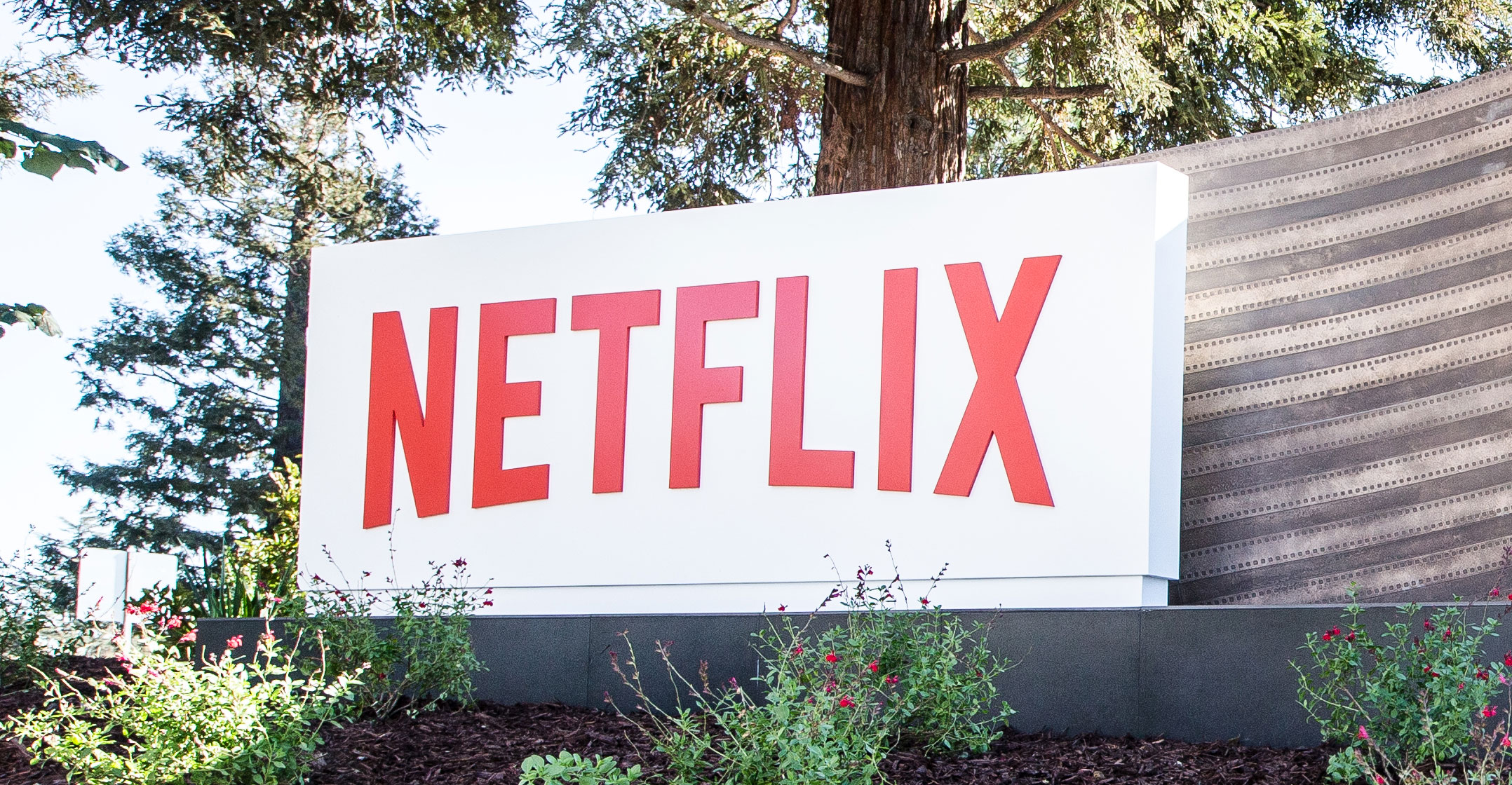
    If you’re an actor or producer in Hollywood, it’s hard to miss the flag Netflix has planted in Tinseltown. Its new 14-storey tower is visible for kilometres in sprawling Los Angeles, topped by the company’s red logo. The smell of popcorn greets visitors in the lobby.

    Inside, chief content officer Ted Sarandos is recruiting some of television’s most successful producers and writers. Since Netflix streamed its first original series Lilyhammer in 2012, the company has built one of the most valuable TV networks by buying shows from others. Now, with a US$16bn (R210bn) budget, Netflix aims to become the world’s largest creator of entertainment, making programmes just like current suppliers including CBS.

    Sunday’s Emmy awards in Los Angeles offer Netflix a chance to burnish its credentials. The company has five programmes nominated for top awards in drama and comedy, including the offbeat hit Stranger Things, a low budget homage to Steven Spielberg and The Goonies. The show is the first drama made in-house, Sarandos said in an interview, and a sign of more to come.

    The old world was always a balancing act between money and creative freedom. In today’s world, it’s possible to have both

    In recent weeks, Netflix has signed Shonda Rhimes, creator of ABC’s Grey’s Anatomy and Scandal, to a long-term deal, hired an executive to develop original kids shows and bought a graphic novel publisher. Netflix Studios is producing about 75% of the company’s new projects, according to Sarandos, the key architect of a lineup this year that includes 200 comedies, dramas, stand-up acts, kids shows and feature films.

    “The old world was always a balancing act between money and creative freedom,” said Chris Silbermann, Rhimes’s agent at ICM Partners. “In today’s world, it’s possible to have both.”

    Sarandos, 53, first came to Hollywood as an executive for a video rental chain — nobody’s idea of a mogul — and joined Netflix in 2000. He’s grown into the role and become a fixture in Hollywood, hosting political fundraisers with his wife Nicole Avant, the former ambassador to the Bahamas, at their home.

    On the road

    Sarandos spends much of his time on the road, signing deals with producers in Australia, Poland and Japan. In Hollywood, his primary job is hand-holding. When the temperamental creator of hit series meets with critics, Sarandos is there.

    “Our part of the business is pretty high touch,” he said. “People need to see your face a lot. People need to know you are interested in and engaged in their project.”

    Over the years, Sarandos’s job has become easier. At first, no self-respecting creator or actor would work for a streaming service when they could win awards at HBO or make millions on a broadcast series. So Netflix made absurd offers. It pledged $100m and made a two-season commitment for the David Fincher political drama House of Cards starring Kevin Spacey. Few TV networks order even one full season before shooting a pilot.

    Stranger Things proved to be a smash hit for Netflix

    The show was a major success, as was the women’s prison drama Orange is the New Black. Still, agents steered clients away from Netflix, fearful they’d never make as much money. The company doesn’t disclose how many people watch its shows, a key metric in TV negotiations, and Netflix also demanded rights in perpetuity, limiting the value of reruns. Seinfeld, the NBC hit comedy from the 1990s, has earned more than $3bn in syndication.

    But the hits and accolades kept coming for shows like Daredevil, Narcos and Master of None. Perhaps no show caught more people by surprise than Stranger Things, a fantasy-horror series about a missing boy.

    Creators Matt and Ross Duffer have said they were worried the show would fail because Netflix didn’t market it. But it was an instant sensation, and many critics list its October return as the most anticipated show of the season.

    The biggest risk for Netflix is slowing growth in subscribers, who now exceed 104m worldwide. The company needs to keep sign-ups coming in to support its burgeoning budget

    With Rhimes, Netflix landed one of TV’s most prolific producers. She’s had a show on the air every year since 2005, when Walt Disney’s ABC first released Grey’s Anatomy. She’s since made seven series for ABC and commandeered an entire night on the network’s schedule. Yet having reached the highest heights at ABC, Rhimes also craved a new challenge, along with freedom from the constraints of broadcasting. Sarandos, with a big smile and a big cheque, was ready.

    The win had consequences. Days later, Disney said it would pull its movies from Netflix when their current deal expires at the end of 2018. CEO Bob Iger also said Disney would create its own streaming service in 2019.

    As the flap shows, traditional media companies were eager to take the money Netflix paid for their shows yet slow to see the risk streaming posed to their golden goose, pay TV. Thanks to Netflix, consumers now expect to be able to watch shows where and when they want. Analysts forecast the company’s sales will hit $11.5bn this year and pass both CBS and Viacom in 2018.

    Sarandos’s shift from buying and licensing shows to making them in-house elevates the threat. The company has hired scores of staff from partners and rivals, and is being sued by 21st Century Fox for poaching employees.

    Netflix signed House of Cards for an initial two seasons

    Jeffrey Katzenberg, whose DreamWorks Animation was an eager partner with Netflix, gives the company high marks and calls Sarandos “a man of high integrity. They built their business in a thoughtful, considerate way.” Yet Katzenberg also understands the rancour Netflix causes among media companies losing viewers to online TV.

    While competing media companies now look more cautiously on Netflix, none is completely cutting ties. Disney is still makes Marvel TV shows for Netflix — and gets paid handsomely. So do CBS, Fox and Comcast’s NBC. And Netflix won’t stop licensing shows anytime soon. It can’t yet make movies on the scale of Disney or the many animated series that DreamWorks Animation provided. It also needs to shop abroad for international audiences.

    The biggest risk for Netflix is slowing growth in subscribers, who now exceed 104m worldwide. The company needs to keep sign-ups coming in to support its burgeoning budget. It continues to burn through cash and has regularly raised money to finance TV and movie-making despite pledges it will soon generate meaningful profit.

    “The acceleration of content spend will start to moderate,” chief financial officer David Wells told investors at a conference this week.

    For now, Netflix is spending money to make money, believing every new show will convince people to sign up. As Wells noted this week, Netflix is poised to become the first company to spend $20m on a single episode of TV.  — Reported by Lucas Shaw, (c) 2017 Bloomberg LP

    Follow TechCentral on Google News Add TechCentral as your preferred source on Google


    Netflix Ted Serandos top
    WhatsApp YouTube
    Share. Facebook Twitter LinkedIn WhatsApp Telegram Email Copy Link
    Previous ArticleSassa seeks treasury funds to replace Net1
    Next Article Pick n Pay in in-store trial of bitcoin payments

    Related Posts

    Why Canal+ is betting DStv's future on live sport

    Why Canal+ is betting DStv’s future on live sport

    4 August 2026
    Netflix, e.tv look to fill the gap Showmax left behind

    Netflix, e.tv look to fill the gap Showmax left behind

    8 July 2026
    Massive restructuring at former Showmax shareholder - Comcast, NBCUniversal

    Massive restructuring at former Showmax shareholder

    29 June 2026
    Company News
    LSD Open earns Red Hat automation specialisation

    LSD Open earns Red Hat automation specialisation

    31 August 2026
    The stuff that doesn't fit on the quote - Graham Millar SevenC

    The stuff that doesn’t fit on the quote

    28 August 2026
    Can you trust the AI speaking to your customers? - 1Stream

    Can you trust the AI speaking to your customers?

    27 August 2026
    Opinion
    The fragile joint in the Capitec machine - Pambos Soteriades

    The R197-billion market the banks can’t reach

    25 August 2026
    South African tech's compounding debt problem - Jannie van Zyl

    Management consulting as we know it is over

    21 August 2026
    South African tech's compounding debt problem - Jannie van Zyl

    The most dangerous customer is the quiet one

    10 August 2026

    Subscribe to Updates

    Get the best South African technology news and analysis delivered to your e-mail inbox every morning.

    Latest Posts
    Eskom's profit doubles even as it sells less electricity - Mteto Nyati

    Eskom’s profit doubles even as it sells less electricity

    31 August 2026
    The R45-billion missing from Eskom's income statement

    The R45-billion missing from Eskom’s income statement

    31 August 2026
    Eskom is still counting irregular spending from years ago - Calib Cassim

    Eskom is still counting irregular spending from years ago

    31 August 2026
    Huawei is ramping up spending on R&D

    Huawei is ramping up spending on R&D

    31 August 2026
    © 2009 - 2026 NewsCentral Media
    Built and maintained by Chronon
    • Cookie policy (ZA)
    • TechCentral – privacy and Popia

    Type above and press Enter to search. Press Esc to cancel.

    Manage consent

    TechCentral uses cookies to enhance its offerings. Consenting to these technologies allows us to serve you better. Not consenting or withdrawing consent may adversely affect certain features and functions of the website.

    Functional Always active
    The technical storage or access is strictly necessary for the legitimate purpose of enabling the use of a specific service explicitly requested by the subscriber or user, or for the sole purpose of carrying out the transmission of a communication over an electronic communications network.
    Preferences
    The technical storage or access is necessary for the legitimate purpose of storing preferences that are not requested by the subscriber or user.
    Statistics
    The technical storage or access that is used exclusively for statistical purposes. The technical storage or access that is used exclusively for anonymous statistical purposes. Without a subpoena, voluntary compliance on the part of your Internet Service Provider, or additional records from a third party, information stored or retrieved for this purpose alone cannot usually be used to identify you.
    Marketing
    The technical storage or access is required to create user profiles to send advertising, or to track the user on a website or across several websites for similar marketing purposes.
    • Manage options
    • Manage services
    • Manage {vendor_count} vendors
    • Read more about these purposes
    View preferences
    • {title}
    • {title}
    • {title}