Close Menu
TechCentralTechCentral

    Subscribe to the newsletter

    Get the best South African technology news and analysis delivered to your e-mail inbox every morning.

    Facebook X (Twitter) YouTube LinkedIn
    WhatsApp Facebook X (Twitter) LinkedIn YouTube
    TechCentralTechCentral
    • News
      Africa's most popular phones have a tracking problem

      Africa’s most popular phones have a tracking problem

      24 July 2026
      Vodacom taps UJ, AWS to build its AI talent pipeline - Vodacom Group CEO Shameel Joosub

      Vodacom taps UJ, AWS to build its AI talent pipeline

      24 July 2026
      Intel is back in the game - Intel CEO Lip-Bu Tan. Laure Andrillon/Reuters

      Intel is back in the game

      24 July 2026
      Fat bonuses at Telkom despite group missing own targets - Serame Taukobong

      Fat bonuses at Telkom despite group missing own targets

      23 July 2026
      Massive changes coming to Amazon Prime Video - Jeff Bezos

      Massive changes coming to Amazon Prime Video

      23 July 2026
    • World
      Meta AI will now tell parents if their teen is in crisis

      Meta AI will now tell parents if their teen is in crisis

      17 July 2026
      IBM shares crash 25% as AI upends software spending - Arvind Krishna

      IBM shares crash 25% as AI upends software spending

      15 July 2026
      Jony Ive's first OpenAI device: an AI smart speaker - Jony Ive and Sam Altman

      Jony Ive’s first OpenAI device: an AI smart speaker

      15 July 2026
      Stripe, Advent in talks to buy PayPal for $53-billion

      Stripe, Advent in talks to buy PayPal for $53-billion

      15 July 2026
      Memory crisis sends smartphone market into steep decline

      Memory crisis sends smartphone market into steep decline

      13 July 2026
    • In-depth
      The plan to stop AI from breaking the world - Google DeepMind CEO Demis Hassabis. Image: John Sears

      The plan to stop AI from breaking the world

      16 July 2026
      The internet has a Strait of Hormuz problem

      The internet has a Strait of Hormuz problem

      15 July 2026
      AI boom sparks rally, frenzy and fear

      AI boom sparks rally, frenzy and fear

      11 June 2026
      Every plug-in hybrid on sale in South Africa, ranked by price - Lamborghini Temerario

      Every plug-in hybrid on sale in South Africa, ranked by price

      7 June 2026
      What Wi-Fi 8 will mean for wireless networks

      What Wi-Fi 8 will mean for wireless networks

      1 June 2026
    • TCS
      TCS | How Optasia lends billions to people banks can't see - Salvador Anglada

      TCS | How Optasia lends billions to people banks can’t see

      23 July 2026
      The rands-and-cents case for electric trucks - William Kelly Watts & Wheels with Wills

      The rands-and-cents case for electric trucks

      20 July 2026
      Watts & Wheels S1E7: 'Ferrari's EV breaks the internet'

      Watts & Wheels S1E7: ‘Ferrari’s EV breaks the internet’

      8 July 2026
      TCS | Pick n Pay's Enrico Ferigolli on Penny, the AI that shops for you

      TCS | Pick n Pay’s Enrico Ferigolli on Penny, the AI that shops for you

      2 July 2026
      TCS+ | How Tracker is turning vehicle data into business strategy - Silvia Schollenberger

      TCS+ | How Tracker is turning vehicle data into business strategy

      1 July 2026
    • Opinion
      Selling vapour is corporate suicide in slow motion - Jannie van Zyl

      Selling vapour is corporate suicide in slow motion

      16 July 2026
      Brazil's online gambling crackdown is a lesson for South Africa

      How Amazon outmanoeuvred Starlink in South Africa

      15 July 2026
      The Popia problem with agentic AI - Herman Haasbroek

      The Popia problem with agentic AI

      14 July 2026
      The author, Fanie van Rooyen

      South Africa can still catch the AI wave – here’s how

      7 July 2026
      The author, Fanie van Rooyen

      The AI utopia South Africa can’t afford

      1 July 2026
    • Company Hubs
      • 1Stream
      • Africa Data Centres
      • AfriGIS
      • Altron Digital Business
      • Altron Document Solutions
      • Altron Group
      • Arctic Wolf
      • Ascent Technology
      • AvertITD
      • BBD
      • Braintree
      • CallMiner
      • CambriLearn
      • CM Telecom
      • Contactable
      • CYBER1 Solutions
      • Digicloud Africa
      • Digimune
      • Domains.co.za
      • ESET
      • Euphoria Telecom
      • HOSTAFRICA
      • Incredible Business
      • iONLINE
      • IQbusiness
      • Iris Network Systems
      • Kaspersky
      • LSD Open
      • Mitel
      • NEC XON
      • Netstar
      • Network Platforms
      • Next DLP
      • Ovations
      • Paracon
      • Paratus
      • Q-KON
      • SevenC
      • SkyWire
      • Solid8 Technologies
      • Telit Cinterion
      • Telviva
      • Tenable
      • Vertiv
      • Videri Digital
      • Vodacom Business
      • Vox
      • Wipro
      • Workday
      • XLink
    • Sections
      • AI and machine learning
      • Banking
      • Broadcasting and Media
      • Cloud services
      • Contact centres and CX
      • Cryptocurrencies
      • Education and skills
      • Electronics and hardware
      • Energy and sustainability
      • Enterprise software
      • Financial services
      • HealthTech
      • Information security
      • Internet and connectivity
      • Internet of Things
      • Investment
      • IT services
      • Lifestyle
      • Policy and regulation
      • Public sector
      • Retail and e-commerce
      • Satellite communications
      • Science
      • SMEs and start-ups
      • Social media
      • Talent and leadership
      • Telecoms
      • Watts & Wheels
    • Events
    • Advertise
    TechCentralTechCentral
    Home » Sections » Social media » Nigeria bans Twitter – and shoots itself in the foot

    Nigeria bans Twitter – and shoots itself in the foot

    By The Conversation8 June 2021
    Twitter LinkedIn Facebook WhatsApp Email Telegram Copy Link
    News Alerts
    WhatsApp
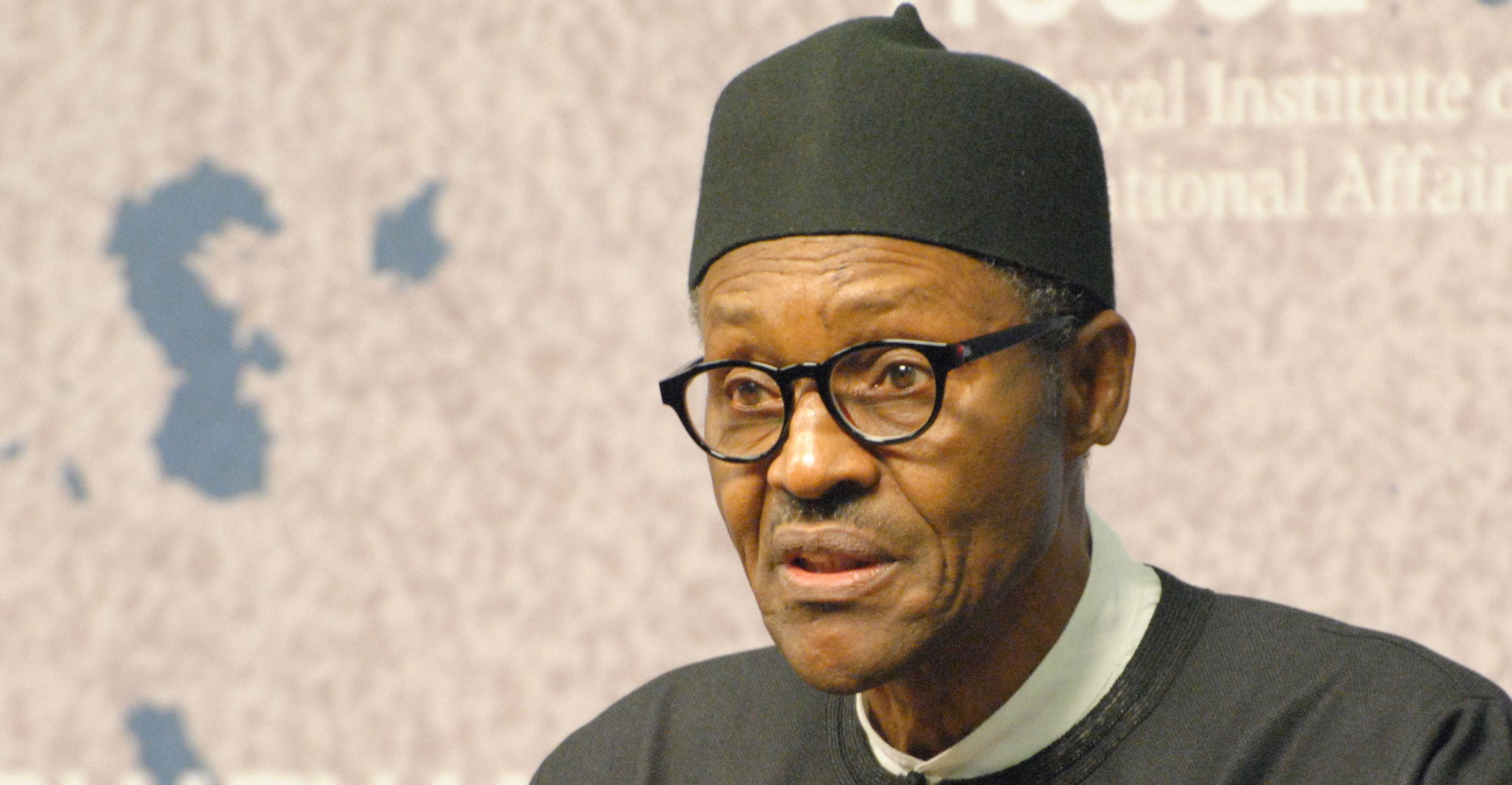
    Nigerian President Muhammadu Buhari. Image: Chatham House, London

    In recent years, Lagos, Nigeria’s biggest city, has become Africa’s most attractive tech hub for investors. But that could be imperilled by the government’s decision to suspend Twitter’s operations in the country.

    Although no direct connection has been drawn, the ban came two days after Twitter took down a tweet by President Muhammadu Buhari. Twitter claimed the message had been deleted because it violated its rules against “abusive behaviour”. The ban could be in retaliation.

    A new chill entered into the relationship between Nigeria and Twitter in mid-April when the social media platform chose Ghana for its regional headquarters. Nigeria’s market is bigger than Ghana’s, with more Twitter users than Ghana has citizens. Ghana won because its government has created an attractive environment for external investors by improving the country’s electricity output, and investing in good roads and a paperless port project.

    A new chill entered into the relationship between Nigeria and Twitter in mid-April when the social media platform chose Ghana for its regional headquarters

    Nevertheless, Nigeria’s fledgling technology sector had been seen as an attractive proposition to investors because of the pool of talent in Nigeria, increasing smartphone penetration and access to the Nigerian market of 200 million people.

    The Nigerian technology scene, concentrated in Lagos, is a recent and rare success story. One particular area of growth has been the fintech sector.

    But the ban makes it difficult for the government to argue that it is friendly to technology enterprises. The Nigerian government has often called on foreign investors to invest in Nigerian technology start-ups and support Nigeria’s technology ecosystem.

    Spooking investors

    For example, in 2016 Buhari hosted Mark Zuckerberg on the Facebook CEO’s first visit to sub-Saharan Africa. Facebook is set to open an office in the second quarter of 2021 in Lagos.

    The indefinite Twitter suspension could prove to be a setback by spooking investors.

    Nigeria’s fintech start-ups have begun to engage innovatively with segments of the population that can’t access traditional financial services. About 56% of Nigerian adults are unbanked.

    Homegrown businesses Flutterwave and Paystack are two examples of fintech start-ups that have been able to secure investments recently.

    Flutterwave provides payment solutions for businesses. It recently attracted investment of US$170-million from a consortium of foreign investors. Paystack, which also provides payment solutions and customer analytics, attracted $200-million from US payments giant Stripe.

    The two start-ups recently earned the coveted unicorn status. This is a reference to privately held technology start-up businesses valued at more than $1-billion. This means that Flutterwave and Paystack are already, on paper, more valuable than most of Nigeria’s biggest banks.

    The Twitter suspension could make it harder for technology entrepreneurs like this to get investment. Technology entrepreneurs will now need to convince investors about regulatory risks. This will be especially so if their business models require an active social media presence.

    The Twitter ban seems to support the notion that the Nigerian government does not like to be held accountable for its actions

    The Twitter ban will also reduce the exposure of Nigerian technology entrepreneurs to the world, undermining their ability to attract funding and grow their markets.

    Finally, it sits at odds with the government’s goal of economic growth and openness by sending a signal that Nigeria is not entirely open for technology business.

    Many small and medium enterprises in Nigeria use social media, including Twitter, for marketing, pitching, attracting investors and reaching customers.

    It started on Twitter

    An example of these are start-up technology firms like Cowrywise, a savings and investment company, and Piggyvest, an online savings platform.

    Not too long ago, Cowrywise announced it was raising $3-million in investment funding. One of the participating investors, Sahil Lavingia, tweeted that his investment conversation started via a Twitter direct message. Lavingia is the founder of Gumroad, a San Francisco based online platform that facilitates the sale of products by creators directly to consumers.

    Lavingia invested in the Nigerian company and posted on Twitter: “Excited to invest in another African startup! The power of Twitter.”
    Nigerian companies have also used social media to raise awareness of their brands. Some do this through “influencers” like the lifestyle and entertainment bloggers Linda Ikeji and Uche Eze Pedro, as well as the music blogger Demola Ogundele of Notjustok.

    Nigeria’s information minister, Lai Mohammed, criticised Twitter for “double standards” because the social media company did not, until recently, delete or flag inflammatory tweets by Mazi Nnamdi Kanu, the separatist group leader.

    But the Twitter ban seems to support the notion that the Nigerian government does not like to be held accountable for its actions and scrutinised when it falls short. It reeks of censorship and is reminiscent of non-democratic institutions. The president did not have to use the platform to air his views and should have been advised that using Twitter means being subject to its rules.

    If the spat between the Nigerian government and Twitter is not de-escalated, the country’s thriving technology sector will suffer. This at a time when Nigeria needs to tap into technology to address its socio-economic challenges. Chief among these is the urgent need to reduce its dependency on oil and improve its infrastructure. Technology can help with that.The Conversation

    • Written by Tolu Olarewaju, lecturer in economics, Staffordshire University
    • This article is republished from The Conversation under a Creative Commons licence

    Follow TechCentral on Google News Add TechCentral as your preferred source on Google


    Flutterwave Muhammadu Buhari Paystack Stripe top Twitter
    WhatsApp YouTube
    Share. Facebook Twitter LinkedIn WhatsApp Telegram Email Copy Link
    Previous ArticleApple is giving iPadOS a big overhaul – here’s what’s coming
    Next Article Major websites offline in global Internet outage

    Related Posts

    Stripe, Advent in talks to buy PayPal for $53-billion

    Stripe, Advent in talks to buy PayPal for $53-billion

    15 July 2026

    Stripe mulling bid for PayPal: report

    25 February 2026
    X moves to block bid to revive Twitter brand

    X moves to block bid to revive Twitter brand

    17 December 2025
    Company News
    Why Europe is turning to South Africa for cross-border innovation - BBD Software

    Why Europe is turning to South Africa for cross-border innovation

    24 July 2026
    Green dashboards, stalled change: the CIO's blind spot - Change Logic Marchant van den Heever

    Green dashboards, stalled change: the CIO’s blind spot

    24 July 2026
    Why Africa's cloud needs more than one path - Africa Data Centres

    Why Africa’s cloud needs more than one path

    23 July 2026
    Opinion
    Selling vapour is corporate suicide in slow motion - Jannie van Zyl

    Selling vapour is corporate suicide in slow motion

    16 July 2026
    Brazil's online gambling crackdown is a lesson for South Africa

    How Amazon outmanoeuvred Starlink in South Africa

    15 July 2026
    The Popia problem with agentic AI - Herman Haasbroek

    The Popia problem with agentic AI

    14 July 2026

    Subscribe to Updates

    Get the best South African technology news and analysis delivered to your e-mail inbox every morning.

    Latest Posts
    Africa's most popular phones have a tracking problem

    Africa’s most popular phones have a tracking problem

    24 July 2026
    Vodacom taps UJ, AWS to build its AI talent pipeline - Vodacom Group CEO Shameel Joosub

    Vodacom taps UJ, AWS to build its AI talent pipeline

    24 July 2026
    Intel is back in the game - Intel CEO Lip-Bu Tan. Laure Andrillon/Reuters

    Intel is back in the game

    24 July 2026
    Why Europe is turning to South Africa for cross-border innovation - BBD Software

    Why Europe is turning to South Africa for cross-border innovation

    24 July 2026
    © 2009 - 2026 NewsCentral Media
    Built and maintained by Chronon
    • Cookie policy (ZA)
    • TechCentral – privacy and Popia

    Type above and press Enter to search. Press Esc to cancel.

    Manage consent

    TechCentral uses cookies to enhance its offerings. Consenting to these technologies allows us to serve you better. Not consenting or withdrawing consent may adversely affect certain features and functions of the website.

    Functional Always active
    The technical storage or access is strictly necessary for the legitimate purpose of enabling the use of a specific service explicitly requested by the subscriber or user, or for the sole purpose of carrying out the transmission of a communication over an electronic communications network.
    Preferences
    The technical storage or access is necessary for the legitimate purpose of storing preferences that are not requested by the subscriber or user.
    Statistics
    The technical storage or access that is used exclusively for statistical purposes. The technical storage or access that is used exclusively for anonymous statistical purposes. Without a subpoena, voluntary compliance on the part of your Internet Service Provider, or additional records from a third party, information stored or retrieved for this purpose alone cannot usually be used to identify you.
    Marketing
    The technical storage or access is required to create user profiles to send advertising, or to track the user on a website or across several websites for similar marketing purposes.
    • Manage options
    • Manage services
    • Manage {vendor_count} vendors
    • Read more about these purposes
    View preferences
    • {title}
    • {title}
    • {title}