Close Menu
TechCentralTechCentral

    Subscribe to the newsletter

    Get the best South African technology news and analysis delivered to your e-mail inbox every morning.

    Facebook X (Twitter) YouTube LinkedIn
    WhatsApp Facebook X (Twitter) LinkedIn YouTube
    TechCentralTechCentral
    • News
      Green light for massive new Cape Town data centres

      Green light for massive new Cape Town data centres

      29 July 2026
      DStv's subscriber count has gone dark

      DStv’s subscriber count has gone dark

      28 July 2026
      Luno cutting a fifth of its workforce - South Africa not spared

      Luno cutting a fifth of its workforce – South Africa not spared

      28 July 2026
      The tech master plan for the Cape Winelands Airport

      The tech master plan for the Cape Winelands Airport

      28 July 2026
      Canal+ concedes MultiChoice turnaround is not won - Maxime Saada

      Canal+ concedes MultiChoice turnaround is not won

      28 July 2026
    • World
      Meta AI will now tell parents if their teen is in crisis

      Meta AI will now tell parents if their teen is in crisis

      17 July 2026
      IBM shares crash 25% as AI upends software spending - Arvind Krishna

      IBM shares crash 25% as AI upends software spending

      15 July 2026
      Jony Ive's first OpenAI device: an AI smart speaker - Jony Ive and Sam Altman

      Jony Ive’s first OpenAI device: an AI smart speaker

      15 July 2026
      Stripe, Advent in talks to buy PayPal for $53-billion

      Stripe, Advent in talks to buy PayPal for $53-billion

      15 July 2026
      Memory crisis sends smartphone market into steep decline

      Memory crisis sends smartphone market into steep decline

      13 July 2026
    • In-depth
      The plan to stop AI from breaking the world - Google DeepMind CEO Demis Hassabis. Image: John Sears

      The plan to stop AI from breaking the world

      16 July 2026
      The internet has a Strait of Hormuz problem

      The internet has a Strait of Hormuz problem

      15 July 2026
      AI boom sparks rally, frenzy and fear

      AI boom sparks rally, frenzy and fear

      11 June 2026
      Every plug-in hybrid on sale in South Africa, ranked by price - Lamborghini Temerario

      Every plug-in hybrid on sale in South Africa, ranked by price

      7 June 2026
      What Wi-Fi 8 will mean for wireless networks

      What Wi-Fi 8 will mean for wireless networks

      1 June 2026
    • TCS
      TCS+ | A smarter approach to cloud for South African businesses - Joel Chacko and Jonathan Oaker

      TCS+ | A smarter approach to cloud for South African businesses

      28 July 2026
      TCS | How Optasia lends billions to people banks can't see - Salvador Anglada

      TCS | How Optasia lends billions to people banks can’t see

      23 July 2026
      The rands-and-cents case for electric trucks - William Kelly Watts & Wheels with Wills

      The rands-and-cents case for electric trucks

      20 July 2026
      Watts & Wheels S1E7: 'Ferrari's EV breaks the internet'

      Watts & Wheels S1E7: ‘Ferrari’s EV breaks the internet’

      8 July 2026
      TCS | Pick n Pay's Enrico Ferigolli on Penny, the AI that shops for you

      TCS | Pick n Pay’s Enrico Ferigolli on Penny, the AI that shops for you

      2 July 2026
    • Opinion
      Selling vapour is corporate suicide in slow motion - Jannie van Zyl

      Selling vapour is corporate suicide in slow motion

      16 July 2026
      Brazil's online gambling crackdown is a lesson for South Africa

      How Amazon outmanoeuvred Starlink in South Africa

      15 July 2026
      The Popia problem with agentic AI - Herman Haasbroek

      The Popia problem with agentic AI

      14 July 2026
      The author, Fanie van Rooyen

      South Africa can still catch the AI wave – here’s how

      7 July 2026
      The author, Fanie van Rooyen

      The AI utopia South Africa can’t afford

      1 July 2026
    • Company Hubs
      • 1Stream
      • Africa Data Centres
      • AfriGIS
      • Altron Digital Business
      • Altron Document Solutions
      • Altron Group
      • Arctic Wolf
      • Ascent Technology
      • AvertITD
      • BBD
      • Braintree
      • CallMiner
      • CambriLearn
      • CM Telecom
      • Contactable
      • CYBER1 Solutions
      • Digicloud Africa
      • Digimune
      • Domains.co.za
      • ESET
      • Euphoria Telecom
      • HOSTAFRICA
      • Incredible Business
      • iONLINE
      • IQbusiness
      • Iris Network Systems
      • Kaspersky
      • LSD Open
      • Mitel
      • NEC XON
      • Netstar
      • Network Platforms
      • Next DLP
      • Ovations
      • Paracon
      • Paratus
      • Q-KON
      • SevenC
      • SkyWire
      • Solid8 Technologies
      • Telit Cinterion
      • Telviva
      • Tenable
      • Vertiv
      • Videri Digital
      • Vodacom Business
      • Vox
      • Wipro
      • Workday
      • XLink
    • Sections
      • AI and machine learning
      • Banking
      • Broadcasting and Media
      • Cloud services
      • Contact centres and CX
      • Cryptocurrencies
      • Education and skills
      • Electronics and hardware
      • Energy and sustainability
      • Enterprise software
      • Financial services
      • HealthTech
      • Information security
      • Internet and connectivity
      • Internet of Things
      • Investment
      • IT services
      • Lifestyle
      • Policy and regulation
      • Public sector
      • Retail and e-commerce
      • Satellite communications
      • Science
      • SMEs and start-ups
      • Social media
      • Talent and leadership
      • Telecoms
      • Watts & Wheels
    • Events
    • Advertise
    TechCentralTechCentral
    Home » Sections » Energy and sustainability » Nothing will save Eskom in its present configuration

    Nothing will save Eskom in its present configuration

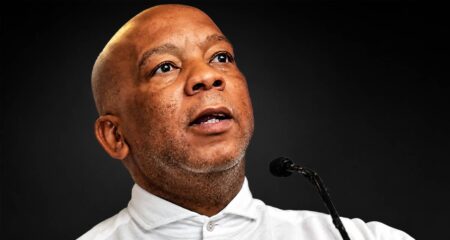
    Why new electricity minister Kgosientsho Ramokgopa should heed the words of former Eskom CEO André de Ruyter.
    By David Richard Walwyn17 March 2023
    Twitter LinkedIn Facebook WhatsApp Email Telegram Copy Link
    News Alerts
    WhatsApp

    A month ago, South Africans heard some hard truths about the state of Eskom, from now former CEO André de Ruyter. In an interview broadcast on television, De Ruyter made accusations about the role of criminal gangs as well as politicians in corruption that’s crippled the utility. The interview triggered his immediate departure – he was due to leave some weeks later – as the ANC rounded on him.

    But South Africans – particularly the new minister of electricity Kgosientsho Ramokgopa – would be well advised to look more carefully at what De Ruyter said, rather than trying to discredit the messenger.

    De Ruyter outlined four levels at which Eskom is being destroyed.

    Ramokgopa needs to get cabinet behind a renewal strategy that aligns with the global energy transition

    Firstly, there is the issue of a lack of political support from cabinet for a renewal strategy for Eskom which De Ruyter attempted to implement. The plan included dealing with crime, separating the existing entity into three different companies (generation, transmission and distribution) and, over time, decarbonising energy generation. Effectively this meant, over time, closing coal-fired power stations and replacing them with renewable energy storage capability.

    Secondly, De Ruyter outlined how Eskom continues to be infiltrated by systemic corruption involving private individuals and companies using public assets for personal gain. The pattern of state capture began in earnest under the presidency of Jacob Zuma but these players have continued to hold onto powerful interests within the company, including contracts for coal, construction and maintenance. They are principally rent-seekers, and extract money for no added value.

    Crime

    Thirdly, there is organised crime. These groups are distinct from the agents of state capture. They control how money flows as well as the operations of several power stations. For instance, Eskom has lost control of Tutuka, one of the bigger coal-fired power stations that should be generating at least 3GW (12% of the total demand). Yet energy availability from the plant is now an eye-watering 12% of its capacity.

    Finally, De Ruyter identified intentional malfunction and petty crime as a major threat. Anyone who can break the law does so without consequence.

    Much of the resource and power necessary to solve problems at all four levels are in Ramakgopa’s or government’s control. He needs to get cabinet behind a renewal strategy that aligns with the global energy transition, he needs to get the police to do their job with competence, and he needs a powerful CEO who has local legitimacy and support.

    Read: Eskom says some power stations show big improvement

    And he needs to act immediately.

    South Africa’s electricity supply crisis has never been more severe. This is clear from the data that Eskom publishes on its data portal.

    Load shedding has now risen to 15% of total demand. This means that, on average, embattled customers are without power for at least 5.5 hours for each 24-hour cycle (see figure below).
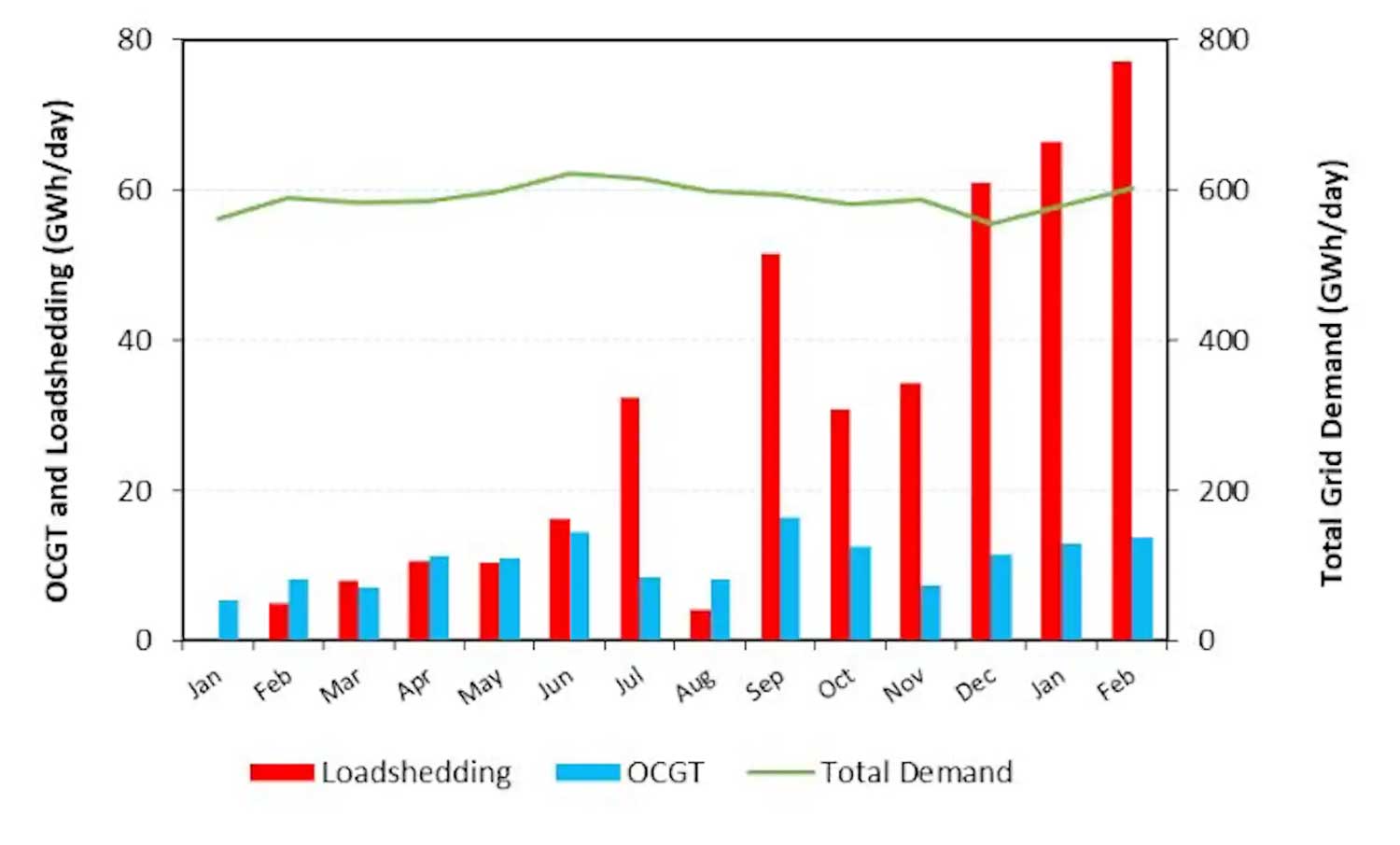
    As the figure shows, load shedding rises every month, with February being the worst on record ever. The data in the graph is based on actual dispatched generation versus the anticipated demand, where the latter is obtained by Eskom from historical patterns of use. Source: Author supplied

    Just when South Africans had hoped that the situation could improve, it deteriorated. In May last year, load shedding was just 2% of the total demand. At the time they still had confidence in President Cyril Ramaphosa’s ability to solve the crisis with his six-point action plan.

    Since then, the country has endured a string of broken promises, heard explosive revelations from the De Ruyter interview and witnessed the further collapse of the coal fleet.

    The longer the crisis lasts, the more Eskom’s energy market will shrink. Using the data from the last few years, it is possible to model what is happening to energy demand and what could happen in the future.

    Read: Appointing a new Eskom CEO could take months

    About 9GW of Eskom’s customer base is untouchable – these customers are unaffected by Eskom and unlikely to source alternative supply. We also know that about 9GW of demand mainly allocated to the Energy Intensive Users Group will be replaced by in-house generation over the next two to three years.

    Combined with the growing use of rooftop solar in residential and commercial buildings, my prediction, based on my modelling studies, is that by March 2026, the shifted demand will be 11GW, leaving a residual demand on the national grid at 14GW, or about 40% of the average demand in 2020.
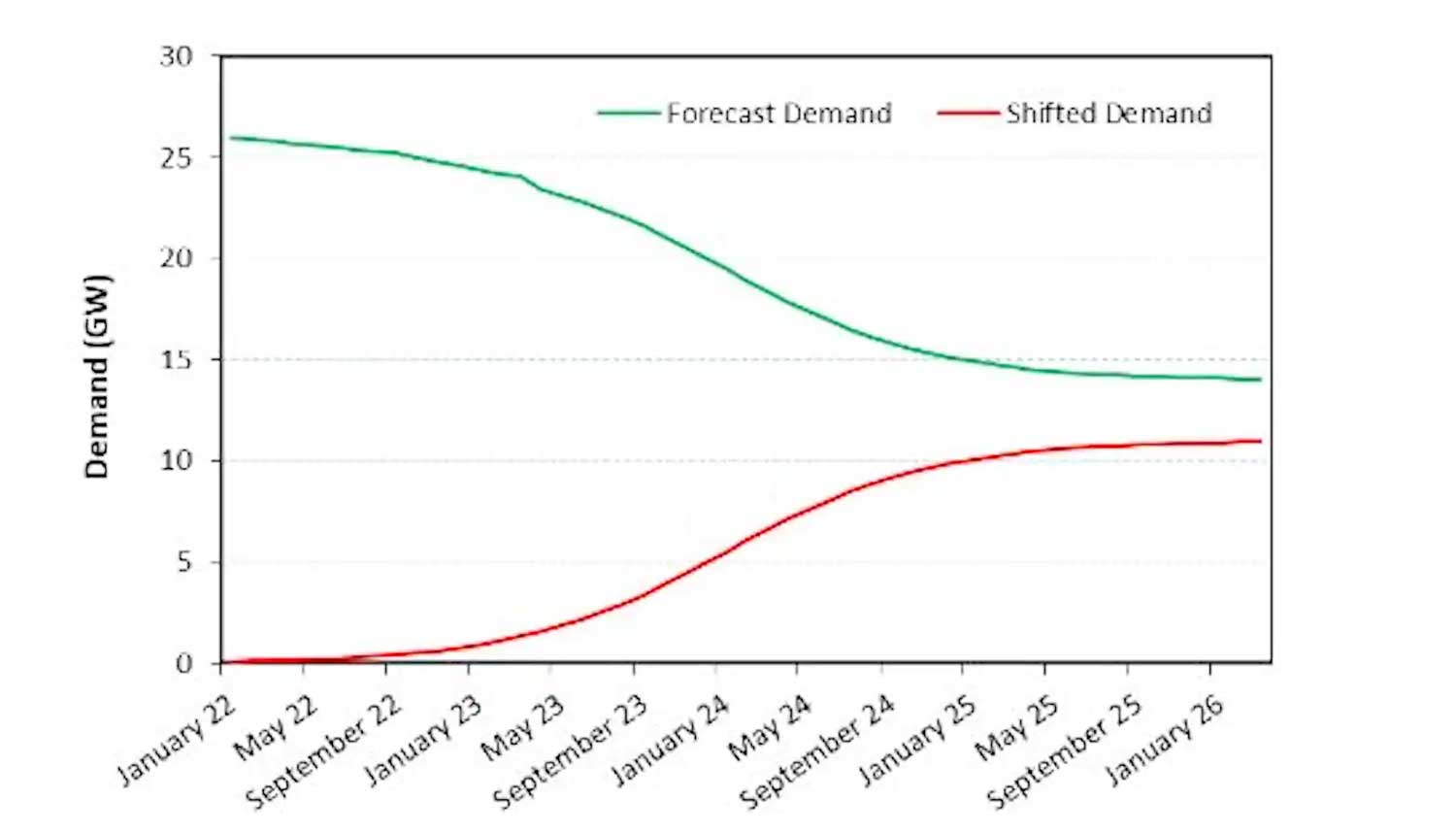
    Source: Author supplied

    If Eskom cannot sell the electricity that it generates, operating costs will quickly outstrip revenue. The challenge is therefore not only to rebuild generation, but also to keep high-value customers who are switching to solar.

    All eyes are on the new minister of electricity. Does he have the skills, energy and political influence to resolve the energy crisis? Or will his appointment further obfuscate an already incoherent portfolio?

    Ramokgopa needs to add three important tasks to his programme of action. He needs to learn from the De Ruyter interview (and address the problems he identified), he needs to rapidly unbundle Eskom, and he needs to solve problems that are delaying the implementation of the renewable energy programme.

    In his budget speech, finance minister Enoch Godongwana made it clear that the establishment of the National Transmission Company of South Africa is a priority. Although national treasury will borrow R254-billion to refloat Eskom, the funds can only be used to secure and extend the assets of the transmission company. The implications of this position are clear: sell off the generation capacity to private investors and leave distribution to local authorities, where this is possible.

    Read: Eskom load shedding sends economy into a tailspin

    One aspect of the De Ruyter interview which has been largely ignored is the issue of the renewable energy programme and how this has been derailed despite its obvious benefits in terms of lower energy cost and minimal water usage. As De Ruyter mentioned, if the programme had remained on track, South Africa would have avoided 98% of the 2022 load shedding.

    In addition, the closure of several Eskom coal-fired water-cooled power stations will release billions of litres of water for use in domestic applications, savings which will become essential for a water-scarce country. Closure of these stations will also deal with the air quality concerns and the ongoing breaches by Eskom of its emissions permits.

    It is apparent, now, that nothing will save Eskom in its present configuration. It will join a list of state-owned entities that are a fraction of their former scale – the Post Office, South African Airways and the Passenger Rail Association of South Africa.

    How far it sinks will depend on how effective Ramokgopa can be in his new position.The Conversation

    • The author, David Richard Walwyn, is professor of technology management, University of Pretoria
    • This article is republished from The Conversation

    Get TechCentral’s daily newsletter

    Follow TechCentral on Google News Add TechCentral as your preferred source on Google


    Andre de Ruyter David Richard Walwyn Eskom Kgosientsho Ramokgopa
    WhatsApp YouTube
    Share. Facebook Twitter LinkedIn WhatsApp Telegram Email Copy Link
    Previous ArticleEskom is set to suspend load shedding this Sunday
    Next Article ChatGPT can lie, but it’s only imitating humans

    Related Posts

    Load shedding is over - and that's exposing a new energy crisis

    Load shedding is over – and that’s exposing a new energy crisis

    23 July 2026
    Eskom quashes Koeberg contamination reports

    Eskom scrambles to quash Koeberg contamination reports

    19 July 2026
    Eskom appoints group executive for renewable energy - Rivoningo Mnisi

    Eskom Green cleared for take-off

    16 July 2026
    Company News
    Neill Nortje appointed as country manager of Paratus Zambia

    Neill Nortje appointed as country manager of Paratus Zambia

    28 July 2026
    iONLINE launches eSim for IoT to keep device fleets connected anywhere

    iONLINE launches eSim for IoT to keep device fleets connected anywhere

    28 July 2026
    Cybercriminals are hacking trust

    Cybercriminals are hacking trust

    27 July 2026
    Opinion
    Selling vapour is corporate suicide in slow motion - Jannie van Zyl

    Selling vapour is corporate suicide in slow motion

    16 July 2026
    Brazil's online gambling crackdown is a lesson for South Africa

    How Amazon outmanoeuvred Starlink in South Africa

    15 July 2026
    The Popia problem with agentic AI - Herman Haasbroek

    The Popia problem with agentic AI

    14 July 2026

    Subscribe to Updates

    Get the best South African technology news and analysis delivered to your e-mail inbox every morning.

    Latest Posts
    Green light for massive new Cape Town data centres

    Green light for massive new Cape Town data centres

    29 July 2026
    DStv's subscriber count has gone dark

    DStv’s subscriber count has gone dark

    28 July 2026
    Luno cutting a fifth of its workforce - South Africa not spared

    Luno cutting a fifth of its workforce – South Africa not spared

    28 July 2026
    The tech master plan for the Cape Winelands Airport

    The tech master plan for the Cape Winelands Airport

    28 July 2026
    © 2009 - 2026 NewsCentral Media
    Built and maintained by Chronon
    • Cookie policy (ZA)
    • TechCentral – privacy and Popia

    Type above and press Enter to search. Press Esc to cancel.

    Manage consent

    TechCentral uses cookies to enhance its offerings. Consenting to these technologies allows us to serve you better. Not consenting or withdrawing consent may adversely affect certain features and functions of the website.

    Functional Always active
    The technical storage or access is strictly necessary for the legitimate purpose of enabling the use of a specific service explicitly requested by the subscriber or user, or for the sole purpose of carrying out the transmission of a communication over an electronic communications network.
    Preferences
    The technical storage or access is necessary for the legitimate purpose of storing preferences that are not requested by the subscriber or user.
    Statistics
    The technical storage or access that is used exclusively for statistical purposes. The technical storage or access that is used exclusively for anonymous statistical purposes. Without a subpoena, voluntary compliance on the part of your Internet Service Provider, or additional records from a third party, information stored or retrieved for this purpose alone cannot usually be used to identify you.
    Marketing
    The technical storage or access is required to create user profiles to send advertising, or to track the user on a website or across several websites for similar marketing purposes.
    • Manage options
    • Manage services
    • Manage {vendor_count} vendors
    • Read more about these purposes
    View preferences
    • {title}
    • {title}
    • {title}