Close Menu
TechCentralTechCentral

    Subscribe to the newsletter

    Get the best South African technology news and analysis delivered to your e-mail inbox every morning.

    Facebook X (Twitter) YouTube LinkedIn
    WhatsApp Facebook X (Twitter) LinkedIn YouTube
    TechCentralTechCentral
    • News
      'There are no adults in the room': the AI safety exodus

      ‘There are no adults in the room’: the AI safety exodus

      11 September 2026
      US in move to counter Huawei in Africa

      US in move to counter Huawei in Africa

      11 September 2026
      SAPS wants to deploy AI bodycams with facial recognition

      SAPS wants to deploy AI bodycams with facial recognition

      10 September 2026
      Lesaka's first profit comes as its merchant business goes backwards - Lincoln Mali

      Lesaka’s first profit comes as its merchant business goes backwards

      10 September 2026
      South Africa's electric car floodgates are opening

      South Africa’s electric car floodgates are opening

      10 September 2026
    • World
      'This is not circular': Jensen Huang defends $3.5-billion MediaTek deal

      ‘This is not circular’: Jensen Huang defends $3.5-billion MediaTek deal

      2 September 2026
      AI-generated music banned from Australian charts

      AI-generated music banned from Australian charts

      26 August 2026
      Traders brace for a R4.5-trillion swing in Nvidia's value

      Traders brace for a R4.5-trillion swing in Nvidia’s value

      25 August 2026
      Russia building its own Starlink - and faster than expected - Vadym Skibitskyi

      Russia building its own Starlink – and faster than expected

      11 August 2026
      Meta AI will now tell parents if their teen is in crisis

      Meta AI will now tell parents if their teen is in crisis

      17 July 2026
    • In-depth
      Google DeepMind CEO Demis Hassabis. Image: John Sears

      The plan to stop AI from breaking the world

      16 July 2026
      The internet has a Strait of Hormuz problem

      The internet has a Strait of Hormuz problem

      15 July 2026
      AI boom sparks rally, frenzy and fear

      AI boom sparks rally, frenzy and fear

      11 June 2026
      Every plug-in hybrid on sale in South Africa, ranked by price - Lamborghini Temerario

      Every plug-in hybrid on sale in South Africa, ranked by price

      7 June 2026
      What Wi-Fi 8 will mean for wireless networks

      What Wi-Fi 8 will mean for wireless networks

      1 June 2026
    • TCS
      Meet the CIO | Shoprite's Chris Shortt on what a supermarket becomes

      Meet the CIO | Shoprite’s Chris Shortt on what a supermarket becomes

      9 September 2026
      Rubicon's EV charging network is profitable - and growing fast - Watts & Wheels

      Rubicon’s EV charging network is profitable – and growing fast

      8 September 2026
      Winstone Jordaan on building a national EV charging network

      Winstone Jordaan on building a national EV charging network

      2 September 2026
      Watts & Wheels S1E8: 'Tesla lands in Africa, just not here'

      Watts & Wheels S1E8: ‘Tesla lands in Africa, just not here’

      24 August 2026
      TCS | Herotel CEO Van Zyl Botha on beating Starlink to South Africa

      TCS | Herotel CEO Van Zyl Botha on beating Starlink to South Africa

      14 August 2026
    • Opinion
      The fragile joint in the Capitec machine - Pambos Soteriades

      The R197-billion market the banks can’t reach

      25 August 2026
      South African tech's compounding debt problem - Jannie van Zyl

      Management consulting as we know it is over

      21 August 2026
      South African tech's compounding debt problem - Jannie van Zyl

      The most dangerous customer is the quiet one

      10 August 2026
      South African tech's compounding debt problem - Jannie van Zyl

      South African tech’s compounding debt problem

      29 July 2026
      The fragile joint in the Capitec machine - Pambos Soteriades

      Best network, worst vibes: the puzzle of SA telecoms

      20 July 2026
    • Company Hubs
      • 1Stream
      • Africa Data Centres
      • AfriGIS
      • Altron Digital Business
      • Altron Document Solutions
      • Altron Group
      • Arctic Wolf
      • Ascent Technology
      • AvertITD
      • BBD
      • Braintree
      • CallMiner
      • CambriLearn
      • CM.com
      • Contactable
      • CYBER1 Solutions
      • Digicloud Africa
      • Digimune
      • Domains.co.za
      • ESET
      • Euphoria Telecom
      • HOSTAFRICA
      • Incredible Business
      • iONLINE
      • IQbusiness
      • Iris Network Systems
      • Kaspersky
      • LSD Open
      • Mitel
      • NEC XON
      • Netstar
      • Network Platforms
      • Next DLP
      • Ovations
      • Paracon
      • Paratus
      • Q-KON
      • SevenC
      • SkyWire
      • Solid8 Technologies
      • Telit Cinterion
      • Telviva
      • Tenable
      • Vertiv
      • Videri Digital
      • Vodacom Business
      • Vox
      • Wipro
      • Workday
      • XLink
    • Sections
      • AI and machine learning
      • Banking
      • Broadcasting and Media
      • Cloud services
      • Contact centres and CX
      • Cryptocurrencies
      • Education and skills
      • Electronics and hardware
      • Energy and sustainability
      • Enterprise software
      • Financial services
      • HealthTech
      • Information security
      • Internet and connectivity
      • Internet of Things
      • Investment
      • IT services
      • Lifestyle
      • Policy and regulation
      • Public sector
      • Retail and e-commerce
      • Satellite communications
      • Science
      • SMEs and start-ups
      • Social media
      • Talent and leadership
      • Telecoms
      • Watts & Wheels
    • Events
    • Advertise
    TechCentralTechCentral
    Home » Opinion » Natasha Mazzone » Rica is broken – and this has grave consequences for SA

    Rica is broken – and this has grave consequences for SA

    The proliferation of unregistered Sim cards, despite South Africa's Rica legislation, warrants serious investigation.
    By Natasha Mazzone18 August 2023
    Twitter LinkedIn Facebook WhatsApp Email Telegram Copy Link
    Get breaking news on WhatsApp

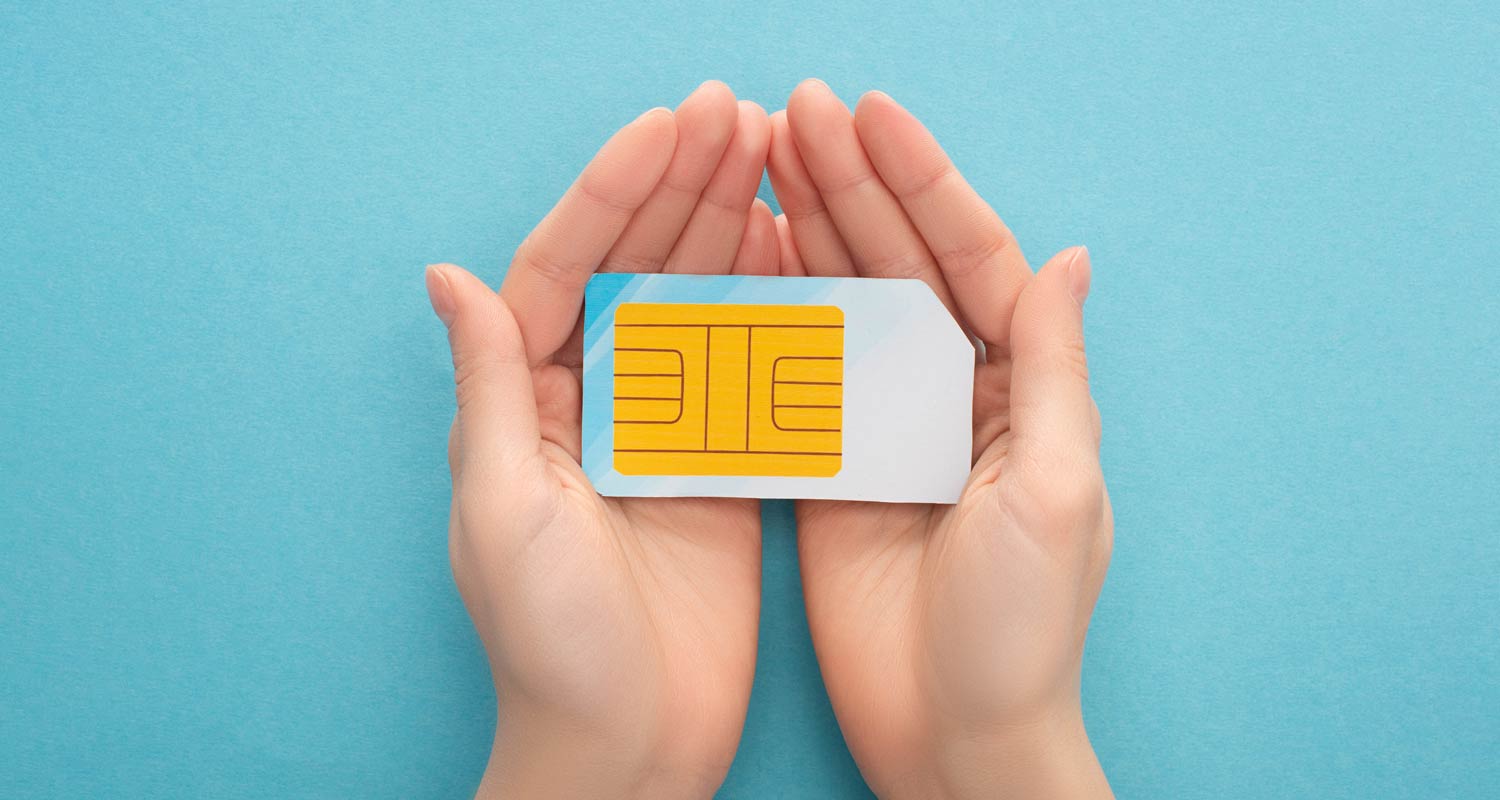
    Rica is broken - and that has grave consequencesOne of the main aims of the Regulation of Interception of Communications and Provision of Communication Related Information Act of 2002 (known colloquially as Rica) was to allow authorities legally and appropriately to track down, or intercept, communications linked to criminal activities and attribute these to an individual, company or group. Rica, which only fully came into effect years later, is best known for doing this in terms of the regulation of mobile network Sim cards for cellphones.

    The legislation requires Sim cards to be registered to an individual, along with that person’s physical address. This measure is meant to allow authorities to trace a number identified during a criminal investigation to an individual, company or group to whom that number is registered. However, 21 years since the legislation was first introduced, the evidence available seems to suggest there is a flaw in its implementation.

    Crime, of all varieties, has unfortunately long been an issue in South Africa and in the post Covid-19, load shedding-stricken economy, recent crime stats show the problem is only escalating. In this environment, police need to be able to rely on all the tools at their disposal when investigating criminal incidents, and one of these tools should be Rica.

    This non-compliance represents a serious loophole that criminals can exploit easily with little fear of consequence

    While there is unfortunately a lack of data on how many criminal investigations have either been assisted or impeded by poor compliance or non-compliance with Rica, media reports on crime stories frequently point to unregistered Sim cards as a challenge for criminal investigations. Moreover, journalists have undertaken their own investigations and run stories on just how easy it is to acquire unregistered Sim cards.

    A news article published in 2020 reported that illegally registered Sim cards in South Africa were hampering investigations by the South African Police Service. According to the article, a source claimed that police investigations up to that point had uncovered thousands of unregistered Sim cards that were available for as little as R5 each. The article further reported that, according to its source, police could trace numbers involved in criminal activity back to a legitimately registered individual in only about 10% of cases.

    Another report from 2022 cites police sources in inner city precincts who have stated that the Sim cards used by criminals are mostly sourced from informal stores, like spaza shops; however, these sources also implicated formal business sellers of these products.

    Serious and violent crime

    The result of this easily accessible market for unregistered Sim cards is the all-too-easy and consequence-free coordination of all kinds of crime, including serious and violent crime. This means that for the cost of a few of these R5 unregistered Sim cards, planning a murder, for example, becomes untraceable by the police through Rica, and thus virtually risk-free.

    Yet another news report from December 2022 covered the politically linked assassination of AmaZulu Prince Mbongiseni Milton Muntukaphiwana Zulu, together with his bodyguard, in KwaZulu-Natal as well as numerous other politically linked killings in the province at the time. Mary de Haas, a monitor and academic, who spoke about the political “hits” in the province, described them in a similar fashion as “so easy”. De Haas specifically mentions the use of unregistered Sim cards in relation to these murders, which are believed to be linked to hitmen in the taxi industry.

    Read: I bought a new Sim card that was already Rica’d by someone else

    An unregistered Sim card was also reported in coverage of death threats made against Eskom’s chief operating officer, Jan Oberholzer, last year. If one thinks about any type of crime in a technology-driven world, the use of a cellphone is likely involved. Given the ease with which unregistered Sim cards seem to be available, this makes this facet of planning crime, from fraud through to murder, easy and almost impossible to trace back to a source without any other evidence.

    Under Rica legislation, telecommunications companies are required to register the users on their networks. This has often been a responsibility which networks have delegated to distribution companies and Rica agents. Somewhere along this chain of responsibility, it is clear that something is going seriously wrong. The pre-registration of Sim cards is further enabled by a deterioration in the built-in security features that should be included in Sim card packaging. The result is the mass sale of non-tamperproof and easily visible Sim cards that can be replicated by bad actors and used in criminal activity.

    The author, the DA’s Natasha Mazzone

    As a result of these lapses in Sim card security, one of the investigative reports into the availability of unregistered Sim cards noted that when tracing numbers used in criminal cases, details were often just a mixture of numbers and letters that meant nothing. This shows that somewhere in the process of distributing Sim cards and registering the details of mobile network users, actors with access to the Rica registration system are purposefully contravening the law with impunity.

    In a country that is beset with serious crime challenges, and having recently been grey-listed by global financial crime watchdog the Financial Action Task Force (FATF), it is clear that implementation issues associated with Rica and the proliferation of unregistered Sim cards are an important avenue which warrants further serious investigation.

    This non-compliance represents a serious loophole that criminals can exploit easily with little fear of consequence. Rica should provide the police, who are already seriously resource-constrained, with reliable information in the majority of cases where cellphones are linked to a crime. It’s clear that a review of the act’s implementation with the aim of identifying where unregistered Sim cards are entering the system is well past overdue.

    • Natasha Mazzone is Democratic Alliance shadow minister of communications & digital technologies

    Get TechCentral’s free daily newsletter

    Add TechCentral as a preferred source on GoogleFollow TechCentral on Google NewsGet breaking news on WhatsApp


    Natasha Mazzone Rica
    WhatsApp YouTube
    Share. Facebook Twitter LinkedIn WhatsApp Telegram Email Copy Link
    Previous ArticleStandard Bank spent R11.2-billion on IT in six months
    Next Article Informal settlements turn to renewable energy

    Related Posts

    MTN puts a price on network quality - Ferdi Moolman

    300 million Sims a year for 65 million South Africans

    25 August 2026
    South Africa's operators can fix Rica - and win big doing it - Contactable

    South Africa’s operators can fix Rica – and win big doing it

    21 May 2026
    Vodacom joins call to end South Africa's 'shadow Sim' crisis - Shameel Joosub

    Vodacom CEO: Rica has been ‘gamed’

    10 November 2025
    Company News
    Can an online school produce a scientist? CambriLearn has an independent answer

    Can an online school produce a scientist? CambriLearn has an independent answer

    9 September 2026
    The ASUS ExpertCenter Pro ET900N from Altron Arrow

    A petaflop on a desk – rethinking AI infrastructure for South Africa

    9 September 2026
    How dual-source technology is changing laser engraving

    How dual-source technology is changing laser engraving

    8 September 2026
    Opinion
    The fragile joint in the Capitec machine - Pambos Soteriades

    The R197-billion market the banks can’t reach

    25 August 2026
    South African tech's compounding debt problem - Jannie van Zyl

    Management consulting as we know it is over

    21 August 2026
    South African tech's compounding debt problem - Jannie van Zyl

    The most dangerous customer is the quiet one

    10 August 2026

    Subscribe to Updates

    Get the best South African technology news and analysis delivered to your e-mail inbox every morning.

    Latest Posts
    'There are no adults in the room': the AI safety exodus

    ‘There are no adults in the room’: the AI safety exodus

    11 September 2026
    US in move to counter Huawei in Africa

    US in move to counter Huawei in Africa

    11 September 2026
    SAPS wants to deploy AI bodycams with facial recognition

    SAPS wants to deploy AI bodycams with facial recognition

    10 September 2026
    Lesaka's first profit comes as its merchant business goes backwards - Lincoln Mali

    Lesaka’s first profit comes as its merchant business goes backwards

    10 September 2026
    © 2009 - 2026 NewsCentral Media
    Built and maintained by Chronon
    • Cookie policy (ZA)
    • TechCentral – privacy and Popia

    Type above and press Enter to search. Press Esc to cancel.

    Manage consent

    TechCentral uses cookies to enhance its offerings. Consenting to these technologies allows us to serve you better. Not consenting or withdrawing consent may adversely affect certain features and functions of the website.

    Functional Always active
    The technical storage or access is strictly necessary for the legitimate purpose of enabling the use of a specific service explicitly requested by the subscriber or user, or for the sole purpose of carrying out the transmission of a communication over an electronic communications network.
    Preferences
    The technical storage or access is necessary for the legitimate purpose of storing preferences that are not requested by the subscriber or user.
    Statistics
    The technical storage or access that is used exclusively for statistical purposes. The technical storage or access that is used exclusively for anonymous statistical purposes. Without a subpoena, voluntary compliance on the part of your Internet Service Provider, or additional records from a third party, information stored or retrieved for this purpose alone cannot usually be used to identify you.
    Marketing
    The technical storage or access is required to create user profiles to send advertising, or to track the user on a website or across several websites for similar marketing purposes.
    • Manage options
    • Manage services
    • Manage {vendor_count} vendors
    • Read more about these purposes
    View preferences
    • {title}
    • {title}
    • {title}