Close Menu
TechCentralTechCentral

    Subscribe to the newsletter

    Get the best South African technology news and analysis delivered to your e-mail inbox every morning.

    Facebook X (Twitter) YouTube LinkedIn
    WhatsApp Facebook X (Twitter) LinkedIn YouTube
    TechCentralTechCentral
    • News
      DStv chops channels as Canal+ leans harder on sport

      DStv chops channels as Canal+ leans harder on sport

      7 August 2026
      Eskom fixed the fleet and the customers left

      Eskom fixed the fleet and the customers left

      7 August 2026
      Starlink LEO rival gaining momentum

      Starlink LEO rival gaining momentum

      7 August 2026
      ByteDance goes big - very big - on AI

      ByteDance goes big – very big – on AI

      7 August 2026
      ICT is becoming the centre of gravity at Reunert - Anthonie de Beer and Rob Godlonton

      ICT is becoming the centre of gravity at Reunert

      6 August 2026
    • World
      Meta AI will now tell parents if their teen is in crisis

      Meta AI will now tell parents if their teen is in crisis

      17 July 2026
      IBM shares crash 25% as AI upends software spending - Arvind Krishna

      IBM shares crash 25% as AI upends software spending

      15 July 2026
      Jony Ive's first OpenAI device: an AI smart speaker - Jony Ive and Sam Altman

      Jony Ive’s first OpenAI device: an AI smart speaker

      15 July 2026
      Stripe, Advent in talks to buy PayPal for $53-billion

      Stripe, Advent in talks to buy PayPal for $53-billion

      15 July 2026
      Memory crisis sends smartphone market into steep decline

      Memory crisis sends smartphone market into steep decline

      13 July 2026
    • In-depth
      The plan to stop AI from breaking the world - Google DeepMind CEO Demis Hassabis. Image: John Sears

      The plan to stop AI from breaking the world

      16 July 2026
      The internet has a Strait of Hormuz problem

      The internet has a Strait of Hormuz problem

      15 July 2026
      AI boom sparks rally, frenzy and fear

      AI boom sparks rally, frenzy and fear

      11 June 2026
      Every plug-in hybrid on sale in South Africa, ranked by price - Lamborghini Temerario

      Every plug-in hybrid on sale in South Africa, ranked by price

      7 June 2026
      What Wi-Fi 8 will mean for wireless networks

      What Wi-Fi 8 will mean for wireless networks

      1 June 2026
    • TCS
      TCS+ | Specops' Darren James on continuous trust in an AI world

      TCS+ | Specops’ Darren James on continuous trust in an AI world

      7 August 2026
      TCS+ | How AI is turning hardware into a subscription service - Shane van der Merwe Merchant West

      TCS+ | How AI is turning hardware into a subscription service

      6 August 2026
      TCS+ | Why South African workers must become supervisors of digital labour - Accelera Digital Group Cliff de Wit

      TCS+ | Why South African workers must become supervisors of digital labour

      31 July 2026
      TCS | Rapid deployment rules can't work without municipalities: ACT - Nomvuyiso Batyi

      TCS | Icasa’s rules skip the real bottleneck: ACT

      30 July 2026
      TCS+ | iStore Business on why Apple makes sense for SMEs - Sudesh Pillay and Tamia Nontsikelelo

      TCS+ | iStore Business on why Apple makes sense for SMEs

      30 July 2026
    • Opinion
      The author, Jannie van Zyl

      Selling vapour is corporate suicide in slow motion

      16 July 2026
      Brazil's online gambling crackdown is a lesson for South Africa

      How Amazon outmanoeuvred Starlink in South Africa

      15 July 2026
      The Popia problem with agentic AI - Herman Haasbroek

      The Popia problem with agentic AI

      14 July 2026
      The author, Fanie van Rooyen

      South Africa can still catch the AI wave – here’s how

      7 July 2026
      The author, Fanie van Rooyen

      The AI utopia South Africa can’t afford

      1 July 2026
    • Company Hubs
      • 1Stream
      • Africa Data Centres
      • AfriGIS
      • Altron Digital Business
      • Altron Document Solutions
      • Altron Group
      • Arctic Wolf
      • Ascent Technology
      • AvertITD
      • BBD
      • Braintree
      • CallMiner
      • CambriLearn
      • CM Telecom
      • Contactable
      • CYBER1 Solutions
      • Digicloud Africa
      • Digimune
      • Domains.co.za
      • ESET
      • Euphoria Telecom
      • HOSTAFRICA
      • Incredible Business
      • iONLINE
      • IQbusiness
      • Iris Network Systems
      • Kaspersky
      • LSD Open
      • Mitel
      • NEC XON
      • Netstar
      • Network Platforms
      • Next DLP
      • Ovations
      • Paracon
      • Paratus
      • Q-KON
      • SevenC
      • SkyWire
      • Solid8 Technologies
      • Telit Cinterion
      • Telviva
      • Tenable
      • Vertiv
      • Videri Digital
      • Vodacom Business
      • Vox
      • Wipro
      • Workday
      • XLink
    • Sections
      • AI and machine learning
      • Banking
      • Broadcasting and Media
      • Cloud services
      • Contact centres and CX
      • Cryptocurrencies
      • Education and skills
      • Electronics and hardware
      • Energy and sustainability
      • Enterprise software
      • Financial services
      • HealthTech
      • Information security
      • Internet and connectivity
      • Internet of Things
      • Investment
      • IT services
      • Lifestyle
      • Policy and regulation
      • Public sector
      • Retail and e-commerce
      • Satellite communications
      • Science
      • SMEs and start-ups
      • Social media
      • Talent and leadership
      • Telecoms
      • Watts & Wheels
    • Events
    • Advertise
    TechCentralTechCentral
    Home » Editor's pick » SA attracts renewable energy billions

    SA attracts renewable energy billions

    By The Conversation10 June 2015
    Twitter LinkedIn Facebook WhatsApp Email Telegram Copy Link
    News Alerts
    WhatsApp

    solar-640

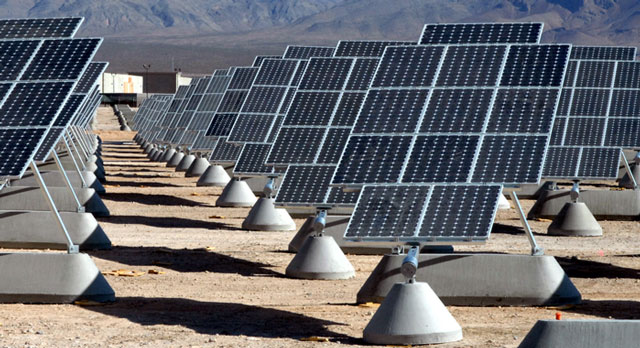
    South Africa has become one of the leading destinations for renewable energy investment, with an estimated R193bn already committed. But there are question marks over how successful the programme has been in balancing the demands of financial and commercial soundness, and requirements of economic development and community co-ownership.

    The investment is the result of a renewable energy programme introduced by the government four years ago. Tariffs offered by the most recent renewable energy projects are now well below those that will come from the state energy utility Eskom’s future coal plants.

    The programme has been applauded internationally for its strong regulatory framework, tough qualification criteria and strong economic development and community ownership requirements.

    Since its launch in 2011, the programme has brought a diversity of new players and sources of investment to South Africa. Consolidation is now taking place, with international firms playing a leading role in project development.

    Fewer companies have won more megawatts (MW) with each bidding round. Two examples are consortia led by Italy’s Enel Green Power and Ireland’s Mainstream Renewable Power.

    This consolidation has seen smaller South African developers being priced out of the market by foreign companies. Some have sold their equity share at financial close to a larger company.

    South Africa’s renewable energy industry is emerging in the midst of the country’s worst electricity supply-side crisis in 40 years. This has resulted in soaring tariffs and a downgrading of the national power utility Eskom to junk status.

    The private sector-led renewable energy sector is being integrated into an electricity network run by a state monopoly. Eskom has historically depended on abundant and, until recently, low-cost coal reserves.

    By June 2015, the renewables programme had procured more than 6,3GW under four bidding rounds. Of this, 53% was for wind, 36% for solar PV and 10% for concentrated solar power. It is anticipated that a further 6,3GW will be procured. Thirty-seven projects to a total of 1,8GW have now been connected to the grid.

    The programme is based on competitive bidding. Potential developers bid to construct a renewable energy project below a certain tariff cap.

    Unique to South Africa’s case, projects are scored 70% on tariff and 30% on economic development and community ownership criteria. Each bidding company must at a minimum be owned 40% by South Africans, of which a minimum of 12% must be black shareholders.

    In addition, a minimum of 2,5% of the company must be owned by communities living within a 50km radius of the project site.

    Implementing the economic development criteria has posed a big challenge for developers. The economic development requirements of the programme are highly complex, incorporating 17 sets of minimum targets and thresholds. They also go beyond the core competence of most developers, many of whom have now contracted socioeconomic development consultants and/or community liaison officers.

    According to one project developer I interviewed in late 2013:

    Some companies are progressive, particularly those who have had a footprint in the country for some time. Others see it as a transaction cost and hope that their local counterpart will deal with it.

    But failure to deliver on economic and community development could result in the purchase agreements being terminated.

    Shareholders can sell their shares in a project three years after the commercial operation date. As project owners are responsible for the economic development criteria and community benefits, a key question is how this responsibility will be upheld when the ownership structure changes. As energy expert Anton Eberhard explains, after sale of equity, it is the owners “who are left to actually deliver on promises”.

    Scrutiny of the renewable energy sector, as of any infrastructure development, is important. Based on economist Mariana Mazzucato’s thesis:

    Investment must socialise the risks as well as privatising the rewards.

    This refers to the nature of investment that seeks short term profits backed by the state, while the longer term costs are often paid for by the general public.

    wind-farm-640

    However, there must also be scrutiny of the potential diversity of other electricity generation projects emerging in the wake of South Africa’s electricity crisis. This includes privately produced power from cogeneration, gas and baseload coal.

    It also includes a 9,6GW government-run nuclear power programme. There is no certainty around this and little transparency around who will build it, where and at what cost.

    Furthermore, the devastating human and environmental impact of the country’s long-term coal development and related infrastructure should not be forgotten.

    Meanwhile, the costs of Eskom’s Medupi coal-fired power plant have escalated from R70bn to R120bn or more in the past five years.

    Lessons learned from the renewables programme must be extended to ensure that the socioeconomic and environmental benefits of energy development are upheld at both a local and national level.The Conversation

    • Lucy Baker is research fellow, international relations, The Sussex Energy Group, Centre for Global Political Economy at the University of Sussex
    • This article was originally published on The Conversation

    Follow TechCentral on Google News Add TechCentral as your preferred source on Google


    WhatsApp YouTube
    Share. Facebook Twitter LinkedIn WhatsApp Telegram Email Copy Link
    Previous ArticleTelkom ‘uncapped’ LTE suburbs named
    Next Article Why Apple could still lead in streaming music

    Related Posts

    DStv chops channels as Canal+ leans harder on sport

    DStv chops channels as Canal+ leans harder on sport

    7 August 2026
    Eskom fixed the fleet and the customers left

    Eskom fixed the fleet and the customers left

    7 August 2026
    TCS+ | Specops' Darren James on continuous trust in an AI world

    TCS+ | Specops’ Darren James on continuous trust in an AI world

    7 August 2026
    Company News
    African Bank signs on as GEC+Africa 2026 partner

    African Bank signs on as GEC+Africa 2026 partner

    7 August 2026
    What a cloud review reveals about how a company actually runs - LSD Open

    What a cloud review reveals about how a company actually runs

    6 August 2026
    Manufacturing from a garage is now a realistic business plan - MaxLaser

    Manufacturing from a garage is now a realistic business plan

    6 August 2026
    Opinion
    The author, Jannie van Zyl

    Selling vapour is corporate suicide in slow motion

    16 July 2026
    Brazil's online gambling crackdown is a lesson for South Africa

    How Amazon outmanoeuvred Starlink in South Africa

    15 July 2026
    The Popia problem with agentic AI - Herman Haasbroek

    The Popia problem with agentic AI

    14 July 2026

    Subscribe to Updates

    Get the best South African technology news and analysis delivered to your e-mail inbox every morning.

    Latest Posts
    DStv chops channels as Canal+ leans harder on sport

    DStv chops channels as Canal+ leans harder on sport

    7 August 2026
    Eskom fixed the fleet and the customers left

    Eskom fixed the fleet and the customers left

    7 August 2026
    TCS+ | Specops' Darren James on continuous trust in an AI world

    TCS+ | Specops’ Darren James on continuous trust in an AI world

    7 August 2026
    Starlink LEO rival gaining momentum

    Starlink LEO rival gaining momentum

    7 August 2026
    © 2009 - 2026 NewsCentral Media
    Built and maintained by Chronon
    • Cookie policy (ZA)
    • TechCentral – privacy and Popia

    Type above and press Enter to search. Press Esc to cancel.

    Manage consent

    TechCentral uses cookies to enhance its offerings. Consenting to these technologies allows us to serve you better. Not consenting or withdrawing consent may adversely affect certain features and functions of the website.

    Functional Always active
    The technical storage or access is strictly necessary for the legitimate purpose of enabling the use of a specific service explicitly requested by the subscriber or user, or for the sole purpose of carrying out the transmission of a communication over an electronic communications network.
    Preferences
    The technical storage or access is necessary for the legitimate purpose of storing preferences that are not requested by the subscriber or user.
    Statistics
    The technical storage or access that is used exclusively for statistical purposes. The technical storage or access that is used exclusively for anonymous statistical purposes. Without a subpoena, voluntary compliance on the part of your Internet Service Provider, or additional records from a third party, information stored or retrieved for this purpose alone cannot usually be used to identify you.
    Marketing
    The technical storage or access is required to create user profiles to send advertising, or to track the user on a website or across several websites for similar marketing purposes.
    • Manage options
    • Manage services
    • Manage {vendor_count} vendors
    • Read more about these purposes
    View preferences
    • {title}
    • {title}
    • {title}