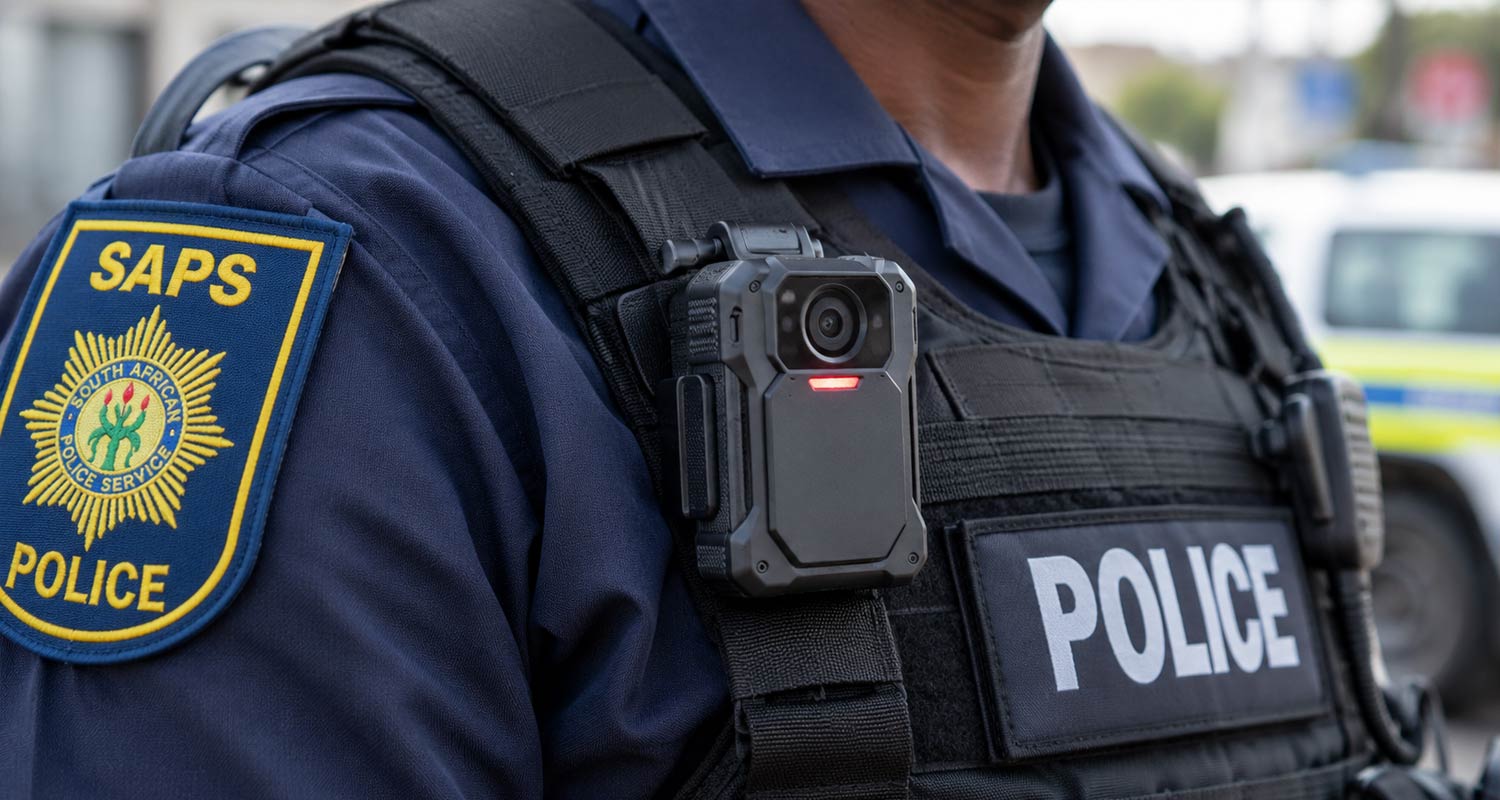
The body-worn cameras the South African Police Service (SAPS) wants to strap to its officers must be able to conduct facial recognition, according to tender documents the State IT Agency (Sita) published this week.
The requirement appears in the bid specification for RFB 3286-2026, a three-year contract for the “supply, delivery, support and maintenance of body-worn and vehicle dashboard cameras” and related software. Bids close at 11am on 29 September.
The scope of work says the solution must give the SAPS the “ability to conduct facial recognition and integrate with various security platforms and have warning capabilities”. It is not a nice-to-have: bidders must confirm compliance with the mandatory, functional and scope requirements, and a bid that fails any of them is not evaluated further.
What the specification does not say is what the police would use it for. The only place it describes such a system working is under user management, where facial recognition is one of three ways – with a fingerprint reader and a key code – to release a camera from its dock, identifying the officer rather than whoever the camera is pointed at.
The dashboard cameras must carry embedded AI, including “automatic number plate recognition” and event detection triggered by blue lights, a door opening or a collision, and the specification lists an “option for interior camera (facing occupants)”. The video management software tying the fleet together “must have” analytics including “motion detection, facial recognition and licence plate recognition”.
That is a wider ambition than the accountability tool the project has been sold as. Besides gathering court evidence, the specification says, the cameras will let the SAPS “refute false civil claims against” it.
Cameras that can watch quietly
Other requirements together describe a device that can record without anyone around it knowing: a “continuous background recording function”, buffers capturing 120 seconds either side of the record button and the “ability to turn off sound/alarm and light indicators”. The cameras must be remotely switchable, flag to a control room when pulled off their mounting and start recording when the wearer’s firearm leaves its holster.
The case for body cameras is well established: TechCentral cited a 2017 Las Vegas police study last year finding officers who wore them “generated significantly fewer complaints about excessive use of force”. What is unusual locally is that no law governs the more powerful features this tender asks for.
The Protection of Personal Information Act (Popia) does not apply cleanly. Section 6(1)(c) excludes processing by a public body for “the prevention, detection … investigation or proof of offences” – but only “to the extent that adequate safeguards have been established in legislation”.
South Africa has no statute setting out when an officer must switch a camera on, who may view the footage, how long it is kept or whether a face may be matched against anything.

The Information Regulator has already applied that clause to the SAPS, and it did not go the service’s way. In an enforcement notice in April 2023 over the circulation of Krugersdorp rape survivors’ details on WhatsApp, the regulator found the SAPS “did not meet the requirements for exclusion under section 6 (1) (c) (ii)” because it had “failed to demonstrate that it has any safeguards in place, let alone safeguards established in legislation”. The SAPS complied and was not fined.
On that reasoning the exclusion is not blanket: without safeguards in legislation the processing falls under Popia and the regulator’s jurisdiction.
The specification deals with chain of custody in detail, aligning the evidence management system with the Electronic Communications and Transactions Act. On the rules of engagement for facial recognition it says nothing.
The tender is silent on what bidders and taxpayers will most want to know: how many cameras the police will buy. The pricing schedule asks for a unit price for body cameras, dashcams and software components. Every other line is ad hoc or billed monthly, with more cameras “procured per unit on as and when needed basis”. Sita reserves the right to negotiate quantities before the award and to “vary the scope with number and or capability of equipment to procure based on customer affordability”.
TechCentral put questions to Sita and the SAPS on Thursday about the use of facial recognition, the number of cameras to be bought and the legal basis for both. Neither had responded by the time of publication. — © 2026 NewsCentral Media