Close Menu
TechCentralTechCentral

    Subscribe to the newsletter

    Get the best South African technology news and analysis delivered to your e-mail inbox every morning.

    Facebook X (Twitter) YouTube LinkedIn
    WhatsApp Facebook X (Twitter) LinkedIn YouTube
    TechCentralTechCentral
    • News
      Nedbank hires MTN's former tech chief as group CIO - Nikos Angelopoulos

      Nedbank hires MTN’s former tech chief as group CIO

      31 July 2026
      Eskom's diesel bill falls 86% as breakdowns hit eight-year low

      Eskom’s diesel bill falls 86% as breakdowns hit eight-year low

      31 July 2026
      Ramaphosa signs off on taking the grid away from Eskom

      Ramaphosa signs off on taking the grid away from Eskom

      31 July 2026
      Microsoft just had the biggest day in stock market history

      Microsoft just had the biggest day in stock market history

      31 July 2026
      MTN Nigeria's growth engine stalled in second quarter - Karl Toriola

      MTN Nigeria’s growth engine stalled in second quarter

      31 July 2026
    • World
      Meta AI will now tell parents if their teen is in crisis

      Meta AI will now tell parents if their teen is in crisis

      17 July 2026
      IBM shares crash 25% as AI upends software spending - Arvind Krishna

      IBM shares crash 25% as AI upends software spending

      15 July 2026
      Jony Ive's first OpenAI device: an AI smart speaker - Jony Ive and Sam Altman

      Jony Ive’s first OpenAI device: an AI smart speaker

      15 July 2026
      Stripe, Advent in talks to buy PayPal for $53-billion

      Stripe, Advent in talks to buy PayPal for $53-billion

      15 July 2026
      Memory crisis sends smartphone market into steep decline

      Memory crisis sends smartphone market into steep decline

      13 July 2026
    • In-depth
      The plan to stop AI from breaking the world - Google DeepMind CEO Demis Hassabis. Image: John Sears

      The plan to stop AI from breaking the world

      16 July 2026
      The internet has a Strait of Hormuz problem

      The internet has a Strait of Hormuz problem

      15 July 2026
      AI boom sparks rally, frenzy and fear

      AI boom sparks rally, frenzy and fear

      11 June 2026
      Every plug-in hybrid on sale in South Africa, ranked by price - Lamborghini Temerario

      Every plug-in hybrid on sale in South Africa, ranked by price

      7 June 2026
      What Wi-Fi 8 will mean for wireless networks

      What Wi-Fi 8 will mean for wireless networks

      1 June 2026
    • TCS
      TCS+ | Why South African workers must become supervisors of digital labour - Accelera Digital Group Cliff de Wit

      TCS+ | Why South African workers must become supervisors of digital labour

      31 July 2026
      TCS | Rapid deployment rules can't work without municipalities: ACT - Nomvuyiso Batyi

      TCS | Icasa’s rules skip the real bottleneck: ACT

      30 July 2026
      TCS+ | iStore Business on why Apple makes sense for SMEs - Sudesh Pillay and Tamia Nontsikelelo

      TCS+ | iStore Business on why Apple makes sense for SMEs

      30 July 2026
      TCS+ | A smarter approach to cloud for South African businesses - Joel Chacko and Jonathan Oaker

      TCS+ | A smarter approach to cloud for South African businesses

      28 July 2026
      TCS | How Optasia lends billions to people banks can't see - Salvador Anglada

      TCS | How Optasia lends billions to people banks can’t see

      23 July 2026
    • Opinion
      The author, Jannie van Zyl

      Selling vapour is corporate suicide in slow motion

      16 July 2026
      Brazil's online gambling crackdown is a lesson for South Africa

      How Amazon outmanoeuvred Starlink in South Africa

      15 July 2026
      The Popia problem with agentic AI - Herman Haasbroek

      The Popia problem with agentic AI

      14 July 2026
      The author, Fanie van Rooyen

      South Africa can still catch the AI wave – here’s how

      7 July 2026
      The author, Fanie van Rooyen

      The AI utopia South Africa can’t afford

      1 July 2026
    • Company Hubs
      • 1Stream
      • Africa Data Centres
      • AfriGIS
      • Altron Digital Business
      • Altron Document Solutions
      • Altron Group
      • Arctic Wolf
      • Ascent Technology
      • AvertITD
      • BBD
      • Braintree
      • CallMiner
      • CambriLearn
      • CM Telecom
      • Contactable
      • CYBER1 Solutions
      • Digicloud Africa
      • Digimune
      • Domains.co.za
      • ESET
      • Euphoria Telecom
      • HOSTAFRICA
      • Incredible Business
      • iONLINE
      • IQbusiness
      • Iris Network Systems
      • Kaspersky
      • LSD Open
      • Mitel
      • NEC XON
      • Netstar
      • Network Platforms
      • Next DLP
      • Ovations
      • Paracon
      • Paratus
      • Q-KON
      • SevenC
      • SkyWire
      • Solid8 Technologies
      • Telit Cinterion
      • Telviva
      • Tenable
      • Vertiv
      • Videri Digital
      • Vodacom Business
      • Vox
      • Wipro
      • Workday
      • XLink
    • Sections
      • AI and machine learning
      • Banking
      • Broadcasting and Media
      • Cloud services
      • Contact centres and CX
      • Cryptocurrencies
      • Education and skills
      • Electronics and hardware
      • Energy and sustainability
      • Enterprise software
      • Financial services
      • HealthTech
      • Information security
      • Internet and connectivity
      • Internet of Things
      • Investment
      • IT services
      • Lifestyle
      • Policy and regulation
      • Public sector
      • Retail and e-commerce
      • Satellite communications
      • Science
      • SMEs and start-ups
      • Social media
      • Talent and leadership
      • Telecoms
      • Watts & Wheels
    • Events
    • Advertise
    TechCentralTechCentral
    Home » In-depth » South Africa’s coal deal can be a green model for the world

    South Africa’s coal deal can be a green model for the world

    By Clara Ferreira Marques5 October 2021
    Twitter LinkedIn Facebook WhatsApp Email Telegram Copy Link
    News Alerts
    WhatsApp

    Positive environmental news is rare. All the more reason to cheer an effort that might see wealthy nations help South Africa curb its coal addiction.

    If the deal goes through in the right form, it will offer a lifeline for a nation struggling to reduce its heavy dependence on the dirtiest of fuels. No less importantly, it will be a model for the sort of support that can be extended to other coal-reliant emerging economies juggling green pressures, urgent development needs and grim fiscal realities — and without which the world cannot reach its climate goals.

    South Africa’s economy was sputtering even before Covid-19, with a negative per-capita growth rate and unemployment running at nearly 30%. The pandemic made everything worse and left the government struggling to rein in its debt. At the heart of this crisis is creaking, coal-gobbling state-owned power utility Eskom, which has created a crippling burden for the guarantor of much of its debt and crowded out greener, often cheaper, alternatives.

    As a middle-income economy, South Africa wouldn’t normally qualify for concessionary finance

    As a middle-income economy, South Africa wouldn’t normally qualify for concessionary finance and the near-US$5-billion of grants and other support on the table in discussions with envoys from the US, Britain, Germany, France and the European Union. But, with alarm bells ringing loudly and the Cop26 climate talks weeks away, this is a long-overdue recognition of the role developed economies have to play in transition well beyond their own borders.

    Without an additional boost, it’s clear that Eskom’s troubles would continue to drag, with more drip-fed bailouts to support a debt burden that currently sits at R400-billion, unmanageable with the company’s current cash generation. Those injections have already cost some R220-billion between 2008 and 2021. The shift to greener alternatives would be painfully lengthy and potentially socially devastating. It would be harder for South Africa to end power cuts that have already cost billions in lost output. The world, meanwhile, would have to deal with the consequences of slow progress at a major carbon dioxide emitter.

    Options

    It’s not yet clear what exactly an agreement would involve.

    There’s the option of traditional infrastructure finance, often favoured by multilateral institutions. This is closer to plans laid out by Eskom in August. At that time, it outlined the need for funding advanced on a “pay-for-performance” basis to invest in 8GW of projects, ranging from wind power to solar, hydropower and gas. That’s helpful capacity, but is unlikely to resolve Eskom’s debt or the wider social problems associated with energy transition in a country with vast wealth disparities, where coal is a major employer and supports more than 500 000 households.

    Alternative plans raised by the deputy finance minister that focus on sovereign debt forgiveness in exchange for action risk simply rattling investors.

    A more far-sighted — and potentially more portable — proposal comes from Meridian Economics, a Cape Town think-tank led by economist Grove Steyn, who sits on President Cyril Ramaphosa’s Economic Advisory Council. Long in the works and taking a wider view, it proposes what is essentially a loan with a climate concession element — a deal in which South Africa promises climate mitigation and social action, in return for inexpensive debt backed by developed country governments.
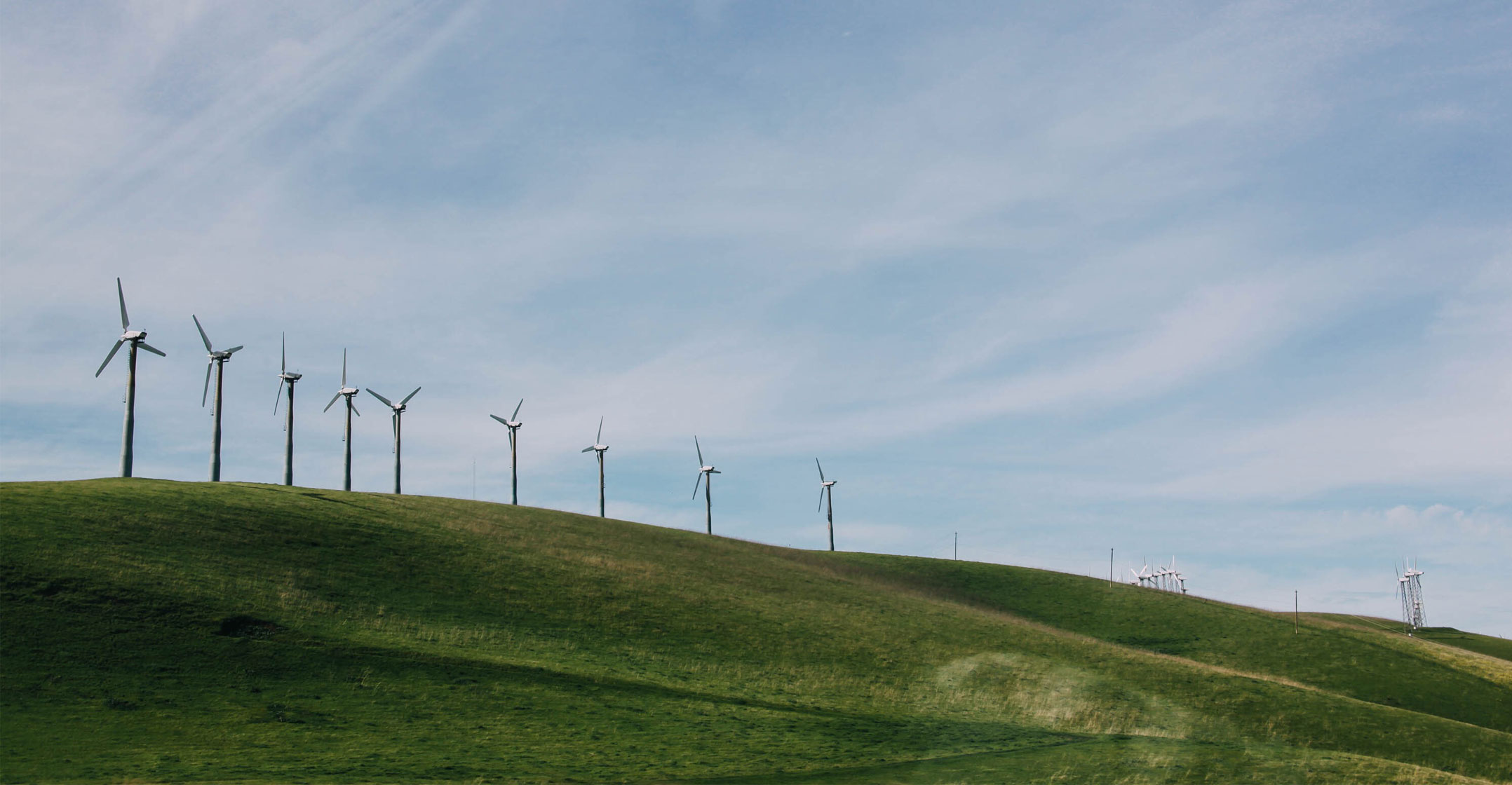
    The funds would not go to Eskom directly, but would be used to give the government the fiscal space to recapitalise Eskom’s unbundled component parts. It would reduce or eliminate the need for government guarantees, and allow the utility to turn to capital markets to fund what are ultimately viable infrastructure investment plans. The loan would also be used to help set up a “just transition” fund, to aid the economic revitalization of the coal-dependent Mpumalanga province, home to the bulk of Eskom’s power stations.

    With fewer guarantees necessary for Eskom, South Africa’s own borrowing position should improve.

    Crucially, the proposal builds in a powerful incentive for compliance. Loans are provided at a market rate, but the ultimate cost is determined by South Africa’s achieved annual carbon savings, which are credited against its interest payments. Using $16-billion in loans disbursed over five years at an annual interest rate of 5.5%, Meridian estimates the rate could be reduced to 1.5% if commitments are met. At a carbon price of $7 per metric ton, mitigation benefits could save close to $7-billion over 25 years calculated on a net-present-value basis.

    There are questions to be tackled when theory becomes practice. How exactly the just transition fund would work, for example

    There are questions to be tackled when theory becomes practice. How exactly the just transition fund would work, for example, or how to avoid moral hazard pitfalls. But it’s a structure that succeeds by pulling in developed nations — Ramaphosa isn’t wrong when he says South Africa and others are “victims of what developed countries did in the past” — but leaving responsibility with governments and incentivising them to act.

    It’s true a lot of South Africa’s problems are of its own making. Under Jacob Zuma’s administration, when more than R500-billion was stolen from state coffers, a bad situation at Eskom became catastrophic. Unions and other entrenched interests have blocked change: The energy minister last week was still advocating carbon-capture technologies to avoid “sterilising” coal. That’s a position the government needs to resist.

    The reality goes beyond a moral duty for developed nations. There is also economic logic to having richer countries provide financial assistance to get developing ones away from economic choices that create lasting financial and social damage, even if there are difficulties.

    ‘Difficult’

    Bard Harstad at the University of Oslo, who has written extensively on supply-side environmental policies, points out that commitments made by one government may not be followed through by others, or actions reversed after the period of the agreement ends. “It is difficult to tie the hands of the next government, therefore it can be difficult to make credible promises on what to do in the future, in return for payments now,” he points out. “Another problem is free riding between multiple countries in the North, who all benefit from the action.”

    Those will have to be weighed up. And even if South Africa can reach a credible deal, others — India, Indonesia, Vietnam, let alone China — would not be able to simply copy and paste. But it does create a basis for a solution in which developed countries do not shirk responsibility, adequate incentives are built into necessary finance and markets are crowded in. That’s worth cheering.  — (c) 2021 Bloomberg LP

    Follow TechCentral on Google News Add TechCentral as your preferred source on Google


    Cyril Ramaphosa Eskom
    WhatsApp YouTube
    Share. Facebook Twitter LinkedIn WhatsApp Telegram Email Copy Link
    Previous ArticleMTN expected to raise R18-billion in Uganda IPO
    Next Article Naspers-backed Udemy files for Nasdaq IPO

    Related Posts

    Eskom's diesel bill falls 86% as breakdowns hit eight-year low

    Eskom’s diesel bill falls 86% as breakdowns hit eight-year low

    31 July 2026
    Ramaphosa signs off on taking the grid away from Eskom

    Ramaphosa signs off on taking the grid away from Eskom

    31 July 2026
    Huawei Connect 2026: taking South African AI beyond pilots

    Huawei Connect 2026: taking South African AI beyond pilots

    29 July 2026
    Company News
    Domains.co.za launches self-hosted n8n VPS hosting

    Domains.co.za launches self-hosted n8n VPS hosting

    31 July 2026
    Smarter.tech '26 shows why smarter technology begins with context - Obsidian Systems

    Context is the missing piece in enterprise AI: Obsidian

    31 July 2026
    Huawei launches 12 intelligent transport solutions in South Africa - Sam Tang

    Huawei launches 12 intelligent transport solutions in South Africa

    30 July 2026
    Opinion
    The author, Jannie van Zyl

    Selling vapour is corporate suicide in slow motion

    16 July 2026
    Brazil's online gambling crackdown is a lesson for South Africa

    How Amazon outmanoeuvred Starlink in South Africa

    15 July 2026
    The Popia problem with agentic AI - Herman Haasbroek

    The Popia problem with agentic AI

    14 July 2026

    Subscribe to Updates

    Get the best South African technology news and analysis delivered to your e-mail inbox every morning.

    Latest Posts
    Nedbank hires MTN's former tech chief as group CIO - Nikos Angelopoulos

    Nedbank hires MTN’s former tech chief as group CIO

    31 July 2026
    Eskom's diesel bill falls 86% as breakdowns hit eight-year low

    Eskom’s diesel bill falls 86% as breakdowns hit eight-year low

    31 July 2026
    Ramaphosa signs off on taking the grid away from Eskom

    Ramaphosa signs off on taking the grid away from Eskom

    31 July 2026
    TCS+ | Why South African workers must become supervisors of digital labour - Accelera Digital Group Cliff de Wit

    TCS+ | Why South African workers must become supervisors of digital labour

    31 July 2026
    © 2009 - 2026 NewsCentral Media
    Built and maintained by Chronon
    • Cookie policy (ZA)
    • TechCentral – privacy and Popia

    Type above and press Enter to search. Press Esc to cancel.

    Manage consent

    TechCentral uses cookies to enhance its offerings. Consenting to these technologies allows us to serve you better. Not consenting or withdrawing consent may adversely affect certain features and functions of the website.

    Functional Always active
    The technical storage or access is strictly necessary for the legitimate purpose of enabling the use of a specific service explicitly requested by the subscriber or user, or for the sole purpose of carrying out the transmission of a communication over an electronic communications network.
    Preferences
    The technical storage or access is necessary for the legitimate purpose of storing preferences that are not requested by the subscriber or user.
    Statistics
    The technical storage or access that is used exclusively for statistical purposes. The technical storage or access that is used exclusively for anonymous statistical purposes. Without a subpoena, voluntary compliance on the part of your Internet Service Provider, or additional records from a third party, information stored or retrieved for this purpose alone cannot usually be used to identify you.
    Marketing
    The technical storage or access is required to create user profiles to send advertising, or to track the user on a website or across several websites for similar marketing purposes.
    • Manage options
    • Manage services
    • Manage {vendor_count} vendors
    • Read more about these purposes
    View preferences
    • {title}
    • {title}
    • {title}