Close Menu
TechCentralTechCentral

    Subscribe to the newsletter

    Get the best South African technology news and analysis delivered to your e-mail inbox every morning.

    Facebook X (Twitter) YouTube LinkedIn
    WhatsApp Facebook X (Twitter) LinkedIn YouTube
    TechCentralTechCentral
    • News
      Netflix, Warner Bros talks raise fresh headaches for MultiChoice

      Netflix, Warner Bros talks raise fresh headaches for MultiChoice

      5 December 2025
      Big Microsoft 365 price increases coming next year

      Big Microsoft price increases coming next year

      5 December 2025
      Vodacom to take control of Safaricom in R36-billion deal - Shameel Joosub

      Vodacom to take control of Safaricom in R36-billion deal

      4 December 2025
      Black Friday goes digital in South Africa as online spending surges to record high

      Black Friday goes digital in South Africa as online spending surges to record high

      4 December 2025
      BYD takes direct aim at Toyota with launch of sub-R500 000 Sealion 5 PHEV

      BYD takes direct aim at Toyota with launch of sub-R500 000 Sealion 5 PHEV

      4 December 2025
    • World
      Amazon and Google launch multi-cloud service for faster connectivity

      Amazon and Google launch multi-cloud service for faster connectivity

      1 December 2025
      Google makes final court plea to stop US breakup

      Google makes final court plea to stop US breakup

      21 November 2025
      Bezos unveils monster rocket: New Glenn 9x4 set to dwarf Saturn V

      Bezos unveils monster rocket: New Glenn 9×4 set to dwarf Saturn V

      21 November 2025
      Tech shares turbocharged by Nvidia's stellar earnings

      Tech shares turbocharged by stellar Nvidia earnings

      20 November 2025
      Config file blamed for Cloudflare meltdown that disrupted the web

      Config file blamed for Cloudflare meltdown that disrupted the web

      19 November 2025
    • In-depth
      Jensen Huang Nvidia

      So, will China really win the AI race?

      14 November 2025
      Valve's Linux console takes aim at Microsoft's gaming empire

      Valve’s Linux console takes aim at Microsoft’s gaming empire

      13 November 2025
      iOCO's extraordinary comeback plan - Rhys Summerton

      iOCO’s extraordinary comeback plan

      28 October 2025
      Why smart glasses keep failing - no, it's not the tech - Mark Zuckerberg

      Why smart glasses keep failing – it’s not the tech

      19 October 2025
      BYD to blanket South Africa with megawatt-scale EV charging network - Stella Li

      BYD to blanket South Africa with megawatt-scale EV charging network

      16 October 2025
    • TCS
      TCS+ | How Cloud on Demand helps partners thrive in the AWS ecosystem - Odwa Ndyaluvane and Xenia Rhode

      TCS+ | How Cloud On Demand helps partners thrive in the AWS ecosystem

      4 December 2025
      TCS | MTN Group CEO Ralph Mupita on competition, AI and the future of mobile

      TCS | Ralph Mupita on competition, AI and the future of mobile

      28 November 2025
      TCS | Dominic Cull on fixing South Africa's ICT policy bottlenecks

      TCS | Dominic Cull on fixing South Africa’s ICT policy bottlenecks

      21 November 2025
      TCS | BMW CEO Peter van Binsbergen on the future of South Africa's automotive industry

      TCS | BMW CEO Peter van Binsbergen on the future of South Africa’s automotive industry

      6 November 2025
      TCS | Why Altron is building an AI factory - Bongani Andy Mabaso

      TCS | Why Altron is building an AI factory in Johannesburg

      28 October 2025
    • Opinion
      Your data, your hardware: the DIY AI revolution is coming - Duncan McLeod

      Your data, your hardware: the DIY AI revolution is coming

      20 November 2025
      Zero Carbon Charge founder Joubert Roux

      The energy revolution South Africa can’t afford to miss

      20 November 2025
      It's time for a new approach to government IT spend in South Africa - Richard Firth

      It’s time for a new approach to government IT spend in South Africa

      19 November 2025
      How South Africa's broken Rica system fuels murder and mayhem - Farhad Khan

      How South Africa’s broken Rica system fuels murder and mayhem

      10 November 2025
      South Africa's AI data centre boom risks overloading a fragile grid - Paul Colmer

      South Africa’s AI data centre boom risks overloading a fragile grid

      30 October 2025
    • Company Hubs
      • Africa Data Centres
      • AfriGIS
      • Altron Digital Business
      • Altron Document Solutions
      • Altron Group
      • Arctic Wolf
      • AvertITD
      • Braintree
      • CallMiner
      • CambriLearn
      • CYBER1 Solutions
      • Digicloud Africa
      • Digimune
      • Domains.co.za
      • ESET
      • Euphoria Telecom
      • Incredible Business
      • iONLINE
      • IQbusiness
      • Iris Network Systems
      • LSD Open
      • NEC XON
      • Netstar
      • Network Platforms
      • Next DLP
      • Ovations
      • Paracon
      • Paratus
      • Q-KON
      • SevenC
      • SkyWire
      • Solid8 Technologies
      • Telit Cinterion
      • Tenable
      • Vertiv
      • Videri Digital
      • Vodacom Business
      • Wipro
      • Workday
      • XLink
    • Sections
      • AI and machine learning
      • Banking
      • Broadcasting and Media
      • Cloud services
      • Contact centres and CX
      • Cryptocurrencies
      • Education and skills
      • Electronics and hardware
      • Energy and sustainability
      • Enterprise software
      • Financial services
      • Information security
      • Internet and connectivity
      • Internet of Things
      • Investment
      • IT services
      • Lifestyle
      • Motoring
      • Public sector
      • Retail and e-commerce
      • Satellite communications
      • Science
      • SMEs and start-ups
      • Social media
      • Talent and leadership
      • Telecoms
    • Events
    • Advertise
    TechCentralTechCentral
    Home » Opinion » Dirk de Vos » South Africa’s Eskom problem

    South Africa’s Eskom problem

    By Dirk de Vos18 December 2012
    Twitter LinkedIn Facebook WhatsApp Email Telegram Copy Link
    News Alerts
    WhatsApp
    Dirk de Vos

    It’s been nearly two months since Eskom presented its proposed tariff increases to the public as part of its third multi-year price determination (MYPD3) for 2013/14 through to 2017/18. Although there have been some useful inputs from civil society, there has not been any real engagement from Eskom on these contributions.

    Effectively, MYPD3 will result in a doubling of the tariff over a period of five years to R1,28/kWh (or 97c/kWh in 2012 money). Because Eskom is South Africa’s only electricity utility — it’s involved in everything from generation to transmission and distribution — it is at the heart of our economy. How we, as a country, manage the inevitable tariff increases is crucial given we have an industrial base built on cheap and abundant electricity.

    We are about to find out what is the elasticity of demand for electricity against different supply price points. This will be measured against mines and factories that have to close down, and businesses that cannot pass on their increased input costs.

    Already, the demand for electricity is declining: Eskom sold 110 766GWh in the six months to 30 September 2012, down from 114 043GWh for the same period a year ago.

    But because Eskom is a vertically integrated monopoly, it is what analysts call a “black box”: it is hard to work out what is going on inside. Much commentary has focused on the way Eskom is financing its new generating capacity — namely the Medupi and Kusile power plants — as well as the use of higher tariffs to rebuild its balance sheet and the apparently arbitrary requirement of an 8%-plus return on assets. Other commentators have pointed to a ballooning fixed cost overhead and even to the amount of electricity used and not charged through illegal connections.

    Eskom states that it has disclosed its numbers transparently, but this is not the case. On the contrary, there is considerable obfuscation on the disclosure of some of the numbers. A clear example of this is the stated revenue requirement for renewables. Eskom thumb sucks a 7% revenue requirement for this on the basis that, according to its MYPD3 application, it expects to pay R2,39/kWh for solar PV and R1,74/kWh for onshore wind. The truth is that these sources of power have fallen dramatically. Round 2 bids see solar PV at R1,65 and onshore wind at 89c.

    The next renewable bidding rounds will likely see further reductions, especially in solar PV pricing. The real costs of purchasing renewable energy will be well below Eskom’s stated figures. Misleading people further, Eskom compares these prices with its own generating cost of 23c-30c/kWh. Those selling renewable energy into the grid could turn this argument on its head and say that their generating costs (sun or the wind) are zero.

    Eskom’s disclosure of its own generating costs, made up largely of the purchase of coal, is revealing but probably not in the way the company intended. Its own generating costs represent about a third of the current tariff and decline to a quarter of the proposed tariff in future. It is therefore hard to understand its complaints about the increasing cost of coal supply.

    The price of coal supplied to Eskom is not the main driver of the proposed tariffs; instead, it is its build programme that’s causing the problem. Leaving aside how the new build programme is being financed, Medupi and Kusile appear to have cost way too much and taken way too long to commission.

    From answers to questions in parliament, we know that the price tag for Medupi and Kusile is about R91bn and R118bn respectively. Finance charges push up total cost of Medupi to nearer R116bn and Kusile to about R158bn. This is partially because they will have taken almost a decade to build.

    Given generation capacity of 4 700MW, Medupi will cost nearly R20m/MW before adding capitalised interest prior to it being commissioned. Kusile will be closer to R25m/MW and that’s without adding pre-commissioning finance charges. Some industry estimates put the total pre-commissioned capital expenditure at a whopping R180bn and R191bn respectively.

    A study by the International Energy Agency (IEA) in 34 countries, and which covered 86 coal-fired power plants, showed that most such plants have construction costs ranging between US$1,5m and $2,5m/MWh (R13,5m-R21,7m on an R8,70/$ exchange rate) in OECD countries and between $600 000 and $2m (R5,2m-R17,4m) in non-OECD countries. Construction times for these facilities average around four years.

    Using the IEA study to benchmark Eskom’s figures shows its capital costs and the financing of its build programme are what are driving increased tariffs. Having not built new capacity for more than 20 years, Eskom seems no longer capable of building power stations at a reasonable cost and within reasonable time frames.

    Whatever your position on renewable energy, we should understand that South Africa has a terrible environmental record. Eskom is one of the world’s worst emitters of carbon dioxide per kilowatt-hour generated. As a result, the country is probably the worst emitter of measured against GDP. The proposed tariff increases do not include carbon taxes, which are very much part of our future.

    The value of introducing renewable energy into the mix might not be about improving our environmental record, but about introducing independent power producers using competitive bidding processes.

    Seen in this way, Eskom now can be viewed as the equivalent of Telkom 20 years ago, before the introduction of cellphones. Before  mobile telephony, Telkom was the only telecommunications operator in town. We need to remind ourselves that Vodacom’s initial business plan had it break even on just 350 000 subscribers.

    Right now, there is very little wriggle room for reducing the proposed electricity tariff increases. Indeed, we can count ourselves lucky that the old legacy power plants, now fully depreciated, work to moderate the tariff increases. What we now need to do is to think hard about what to do in the future. Depending on the elasticity of demand for electricity, national treasury might have to take a deep breath, increase South Africa’s debt further and capitalise Eskom’s balance sheet and take on the financing of the new capacity directly.

    One obvious step is to separate the management of the grid from power generation. A piece of legislation, known as the Independent System and Market Operator (ISMO) Bill, meant to do just this is stuck in parliamentary processes. A strengthened version of this bill, allowing for independent grid operators to procure power from independent power producers using a variety of energy sources should be introduced. It is now time to revisit the role of Eskom as a whole, restructure South Africa’s entire electricity sector and encourage private investment.

    • Dirk de Vos consults to the telecommunications and renewable energy sectors

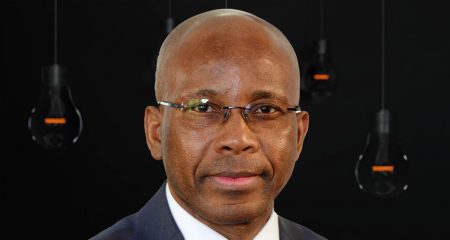
    Dirk de Vos Eskom Telkom
    Subscribe to TechCentral Subscribe to TechCentral
    Share. Facebook Twitter LinkedIn WhatsApp Telegram Email Copy Link
    Previous ArticleTeleMasters slumps into the red
    Next Article Best gadgets of 2012

    Related Posts

    Eskom targets 2027 approval for new 5.2GW nuclear facility

    Eskom targets 2027 approval for new 5.2GW nuclear facility

    2 December 2025
    Eskom profit surges 37% as load shedding virtually vanishes

    Eskom profit surges 37% as load shedding virtually vanishes

    28 November 2025
    Big step forward in opening South Africa's electricity market - NTCSA

    Big step forward in opening South Africa’s electricity market

    28 November 2025
    Company News
    AI is not a technology problem - iqbusiness

    AI is not a technology problem – iqbusiness

    5 December 2025
    Telcos are sitting on a data gold mine - but few know what do with it - Phillip du Plessis

    Telcos are sitting on a data gold mine – but few know what do with it

    4 December 2025
    Unlock smarter computing with your surface Copilot+ PC

    Unlock smarter computing with your Surface Copilot+ PC

    4 December 2025
    Opinion
    Your data, your hardware: the DIY AI revolution is coming - Duncan McLeod

    Your data, your hardware: the DIY AI revolution is coming

    20 November 2025
    Zero Carbon Charge founder Joubert Roux

    The energy revolution South Africa can’t afford to miss

    20 November 2025
    It's time for a new approach to government IT spend in South Africa - Richard Firth

    It’s time for a new approach to government IT spend in South Africa

    19 November 2025

    Subscribe to Updates

    Get the best South African technology news and analysis delivered to your e-mail inbox every morning.

    Latest Posts
    Netflix, Warner Bros talks raise fresh headaches for MultiChoice

    Netflix, Warner Bros talks raise fresh headaches for MultiChoice

    5 December 2025
    Big Microsoft 365 price increases coming next year

    Big Microsoft price increases coming next year

    5 December 2025
    AI is not a technology problem - iqbusiness

    AI is not a technology problem – iqbusiness

    5 December 2025
    Vodacom to take control of Safaricom in R36-billion deal - Shameel Joosub

    Vodacom to take control of Safaricom in R36-billion deal

    4 December 2025
    © 2009 - 2025 NewsCentral Media
    • Cookie policy (ZA)
    • TechCentral – privacy and Popia

    Type above and press Enter to search. Press Esc to cancel.

    Manage consent

    TechCentral uses cookies to enhance its offerings. Consenting to these technologies allows us to serve you better. Not consenting or withdrawing consent may adversely affect certain features and functions of the website.

    Functional Always active
    The technical storage or access is strictly necessary for the legitimate purpose of enabling the use of a specific service explicitly requested by the subscriber or user, or for the sole purpose of carrying out the transmission of a communication over an electronic communications network.
    Preferences
    The technical storage or access is necessary for the legitimate purpose of storing preferences that are not requested by the subscriber or user.
    Statistics
    The technical storage or access that is used exclusively for statistical purposes. The technical storage or access that is used exclusively for anonymous statistical purposes. Without a subpoena, voluntary compliance on the part of your Internet Service Provider, or additional records from a third party, information stored or retrieved for this purpose alone cannot usually be used to identify you.
    Marketing
    The technical storage or access is required to create user profiles to send advertising, or to track the user on a website or across several websites for similar marketing purposes.
    • Manage options
    • Manage services
    • Manage {vendor_count} vendors
    • Read more about these purposes
    View preferences
    • {title}
    • {title}
    • {title}