 SpaceX’s Starlink touts its high-speed internet as “available almost anywhere on Earth”.
In the real world, its reach extends to countries where Elon Musk’s satellite-enabled service has no agreement to operate, including territories ruled by repressive regimes.
An investigation has identified wide-spanning examples of Starlink kits being traded and activated illegally. How they are smuggled and the sheer availability of Starlink on the black market suggests that its misuse is a systemic global problem, raising questions about the company’s control of a system with clear national security dimensions.
In Yemen, which is in the throes of a decade-long civil war, a government official conceded that Starlink is in widespread use. Many people are prepared to defy competing warring factions, including Houthi rebels, to secure terminals for business and personal communications, and evade the slow, often censored internet service that’s currently available.
Or take Sudan, where a year-long civil war has led to accusations of genocide, crimes against humanity and millions of people fleeing their homes. With the regular internet down for months, soldiers of the paramilitary Rapid Support Forces are among those using the system for their logistics, according to Western diplomats.
“It is deeply concerning because it’s unregulated and headed by a private company,” Emma Shortis, a senior researcher in international and security affairs at the Australia Institute, an independent think-tank in Canberra, said of the Starlink system. “There’s no accountability on who has access to it and how it’s being used.”
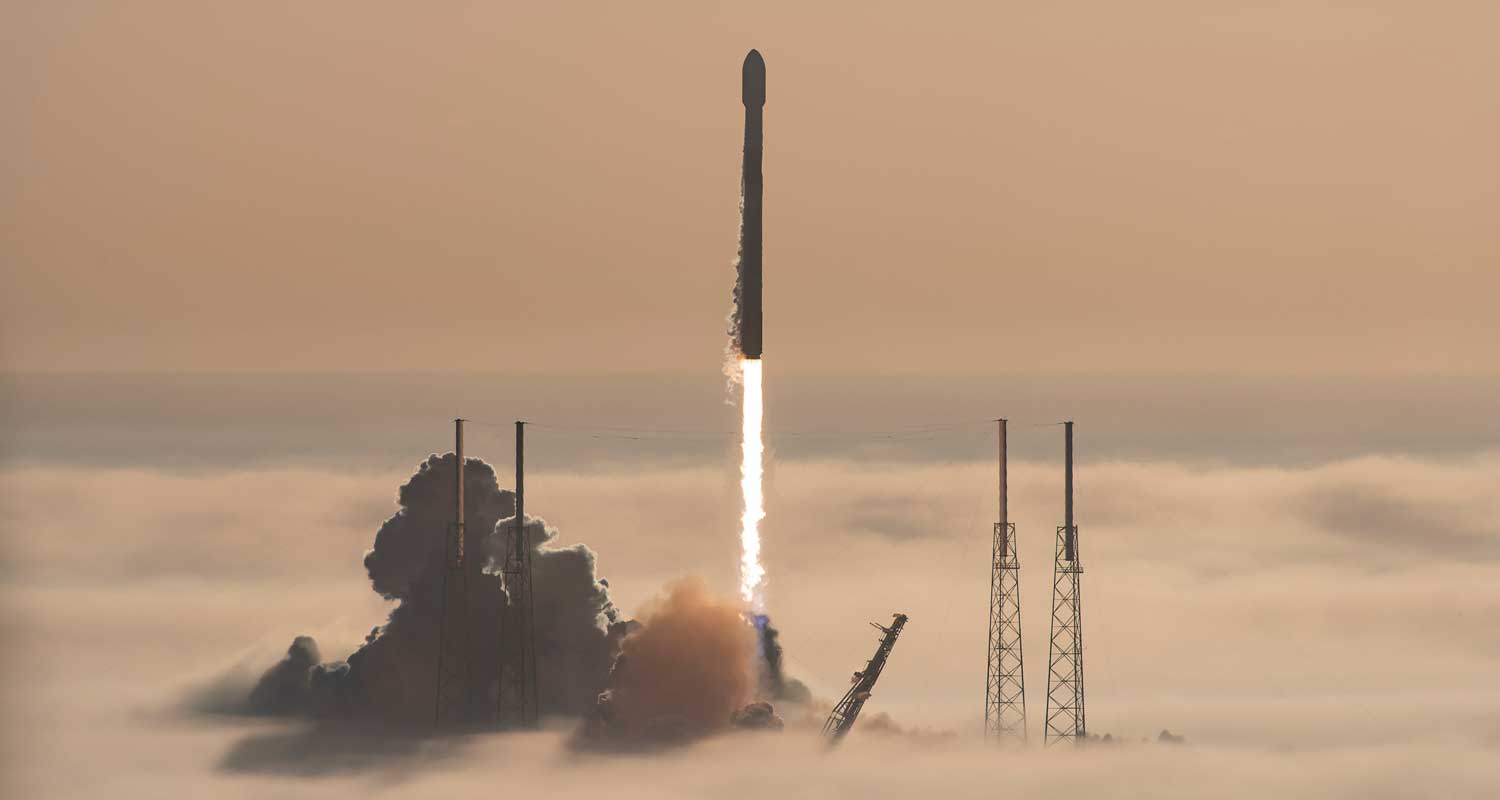
Starlink delivers broadband internet beamed down from a network of roughly 5 500 satellites that SpaceX started deploying in 2019. With some 2.6 million customers already, Starlink has the potential to become a major moneymaker for SpaceX, a company that began as Musk’s way to fulfil his dream of exploring Mars and has now become the most important private sector contractor to the US government’s space programme and a dominant force in national security.
Security concerns
Musk, until recently the world’s richest person, has said there will be a cap to how much money SpaceX’s launch services business will make, while Starlink could eventually reach revenue of $30-billion/year. Starlink plans to launch tens of thousands of additional satellites to connect places that are too remote for ground-based broadband or that have been cut off by natural disasters or conflict.
But given the security concerns around a private American company controlling internet service, SpaceX first needs to strike agreements with governments in each territory. Where there is none, people are “proceeding to use Starlink without the proper coverage — that is quite illegal and of course should not be allowed, but it’s difficult to control and manage”, said Manuel Ntumba, an Africa geospatial, governance and risk expert based in New York.
TCS | Starlink in South Africa – separating fact from fiction
In Central Asia, where Starlink deals are rare, a government crackdown on illicit terminals in Kazakhstan this year has barely made a dent on its use. All it did was lead to higher prices on the black market, according to a trader who imports the gear and who didn’t want to speak publicly for fear of retribution. Prior to the government intervention, customers were able to buy the company’s equipment and have it shipped via the local postal service, the trader said.
SpaceX didn’t respond when asked to comment on a written list of questions submitted on Thursday. “If SpaceX obtains knowledge that a Starlink terminal is being used by a sanctioned or unauthorised party, we investigate the claim and take actions to deactivate the terminal if confirmed,” the company said in a post on X in February.
The growing black market for Starlink has emerged in regions with patchy connectivity, where the allure of high speed, dependable internet in an easy-to-use package is strong for businesses and consumers alike.
In many ways, it’s Starlink’s effectiveness as a communications tool that has made it such a sensitive matter. The US military is a customer: the US air force has been testing terminals in the Arctic, calling them “reliable and high-performance”.
Those same properties made it vital to Ukraine’s military in its defence against invading Russian forces. SpaceX provided the technology to Kyiv in the early days of Russia’s invasion, and Starlink has since become crucial to the Ukrainian communications infrastructure. The US department of defence later struck a deal with Starlink to supply Ukraine with equipment, the terms of which were not made public.
Then in February this year, Ukraine said that Russia was deploying Starlink in its own war efforts, while unverified posts on X, Musk’s social network, appeared to show Russian soldiers unpacking kits. Two US house Democrats wrote a letter to SpaceX president Gwynne Shotwell pressing her on Ukraine’s claims. “To the best of our knowledge, no Starlinks have been sold directly or indirectly to Russia,” Musk wrote on X.
It’s the uncertainty about where the satellite dishes are landing that has security officials around the world concerned.
Starlink kits are being sold for use in Venezuela, where individuals and entities have been subject to US sanctions for almost a decade, most recently under President Nicolas Maduro’s authoritarian rule. A map of coverage areas on Starlink’s website shows the South American nation blacked out. Yet social media ads promote package deals for Starlink equipment, which is widely available and admired for its reliability and portability in a country of isolated cattle ranches and gold mines.
SpaceX should be able to prevent Russian use of Starlink in occupied Ukraine, since “basically every single transmitter can be identified”, said Candace Johnson, director at NorthStar Earth & Space, a Montreal company that in January successfully launched four satellites — on a rocket from SpaceX competitor Rocket Lab USA — to identify and track objects in space.
‘More accountability’
“There needs to be more accountability: to your country, to your company, to your shareholders, to your stakeholders,” said Johnson, who is also a partner with Seraphim Capital, a venture capital firm that invests in space start-ups.
In North Africa, Starlink’s use in Sudan shows how terminals arrive in a country subject to international sanctions. There has been no internet in Sudan since early February. Both the Sudanese Armed Forces and Rapid Support Forces have blamed each other for cutting the service while the CEO of Zain Sudan, a mobile operator, said his company’s engineers had been prevented from reaching parts of the country to reconnect the network due to insecurity and a lack of fuel.
To bypass the blackout, members of the RSF and local business owners have smuggled Starlink devices into Sudan’s Darfur region using an organised network that registered the units in Dubai before transporting them into Uganda by aeroplane and then by road to Sudan via South Sudan, according to interviews with Western diplomats and business owners using the devices.
Read: Zimbabwe threatens to arrest Starlink users
Gold miners in remote areas along the borders of South Sudan and the Central African Republic were provided with Starlink services even prior to the war by traders working in South Darfur’s Nyala City. Starlink says on its website that a “service date is unknown at this time” for Sudan.
Haroun Mohamed, a trader in Nyala who transports goods across the border to Chad and South Sudan, said the use of Starlink by RSF soldiers and civilians was widespread. “Ever since the eruption of war in Darfur, a lot of people are bringing in Starlink devices and use it for business,” he said. “People are paying between $2 or $3/hour, so it’s very good business.”
In South Africa, where Musk was born, the government hasn’t yet approved Starlink’s application to operate. But that hasn’t prevented a flourishing trade in terminals there. Facebook groups feature providers that offer to buy and activate the kits in Mozambique, where it is licensed, and then deliver them over the border to South African customers.
There were enough users of the service in the country as of 28 November that the regulator, Icasa, felt the need to issue a statement reminding people that Starlink has no licence for South Africa. Unlawful use could result in fines of as much as R5-million, or 10% of annual turnover.
Regulators in other countries in Africa have issued similar warnings. Ghana’s National Communications Authority in December released a statement demanding that anyone involved in selling or operating Starlink services in the country “cease and desist immediately”.
In Zimbabwe, authorities threatened raids in response to online advertising for Starlink equipment, H-Metro newspaper reported in January. Prices for Starlink gear on the black market ranged from $700 to $2 000, according to local technology blog Techzim. Government officials in Ghana and Zimbabwe have recently said they hope to allow licensed service.
Countries have different reasons for declining to cooperate with Starlink, including stipulations that it have a local partner and concerns around data use.
Starlink service is currently available — legally — in eight countries in sub-Saharan Africa, and the US company has big plans to build its user base. It is working with local marketing partners such as Jumia Technologies, an e-commerce company backed by Pernod Ricard that has an agreement to sell Starlink equipment for residential use in Nigeria and Kenya. There has been significant demand, with the first shipment to Nigeria selling out in a few hours, according to chief commercial officer Hisham El Gabry.
‘Normalised’
“Jumia is aware that there are some unofficial distributors of these kits,” El Gabry said in an interview. While the number of devices is not yet at an alarming level, “it is a point of discussion between us and Starlink that this needs to be brought under control”, he said.
Jumia verifies customers, and cancels orders if they are going to traders or unverified sources, according to El Gabry. While “that device could eventually end up with bad actors”, Starlink can monitor where these devices are connecting from. “If they pick up it’s connecting from a particular militant group for instance, they can enforce that control,” he said.
One Facebook group of people complaining they’d been cut off suggests that Starlink has recently deactivated some of the equipment smuggled into South Africa. Still, social media groups point to a workaround, with terminals reregistered in a country like Malawi and reactivated. Customers can then make use of Starlink’s roaming services, with a subscription paid through the website.
Read: Icasa takes aim at ‘illegal’ Starlink sales in South Africa
The company offers a global roaming service with a monthly charge of $200. Customers in South Africa can expect to pay about R12 000 for a kit.
In Venezuela, customers similarly get around the ban by paying for the global service plan using an international credit card, according to people familiar with the market, who said its use is now “normalised”.
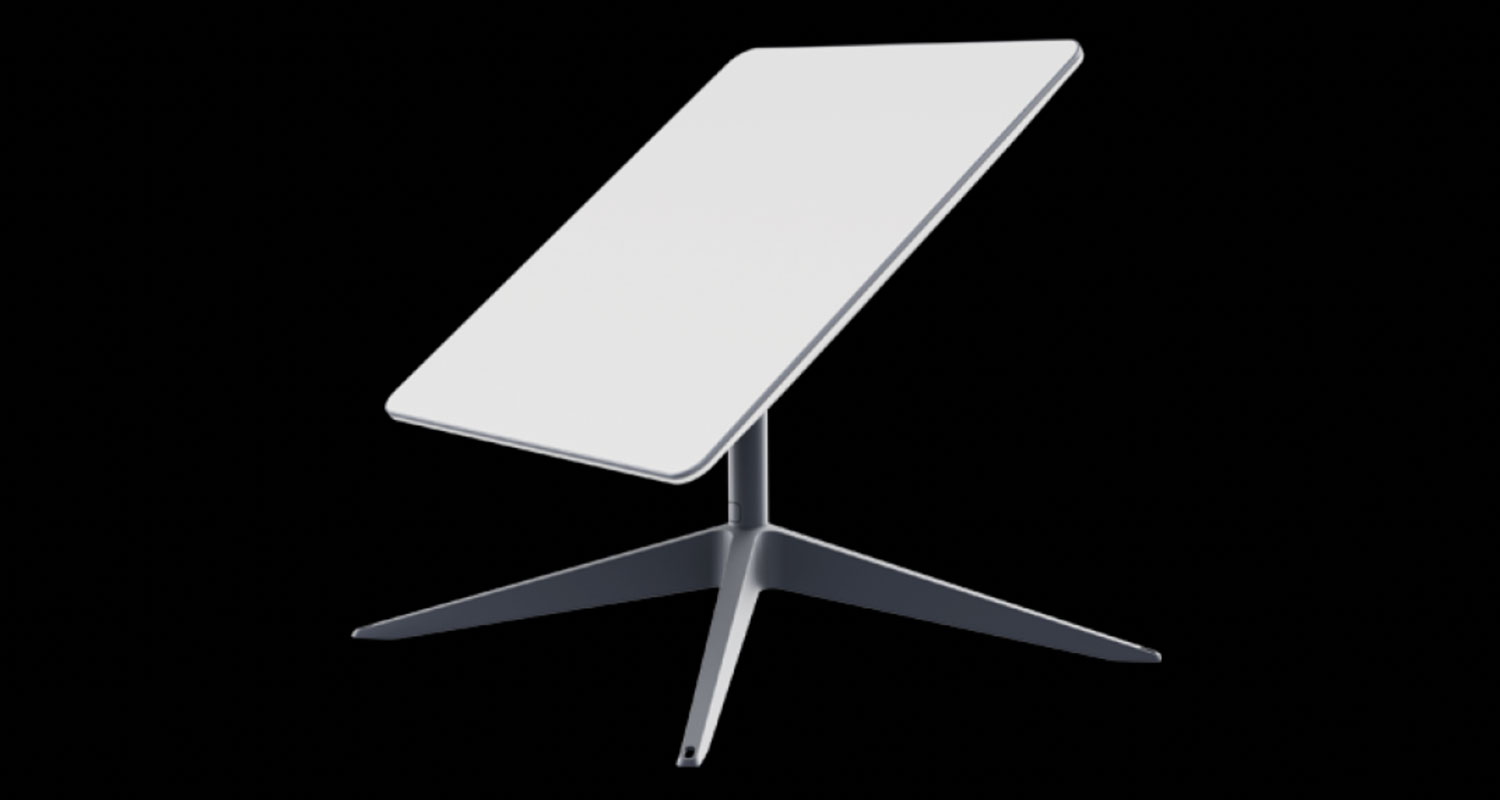
US President Joe Biden’s administration could tighten the export controls that apply to Starlink to keep them out of the hands of American adversaries, according to a former US government official. A security consultant who provides training to companies on the restrictions said the real key is trying to geolocate kits when they are turned on and blocking the ones that are in violation of US export controls. That would require the company to cooperate, the person said, asking not to be named discussing commercially sensitive matters of national security.
A US state department spokesman said that satellite constellations like Starlink are a key tool for providing connectivity and bridging digital divides. “We encourage companies to take appropriate measures to seek licences for operating in nations around the world,” they said.
Meanwhile, SpaceX is providing assurance to some countries that it will work with them to keep its Starlink services out of certain areas.
SpaceX has reassured Israel that it can geolocate and turn off individual terminals when it detects illegal use, according to an Israeli government official.
In Yemen, meanwhile, Starlink kits are openly for sale on social media, bought in countries such as Singapore or Malaysia, then activated on roaming. Customers pay via bank transfers in other countries or at the port of arrival. Prices are higher in Houthi-controlled areas, said one seller who asked not be named for safety reasons. That’s because telecommunications is controlled by the Houthis, who profit from the revenues, and have warned of “severe actions” against those caught using Starlink.
Facebook and WhatsApp groups offer the equipment regardless — along with tips on how to conceal the dish. — Bruce Einhorn, Loni Prinsloo, Marissa Newman and Simon Marks, with Fabiola Zerpa, Daniel Flatley, Mohammed Alamin, Mohammed Hatem, Andreina Itriago Acosta, Nariman Gizitdinov, Ray Ndlovu, Eric Johnson and Jake Rudnitsky, (c) 2024 Bloomberg LP
Get breaking news alerts from TechCentral on WhatsApp