
Close Menu
TechCentralTechCentral

    Subscribe to the newsletter

    Get the best South African technology news and analysis delivered to your e-mail inbox every morning.

    Facebook X (Twitter) YouTube LinkedIn
    WhatsApp Facebook X (Twitter) LinkedIn YouTube
    TechCentralTechCentral
    • News
      Everything you wanted to know about EVs but were afraid to ask

      Everything you wanted to know about EVs but were afraid to ask

      22 July 2026
      Bitcoin at $65 000: stalled, or simply early?

      Bitcoin at $65 000: stalled, or simply early?

      22 July 2026
      Smart ID renewals go mobile - Absa CEO Kenny Fihla with home affairs minister Leon Schreiber

      Smart ID renewals go mobile

      22 July 2026
      South African inflation surges to 5% - a two-year high

      South African inflation surges to 5% – a two-year high

      22 July 2026
      Pepkor builds R21-billion fintech giant - and plans to list it - Pieter Erasmus

      Pepkor builds R21-billion fintech giant – and plans to list it

      22 July 2026
    • World
      Meta AI will now tell parents if their teen is in crisis

      Meta AI will now tell parents if their teen is in crisis

      17 July 2026
      IBM shares crash 25% as AI upends software spending - Arvind Krishna

      IBM shares crash 25% as AI upends software spending

      15 July 2026
      Jony Ive's first OpenAI device: an AI smart speaker - Jony Ive and Sam Altman

      Jony Ive’s first OpenAI device: an AI smart speaker

      15 July 2026
      Stripe, Advent in talks to buy PayPal for $53-billion

      Stripe, Advent in talks to buy PayPal for $53-billion

      15 July 2026
      Memory crisis sends smartphone market into steep decline

      Memory crisis sends smartphone market into steep decline

      13 July 2026
    • In-depth
      The plan to stop AI from breaking the world - Google DeepMind CEO Demis Hassabis. Image: John Sears

      The plan to stop AI from breaking the world

      16 July 2026
      The internet has a Strait of Hormuz problem

      The internet has a Strait of Hormuz problem

      15 July 2026
      AI boom sparks rally, frenzy and fear

      AI boom sparks rally, frenzy and fear

      11 June 2026
      Every plug-in hybrid on sale in South Africa, ranked by price - Lamborghini Temerario

      Every plug-in hybrid on sale in South Africa, ranked by price

      7 June 2026
      What Wi-Fi 8 will mean for wireless networks

      What Wi-Fi 8 will mean for wireless networks

      1 June 2026
    • TCS
      The rands-and-cents case for electric trucks - William Kelly Watts & Wheels with Wills

      The rands-and-cents case for electric trucks

      20 July 2026
      Watts & Wheels S1E7: 'Ferrari's EV breaks the internet'

      Watts & Wheels S1E7: ‘Ferrari’s EV breaks the internet’

      8 July 2026
      TCS+ | How Tracker is turning vehicle data into business strategy - Silvia Schollenberger

      TCS+ | How Tracker is turning vehicle data into business strategy

      1 July 2026
      TCS+ | IBM Bob: an AI-powered 'development partner' for the enterprise - David Spurway

      TCS+ | IBM Bob: an AI-powered development partner for the enterprise

      30 June 2026
      Watts & Wheels S1E6: 'A flawless Alfa and a bakkie that divides'

      Watts & Wheels S1E6: ‘A flawless Alfa and a bakkie that divides’

      17 June 2026
    • Opinion
      Selling vapour is corporate suicide in slow motion - Jannie van Zyl

      Selling vapour is corporate suicide in slow motion

      16 July 2026
      Brazil's online gambling crackdown is a lesson for South Africa

      How Amazon outmanoeuvred Starlink in South Africa

      15 July 2026
      The Popia problem with agentic AI - Herman Haasbroek

      The Popia problem with agentic AI

      14 July 2026
      The author, Fanie van Rooyen

      South Africa can still catch the AI wave – here’s how

      7 July 2026
      The author, Fanie van Rooyen

      The AI utopia South Africa can’t afford

      1 July 2026
    • Company Hubs
      • 1Stream
      • Africa Data Centres
      • AfriGIS
      • Altron Digital Business
      • Altron Document Solutions
      • Altron Group
      • Arctic Wolf
      • Ascent Technology
      • AvertITD
      • BBD
      • Braintree
      • CallMiner
      • CambriLearn
      • CM Telecom
      • Contactable
      • CYBER1 Solutions
      • Digicloud Africa
      • Digimune
      • Domains.co.za
      • ESET
      • Euphoria Telecom
      • HOSTAFRICA
      • Incredible Business
      • iONLINE
      • IQbusiness
      • Iris Network Systems
      • Kaspersky
      • LSD Open
      • Mitel
      • NEC XON
      • Netstar
      • Network Platforms
      • Next DLP
      • Ovations
      • Paracon
      • Paratus
      • Q-KON
      • SevenC
      • SkyWire
      • Solid8 Technologies
      • Telit Cinterion
      • Telviva
      • Tenable
      • Vertiv
      • Videri Digital
      • Vodacom Business
      • Vox
      • Wipro
      • Workday
      • XLink
    • Sections
      • AI and machine learning
      • Banking
      • Broadcasting and Media
      • Cloud services
      • Contact centres and CX
      • Cryptocurrencies
      • Education and skills
      • Electronics and hardware
      • Energy and sustainability
      • Enterprise software
      • Financial services
      • HealthTech
      • Information security
      • Internet and connectivity
      • Internet of Things
      • Investment
      • IT services
      • Lifestyle
      • Policy and regulation
      • Public sector
      • Retail and e-commerce
      • Satellite communications
      • Science
      • SMEs and start-ups
      • Social media
      • Talent and leadership
      • Telecoms
      • Watts & Wheels
    • Events
    • Advertise
    TechCentralTechCentral
    Home » Sections » Cryptocurrencies » SVB collapse shows fickleness of crypto money

    SVB collapse shows fickleness of crypto money

    When the world’s second largest stablecoin got caught up in the collapse of a California bank late last week, it reprised a now-famous maxim.
    By Agency Staff13 March 2023
    Twitter LinkedIn Facebook WhatsApp Email Telegram Copy Link
    News Alerts
    WhatsApp

    When the world’s second largest stablecoin got caught up in the collapse of a California bank late last week, it reprised the now-famous maxim of Nobuhiro Kiyotaki and John Moore. “Evil,” the economists had claimed in a 2001 lecture, later made available as a paper of the same title, “is the root of all money”.

    Turning a popular aphorism on its head was a ploy by the professors to enliven a technical discussion. “Evil is a strong word,” they wrote. “You may find the moral category too severe for something as mild as breaking a promise. In which case, you may want to change the title to ‘Distrust Is the Root of All Money’. But that wouldn’t have quite the same ring.”

    Events last week showed that Kiyotaki-Moore may have been right, not just in their analysis but also in their hyperbole: people accept and hold money not because it circulates freely and is widely used to store value, but because it helps the society overcome the scourge of broken promises. For something to aspire to money-ness, it must be free of even the slightest doubt in that regard.

    Based on what we know so far, SVB went down because of its executives’ greed for yield

    That was clearly not the case with Circle Internet Financial’s USD coin, or USDC, the number-two dollar clone behind tether. News that around 8% of the crypto firm’s reserves were on deposit at Silicon Valley Bank, which was closed down by regulators on Friday, sent the price of the stablecoin sharply below $1, falling to less than 85c before recovering. In the language of money-market funds — the older, more conventional cousins of blockchain-based stablecoins — USDC broke the buck. Circle may still keep its promise of redeeming all its coins 1:1 for dollar. But a small doubt that it may not be able to do so arose. Even if briefly, USDC has lost its claim of being money.

    None of this was the crypto company’s fault. A lot of young firms kept their cash at SVB, and not all of them are from Silicon Valley. Over 60 Indian start-ups have their money stuck, too, according to a survey seen by TechCrunch. Based on what we know so far, SVB went down because of its executives’ greed for yield: the bank’s own assets were overexposed to long-term interest rates, which are rising because of untamed US inflation. The higher the rates, the lower the value of the mortgage securities on SVB’s books. The bigger the unrealised, unhedged losses from those investments, the greater the distrust among the banks’ depositors.

    Too late

    Circle tried to move its funds away to another bank, but it was too late. And then the misgivings that were being expressed by SVB depositors began to infect USDC investors as well. While all deposits below $250 000 are fully insured, no such safety net is available to token holders, even though seven of the 10 largest so-called liquidity pools running on the ethereum blockchain use USDC for transactions.

    Yale School of Management finance professor Gary Gorton and Federal Reserve attorney Jeffery Zhang have highlighted this regulatory vacuum, and how it prevents stablecoins from becoming what they refer to as “no-questions-asked” money. Nobody should have to do due diligence on a medium of exchange because it’s supposed to be free of the evil of broken promises. NQA money needs the state’s blessing — and oversight.

    Now that regulators have worked out a solution, for both insured and uninsured SVB deposits, any doubts about Circle’s ability to redeem every coin at par may subside as quickly as they had arisen. “Depositors will have access to all of their money starting Monday, 13 March,” the treasury department, Federal Reserve and Federal Deposit Insurance said in a joint statement on Sunday. Finally, almost 77% of USDC’s backing assets are in BlackRock’s Circle Reserve Fund, which is 100% invested in short-term US treasury debt. That part is both liquid and bulletproof.
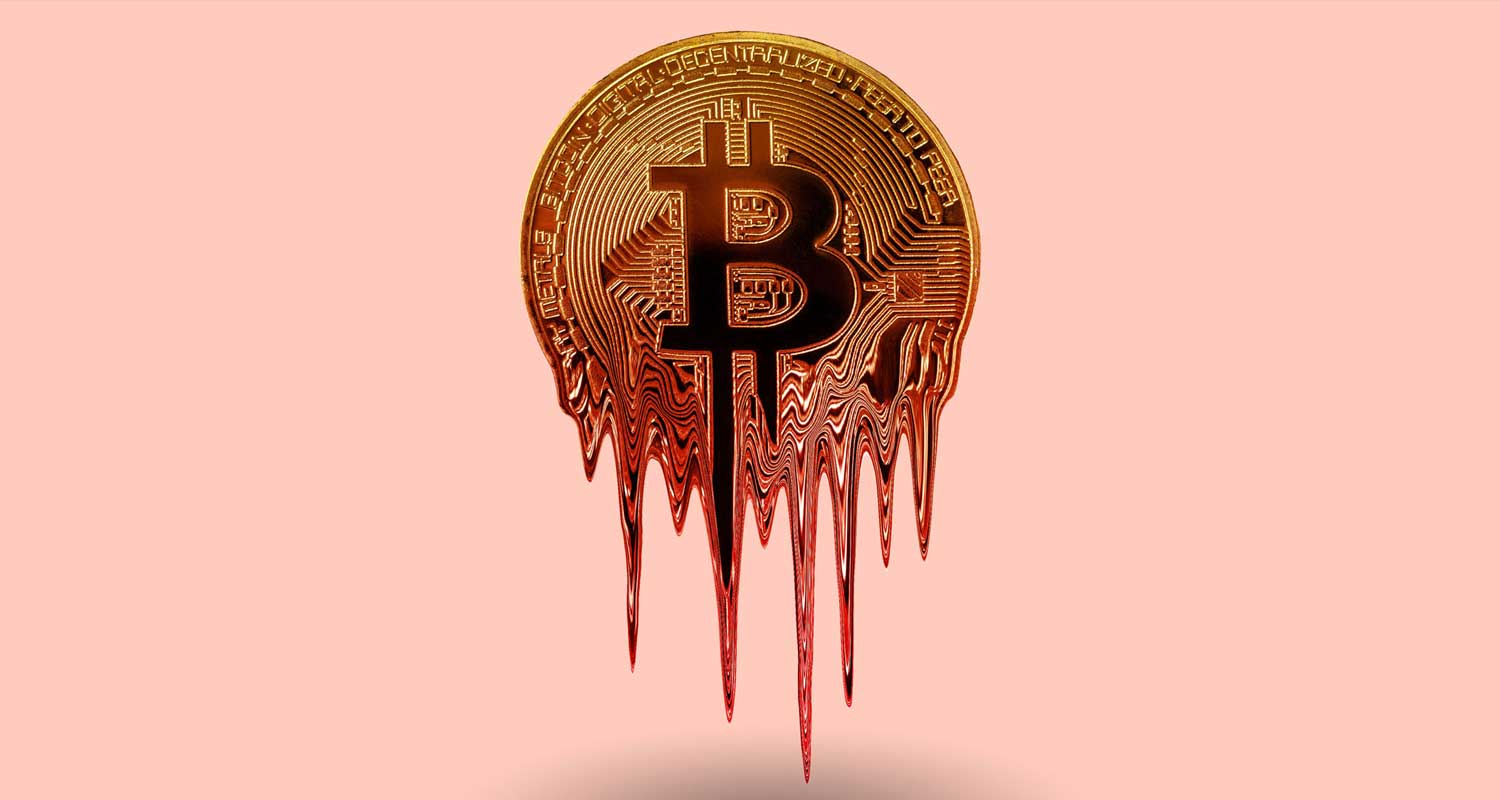
    The bigger concern is systemic. Tremors like this aren’t novel in traditional finance, or TradFi. In the US alone, sponsors of money-market funds have absorbed losses in more than 200 instances since the 1980s to keep the promise — or keep up the pretense — of money-ness. Only twice — in 1994 and 2008 — have shareholders suffered losses, according to a paper last year by the Federal Reserve board in Washington. (Plus, there have been two highly publicised public bailouts, following the 2008 global financial crisis and, then again, during the 2020 pandemic.)

    Still, TradFi has access to a perfectly safe form of money in the form of insured bank deposits. By contrast, the emerging world of decentralised finance, or DeFi, is handicapped. With the recent collapse of Silvergate Capital, investors have lost access to Silvergate Exchange Network, or SEN, a popular institutional platform for converting dollars into crypto assets.

    Read: Bitcoin leaps higher as US regulators come to banks’ aid

    If the blockchain is going to host a parallel system for people to save, invest, lend, borrow and insure — minus the popular custodial institutions of today — it can’t possibly be at the mercy of stablecoins whose values come into doubt, even sporadically.

    Read: Circle says USDC reserves to be fully available on Monday

    This isn’t likely to ever happen with central bank digital currencies, which will come with full sovereign backing. But CBDCs are still largely at an experimental stage, and it’s unclear if they will be available on public blockchains. When SEN shut down, it looked like stablecoins were going to triumph over the evil of broken promises after all, and do it ahead of public-sector electronic money. The de-pegging of USDC, even if it proves to be temporary, has shattered that illusion.  — Andy Mukherjee, (c) 2023 Bloomberg LP

    Get TechCentral’s daily newsletter

    Follow TechCentral on Google News Add TechCentral as your preferred source on Google


    Silicon Valley Ban SVB USD Coin USDC
    WhatsApp YouTube
    Share. Facebook Twitter LinkedIn WhatsApp Telegram Email Copy Link
    Previous ArticleOscar winners 2023 announced – all the details
    Next Article MTN Group CEO: South Africa risks becoming a failed state

    Related Posts

    Crypto has gone mainstream - will South African regulators catch up in 2026? - Marius Reitz

    South Africa risks being left behind as stablecoins reshape global finance

    6 June 2025
    Ripple challenges industry giants with new stablecoin

    Ripple challenges industry giants with new stablecoin

    16 October 2024
    Paycorp expands into embedded business funding in SA and the UK - Steven Kark

    You can now withdraw crypto as cash at ATMs across SA

    15 November 2023
    Company News
    Is your cloud PBX a hacker's back door? Centracom

    Is your cloud PBX a hacker’s back door?

    22 July 2026

    Africa’s biggest entrepreneurship gathering heads for Cape Town

    22 July 2026
    Cloud adoption is done. Execution is the new frontier - Cloud on Demand

    Cloud adoption is done. Execution is the new frontier

    21 July 2026
    Opinion
    Selling vapour is corporate suicide in slow motion - Jannie van Zyl

    Selling vapour is corporate suicide in slow motion

    16 July 2026
    Brazil's online gambling crackdown is a lesson for South Africa

    How Amazon outmanoeuvred Starlink in South Africa

    15 July 2026
    The Popia problem with agentic AI - Herman Haasbroek

    The Popia problem with agentic AI

    14 July 2026

    Subscribe to Updates

    Get the best South African technology news and analysis delivered to your e-mail inbox every morning.

    Latest Posts
    Everything you wanted to know about EVs but were afraid to ask

    Everything you wanted to know about EVs but were afraid to ask

    22 July 2026
    Is your cloud PBX a hacker's back door? Centracom

    Is your cloud PBX a hacker’s back door?

    22 July 2026
    Bitcoin at $65 000: stalled, or simply early?

    Bitcoin at $65 000: stalled, or simply early?

    22 July 2026
    Smart ID renewals go mobile - Absa CEO Kenny Fihla with home affairs minister Leon Schreiber

    Smart ID renewals go mobile

    22 July 2026
    © 2009 - 2026 NewsCentral Media
    Built and maintained by Chronon
    • Cookie policy (ZA)
    • TechCentral – privacy and Popia

    Type above and press Enter to search. Press Esc to cancel.

    Manage consent

    TechCentral uses cookies to enhance its offerings. Consenting to these technologies allows us to serve you better. Not consenting or withdrawing consent may adversely affect certain features and functions of the website.

    Functional Always active
    The technical storage or access is strictly necessary for the legitimate purpose of enabling the use of a specific service explicitly requested by the subscriber or user, or for the sole purpose of carrying out the transmission of a communication over an electronic communications network.
    Preferences
    The technical storage or access is necessary for the legitimate purpose of storing preferences that are not requested by the subscriber or user.
    Statistics
    The technical storage or access that is used exclusively for statistical purposes. The technical storage or access that is used exclusively for anonymous statistical purposes. Without a subpoena, voluntary compliance on the part of your Internet Service Provider, or additional records from a third party, information stored or retrieved for this purpose alone cannot usually be used to identify you.
    Marketing
    The technical storage or access is required to create user profiles to send advertising, or to track the user on a website or across several websites for similar marketing purposes.
    • Manage options
    • Manage services
    • Manage {vendor_count} vendors
    • Read more about these purposes
    View preferences
    • {title}
    • {title}
    • {title}