Close Menu
TechCentralTechCentral

    Subscribe to the newsletter

    Get the best South African technology news and analysis delivered to your e-mail inbox every morning.

    Facebook X (Twitter) YouTube LinkedIn
    WhatsApp Facebook X (Twitter) LinkedIn YouTube
    TechCentralTechCentral
    • News
      Fashion retailer TFG discloses cyberattack

      Fashion retailer TFG discloses cyberattack

      13 October 2026
      Africa Bitcoin Corporation board quits in shareholder clash - Stafford Masie

      Africa Bitcoin Corporation board quits in shareholder clash

      12 October 2026
      Capitec is setting traps for scammers' mule accounts - Andrew Baker

      Capitec is setting traps for scammers’ mule accounts

      12 October 2026
      Sars to pay Microsoft and IBM R2.75-billion in sole-source deals

      Sars to pay Microsoft and IBM R2.75-billion in sole-source deals

      12 October 2026
      Microsoft president says milk faces more regulation than AI - President Cyril Ramaphosa with Microsoft president and vice chairman Brad Smith

      Microsoft president says milk faces more regulation than AI

      12 October 2026
    • World
      AI is now holding up the world economy, says IMF

      AI is now propping up the world economy, says IMF

      12 October 2026
      SpaceX takes aim at US wireless carriers with spectrum acquisition

      Starlink is coming for your mobile operator

      9 October 2026
      The AI PC is finally here. It's just very expensive - Jensen Huang, Satya Nadella

      The AI PC is finally here. It’s just very expensive

      8 October 2026
      The memory crunch is making Samsung fabulously rich

      The memory crunch is making Samsung fabulously rich

      8 October 2026
      SpaceX to borrow $40-billion to buy Nvidia chips

      SpaceX to borrow $40-billion to buy Nvidia chips

      7 October 2026
    • In-depth

      10 days that changed the course of AI

      21 September 2026
      Meta to the AI industry: slow down without us - Mark Zuckerberg

      Meta to the AI industry: slow down without us

      16 September 2026
      Google DeepMind CEO Demis Hassabis. Image: John Sears

      The plan to stop AI from breaking the world

      16 July 2026
      The internet has a Strait of Hormuz problem

      The internet has a Strait of Hormuz problem

      15 July 2026
      AI boom sparks rally, frenzy and fear

      AI boom sparks rally, frenzy and fear

      11 June 2026
    • TCS
      W&W | LDV's Gerhard Moolman on electric bakkies, fleet orders and 'school fees'

      W&W | LDV’s Gerhard Moolman on electric bakkies and fleets

      9 October 2026
      TCS | Frogfoot sees bigger fibre deals coming - TechCentral Show guests Abraham van der Merwe and Shane Chorley

      TCS | Frogfoot sees bigger fibre deals coming

      8 October 2026
      Meet the CIO | Vodacom's Mohamed Sami on the agentic future

      Meet the CIO | Vodacom’s Mohamed Sami on the agentic future

      5 October 2026
      Lexi Novitske, general partner at Norrsken22, on the TechCentral Show

      TCS | Norrsken22’s Lexi Novitske on how China is winning African tech

      1 October 2026
      TCS | Dominic White and Adam Ely on AI agents going rogue

      TCS | Dominic White and Adam Ely on AI agents going rogue

      29 September 2026
    • Opinion
      When a machine can choose, who does it become? Fanie van Rooyen

      When a machine can choose, who does it become?

      9 October 2026
      Let South Africans jailbreak their way to digital sovereignty - Dirk de Vos

      Let South Africans jailbreak their way to digital sovereignty

      5 October 2026
      South Africa's next energy crisis is in the accounts department - Craig Holmes

      South Africa’s next energy crisis is in the accounts department

      29 September 2026
      The steam engine lesson AI doomsayers keep missing - Sam Clarke

      The steam engine lesson AI doomsayers keep missing

      28 September 2026
      Let South Africans jailbreak their way to digital sovereignty - Dirk de Vos

      Regulating AI: apply the laws we have first

      21 September 2026
    • Company News
      • 1Stream
      • Africa Data Centres
      • AfriGIS
      • Altron Digital Business
      • Altron Document Solutions
      • Altron Group
      • Arctic Wolf
      • Ascent Technology
      • AvertITD
      • BBD
      • Braintree
      • CallMiner
      • CambriLearn
      • CM.com
      • Contactable
      • CYBER1 Solutions
      • Digicloud Africa
      • Digimune
      • Domains.co.za
      • ESET
      • Euphoria Telecom
      • HOSTAFRICA
      • Incredible Business
      • iONLINE
      • IQbusiness
      • Iris Network Systems
      • Kaspersky
      • LSD Open
      • Mitel
      • NEC XON
      • Netstar
      • Network Platforms
      • Next DLP
      • Ovations
      • Paracon
      • Paratus
      • Publishared
      • Q-KON
      • SevenC
      • SkyWire
      • Solid8 Technologies
      • Telit Cinterion
      • Telviva
      • Tenable
      • Vertiv
      • Videri Digital
      • Vodacom Business
      • Vox
      • Wipro
      • Workday
      • XLink
    • Sections
      • AI and machine learning
      • Banking
      • Broadcasting and Media
      • Cloud services
      • Contact centres and CX
      • Cryptocurrencies
      • Education and skills
      • Electronics and hardware
      • Energy and sustainability
      • Enterprise software
      • Financial services
      • HealthTech
      • Information security
      • Internet and connectivity
      • Internet of Things
      • Investment
      • IT services
      • Lifestyle
      • Policy and regulation
      • Public sector
      • Retail and e-commerce
      • Satellite communications
      • Science
      • SMEs and start-ups
      • Social media
      • Talent and leadership
      • Telecoms
      • Watts & Wheels
    • Events
    • Advertise
    TechCentralTechCentral
    Home » Sections » Internet and connectivity » Tethered balloons to connect rural Africa in new trial

    Tethered balloons to connect rural Africa in new trial

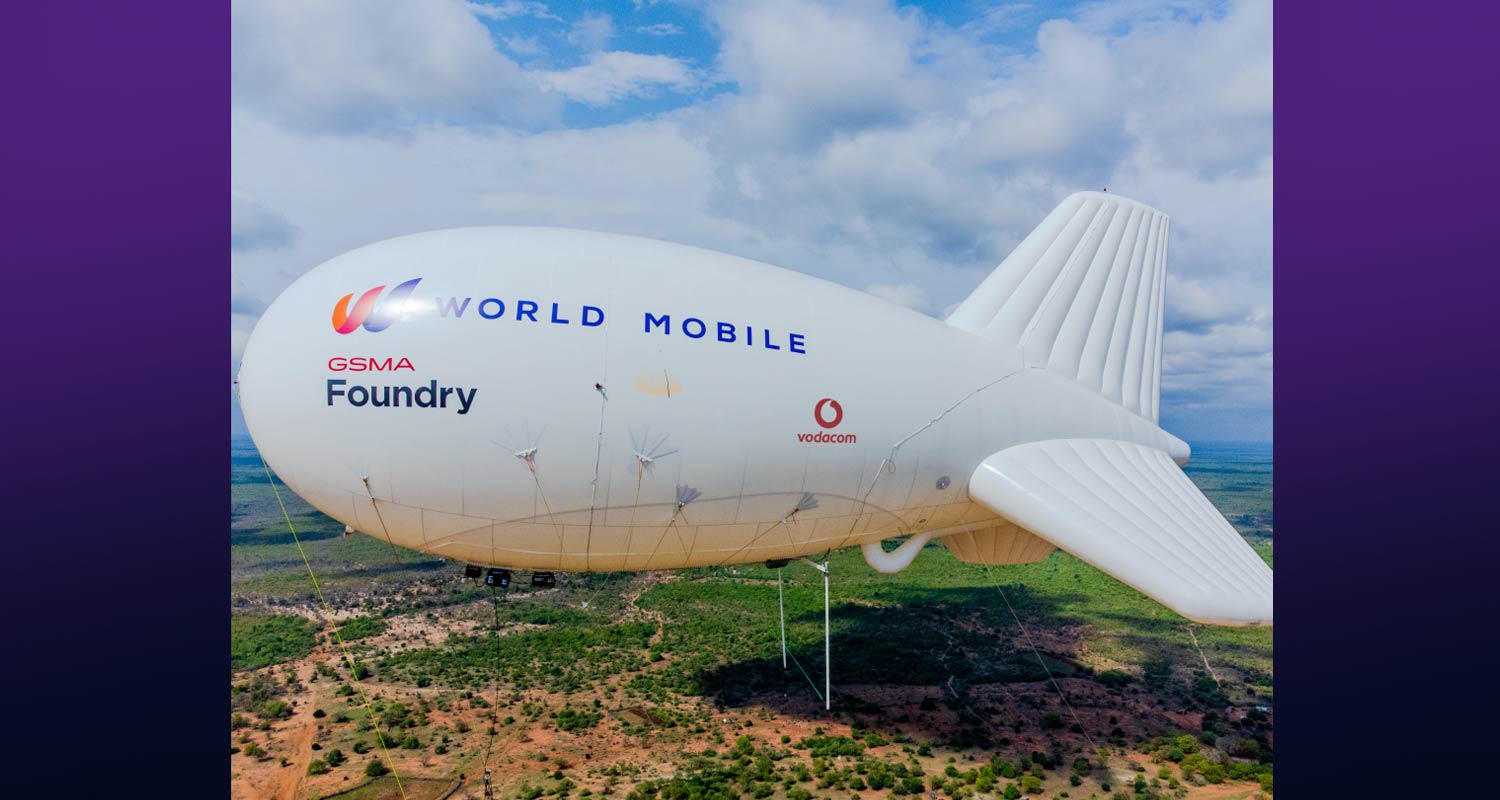
    World Mobile Group recently launched its first “aerostat” in Massingir, Mozambique, in collaboration with Vodacom.
    By Sandra Laurence3 January 2024
    Twitter LinkedIn Facebook WhatsApp Email Telegram Copy Link
    Get breaking news on WhatsApp

    World Mobile Group recently launched its first “aerostat” in Massingir, Mozambique, in collaboration with Vodacom.

    Vodacom shared spectrum and other vital resources to facilitate the launch of the aerostat, or tethered balloon.

    The trial in Mozambique is more than just a technological experiment. “The success of this project could pave the way for similar initiatives across Africa and beyond, bringing us closer to a world where everyone is connected,” said World Mobile CEO Micky Watkins.

    Mozambique’s internet penetration rate stood at a mere 23% of the population in 2022

    The trial kicked off in November and will assess the efficacy and sustainability of the aerostat technology in real-world scenarios.

    Of the 5% of the world’s population not yet covered by mobile internet, half live and work in sub-Saharan Africa – in rural districts like Massingir, a remote part of Mozambique adjacent to Kruger National Park.

    The company initially hoped to launch aerostats – helium-filled balloons tethered to a base station on the ground with a high-speed fibre connection – in Zanzibar and Pemba, both in Tanzania. But after waiting 11 months for permission to be granted by the regulator, it decided to launch elsewhere.

    In an October 2023 CNBC Africa interview, Watkins said: “Mozambique regulators and flight authorities have been incredible.” But he added that as soon as Zanzibar grants permission, World Mobile will launch on the island.

    Tethered to the ground

    Mozambique’s internet penetration rate stood at a mere 23% of the population in 2022, an unsurprising figure given that almost 62% of its population lives in rural areas. Most of the country’s infrastructure is concentrated in urban centres, while a lack of electricity in rural areas means there is limited power to support internet access.

    This lack of connectivity inhibits access to healthcare, education and economic opportunities, and almost three-quarters of the unconnected population cannot afford internet services or devices such as smartphones and computers, according to the World Bank.

    World Mobile’s Massingir aerostat is positioned about 300m in the air and is tethered to the ground, providing last-mile connectivity using a custom radio payload. This means customers can directly connect to the payload using internet-connected devices akin to a traditional cell tower.

    Read: Vodacom pulls plug on internet balloons project

    The aerostats offer standard cellular connectivity covering a radius of up to 130km, overcoming the challenges of terrain, infrastructure and cost that often hinder the expansion of mobile networks.

    The company’s aerostats expert, Gregory Gottlieb, said in a statement: “An aerostat is one of a number of different types of lighter-than-air vehicles that has a long history, much longer than aeroplanes or anything else that flies. They rely on the basic principle that approximately one cubic metre of helium can effectively generate enough lift to carry 1kg.”

    World Mobile CEO Micky Watkins

    The way an aerostat lifts a payload into the air is not by floating, but by displacing the air around it – similar to turning an empty glass upside down in a sink, he said. The tether that keeps this floating balloon of helium fixed to the ground is among the most crucial components of the solution.

    “In the case of an aerostat, which is tethered to the ground, you are effectively building a tower that is the height of the tether that is attached to the balloon. There are a number of complexities to aerostat design, but perhaps the most complex piece of technology involved is the design of the tether itself.

    “If you have a payload on the aerostat, any data or power or material that has to be used by that payload has to come up the tether. At the same time, the tether has to provide the ability to raise and lower the aerostat, change altitude and provide a ‘strength member’ that prevents the aerostat from simply flying away,” he said.

    The mobile operators’ legacy infrastructure doesn’t support connecting the unconnected profitably

    The tether that links to the base station below must therefore be both extremely durable and complex, while also providing a high-speed data connection and power supply to the communications payload on the aerostat itself.

    Similar projects have been tried before. Google’s balloon-powered internet company, Project Loon, intended to spread internet access across the globe using a network of helium balloons floating in the sky, partnering with telecoms companies to beam their LTE services to inaccessible places.

    In May 2020, Loon announced a deal with Vodacom in Mozambique that would have seen the two begin serving the Cabo Delgado and Niassa provinces, two regions of Mozambique that have proven hard to connect in the past.

    But in January 2021, Loon said the project was “winding down” after failing to find a sustainable business model to keep going. This prompted Vodacom to stop work on the project, too.

    ‘Built on the blockchain’

    According to Watkins, unlike traditional mobile networks, World Mobile is “built on the blockchain, enabling it to offer unmatched transparency, efficiency and security in comparison to legacy mobile network operators”.

    Watkins hopes to initiate a “distributed sharing economy that taps into the trillion-dollar global telecoms market, where individuals and business owners can operate nodes on its network and bring their communities online while earning revenue”.

    “It requires US$1-milion to deploy an aerostat. People can club together and purchase their own, which will lower the barrier to entry.

    Read: Is it a barrage balloon? No, it’s a Stellenbosch airship

    “It’s not the fault of the mobile network operators,“ he added. “Their legacy infrastructure doesn’t support connecting the unconnected profitably. We are working towards a sharing economy where the people can run the network for the people and get paid for it, and our tests in America have shown that we can provide the same sort of coverage at 12 times less cost. That is the answer to connecting everybody before 2030 and that’s what we’re aiming to do.”  — © 2024 NewsCentral Media

    Get breaking news alerts from TechCentral on WhatsApp

    Add TechCentral as a preferred source on GoogleFollow TechCentral on Google NewsGet breaking news on WhatsApp


    Micky Watkins Vodacom World Mobile
    WhatsApp YouTube
    Share. Facebook Twitter LinkedIn WhatsApp Telegram Email Copy Link
    Previous ArticleNew Starlink satellites get direct-to-phone capabilities
    Next Article VW talks of EV battery breakthrough

    Related Posts

    Sars to pay Microsoft and IBM R2.75-billion in sole-source deals

    Sars to pay Microsoft and IBM R2.75-billion in sole-source deals

    12 October 2026
    Shoprite takes on the banking apps with airtime on Sixty60

    Shoprite takes on the banking apps with airtime on Sixty60

    9 October 2026
    DNI's R500-million bet on Mission Mobile is mostly debt - Timothy Strike

    Behind DNI’s R500-million bet on Mission Mobile

    5 October 2026
    Company News
    Why fintechs need an insurance partner they can trust - Hollard Insurance

    Why fintechs need an insurance partner they can trust

    8 October 2026
    Reusable KYC means the end of 'please upload your ID' - Contactable

    Reusable KYC means the end of ‘please upload your ID’

    8 October 2026
    Eliminating the 'toggle tax': how CRM integration changes customer experience - Martie de Beer

    Eliminating the ‘toggle tax’: how CRM integration changes customer experience

    8 October 2026
    Opinion
    When a machine can choose, who does it become? Fanie van Rooyen

    When a machine can choose, who does it become?

    9 October 2026
    Let South Africans jailbreak their way to digital sovereignty - Dirk de Vos

    Let South Africans jailbreak their way to digital sovereignty

    5 October 2026
    South Africa's next energy crisis is in the accounts department - Craig Holmes

    South Africa’s next energy crisis is in the accounts department

    29 September 2026

    Subscribe to Updates

    Get the best South African technology news and analysis delivered to your e-mail inbox every morning.

    Latest Posts
    Fashion retailer TFG discloses cyberattack

    Fashion retailer TFG discloses cyberattack

    13 October 2026
    Africa Bitcoin Corporation board quits in shareholder clash - Stafford Masie

    Africa Bitcoin Corporation board quits in shareholder clash

    12 October 2026
    Capitec is setting traps for scammers' mule accounts - Andrew Baker

    Capitec is setting traps for scammers’ mule accounts

    12 October 2026
    Sars to pay Microsoft and IBM R2.75-billion in sole-source deals

    Sars to pay Microsoft and IBM R2.75-billion in sole-source deals

    12 October 2026
    © 2009 - 2026 NewsCentral Media
    Built and maintained by Chronon
    • Cookie policy (ZA)
    • TechCentral – privacy and Popia

    Type above and press Enter to search. Press Esc to cancel.

    Manage consent

    TechCentral uses cookies to enhance its offerings. Consenting to these technologies allows us to serve you better. Not consenting or withdrawing consent may adversely affect certain features and functions of the website.

    Functional Always active
    The technical storage or access is strictly necessary for the legitimate purpose of enabling the use of a specific service explicitly requested by the subscriber or user, or for the sole purpose of carrying out the transmission of a communication over an electronic communications network.
    Preferences
    The technical storage or access is necessary for the legitimate purpose of storing preferences that are not requested by the subscriber or user.
    Statistics
    The technical storage or access that is used exclusively for statistical purposes. The technical storage or access that is used exclusively for anonymous statistical purposes. Without a subpoena, voluntary compliance on the part of your Internet Service Provider, or additional records from a third party, information stored or retrieved for this purpose alone cannot usually be used to identify you.
    Marketing
    The technical storage or access is required to create user profiles to send advertising, or to track the user on a website or across several websites for similar marketing purposes.
    • Manage options
    • Manage services
    • Manage {vendor_count} vendors
    • Read more about these purposes
    View preferences
    • {title}
    • {title}
    • {title}
    🇿🇦 Sign up to the TechCentral newsletter