Close Menu
TechCentralTechCentral

    Subscribe to the newsletter

    Get the best South African technology news and analysis delivered to your e-mail inbox every morning.

    Facebook X (Twitter) YouTube LinkedIn
    WhatsApp Facebook X (Twitter) LinkedIn YouTube
    TechCentralTechCentral
    • News
      South Africa's newfound economic resilience

      South Africa’s newfound economic resilience

      20 July 2026
      Meta could become Anthropic's landlord in $10-billion deal

      Meta could become Anthropic’s landlord in $10-billion deal

      20 July 2026
      FNB, Absa and Nedbank bet on money for machines

      FNB, Absa and Nedbank bet on money for machines

      19 July 2026
      Apple knocks Nvidia off its perch - John Ternus

      Apple knocks Nvidia off its perch

      19 July 2026
      Eskom quashes Koeberg contamination reports

      Eskom scrambles to quash Koeberg contamination reports

      19 July 2026
    • World
      Meta AI will now tell parents if their teen is in crisis

      Meta AI will now tell parents if their teen is in crisis

      17 July 2026
      IBM shares crash 25% as AI upends software spending - Arvind Krishna

      IBM shares crash 25% as AI upends software spending

      15 July 2026
      Jony Ive's first OpenAI device: an AI smart speaker - Jony Ive and Sam Altman

      Jony Ive’s first OpenAI device: an AI smart speaker

      15 July 2026
      Stripe, Advent in talks to buy PayPal for $53-billion

      Stripe, Advent in talks to buy PayPal for $53-billion

      15 July 2026
      Memory crisis sends smartphone market into steep decline

      Memory crisis sends smartphone market into steep decline

      13 July 2026
    • In-depth
      The plan to stop AI from breaking the world - Google DeepMind CEO Demis Hassabis. Image: John Sears

      The plan to stop AI from breaking the world

      16 July 2026
      The internet has a Strait of Hormuz problem

      The internet has a Strait of Hormuz problem

      15 July 2026
      AI boom sparks rally, frenzy and fear

      AI boom sparks rally, frenzy and fear

      11 June 2026
      Every plug-in hybrid on sale in South Africa, ranked by price - Lamborghini Temerario

      Every plug-in hybrid on sale in South Africa, ranked by price

      7 June 2026
      What Wi-Fi 8 will mean for wireless networks

      What Wi-Fi 8 will mean for wireless networks

      1 June 2026
    • TCS
      Watts & Wheels S1E7: 'Ferrari's EV breaks the internet'

      Watts & Wheels S1E7: ‘Ferrari’s EV breaks the internet’

      8 July 2026
      TCS+ | How Tracker is turning vehicle data into business strategy - Silvia Schollenberger

      TCS+ | How Tracker is turning vehicle data into business strategy

      1 July 2026
      TCS+ | IBM Bob: an AI-powered 'development partner' for the enterprise - David Spurway

      TCS+ | IBM Bob: an AI-powered development partner for the enterprise

      30 June 2026
      Watts & Wheels S1E6: 'A flawless Alfa and a bakkie that divides'

      Watts & Wheels S1E6: ‘A flawless Alfa and a bakkie that divides’

      17 June 2026
      Watts & Wheels S1E6: 'A flawless Alfa and a bakkie that divides'

      Watts & Wheels S1E5: ‘A Bentley of the bush and a car that swims’

      8 June 2026
    • Opinion
      Selling vapour is corporate suicide in slow motion - Jannie van Zyl

      Selling vapour is corporate suicide in slow motion

      16 July 2026
      Brazil's online gambling crackdown is a lesson for South Africa

      How Amazon outmanoeuvred Starlink in South Africa

      15 July 2026
      The Popia problem with agentic AI - Herman Haasbroek

      The Popia problem with agentic AI

      14 July 2026
      The author, Fanie van Rooyen

      South Africa can still catch the AI wave – here’s how

      7 July 2026
      The author, Fanie van Rooyen

      The AI utopia South Africa can’t afford

      1 July 2026
    • Company Hubs
      • 1Stream
      • Africa Data Centres
      • AfriGIS
      • Altron Digital Business
      • Altron Document Solutions
      • Altron Group
      • Arctic Wolf
      • Ascent Technology
      • AvertITD
      • BBD
      • Braintree
      • CallMiner
      • CambriLearn
      • CM Telecom
      • Contactable
      • CYBER1 Solutions
      • Digicloud Africa
      • Digimune
      • Domains.co.za
      • ESET
      • Euphoria Telecom
      • HOSTAFRICA
      • Incredible Business
      • iONLINE
      • IQbusiness
      • Iris Network Systems
      • Kaspersky
      • LSD Open
      • Mitel
      • NEC XON
      • Netstar
      • Network Platforms
      • Next DLP
      • Ovations
      • Paracon
      • Paratus
      • Q-KON
      • SevenC
      • SkyWire
      • Solid8 Technologies
      • Telit Cinterion
      • Telviva
      • Tenable
      • Vertiv
      • Videri Digital
      • Vodacom Business
      • Wipro
      • Workday
      • XLink
    • Sections
      • AI and machine learning
      • Banking
      • Broadcasting and Media
      • Cloud services
      • Contact centres and CX
      • Cryptocurrencies
      • Education and skills
      • Electronics and hardware
      • Energy and sustainability
      • Enterprise software
      • Financial services
      • HealthTech
      • Information security
      • Internet and connectivity
      • Internet of Things
      • Investment
      • IT services
      • Lifestyle
      • Policy and regulation
      • Public sector
      • Retail and e-commerce
      • Satellite communications
      • Science
      • SMEs and start-ups
      • Social media
      • Talent and leadership
      • Telecoms
      • Watts & Wheels
    • Events
    • Advertise
    TechCentralTechCentral
    Home » In-depth » Tiny Japan firm helps to crack code for next-gen computer chips

    Tiny Japan firm helps to crack code for next-gen computer chips

    By Agency Staff3 September 2019
    Twitter LinkedIn Facebook WhatsApp Email Telegram Copy Link
    News Alerts
    WhatsApp

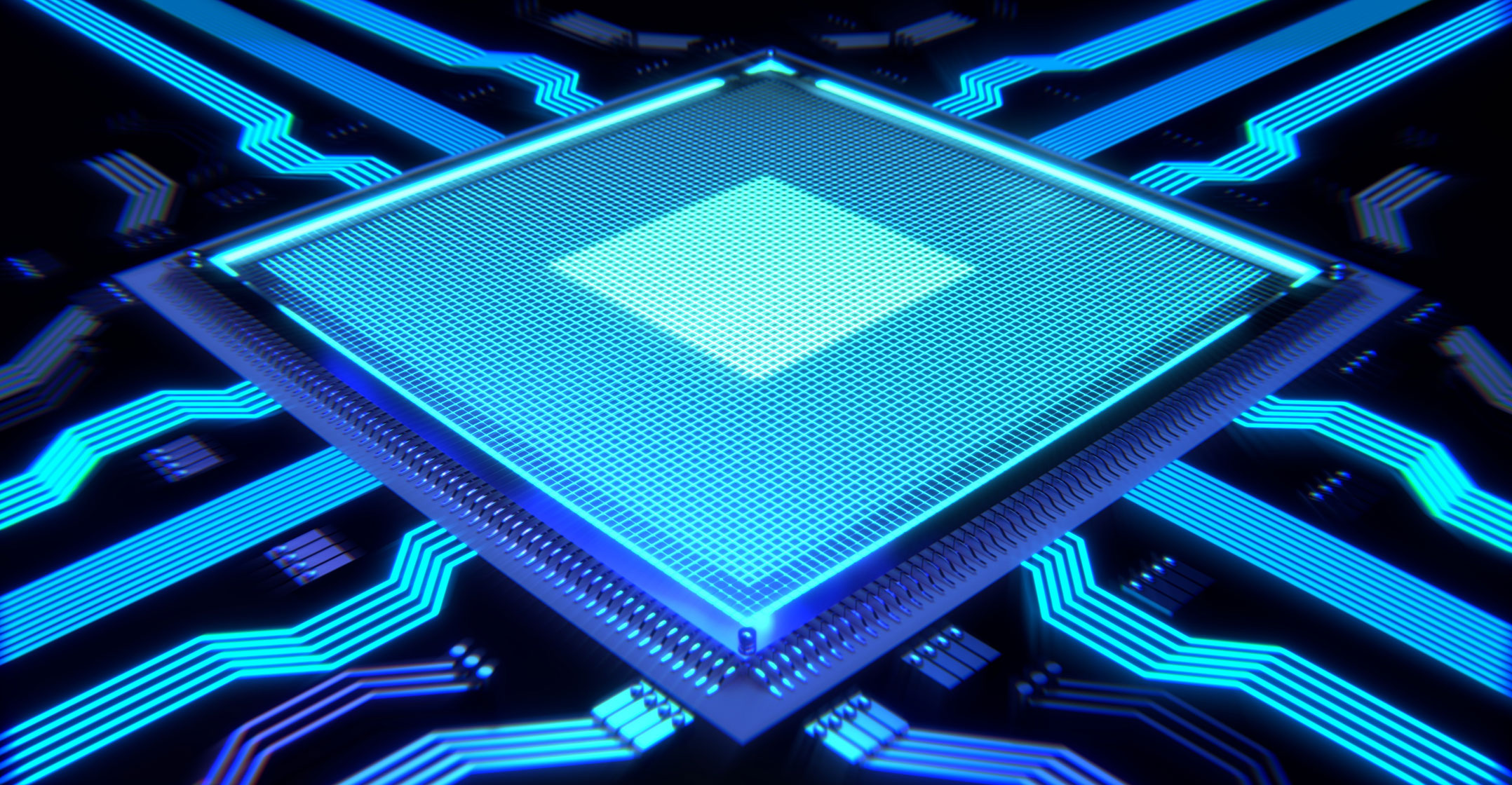
    Chip makers have spent two decades pouring investment into a revolutionary new technique to push the limits of physics and cram more transistors onto slices of silicon. Now that technology is on the cusp of going mainstream, thanks to a secretive Japanese company that’s mastered the skill of manipulating light for applications from squid fishing to cinema projection.

    Ushio announced in July that it had cleared a key milestone, perfecting the powerful, ultra-precise lights needed to test chip designs based on extreme ultraviolet lithography or EUV, the process through which the next generation of semiconductors will be made. With that, the Japanese company became a major player in future chip making.

    “The infrastructure is now mostly ready,” CEO Koji Naito said in an interview. “Testing equipment was one of the things holding back EUV. With that piece in place, production efficiency and yields can go up.”

    Testing equipment was one of the things holding back EUV. With that piece in place, production efficiency and yields can go up

    Ushio’s advances cement its position among a coterie of little-known Japanese companies indispensable to the production of the world’s consumer electronics. The Tokyo-based company developed a light source for equipment used to test what are known as masks: glass squares slightly bigger than a CD case that act as a stencil for chip designs. These templates have to be absolutely perfect, as even a tiny defect in one of them can render every chip in a large batch unusable.

    That’s where Ushio comes in. Its technology uses lasers to vaporise liquid tin into plasma and produce light closer in wavelength to X-rays than the spectrum visible to the human eye. That light helps chip makers spot potential defects in the product. This process takes a room-sized machine that looks like a sci-fi death ray and requires a team of people to operate. After 15 years in development, the EUV business will start contributing to profit from the next fiscal year, Naito said, without giving further details.

    Decades-old trend

    The move to EUV is the culmination of a decades-old trend. The push for smaller geometries that started when integrated circuits replaced vacuum tubes in the 1970s is approaching its final stages, and the number of companies that can compete in that space has been whittled down to a handful. Only Intel, Samsung Electronics and Taiwan Semiconductor Manufacturing Co have plans to use EUV to go smaller than the 7-nanometer processes that are the current cutting edge of CPU design. All three will use lithography machines from ASML Holding, and for a few specialist suppliers like Ushio, that means a chance to have a 100% share of their respective markets.

    “We don’t chase the mass market, even though there is potentially a ton of money to be made in home lighting or automotive,” Naito said. “Instead, we want to focus on niche areas and do things that others can’t.”

    Naito believes Ushio is positioned to control the market for light sources used in testing of patterned EUV masks, while a small group of fellow Japanese companies specialise in other aspects of the technology. JSR and Tokyo Ohka Kogyo, for instance, control production of the light-sensitive resins required to print the designs, while the blank masks are made by only two companies, AGC and Hoya, which both use Lasertec’s machines to test for flaws. All are based in the greater Tokyo area and espouse an almost artisanal commitment to high-precision manufacturing.

    The fact that much of the EUV supply chain hails from a single country was seized upon by Japan in its trade spat with South Korea. Tokyo slapped export restrictions on key materials heading to Korea, giving undesired attention to companies that prefer to operate behind the scenes. While Ushio’s machines were not targeted, photo-resists made by JSR and Tokyo Ohka made the sanctions list. The government has since relented, but concern lingers that the industry’s delicate balance may be again disrupted in the future.

    “There hasn’t been a direct impact for us yet,” Naito said. “But because we have such a high market share for our products, we feel a responsibility to absolutely make sure our customers’ production lines do not stop.”

    Alongside its EUV ambitions, Ushio commands an 80% share of the market for lithography lamps used to make liquid crystal displays and controls 95% of the supply of excimer lamps used in silicon wafer cleaning. The key to its success is balancing mass production with craftsmanship. Materials like quartz glass are difficult to handle and have different thermal expansion properties from metals like the molybdenum in which they are housed. Some of the lamps still have to be finished by hand.

    Wherever you have a manufacturing process that needs to shine a very bright light, you will find Ushio

    “Wherever you have a manufacturing process that needs to shine a very bright light, you will find Ushio,” said Damian Thong, an analyst at Macquarie Group.

    Ushio’s expertise also extends beyond semiconductors. Founded in 1964, it was the first Japanese company to develop and produce halogen lamps. From 1973, fishermen began to use its lights to catch squid — a controversial technique in many countries. Finding new uses for its technology, from tanning salons to movie projectors, helped Ushio more than triple its sales over the past 25 years. The company is now experimenting with the use of sodium lamps to nurture plants and using ultraviolet light calibrated to such a precise wavelength as to kill bacteria without damaging human skin.

    “For Japanese firms with strong legacy manufacturing technology, the bigger danger is being trapped in them,” Thong said. “You have to give Ushio credit for moving further downstream, away from manufacturing toward something that requires more system integration.”  — Reported by Pavel Alpeyev and Yuki Furukawa, (c) 2019 Bloomberg LP

    Follow TechCentral on Google News Add TechCentral as your preferred source on Google


    Intel Samsung TSMC Ushio
    WhatsApp YouTube
    Share. Facebook Twitter LinkedIn WhatsApp Telegram Email Copy Link
    Previous ArticleFacebook could drop the ‘like’ count
    Next Article What to expect at IFA 2019

    Related Posts

    Memory crisis sends smartphone market into steep decline

    Memory crisis sends smartphone market into steep decline

    13 July 2026
    We laughed off the 'glassholes' - this time it's serious - Mark Zuckerberg

    We laughed off the ‘glassholes’ – this time it’s serious

    13 July 2026
    More bad news for memory prices - SK Hynix CEO Kwak Noh-jung

    More bad news for memory prices

    13 July 2026
    Company News
    Paratus again voted Namibia's most reliable internet provider

    Paratus again voted Namibia’s most reliable internet provider

    17 July 2026
    Core opens Microsoft Surface reseller programme to South African SMEs - John Press

    Core opens Microsoft Surface reseller programme to South African SMEs

    17 July 2026
    The economy the statistics miss is thriving on Spondo Street - Lesaka Technologies Lincoln Mali

    The economy the statistics miss is thriving on Spondo Street

    16 July 2026
    Opinion
    Selling vapour is corporate suicide in slow motion - Jannie van Zyl

    Selling vapour is corporate suicide in slow motion

    16 July 2026
    Brazil's online gambling crackdown is a lesson for South Africa

    How Amazon outmanoeuvred Starlink in South Africa

    15 July 2026
    The Popia problem with agentic AI - Herman Haasbroek

    The Popia problem with agentic AI

    14 July 2026

    Subscribe to Updates

    Get the best South African technology news and analysis delivered to your e-mail inbox every morning.

    Latest Posts
    South Africa's newfound economic resilience

    South Africa’s newfound economic resilience

    20 July 2026
    Meta could become Anthropic's landlord in $10-billion deal

    Meta could become Anthropic’s landlord in $10-billion deal

    20 July 2026
    FNB, Absa and Nedbank bet on money for machines

    FNB, Absa and Nedbank bet on money for machines

    19 July 2026
    Apple knocks Nvidia off its perch - John Ternus

    Apple knocks Nvidia off its perch

    19 July 2026
    © 2009 - 2026 NewsCentral Media
    Built and maintained by Chronon
    • Cookie policy (ZA)
    • TechCentral – privacy and Popia

    Type above and press Enter to search. Press Esc to cancel.

    Manage consent

    TechCentral uses cookies to enhance its offerings. Consenting to these technologies allows us to serve you better. Not consenting or withdrawing consent may adversely affect certain features and functions of the website.

    Functional Always active
    The technical storage or access is strictly necessary for the legitimate purpose of enabling the use of a specific service explicitly requested by the subscriber or user, or for the sole purpose of carrying out the transmission of a communication over an electronic communications network.
    Preferences
    The technical storage or access is necessary for the legitimate purpose of storing preferences that are not requested by the subscriber or user.
    Statistics
    The technical storage or access that is used exclusively for statistical purposes. The technical storage or access that is used exclusively for anonymous statistical purposes. Without a subpoena, voluntary compliance on the part of your Internet Service Provider, or additional records from a third party, information stored or retrieved for this purpose alone cannot usually be used to identify you.
    Marketing
    The technical storage or access is required to create user profiles to send advertising, or to track the user on a website or across several websites for similar marketing purposes.
    • Manage options
    • Manage services
    • Manage {vendor_count} vendors
    • Read more about these purposes
    View preferences
    • {title}
    • {title}
    • {title}