Close Menu
TechCentralTechCentral

    Subscribe to the newsletter

    Get the best South African technology news and analysis delivered to your e-mail inbox every morning.

    Facebook X (Twitter) YouTube LinkedIn
    WhatsApp Facebook X (Twitter) LinkedIn YouTube
    TechCentralTechCentral
    • News
      Cell C cleans up its balance sheet but faces tough trading reality

      Cell C cleans up its balance sheet but faces tough trading reality

      13 February 2026
      MVNO business shines in Cell C's first post-listing results - Jorges Mendes

      MVNO business shines in Cell C’s first post-listing results

      13 February 2026
      Ramaphosa presses ahead with Eskom break-up - Cyril Ramaphosa

      Ramaphosa presses ahead with Eskom break-up

      13 February 2026
      The key technology takeaways from Ramaphosa's 2026 Sona - Cyril Ramaphosa

      The key technology takeaways from Ramaphosa’s 2026 Sona

      13 February 2026
      Toyota SA CEO: NEV inaction will cost South Africa its motoring industry - Andrew Kirby

      Toyota SA CEO: NEV inaction will cost South Africa its motoring industry

      12 February 2026
    • World
      Russia bans WhatsApp

      Russia bans WhatsApp

      12 February 2026
      EU regulators take aim at WhatsApp

      EU regulators take aim at WhatsApp

      9 February 2026
      Musk hits brakes on Mars mission

      Musk hits brakes on Mars mission

      9 February 2026
      Crypto firm accidentally sends R700-billion in bitcoin to its users

      Crypto firm accidentally sends R700-billion in bitcoin to its users

      8 February 2026
      AI won't replace software, says Nvidia CEO amid market rout - Jensen Huang

      AI won’t replace software, says Nvidia CEO amid market rout

      4 February 2026
    • In-depth
      How liberalisation is rewiring South Africa's power sector

      How liberalisation is rewiring South Africa’s power sector

      21 January 2026
      The top-performing South African tech shares of 2025

      The top-performing South African tech shares of 2025

      12 January 2026
      Digital authoritarianism grows as African states normalise internet blackouts

      Digital authoritarianism grows as African states normalise internet blackouts

      19 December 2025
      TechCentral's South African Newsmakers of 2025

      TechCentral’s South African Newsmakers of 2025

      18 December 2025
      Black Friday goes digital in South Africa as online spending surges to record high

      Black Friday goes digital in South Africa as online spending surges to record high

      4 December 2025
    • TCS
      Watts & Wheels S1E4: 'We drive an electric Uber'

      Watts & Wheels S1E4: ‘We drive an electric Uber’

      10 February 2026
      TCS+ | How Cloud On Demand is helping SA businesses succeed in the cloud - Xhenia Rhode, Dion Kalicharan

      TCS+ | Cloud On Demand and Consnet: inside a real-world AWS partner success story

      30 January 2026
      Watts & Wheels S1E4: 'We drive an electric Uber'

      Watts & Wheels S1E3: ‘BYD’s Corolla Cross challenger’

      30 January 2026
      Watts & Wheels S1E4: 'We drive an electric Uber'

      Watts & Wheels S1E2: ‘China attacks, BMW digs in, Toyota’s sublime supercar’

      23 January 2026

      TCS+ | Why cybersecurity is becoming a competitive advantage for SA businesses

      20 January 2026
    • Opinion
      A million reasons monopolies don't work - Duncan McLeod

      A million reasons monopolies don’t work

      10 February 2026
      Eskom unbundling U-turn threatens to undo hard-won electricity gains - Busi Mavuso

      Eskom unbundling U-turn threatens to undo hard-won electricity gains

      9 February 2026
      South Africa's skills advantage is being overlooked at home - Richard Firth

      South Africa’s skills advantage is being overlooked at home

      29 January 2026
      Why Elon Musk's Starlink is a 'hard no' for me - Songezo Zibi

      Why Elon Musk’s Starlink is a ‘hard no’ for me

      26 January 2026
      A million reasons monopolies don't work - Duncan McLeod

      South Africa’s new fibre broadband battle

      20 January 2026
    • Company Hubs
      • Africa Data Centres
      • AfriGIS
      • Altron Digital Business
      • Altron Document Solutions
      • Altron Group
      • Arctic Wolf
      • AvertITD
      • Braintree
      • CallMiner
      • CambriLearn
      • CYBER1 Solutions
      • Digicloud Africa
      • Digimune
      • Domains.co.za
      • ESET
      • Euphoria Telecom
      • Incredible Business
      • iONLINE
      • IQbusiness
      • Iris Network Systems
      • LSD Open
      • Mitel
      • NEC XON
      • Netstar
      • Network Platforms
      • Next DLP
      • Ovations
      • Paracon
      • Paratus
      • Q-KON
      • SevenC
      • SkyWire
      • Solid8 Technologies
      • Telit Cinterion
      • Tenable
      • Vertiv
      • Videri Digital
      • Vodacom Business
      • Wipro
      • Workday
      • XLink
    • Sections
      • AI and machine learning
      • Banking
      • Broadcasting and Media
      • Cloud services
      • Contact centres and CX
      • Cryptocurrencies
      • Education and skills
      • Electronics and hardware
      • Energy and sustainability
      • Enterprise software
      • Financial services
      • Information security
      • Internet and connectivity
      • Internet of Things
      • Investment
      • IT services
      • Lifestyle
      • Motoring
      • Public sector
      • Retail and e-commerce
      • Satellite communications
      • Science
      • SMEs and start-ups
      • Social media
      • Talent and leadership
      • Telecoms
    • Events
    • Advertise
    TechCentralTechCentral
    Home » World » New chip blockade: US in ‘economic war’ with China

    New chip blockade: US in ‘economic war’ with China

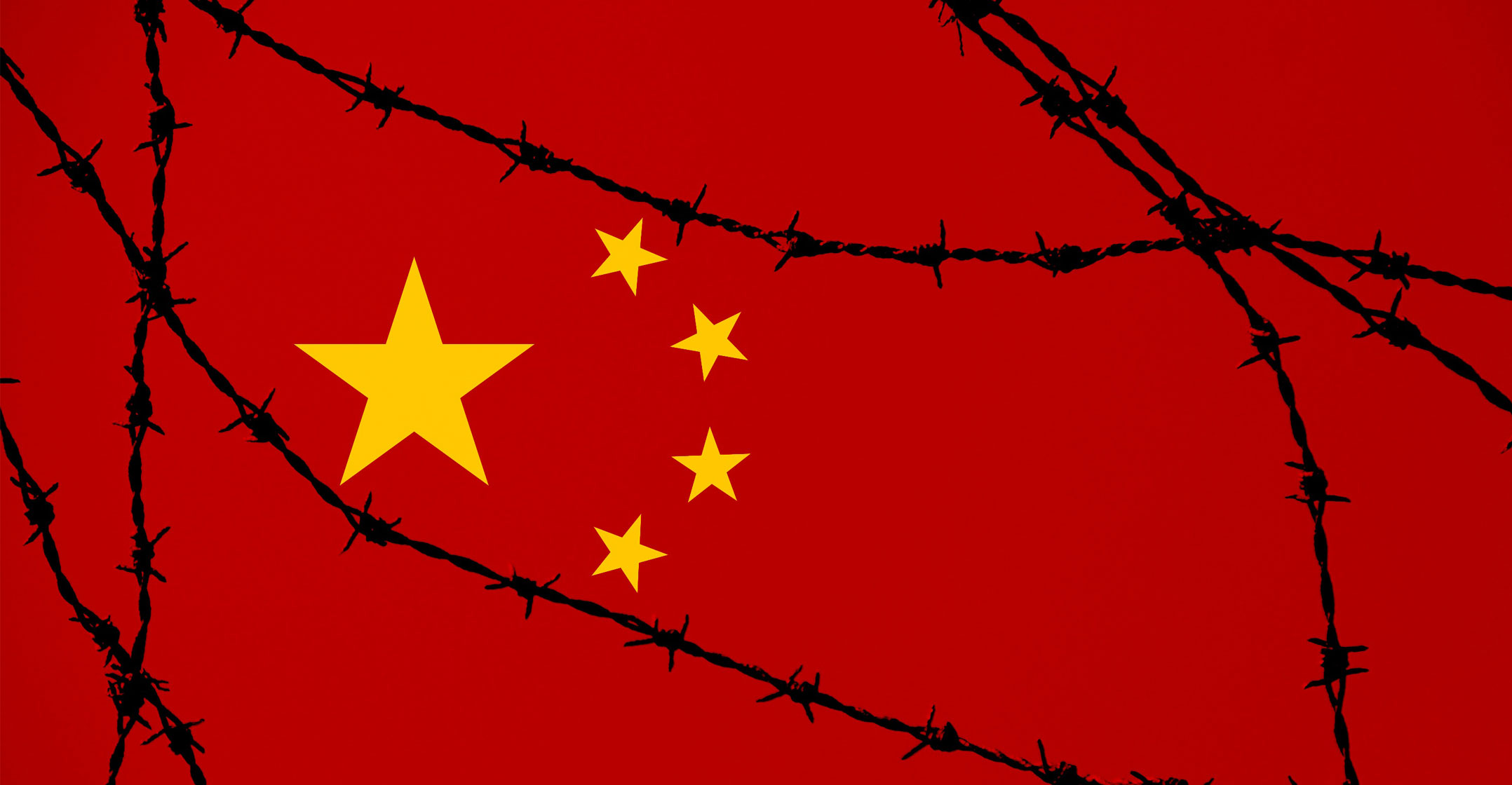
    The US's new restrictions on technology exports to China could undercut the Asian country’s ability to develop wide swaths of its economy.
    By Agency Staff10 October 2022
    Twitter LinkedIn Facebook WhatsApp Email Telegram Copy Link
    News Alerts
    WhatsApp

    The Joe Biden administration’s new restrictions on technology exports to China could undercut the Asian country’s ability to develop wide swaths of its economy, from semiconductors and supercomputers to surveillance systems and advanced weapons.

    The US commerce department on Friday unveiled sweeping regulations that limit the sale of semiconductors and chip-making equipment to Chinese customers, striking at the foundation of the country’s efforts to build its own chip industry. The agency also added 31 organisations to its unverified list, including Yangtze Memory Technologies and a subsidiary of leading chip equipment maker Naura Technology Group, severely limiting their ability to buy technology from abroad.

    The moves are the Biden administration’s most aggressive yet as it tries to stop China from developing technological capabilities it sees as a threat. Depending on how broadly Washington enforces the restrictions, the impact could extend well beyond semiconductors and into industries that rely on high-end computing, from electric vehicles and aerospace to simple gadgets like smartphones.

    Chinese state media and officials over the weekend raged against the action, warning of economic consequences

    Chinese state media and officials over the weekend raged against the action, warning of economic consequences and stirring speculation about potential retaliation. He Xiaopeng, the chairman and CEO of Chinese EV maker Xpeng, warned last month that escalating US restrictions on chip exports will set back the nation’s autonomous driving sector.

    The two countries are now officially in an “economic war”, Dylan Patel, chief analyst at SemiAnalysis, said. A Chinese analyst said there is “no possibility of reconciliation” any longer.

    “This is the US salvo against China’s efforts to build its domestic tech capabilities,” said Patel, who estimates the restrictions could reduce global technology and industry trade by hundreds of billions of dollars. “It’s the US firing back, making clear they will fight back.”

    Chinese semiconductor stocks tumbled on the news. Bellwether Semiconductor Manufacturing International, better known as SMIC, fell as much as 5.2% in Hong Kong on Monday, the most since 15 August 15. Hua Hong Semiconductor plunged 10%, while Shanghai Fudan Microelectronics Group plummeted 25%.

    Furious reaction

    US officials said the new restrictions are necessary to stop China from becoming more of an economic and military menace. They are seeking to ensure the country’s chip makers don’t secure the capability to make advanced semiconductors.

    China “has poured resources into developing supercomputing capabilities and seeks to become a world leader in artificial intelligence by 2030”, said US assistant secretary of commerce for export administration Thea D Rozman Kendler. “It is using these capabilities to monitor, track and surveil their own citizens, and fuel its military modernisation.”

    Reaction in China was furious. The nationalistic Global Times newspaper warned the “savage attack on free trade” would have dire consequences for the US.

    “Only arrogant and ignorant people can truly believe that the US can block the development of China’s semiconductor or other technology industries by these illegitimate means,” it said in an editorial. “The US hegemony in science and technology that harms others without benefiting itself may bring some short-term difficulties to China’s semiconductor industry, but will in turn strengthen China’s will and ability to stand on its own in science and technology.”

    Chinese foreign ministry spokesman Mao Ning said the measures are unfair and will “deal a blow to global industrial and supply chains and world economic recovery”.

    “The reality is the US is determined to use chips as a tool to contain China,” Gu Wenjun, head of Chinese chip researcher ICwise, wrote in an online commentary. “There is no possibility of reconciliation.”

    The new US regulations broadly limit chip makers from selling to China AI semiconductors and those that can be used for supercomputers. Nvidia warned in September that government restrictions on exporting AI chips to China could affect hundreds of millions of dollars in revenue, sending its stock tumbling.

    Chip makers can request a US commerce department exception to those rules. But they should presume such requests will be denied, senior officials said.

    The commerce department also put in place a raft of restrictions on supplying US machinery that’s capable of making advanced semiconductors. It’s targeting the types of memory and logic chips that are at the heart of state-of-the-art designs.

    Specifically, the restrictions cover production of logic chips using so-called nonplanar transistors made with 16-nanometre technology or anything more advanced than that, 18nm dynamic random access memory chips and NAND-style flash memory chips with 128 layers or more. Generally speaking, the smaller the number of nanometres, the more capable the chip.

    The changes represent a further escalation, and we do not know what China might do in response

    Analysts pored over the commerce department’s announcement that ran to more than 135 pages for implications. Chinese AI chip designers like Biren could face some restrictions on their orders with TSMC, according to Patel.

    Stacy Rasgon and a team from Sanford C Bernstein explained the restrictions on AI, supercomputers and advanced chip-making equipment, while pointing out that the standard CPUs used in PCs and servers would not be blocked from export to China, as some had feared.

    “The changes represent a further escalation, and we do not know what China might do in response,” the Bernstein analysts wrote. “Potential retaliation remains a risk.”

    One question is how the US rules will affect the ability of companies like ASML Holding to sell into China. The Dutch company is the most advanced maker of equipment for producing semiconductors, effectively the most important arms dealer for chip makers around the world.

    ‘This is huge’

    ASML has had to strike a challenging balance between the US and China. It has been selling its deep ultraviolet, or DUV, machines to Chinese customers, but has held back from selling its more advanced extreme ultraviolet, or EUV, machines. Under the new commerce department restrictions, the company may be limited from selling DUV technology to Chinese customers, too, Citigroup analysts wrote. Representatives for ASML didn’t immediately respond to requests for comment.

    Patel of SemiAnalysis believes the unverified list is a serious threat to China’s tech ambitions. In the past, the commerce department cut off access to critical technologies for companies like Huawei Technologies when they were added to the so-called Entity List, meaning the agency had gathered evidence against them. The unverified list simply means the commerce department can’t verify that a company’s activities are safe.

    “That is huge,” he said. “They can pretty much blacklist any company they want in China within two months.”  — (c) 2022 Bloomberg LP



    ASML Nvidia SMIC TSMC
    WhatsApp YouTube Follow on Google News Add as preferred source on Google
    Share. Facebook Twitter LinkedIn WhatsApp Telegram Email Copy Link
    Previous ArticleAmazon to invest over €1-billion in electric van, truck fleet
    Next Article Elon Musk taps his inner Trump in Twitter machinations

    Related Posts

    Chip shortage hits PCs as AI swallows the world's memory supply

    Chip shortage hits PCs as AI swallows the world’s memory supply

    12 February 2026
    AI won't replace software, says Nvidia CEO amid market rout - Jensen Huang

    AI won’t replace software, says Nvidia CEO amid market rout

    4 February 2026
    Investors can't get enough of ASML

    Investors can’t get enough of ASML

    27 January 2026
    Company News
    Cell C delivers maiden results with growth momentum, financial flexibility - Jorges Mendes

    Cell C delivers maiden results with growth momentum, financial flexibility

    13 February 2026
    Start-up king joins Paratus Rwanda - Innocent Mutimura

    Start-up king joins Paratus Rwanda

    13 February 2026
    How NEC XON tackled identity risk for a major telco - Michael de Neuilly Rice

    How NEC XON tackled identity risk for a major telco

    11 February 2026
    Opinion
    A million reasons monopolies don't work - Duncan McLeod

    A million reasons monopolies don’t work

    10 February 2026
    Eskom unbundling U-turn threatens to undo hard-won electricity gains - Busi Mavuso

    Eskom unbundling U-turn threatens to undo hard-won electricity gains

    9 February 2026
    South Africa's skills advantage is being overlooked at home - Richard Firth

    South Africa’s skills advantage is being overlooked at home

    29 January 2026

    Subscribe to Updates

    Get the best South African technology news and analysis delivered to your e-mail inbox every morning.

    Latest Posts
    Cell C cleans up its balance sheet but faces tough trading reality

    Cell C cleans up its balance sheet but faces tough trading reality

    13 February 2026
    MVNO business shines in Cell C's first post-listing results - Jorges Mendes

    MVNO business shines in Cell C’s first post-listing results

    13 February 2026
    Ramaphosa presses ahead with Eskom break-up - Cyril Ramaphosa

    Ramaphosa presses ahead with Eskom break-up

    13 February 2026
    The key technology takeaways from Ramaphosa's 2026 Sona - Cyril Ramaphosa

    The key technology takeaways from Ramaphosa’s 2026 Sona

    13 February 2026
    © 2009 - 2026 NewsCentral Media
    • Cookie policy (ZA)
    • TechCentral – privacy and Popia

    Type above and press Enter to search. Press Esc to cancel.

    Manage consent

    TechCentral uses cookies to enhance its offerings. Consenting to these technologies allows us to serve you better. Not consenting or withdrawing consent may adversely affect certain features and functions of the website.

    Functional Always active
    The technical storage or access is strictly necessary for the legitimate purpose of enabling the use of a specific service explicitly requested by the subscriber or user, or for the sole purpose of carrying out the transmission of a communication over an electronic communications network.
    Preferences
    The technical storage or access is necessary for the legitimate purpose of storing preferences that are not requested by the subscriber or user.
    Statistics
    The technical storage or access that is used exclusively for statistical purposes. The technical storage or access that is used exclusively for anonymous statistical purposes. Without a subpoena, voluntary compliance on the part of your Internet Service Provider, or additional records from a third party, information stored or retrieved for this purpose alone cannot usually be used to identify you.
    Marketing
    The technical storage or access is required to create user profiles to send advertising, or to track the user on a website or across several websites for similar marketing purposes.
    • Manage options
    • Manage services
    • Manage {vendor_count} vendors
    • Read more about these purposes
    View preferences
    • {title}
    • {title}
    • {title}