Close Menu
TechCentralTechCentral

    Subscribe to the newsletter

    Get the best South African technology news and analysis delivered to your e-mail inbox every morning.

    Facebook X (Twitter) YouTube LinkedIn
    WhatsApp Facebook X (Twitter) LinkedIn YouTube
    TechCentralTechCentral
    • News
      Namibia tells Starlink to take a hike - again

      Namibia tells Starlink to take a hike – again

      22 June 2026
      Joburg the epicentre of South Africa's tech brain drain

      Joburg the epicentre of South Africa’s tech brain drain

      22 June 2026
      South Africa went cashless - except for the millions who didn't

      South Africa went cashless – except for the millions who didn’t

      22 June 2026
      That drone over your house is almost certainly breaking the law

      That drone over your house is almost certainly breaking the law

      22 June 2026
      DStv Stream to come pre-installed on Samsung TVs across Africa

      DStv Stream to come pre-installed on Samsung TVs across Africa

      22 June 2026
    • World

      SK Hynix ends Samsung’s 26-year reign at the top

      22 June 2026
      Google on the hook for what its AI tells users, court rules

      Google on the hook for what its AI tells users, court rules

      15 June 2026
      How Russians juggle VPNs to outwit the Kremlin

      How Russians juggle VPNs to outwit the Kremlin

      15 June 2026
      Amazon CEO flagged Anthropic AI risks to Washington - Andy Jassy

      Amazon CEO flagged Anthropic AI risks to Washington

      14 June 2026
      Trouble at Xbox

      Trouble at Xbox

      11 June 2026
    • In-depth
      AI boom sparks rally, frenzy and fear

      AI boom sparks rally, frenzy and fear

      11 June 2026
      Every plug-in hybrid on sale in South Africa, ranked by price - Lamborghini Temerario

      Every plug-in hybrid on sale in South Africa, ranked by price

      7 June 2026
      What Wi-Fi 8 will mean for wireless networks

      What Wi-Fi 8 will mean for wireless networks

      1 June 2026
      Alfa's electric rebel - Alfa Romeo Junior Elettrica Veloce

      Alfa’s electric rebel

      29 April 2026
      Africa switches on as Europe dims the lights

      Africa switches on as Europe dims the lights

      9 April 2026
    • TCS
      Watts & Wheels S1E6: 'A flawless Alfa and a bakkie that divides'

      Watts & Wheels S1E6: ‘A flawless Alfa and a bakkie that divides’

      17 June 2026
      Watts & Wheels S1E6: 'A flawless Alfa and a bakkie that divides'

      Watts & Wheels S1E5: ‘A Bentley of the bush and a car that swims’

      8 June 2026
      TCS | Charge's R1.8-billion bet on an off-grid EV future - Charge chairman Joubert Roux

      TCS | Charge’s R1.8-billion bet on an off-grid EV future

      18 May 2026
      TCS+ | The Up&Up Group on the hidden cost of AI - Jason Harrison

      TCS+ | The Up&Up Group on the hidden cost of AI

      13 May 2026
      Michael Rossouw

      TCS+ | The retirement decision most South Africans get wrong

      6 May 2026
    • Opinion
      Finish the job Mandela started - Farzam Ehsani

      Finish the job Mandela started

      18 June 2026
      The author, Fanie van Rooyen

      The US just showed it can switch off our AI

      17 June 2026
      The clock is ticking on South African banks' biggest advantage - Pambos Soteriades

      The clock is ticking on South African banks’ biggest advantage

      9 June 2026

      Clashing judgments leave South Africa’s crypto law unsettled

      2 June 2026
      The clock is ticking on South African banks' biggest advantage - Pambos Soteriades

      The trap inside South Africa’s banking MVNO boom

      1 June 2026
    • Company Hubs
      • 1Stream
      • Africa Data Centres
      • AfriGIS
      • Altron Digital Business
      • Altron Document Solutions
      • Altron Group
      • Arctic Wolf
      • Ascent Technology
      • AvertITD
      • BBD
      • Braintree
      • CallMiner
      • CambriLearn
      • CM Telecom
      • Contactable
      • CYBER1 Solutions
      • Digicloud Africa
      • Digimune
      • Domains.co.za
      • ESET
      • Euphoria Telecom
      • HOSTAFRICA
      • Incredible Business
      • iONLINE
      • IQbusiness
      • Iris Network Systems
      • Kaspersky
      • LSD Open
      • Mitel
      • NEC XON
      • Netstar
      • Network Platforms
      • Next DLP
      • Ovations
      • Paracon
      • Paratus
      • Q-KON
      • SevenC
      • SkyWire
      • Solid8 Technologies
      • Telit Cinterion
      • Telviva
      • Tenable
      • Vertiv
      • Videri Digital
      • Vodacom Business
      • Wipro
      • Workday
      • XLink
    • Sections
      • AI and machine learning
      • Banking
      • Broadcasting and Media
      • Cloud services
      • Contact centres and CX
      • Cryptocurrencies
      • Education and skills
      • Electronics and hardware
      • Energy and sustainability
      • Enterprise software
      • Financial services
      • HealthTech
      • Information security
      • Internet and connectivity
      • Internet of Things
      • Investment
      • IT services
      • Lifestyle
      • Motoring
      • Policy and regulation
      • Public sector
      • Retail and e-commerce
      • Satellite communications
      • Science
      • SMEs and start-ups
      • Social media
      • Talent and leadership
      • Telecoms
    • Events
    • Advertise
    TechCentralTechCentral
    Home » Sections » Telecoms » US war with Huawei moves to a dangerous new arena

    US war with Huawei moves to a dangerous new arena

    By Agency Staff31 May 2019
    Twitter LinkedIn Facebook WhatsApp Email Telegram Copy Link
    News Alerts
    WhatsApp

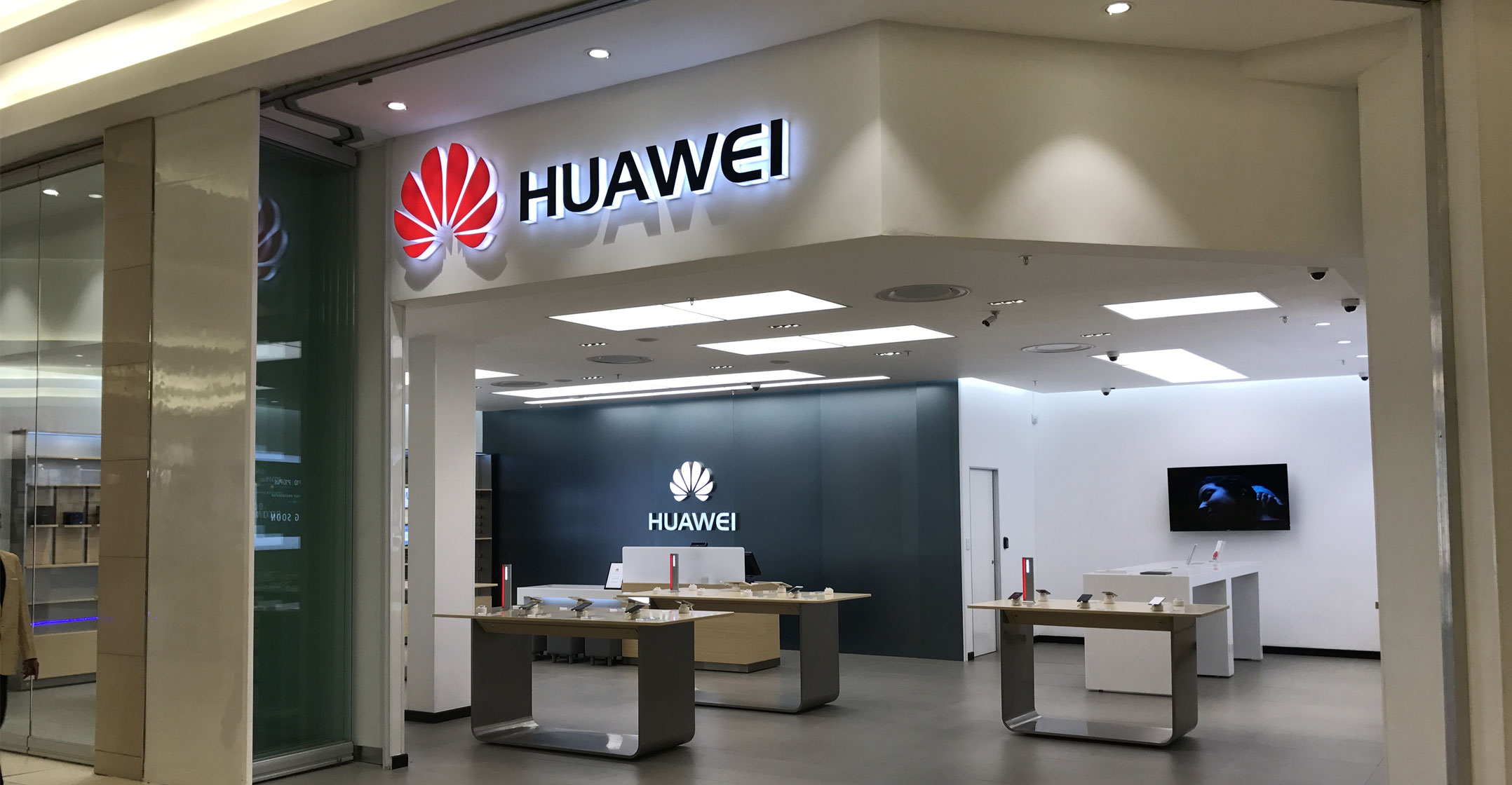
    The continuing war between the US and Huawei Technologies has moved into the world of ideas. The Institute of Electrical and Electronics Engineers announced this week that scientists affiliated with Huawei will no longer be permitted to serve as referees or editors for papers published in the private organisation’s 200-odd journals.

    This is a big deal. Journal referees review submitted articles long before they see the light of day and offer comments and recommendations, often on whether or not to publish. They are exposed to work the rest of the world has yet to see. Referee comments have long been a key part of the exchange of ideas. Among serious academics, publication in a refereed journal is evidence that an idea has survived rigorous scrutiny.

    Huawei employs about 188 000 people around the world, and a fair minority are scientists and engineers. Now, due to US restrictions on the company, they can’t have access to papers submitted to IEEE’s many publications until they’re published. No reviewing, no advising, no editing, no anything — all to keep Huawei from gaining access to technological advances ahead of everybody else.

    A special application is required, and Huawei has been labelled with the dreaded ‘presumption of denial’

    In explaining its decision, IEEE cited legal concerns arising after the US commerce department’s Bureau of Industry and Security earlier this month added Huawei and some 68 affiliates to the list of entities to whom exports are restricted. A special application is required, and Huawei has been labelled with the dreaded “presumption of denial”.

    The administration of President Donald Trump has been pursuing an anti-Huawei campaign for some while now, and at this point China has few weapons in its arsenal to protect the company from the US assault. But even if the administration’s charges are true — and the company heatedly denies that it in effect spies for the Chinese government — the effort to restrict the flow of technology has a 1980s (or 1960s) feel to it.

    Cold War relic

    Consider that last year, with little fanfare, the administration and congress decided to cancel the Militarily Critical Technologies List, a Cold War relic maintained by the department of defence. The MCTL, as it was known, once placed significant restrictions on the transfer of scientific know-how abroad, but had long been allowed to languish and was no longer affecting decisions to grant export licences. Nevertheless, the cancellation was an implicit admission that in a connected world, it’s tough to prevent technology transfer, even when national security is involved. And as far as I’ve been able to determine, the commentariat raised nary a peep.

    Similarly, in the case of Huawei, nobody in tech imagines that the company can entirely be prevented from participating in the digital universe. Yes, there will be serious effects, at least for now. The BIS listing will keep the company from gaining access to certain services for Google’s Android and from chips made by Intel, Qualcomm and other leading manufacturers. Yet data will continue to flow through Huawei devices. US pressure may be able to keep Huawei out of much of the 5G network, at least for the moment, but there’s no way to avoid using the company’s burgeoning network of undersea cables.

    Besides, even if you believe in the importance of keeping Huawei away from certain technologies, there’s less reason to defend keeping the company’s researchers from getting an early look at articles proposed for publication in the major journals in their fields. It’s hard to imagine what enduring advantage China or any other power might derive from getting a peek at research articles a few months in advance. The IEEE seems to believe that, under the BIS rules, it has no choice. If that’s so, there’s something terribly wrong with the rules.
    Donald Trump

    The historian Audra J Wolfe points out in her engrossing 2018 book, Freedom’s Laboratory: The Cold War Struggle for the Soul of Science, that during the years after World War 2, Soviet scientists were often permitted to attend Western scientific conferences (provided that they could get permission from their own suspicious government). But in 1950, congress adopted the McCarran Act, which essentially made it impossible for those with Communist connections to travel to the US. The act, writes Wolfe, “had an immediate and chilling effect on scientific exchange, by some estimates blocking the entry of half of foreign scientists who sought to enter the country”.

    The effect of today’s restrictions on scientific exchange is likely to be significantly smaller. For one thing, the US long ago yielded its near-monopoly on scientific advancement. In biomedical journals, for example, the share of articles by US-based authors has been steadily declining. A 2018 survey found a significant drop during the 21st century in applications from students abroad seeking to study physics in the top US programmes.

    The fact that the anti-Huawei rules are less intrusive than the Cold War rules does not mean there’s no problem

    For another, as IEEE points out, the BIS restrictions do not seem to prohibit Huawei employees from attending conferences. In other words, they may not be able to referee unpublished papers, but they can still listen as other scientists present that very research. In this sense, at least, the BIS restrictions do not go as far as the Cold War rules. Wolfe recounts tales of US researchers not permitted even to attend international conferences in the 1950s simply because scientists from the Soviet Union or the People’s Republic of China were expected to be present. It’s hard to imagine that the bans hurt Communist science more than American science.

    Nevertheless, the fact that the anti-Huawei rules are less intrusive than the Cold War rules does not mean there’s no problem. Efforts to restrict the flow of technology are probably inevitable. Efforts to restrict the free flow of scientific debate, however, were a bad idea during the Cold War and are a bad idea now. Let’s hope someone from the administration will give IEEE a call to say this isn’t what the BIS listing means.  — By Stephen L Carter, (c) 2019 Bloomberg LP

    Follow TechCentral on Google News Add TechCentral as your preferred source on Google


    Donald Trump Huawei IEEE top
    WhatsApp YouTube
    Share. Facebook Twitter LinkedIn WhatsApp Telegram Email Copy Link
    Previous ArticleAmerican Tower to buy Eaton in R27-billion deal
    Next Article Twitter is showing more ads instead of selling better ideas

    Related Posts

    The author, Fanie van Rooyen

    The US just showed it can switch off our AI

    17 June 2026
    US scored 'own goal' with ban on top Anthropic model

    US scored ‘own goal’ with ban on top Anthropic model

    15 June 2026
    Huawei claims chip design breakthrough

    Huawei claims chip design breakthrough

    25 May 2026
    Company News
    A smarter way to buy or renew your Red Hat subscriptions - LSD Open

    A smarter way to buy or renew your Red Hat subscriptions

    22 June 2026
    Moving past the pilot: inside the CloudZA and AWS closed-door AI executive roundtable

    CloudZA and AWS chart the road from AI pilots to production

    19 June 2026
    The role of edge infrastructure in South Africa's AI leap - OADC Open Access Data Centres

    The role of edge infrastructure in South Africa’s AI leap

    19 June 2026
    Opinion
    Finish the job Mandela started - Farzam Ehsani

    Finish the job Mandela started

    18 June 2026
    The author, Fanie van Rooyen

    The US just showed it can switch off our AI

    17 June 2026
    The clock is ticking on South African banks' biggest advantage - Pambos Soteriades

    The clock is ticking on South African banks’ biggest advantage

    9 June 2026

    Subscribe to Updates

    Get the best South African technology news and analysis delivered to your e-mail inbox every morning.

    Latest Posts
    Namibia tells Starlink to take a hike - again

    Namibia tells Starlink to take a hike – again

    22 June 2026
    Joburg the epicentre of South Africa's tech brain drain

    Joburg the epicentre of South Africa’s tech brain drain

    22 June 2026
    South Africa went cashless - except for the millions who didn't

    South Africa went cashless – except for the millions who didn’t

    22 June 2026
    That drone over your house is almost certainly breaking the law

    That drone over your house is almost certainly breaking the law

    22 June 2026
    © 2009 - 2026 NewsCentral Media
    • Cookie policy (ZA)
    • TechCentral – privacy and Popia

    Type above and press Enter to search. Press Esc to cancel.

    Manage consent

    TechCentral uses cookies to enhance its offerings. Consenting to these technologies allows us to serve you better. Not consenting or withdrawing consent may adversely affect certain features and functions of the website.

    Functional Always active
    The technical storage or access is strictly necessary for the legitimate purpose of enabling the use of a specific service explicitly requested by the subscriber or user, or for the sole purpose of carrying out the transmission of a communication over an electronic communications network.
    Preferences
    The technical storage or access is necessary for the legitimate purpose of storing preferences that are not requested by the subscriber or user.
    Statistics
    The technical storage or access that is used exclusively for statistical purposes. The technical storage or access that is used exclusively for anonymous statistical purposes. Without a subpoena, voluntary compliance on the part of your Internet Service Provider, or additional records from a third party, information stored or retrieved for this purpose alone cannot usually be used to identify you.
    Marketing
    The technical storage or access is required to create user profiles to send advertising, or to track the user on a website or across several websites for similar marketing purposes.
    • Manage options
    • Manage services
    • Manage {vendor_count} vendors
    • Read more about these purposes
    View preferences
    • {title}
    • {title}
    • {title}