Close Menu
TechCentralTechCentral

    Subscribe to the newsletter

    Get the best South African technology news and analysis delivered to your e-mail inbox every morning.

    Facebook X (Twitter) YouTube LinkedIn
    WhatsApp Facebook X (Twitter) LinkedIn YouTube
    TechCentralTechCentral
    • News
      Nedbank hires MTN's former tech chief as group CIO - Nikos Angelopoulos

      Nedbank hires MTN’s former tech chief as group CIO

      31 July 2026
      Eskom's diesel bill falls 86% as breakdowns hit eight-year low

      Eskom’s diesel bill falls 86% as breakdowns hit eight-year low

      31 July 2026
      Ramaphosa signs off on taking the grid away from Eskom

      Ramaphosa signs off on taking the grid away from Eskom

      31 July 2026
      Microsoft just had the biggest day in stock market history

      Microsoft just had the biggest day in stock market history

      31 July 2026
      MTN Nigeria's growth engine stalled in second quarter - Karl Toriola

      MTN Nigeria’s growth engine stalled in second quarter

      31 July 2026
    • World
      Meta AI will now tell parents if their teen is in crisis

      Meta AI will now tell parents if their teen is in crisis

      17 July 2026
      IBM shares crash 25% as AI upends software spending - Arvind Krishna

      IBM shares crash 25% as AI upends software spending

      15 July 2026
      Jony Ive's first OpenAI device: an AI smart speaker - Jony Ive and Sam Altman

      Jony Ive’s first OpenAI device: an AI smart speaker

      15 July 2026
      Stripe, Advent in talks to buy PayPal for $53-billion

      Stripe, Advent in talks to buy PayPal for $53-billion

      15 July 2026
      Memory crisis sends smartphone market into steep decline

      Memory crisis sends smartphone market into steep decline

      13 July 2026
    • In-depth
      The plan to stop AI from breaking the world - Google DeepMind CEO Demis Hassabis. Image: John Sears

      The plan to stop AI from breaking the world

      16 July 2026
      The internet has a Strait of Hormuz problem

      The internet has a Strait of Hormuz problem

      15 July 2026
      AI boom sparks rally, frenzy and fear

      AI boom sparks rally, frenzy and fear

      11 June 2026
      Every plug-in hybrid on sale in South Africa, ranked by price - Lamborghini Temerario

      Every plug-in hybrid on sale in South Africa, ranked by price

      7 June 2026
      What Wi-Fi 8 will mean for wireless networks

      What Wi-Fi 8 will mean for wireless networks

      1 June 2026
    • TCS
      TCS+ | Why South African workers must become supervisors of digital labour - Accelera Digital Group Cliff de Wit

      TCS+ | Why South African workers must become supervisors of digital labour

      31 July 2026
      TCS | Rapid deployment rules can't work without municipalities: ACT - Nomvuyiso Batyi

      TCS | Icasa’s rules skip the real bottleneck: ACT

      30 July 2026
      TCS+ | iStore Business on why Apple makes sense for SMEs - Sudesh Pillay and Tamia Nontsikelelo

      TCS+ | iStore Business on why Apple makes sense for SMEs

      30 July 2026
      TCS+ | A smarter approach to cloud for South African businesses - Joel Chacko and Jonathan Oaker

      TCS+ | A smarter approach to cloud for South African businesses

      28 July 2026
      TCS | How Optasia lends billions to people banks can't see - Salvador Anglada

      TCS | How Optasia lends billions to people banks can’t see

      23 July 2026
    • Opinion
      The author, Jannie van Zyl

      Selling vapour is corporate suicide in slow motion

      16 July 2026
      Brazil's online gambling crackdown is a lesson for South Africa

      How Amazon outmanoeuvred Starlink in South Africa

      15 July 2026
      The Popia problem with agentic AI - Herman Haasbroek

      The Popia problem with agentic AI

      14 July 2026
      The author, Fanie van Rooyen

      South Africa can still catch the AI wave – here’s how

      7 July 2026
      The author, Fanie van Rooyen

      The AI utopia South Africa can’t afford

      1 July 2026
    • Company Hubs
      • 1Stream
      • Africa Data Centres
      • AfriGIS
      • Altron Digital Business
      • Altron Document Solutions
      • Altron Group
      • Arctic Wolf
      • Ascent Technology
      • AvertITD
      • BBD
      • Braintree
      • CallMiner
      • CambriLearn
      • CM Telecom
      • Contactable
      • CYBER1 Solutions
      • Digicloud Africa
      • Digimune
      • Domains.co.za
      • ESET
      • Euphoria Telecom
      • HOSTAFRICA
      • Incredible Business
      • iONLINE
      • IQbusiness
      • Iris Network Systems
      • Kaspersky
      • LSD Open
      • Mitel
      • NEC XON
      • Netstar
      • Network Platforms
      • Next DLP
      • Ovations
      • Paracon
      • Paratus
      • Q-KON
      • SevenC
      • SkyWire
      • Solid8 Technologies
      • Telit Cinterion
      • Telviva
      • Tenable
      • Vertiv
      • Videri Digital
      • Vodacom Business
      • Vox
      • Wipro
      • Workday
      • XLink
    • Sections
      • AI and machine learning
      • Banking
      • Broadcasting and Media
      • Cloud services
      • Contact centres and CX
      • Cryptocurrencies
      • Education and skills
      • Electronics and hardware
      • Energy and sustainability
      • Enterprise software
      • Financial services
      • HealthTech
      • Information security
      • Internet and connectivity
      • Internet of Things
      • Investment
      • IT services
      • Lifestyle
      • Policy and regulation
      • Public sector
      • Retail and e-commerce
      • Satellite communications
      • Science
      • SMEs and start-ups
      • Social media
      • Talent and leadership
      • Telecoms
      • Watts & Wheels
    • Events
    • Advertise
    TechCentralTechCentral
    Home » Sections » Electronics and hardware » Warning that Korea could lose the global chip war

    Warning that Korea could lose the global chip war

    In three decades at Samsung Electronics, Yang Hyang-ja helped shape the conglomerate’s present dominance in global memory chip making. Now she’s taking on a far broader challenge.
    By Sohee Kim3 January 2023
    Twitter LinkedIn Facebook WhatsApp Email Telegram Copy Link
    News Alerts
    WhatsApp
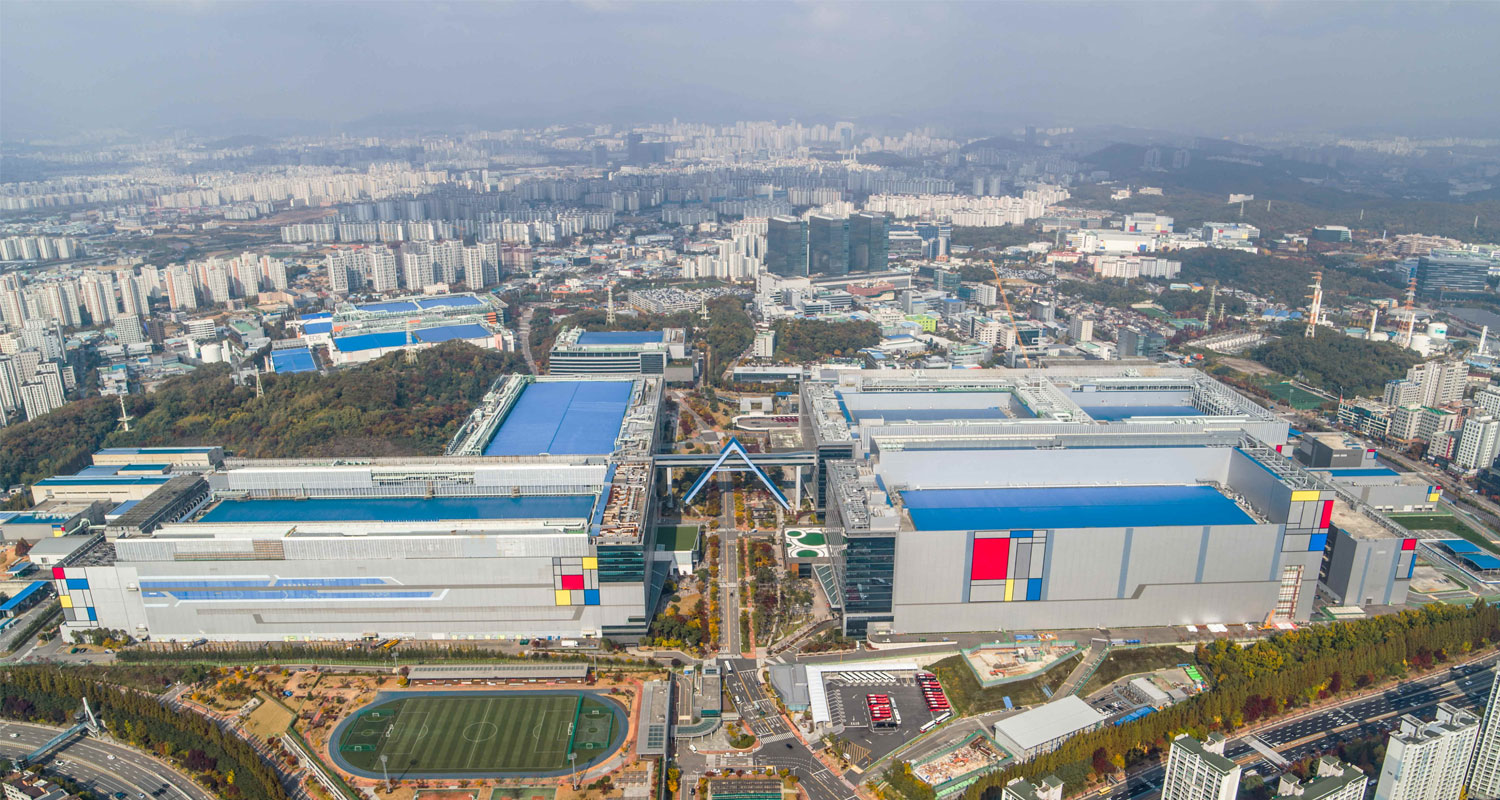
    An aerial view of Samsung Electronics’ chip production facilities at Hwaseong, South Korea

    In three decades at Samsung Electronics, Yang Hyang-ja helped shape the 84-year-old conglomerate’s present dominance in global memory chip making. Now she’s taking on a far broader challenge: ensuring Korea remains relevant as the US and China fight over semiconductors.

    Yang, who rose from a researcher’s assistant at the storied company before heading the key memory-chip development division, is the lead architect of a nationwide effort to fund and galvanise its domestic chip industry. Her mission is surging in importance as the US, China and Japan pour billions into building up their own chip supply chains, clouding Korea’s future role in semiconductors, she said in an interview.

    It’s a matter of national security, she said, echoing the views of those in Washington and Beijing who’re funnelling talent, money and policy support into the development of the slivers of silicon powering future technologies from artificial intelligence and the metaverse to next-generation computing and — notably — military capability.

    Yang is the lead architect of a nationwide effort to fund and galvanise its domestic chip industry

    “We’re in a chip war,” Yang said in a December interview. “Technology supremacy is a way that our country can take the lead in any security-related agenda, such as diplomatic and defence issues, without being swayed by other nations.”

    Yang, who leads a 13-member special committee President Yoon Suk Yeol’s ruling party formed this year to brainstorm a solution, has argued that only through strong and direct intervention can Seoul expand its position in the US$550-billion global semiconductor industry. She’s one of a growing number of global policy makers who have embraced tech protectionism after pandemic-driven logistics snarls highlighted countries’ dependence on one another for key electronic components. She’s won an ally in Yoon, who has joined Yang’s calls for more policies to help the country’s homegrown chip sector, which includes SK Hynix as well as Samsung.

    But her efforts have fallen short. Last month, parliament passed Korea’s version of the US Chips Act. Spearheaded by Yang, the move expedites the approval process to build factories in the metropolitan area, while increasing the number of tech-specialised schools. Separately, parliament passed a bill offering a tax credit of 8% to big firms investing in semiconductor manufacturing, far smaller than Yang’s proposal of 20-25%.

    Far cry

    Those gestures that are a far cry from the billions of dollars in subsidies that other countries are committing to chip production, said Yang, adding that short-term political interests are blinding fellow lawmakers in the country’s national assembly. Some of her peers have argued, in turn, that overly generous incentives threatened government finances and would only benefit big companies.

    More Korean companies could move their major production facilities to the US, and take their best engineers with them, she said. Samsung plans to build a $17-billion semiconductor plant in Texas, and has floated the possibility of spending almost $200-billion on a series of plants in Austin and Taylor.

    Korea has a unique opportunity to counter this trend, Yang said. Taiwan — where TSMC is based — produces the majority of leading-edge chips controlling the newest iPhones, servers and supercomputers. That’s triggered calls worldwide to diversify production away from an island that China claims and has threatened to invade.

    “Samsung is the only company in the world that can fill in for TSMC,” said Yang.

    Yang, who first joined politics in 2016 at the encouragement of former President Moon Jae-in, has led the current ruling party’s special committee on semiconductors. She’s an independent lawmaker after leaving the Democratic Party in 2021 amid criticism about her response to a sexual assault case against one of her aides, who was also a relative. Yang later apologised. A police investigation yielded no charges against the lawmaker.
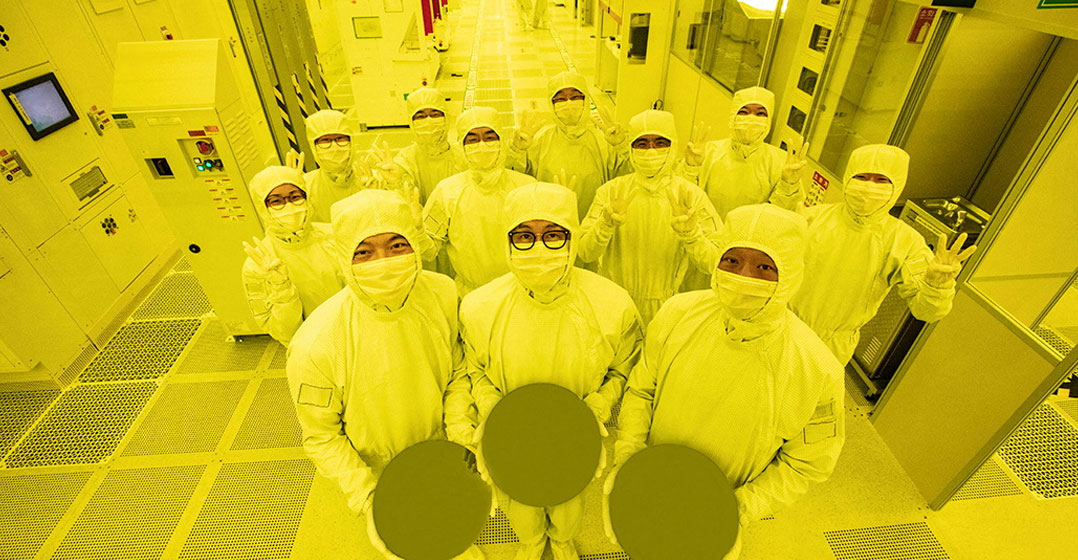
    Samsung Electronics workers stand with wafers at its chip contract manufacturing facilities in Hwaseong, South Korea

    Chip policy today takes up her time. Escalating sanctions on advanced technology are putting increased pressure on the country to choose between the US, its security ally, and China, its biggest trade partner. Both have asked South Korea to expand chip production partnerships.

    But Seoul has sidestepped explicit comments regarding its commitment to the Biden administration’s sanctions on exports of US-affiliated knowhow to China. That delicate situation highlights the need for Korea to build its own domestic technological capabilities — or risk growing ever more beholden to foreign powers, Yang said.

    This is the time to offer Korean companies more incentives to build production capacity at home, rather than abroad, Yang said. The country needs to do more to keep young talent, she said.

    “How else would our country survive?” she said. “It’d become a new technological colony.”  — Reported with Emily Yamamoto, (c) 2022 Bloomberg LP

    Get TechCentral’s daily newsletter

    Follow TechCentral on Google News Add TechCentral as your preferred source on Google


    Samsung Yang Hyang-ja Yoon Suk Yeol
    WhatsApp YouTube
    Share. Facebook Twitter LinkedIn WhatsApp Telegram Email Copy Link
    Previous ArticleTesla shares had their worst year ever. That still doesn’t make them cheap
    Next Article Beware the dangers of regulating crypto

    Related Posts

    Samsung Fold8 series unveiled as folding phone war looms

    Samsung Fold8 series unveiled as folding phone war looms

    22 July 2026
    Samsung's new Galaxy Z series: foldables, perfected

    Samsung’s new Galaxy Z series: foldables, perfected

    22 July 2026
    Memory crisis sends smartphone market into steep decline

    Memory crisis sends smartphone market into steep decline

    13 July 2026
    Company News
    Domains.co.za launches self-hosted n8n VPS hosting

    Domains.co.za launches self-hosted n8n VPS hosting

    31 July 2026
    Smarter.tech '26 shows why smarter technology begins with context - Obsidian Systems

    Context is the missing piece in enterprise AI: Obsidian

    31 July 2026
    Huawei launches 12 intelligent transport solutions in South Africa - Sam Tang

    Huawei launches 12 intelligent transport solutions in South Africa

    30 July 2026
    Opinion
    The author, Jannie van Zyl

    Selling vapour is corporate suicide in slow motion

    16 July 2026
    Brazil's online gambling crackdown is a lesson for South Africa

    How Amazon outmanoeuvred Starlink in South Africa

    15 July 2026
    The Popia problem with agentic AI - Herman Haasbroek

    The Popia problem with agentic AI

    14 July 2026

    Subscribe to Updates

    Get the best South African technology news and analysis delivered to your e-mail inbox every morning.

    Latest Posts
    Nedbank hires MTN's former tech chief as group CIO - Nikos Angelopoulos

    Nedbank hires MTN’s former tech chief as group CIO

    31 July 2026
    Eskom's diesel bill falls 86% as breakdowns hit eight-year low

    Eskom’s diesel bill falls 86% as breakdowns hit eight-year low

    31 July 2026
    Ramaphosa signs off on taking the grid away from Eskom

    Ramaphosa signs off on taking the grid away from Eskom

    31 July 2026
    TCS+ | Why South African workers must become supervisors of digital labour - Accelera Digital Group Cliff de Wit

    TCS+ | Why South African workers must become supervisors of digital labour

    31 July 2026
    © 2009 - 2026 NewsCentral Media
    Built and maintained by Chronon
    • Cookie policy (ZA)
    • TechCentral – privacy and Popia

    Type above and press Enter to search. Press Esc to cancel.

    Manage consent

    TechCentral uses cookies to enhance its offerings. Consenting to these technologies allows us to serve you better. Not consenting or withdrawing consent may adversely affect certain features and functions of the website.

    Functional Always active
    The technical storage or access is strictly necessary for the legitimate purpose of enabling the use of a specific service explicitly requested by the subscriber or user, or for the sole purpose of carrying out the transmission of a communication over an electronic communications network.
    Preferences
    The technical storage or access is necessary for the legitimate purpose of storing preferences that are not requested by the subscriber or user.
    Statistics
    The technical storage or access that is used exclusively for statistical purposes. The technical storage or access that is used exclusively for anonymous statistical purposes. Without a subpoena, voluntary compliance on the part of your Internet Service Provider, or additional records from a third party, information stored or retrieved for this purpose alone cannot usually be used to identify you.
    Marketing
    The technical storage or access is required to create user profiles to send advertising, or to track the user on a website or across several websites for similar marketing purposes.
    • Manage options
    • Manage services
    • Manage {vendor_count} vendors
    • Read more about these purposes
    View preferences
    • {title}
    • {title}
    • {title}