
Close Menu
TechCentralTechCentral

    Subscribe to the newsletter

    Get the best South African technology news and analysis delivered to your e-mail inbox every morning.

    Facebook X (Twitter) YouTube LinkedIn
    WhatsApp Facebook X (Twitter) LinkedIn YouTube
    TechCentralTechCentral
    • News
      Nedbank hires MTN's former tech chief as group CIO - Nikos Angelopoulos

      Nedbank hires MTN’s former tech chief as group CIO

      31 July 2026
      Eskom's diesel bill falls 86% as breakdowns hit eight-year low

      Eskom’s diesel bill falls 86% as breakdowns hit eight-year low

      31 July 2026
      Ramaphosa signs off on taking the grid away from Eskom

      Ramaphosa signs off on taking the grid away from Eskom

      31 July 2026
      Microsoft just had the biggest day in stock market history

      Microsoft just had the biggest day in stock market history

      31 July 2026
      MTN Nigeria's growth engine stalled in second quarter - Karl Toriola

      MTN Nigeria’s growth engine stalled in second quarter

      31 July 2026
    • World
      Meta AI will now tell parents if their teen is in crisis

      Meta AI will now tell parents if their teen is in crisis

      17 July 2026
      IBM shares crash 25% as AI upends software spending - Arvind Krishna

      IBM shares crash 25% as AI upends software spending

      15 July 2026
      Jony Ive's first OpenAI device: an AI smart speaker - Jony Ive and Sam Altman

      Jony Ive’s first OpenAI device: an AI smart speaker

      15 July 2026
      Stripe, Advent in talks to buy PayPal for $53-billion

      Stripe, Advent in talks to buy PayPal for $53-billion

      15 July 2026
      Memory crisis sends smartphone market into steep decline

      Memory crisis sends smartphone market into steep decline

      13 July 2026
    • In-depth
      The plan to stop AI from breaking the world - Google DeepMind CEO Demis Hassabis. Image: John Sears

      The plan to stop AI from breaking the world

      16 July 2026
      The internet has a Strait of Hormuz problem

      The internet has a Strait of Hormuz problem

      15 July 2026
      AI boom sparks rally, frenzy and fear

      AI boom sparks rally, frenzy and fear

      11 June 2026
      Every plug-in hybrid on sale in South Africa, ranked by price - Lamborghini Temerario

      Every plug-in hybrid on sale in South Africa, ranked by price

      7 June 2026
      What Wi-Fi 8 will mean for wireless networks

      What Wi-Fi 8 will mean for wireless networks

      1 June 2026
    • TCS
      TCS+ | Why South African workers must become supervisors of digital labour - Accelera Digital Group Cliff de Wit

      TCS+ | Why South African workers must become supervisors of digital labour

      31 July 2026
      TCS | Rapid deployment rules can't work without municipalities: ACT - Nomvuyiso Batyi

      TCS | Icasa’s rules skip the real bottleneck: ACT

      30 July 2026
      TCS+ | iStore Business on why Apple makes sense for SMEs - Sudesh Pillay and Tamia Nontsikelelo

      TCS+ | iStore Business on why Apple makes sense for SMEs

      30 July 2026
      TCS+ | A smarter approach to cloud for South African businesses - Joel Chacko and Jonathan Oaker

      TCS+ | A smarter approach to cloud for South African businesses

      28 July 2026
      TCS | How Optasia lends billions to people banks can't see - Salvador Anglada

      TCS | How Optasia lends billions to people banks can’t see

      23 July 2026
    • Opinion
      The author, Jannie van Zyl

      Selling vapour is corporate suicide in slow motion

      16 July 2026
      Brazil's online gambling crackdown is a lesson for South Africa

      How Amazon outmanoeuvred Starlink in South Africa

      15 July 2026
      The Popia problem with agentic AI - Herman Haasbroek

      The Popia problem with agentic AI

      14 July 2026
      The author, Fanie van Rooyen

      South Africa can still catch the AI wave – here’s how

      7 July 2026
      The author, Fanie van Rooyen

      The AI utopia South Africa can’t afford

      1 July 2026
    • Company Hubs
      • 1Stream
      • Africa Data Centres
      • AfriGIS
      • Altron Digital Business
      • Altron Document Solutions
      • Altron Group
      • Arctic Wolf
      • Ascent Technology
      • AvertITD
      • BBD
      • Braintree
      • CallMiner
      • CambriLearn
      • CM Telecom
      • Contactable
      • CYBER1 Solutions
      • Digicloud Africa
      • Digimune
      • Domains.co.za
      • ESET
      • Euphoria Telecom
      • HOSTAFRICA
      • Incredible Business
      • iONLINE
      • IQbusiness
      • Iris Network Systems
      • Kaspersky
      • LSD Open
      • Mitel
      • NEC XON
      • Netstar
      • Network Platforms
      • Next DLP
      • Ovations
      • Paracon
      • Paratus
      • Q-KON
      • SevenC
      • SkyWire
      • Solid8 Technologies
      • Telit Cinterion
      • Telviva
      • Tenable
      • Vertiv
      • Videri Digital
      • Vodacom Business
      • Vox
      • Wipro
      • Workday
      • XLink
    • Sections
      • AI and machine learning
      • Banking
      • Broadcasting and Media
      • Cloud services
      • Contact centres and CX
      • Cryptocurrencies
      • Education and skills
      • Electronics and hardware
      • Energy and sustainability
      • Enterprise software
      • Financial services
      • HealthTech
      • Information security
      • Internet and connectivity
      • Internet of Things
      • Investment
      • IT services
      • Lifestyle
      • Policy and regulation
      • Public sector
      • Retail and e-commerce
      • Satellite communications
      • Science
      • SMEs and start-ups
      • Social media
      • Talent and leadership
      • Telecoms
      • Watts & Wheels
    • Events
    • Advertise
    TechCentralTechCentral
    Home » In-depth » Why ‘fair use’ is so important for SA copyright law

    Why ‘fair use’ is so important for SA copyright law

    By The Conversation26 November 2018
    Twitter LinkedIn Facebook WhatsApp Email Telegram Copy Link
    News Alerts
    WhatsApp

    “Fair use” is a doctrine adopted by some countries that permits the use of copyright material like books, journals, music and art work — without requiring permission from the copyright holder. It provides a balance between the just demands of rightsholders and the need for people to use copyright material for education, research, in libraries and archives.

    The reuse of copyright material is done within a framework of four criteria. These determine whether the proposed use is fair or not. If the user complies with these, they may go ahead and use the copyright work without permission from the rightsholder.

    In the US, which entrenched the doctrine in its law in 1976, fair use has served citizens well. It has enabled the country’s creative industries to grow exponentially — so much so that the US boasts the largest and most successful filmed entertainment, music, book publishing and videogames in the world.

    Groups that object to the proposed changes would prefer to maintain what’s known as ‘fair dealing’ as the status quo

    Despite these gains, “fair use” has its naysayers. Now the debate has come to South Africa, as the country seeks to amend its outdated copyright legislation.

    The country’s Copyright Amendment Bill has been redrafted several times since 2015. It has been discussed and debated over the past 15 months by the parliamentary portfolio committee on trade & industry. In its latest draft, the bill outlines several fair use provisions and exceptions for the educational, research and library sectors.

    These have been largely welcomed in the higher education space and formally supported by many international and local organisations, institutions, teacher unions, NGOs, various creators, and libraries and archives. That’s because fair-use provisions will facilitate better access to information and resource sharing, along with other benefits like allowing accessible formats for persons with disabilities.

    Fierce opposition

    There’s also been fierce opposition to these provisions. Groups that object to the proposed changes would prefer to maintain what’s known as “fair dealing” as the status quo. This is a legal doctrine that allows for an express, finite (closed) list of uses of copyright material without permission from the copyright holder. It’s far more restrictive in application than “fair use”.

    The problem is that the status quo is outdated. Entrenching fair use in South African copyright law is a way to ensure the country steps firmly into the present and, ultimately, is able to move into the future. Fair use is “future-proof”. The US, for instance, has not needed to change its fair-use provisions since 1976. That’s because the provisions already cater for new technologies, artificial intelligence and new developments that arise out of the fast-advancing fourth Industrial Revolution.

    South Africa’s copyright law must not continue to ignore fair use.
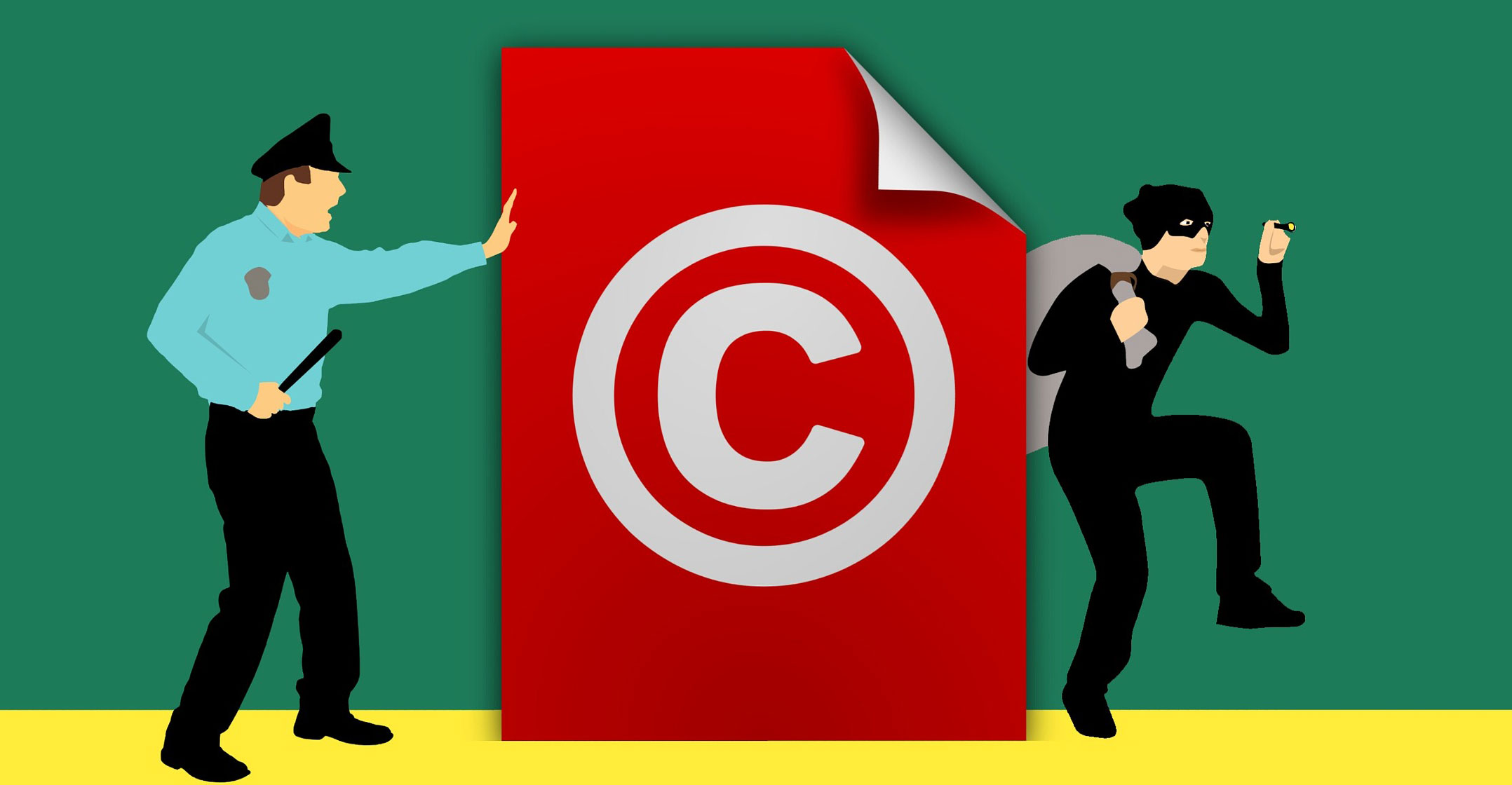
    Several arguments have been levelled against fair use in South Africa and other parts of the world.

    First, it’s been suggested that fair use offers carte blanche for infringing copyright owners’ rights. Some argue that, for instance, a university could buy one copy of a prescribed book and make copies for thousands of students, without compensating the author. But that’s not fair use; that’s copyright infringement, and it’s expressly forbidden according to the framework that governs fair use.

    This framework consists of four criteria, which explore the following issues:

    • The purpose and character of use;
    • The nature of the copyrighted work;
    • The amount and sustainability of the portion used; and
    • The effect upon the rightsholder’s potential market.

    This framework allows copyright users to assess whether their reproduction, reuse or remixing of copyright works is lawful or not.

    Some have also argued that fair use is in conflict with the Berne Convention, an international agreement governing copyright that’s been in use for more than a century. That’s not the case. If it was, the US and other countries that have fair use in their copyright laws would have faced challenges by now under the dispute settlement mechanism at the World Intellectual Property Organisation or other international forums that deal with copyright matters.

    Positive tool

    Fair use is a positive tool for users and producers of information, as it facilitates access and reuse of copyright works for various purposes, including creativity and innovation, without infringing copyright law.

    As US judge Pierre N Leval puts it:

    Fair use is not a grudgingly tolerated exception to the copyright owner’s rights of private property, but a fundamental policy of the copyright law. The stimulation of creative thought and authorship for the benefit of society depends assuredly on the protection of the author’s monopoly. But it depends equally on the recognition that the monopoly must have limits.

    Another argument that’s been levelled against fair use specifically in South Africa is that the country will be importing a “foreign” copyright regime into its national legislation.

    South African laws have been based on or influenced by foreign legislation for centuries. Why would adopting this piece of law — which works in the US and several other countries — be any different? In fact, the current “fair dealing” provisions are inherited from British colonial legislation, which makes them equally “foreign”.

    South Africa is part of the global community. It cannot ignore legislative developments in other countries, particularly those that will bring them in line with global best practice.

    The latest draft of the bill was approved by the parliamentary committee in November 2018. Next, it is due to go before the national assembly, and possibly the national council of provinces, for further debate.

    Hopefully this ongoing debate will encourage better, stronger fair-use conditions rather than leaving South Africa far behind, and will ensure that the country has a fair and progressive Copyright Amendment Act in the near future.The Conversation

    • Written by Denise Rosemary Nicholson, scholarly communications librarian, University of the Witwatersrand
    • This article is republished from The Conversation under a Creative Commons licence

    Follow TechCentral on Google News Add TechCentral as your preferred source on Google


    Denise Rosemary Nicholson top
    WhatsApp YouTube
    Share. Facebook Twitter LinkedIn WhatsApp Telegram Email Copy Link
    Previous ArticleChina’s Big Dipper challenges dominance of GPS
    Next Article Watch | Nasa InSight probe live Mars landing

    Related Posts

    18GW in unplanned breakdowns cripple Eskom

    2 November 2021

    Nersa kicks the Karpowership can down the road

    13 September 2021

    If you think South African load shedding is bad, try Zimbabwe’s

    13 September 2021
    Company News
    Domains.co.za launches self-hosted n8n VPS hosting

    Domains.co.za launches self-hosted n8n VPS hosting

    31 July 2026
    Smarter.tech '26 shows why smarter technology begins with context - Obsidian Systems

    Context is the missing piece in enterprise AI: Obsidian

    31 July 2026
    Huawei launches 12 intelligent transport solutions in South Africa - Sam Tang

    Huawei launches 12 intelligent transport solutions in South Africa

    30 July 2026
    Opinion
    The author, Jannie van Zyl

    Selling vapour is corporate suicide in slow motion

    16 July 2026
    Brazil's online gambling crackdown is a lesson for South Africa

    How Amazon outmanoeuvred Starlink in South Africa

    15 July 2026
    The Popia problem with agentic AI - Herman Haasbroek

    The Popia problem with agentic AI

    14 July 2026

    Subscribe to Updates

    Get the best South African technology news and analysis delivered to your e-mail inbox every morning.

    Latest Posts
    Nedbank hires MTN's former tech chief as group CIO - Nikos Angelopoulos

    Nedbank hires MTN’s former tech chief as group CIO

    31 July 2026
    Eskom's diesel bill falls 86% as breakdowns hit eight-year low

    Eskom’s diesel bill falls 86% as breakdowns hit eight-year low

    31 July 2026
    Ramaphosa signs off on taking the grid away from Eskom

    Ramaphosa signs off on taking the grid away from Eskom

    31 July 2026
    TCS+ | Why South African workers must become supervisors of digital labour - Accelera Digital Group Cliff de Wit

    TCS+ | Why South African workers must become supervisors of digital labour

    31 July 2026
    © 2009 - 2026 NewsCentral Media
    Built and maintained by Chronon
    • Cookie policy (ZA)
    • TechCentral – privacy and Popia

    Type above and press Enter to search. Press Esc to cancel.

    Manage consent

    TechCentral uses cookies to enhance its offerings. Consenting to these technologies allows us to serve you better. Not consenting or withdrawing consent may adversely affect certain features and functions of the website.

    Functional Always active
    The technical storage or access is strictly necessary for the legitimate purpose of enabling the use of a specific service explicitly requested by the subscriber or user, or for the sole purpose of carrying out the transmission of a communication over an electronic communications network.
    Preferences
    The technical storage or access is necessary for the legitimate purpose of storing preferences that are not requested by the subscriber or user.
    Statistics
    The technical storage or access that is used exclusively for statistical purposes. The technical storage or access that is used exclusively for anonymous statistical purposes. Without a subpoena, voluntary compliance on the part of your Internet Service Provider, or additional records from a third party, information stored or retrieved for this purpose alone cannot usually be used to identify you.
    Marketing
    The technical storage or access is required to create user profiles to send advertising, or to track the user on a website or across several websites for similar marketing purposes.
    • Manage options
    • Manage services
    • Manage {vendor_count} vendors
    • Read more about these purposes
    View preferences
    • {title}
    • {title}
    • {title}