Close Menu
TechCentralTechCentral

    Subscribe to the newsletter

    Get the best South African technology news and analysis delivered to your e-mail inbox every morning.

    Facebook X (Twitter) YouTube LinkedIn
    WhatsApp Facebook X (Twitter) LinkedIn YouTube
    TechCentralTechCentral
    • News
      300 million Sims a year for 60 million South Africans - Ferdi Moolman

      300 million Sims a year for 65 million South Africans

      25 August 2026
      MTN targets 150MW in first phase of AI data centre push

      MTN targets 150MW in first phase of AI data centre push

      25 August 2026
      Pick n Pay puts a TikTok-style shopping feed inside its grocery app

      Pick n Pay puts a TikTok-style shopping feed inside its grocery app

      25 August 2026
      SpaceX wants to launch its AI satellite fleet from a Louisiana swamp

      SpaceX wants to launch its AI satellite fleet from a Louisiana swamp

      25 August 2026
      $4-billion telescope that could rewrite gravity launches on Sunday

      $4-billion telescope that could rewrite gravity launches on Sunday

      25 August 2026
    • World
      Russia building its own Starlink - and faster than expected - Vadym Skibitskyi

      Russia building its own Starlink – and faster than expected

      11 August 2026
      Meta AI will now tell parents if their teen is in crisis

      Meta AI will now tell parents if their teen is in crisis

      17 July 2026
      IBM shares crash 25% as AI upends software spending - Arvind Krishna

      IBM shares crash 25% as AI upends software spending

      15 July 2026
      Jony Ive's first OpenAI device: an AI smart speaker - Jony Ive and Sam Altman

      Jony Ive’s first OpenAI device: an AI smart speaker

      15 July 2026
      Stripe, Advent in talks to buy PayPal for $53-billion

      Stripe, Advent in talks to buy PayPal for $53-billion

      15 July 2026
    • In-depth
      Google DeepMind CEO Demis Hassabis. Image: John Sears

      The plan to stop AI from breaking the world

      16 July 2026
      The internet has a Strait of Hormuz problem

      The internet has a Strait of Hormuz problem

      15 July 2026
      AI boom sparks rally, frenzy and fear

      AI boom sparks rally, frenzy and fear

      11 June 2026
      Every plug-in hybrid on sale in South Africa, ranked by price - Lamborghini Temerario

      Every plug-in hybrid on sale in South Africa, ranked by price

      7 June 2026
      What Wi-Fi 8 will mean for wireless networks

      What Wi-Fi 8 will mean for wireless networks

      1 June 2026
    • TCS
      Watts & Wheels S1E8: 'Tesla lands in Africa, just not here'

      Watts & Wheels S1E8: ‘Tesla lands in Africa, just not here’

      24 August 2026
      Meet the CIO | Discovery's Derek Wilcocks on AI, guardrails and growth

      Meet the CIO | Derek Wilcocks on how AI personalised Vitality

      13 August 2026
      TCS | Money just became native to the internet - Steven Boykey Sidley

      TCS | Money just became native to the internet – Steven Boykey Sidley

      12 August 2026
      TCS+ | Specops' Darren James on continuous trust in an AI world

      TCS+ | Specops’ Darren James on continuous trust in an AI world

      7 August 2026
      TCS+ | How AI is turning hardware into a subscription service - Shane van der Merwe Merchant West

      TCS+ | How AI is turning hardware into a subscription service

      6 August 2026
    • Opinion
      The author, Jannie van Zyl

      Selling vapour is corporate suicide in slow motion

      16 July 2026
      Brazil's online gambling crackdown is a lesson for South Africa

      How Amazon outmanoeuvred Starlink in South Africa

      15 July 2026
      The Popia problem with agentic AI - Herman Haasbroek

      The Popia problem with agentic AI

      14 July 2026
      The author, Fanie van Rooyen

      South Africa can still catch the AI wave – here’s how

      7 July 2026
      The author, Fanie van Rooyen

      The AI utopia South Africa can’t afford

      1 July 2026
    • Company Hubs
      • 1Stream
      • Africa Data Centres
      • AfriGIS
      • Altron Digital Business
      • Altron Document Solutions
      • Altron Group
      • Arctic Wolf
      • Ascent Technology
      • AvertITD
      • BBD
      • Braintree
      • CallMiner
      • CambriLearn
      • CM Telecom
      • Contactable
      • CYBER1 Solutions
      • Digicloud Africa
      • Digimune
      • Domains.co.za
      • ESET
      • Euphoria Telecom
      • HOSTAFRICA
      • Incredible Business
      • iONLINE
      • IQbusiness
      • Iris Network Systems
      • Kaspersky
      • LSD Open
      • Mitel
      • NEC XON
      • Netstar
      • Network Platforms
      • Next DLP
      • Ovations
      • Paracon
      • Paratus
      • Q-KON
      • SevenC
      • SkyWire
      • Solid8 Technologies
      • Telit Cinterion
      • Telviva
      • Tenable
      • Vertiv
      • Videri Digital
      • Vodacom Business
      • Vox
      • Wipro
      • Workday
      • XLink
    • Sections
      • AI and machine learning
      • Banking
      • Broadcasting and Media
      • Cloud services
      • Contact centres and CX
      • Cryptocurrencies
      • Education and skills
      • Electronics and hardware
      • Energy and sustainability
      • Enterprise software
      • Financial services
      • HealthTech
      • Information security
      • Internet and connectivity
      • Internet of Things
      • Investment
      • IT services
      • Lifestyle
      • Policy and regulation
      • Public sector
      • Retail and e-commerce
      • Satellite communications
      • Science
      • SMEs and start-ups
      • Social media
      • Talent and leadership
      • Telecoms
      • Watts & Wheels
    • Events
    • Advertise
    TechCentralTechCentral
    Home » Sections » Electronics and hardware » Why your phone is probably covered in 💩

    Why your phone is probably covered in 💩

    We carry them everywhere, take them to bed, to the bathroom and for many people they’re the first thing they see in the morning. They're also filthy.
    By The Conversation25 April 2023
    Twitter LinkedIn Facebook WhatsApp Email Telegram Copy Link
    News Alerts
    WhatsApp

    We carry them everywhere, take them to bed, to the bathroom and for many people they’re the first thing they see in the morning – more than 90% of the world owns or uses a mobile phone and many of us couldn’t manage without one.

    But while health concerns about phones use usually focus on the distraction they can cause while driving, the possible effects of radiofrequency exposure, or just how addictive they can be. The microbial infection risk of your phone is much less appreciated – but it’s very real.

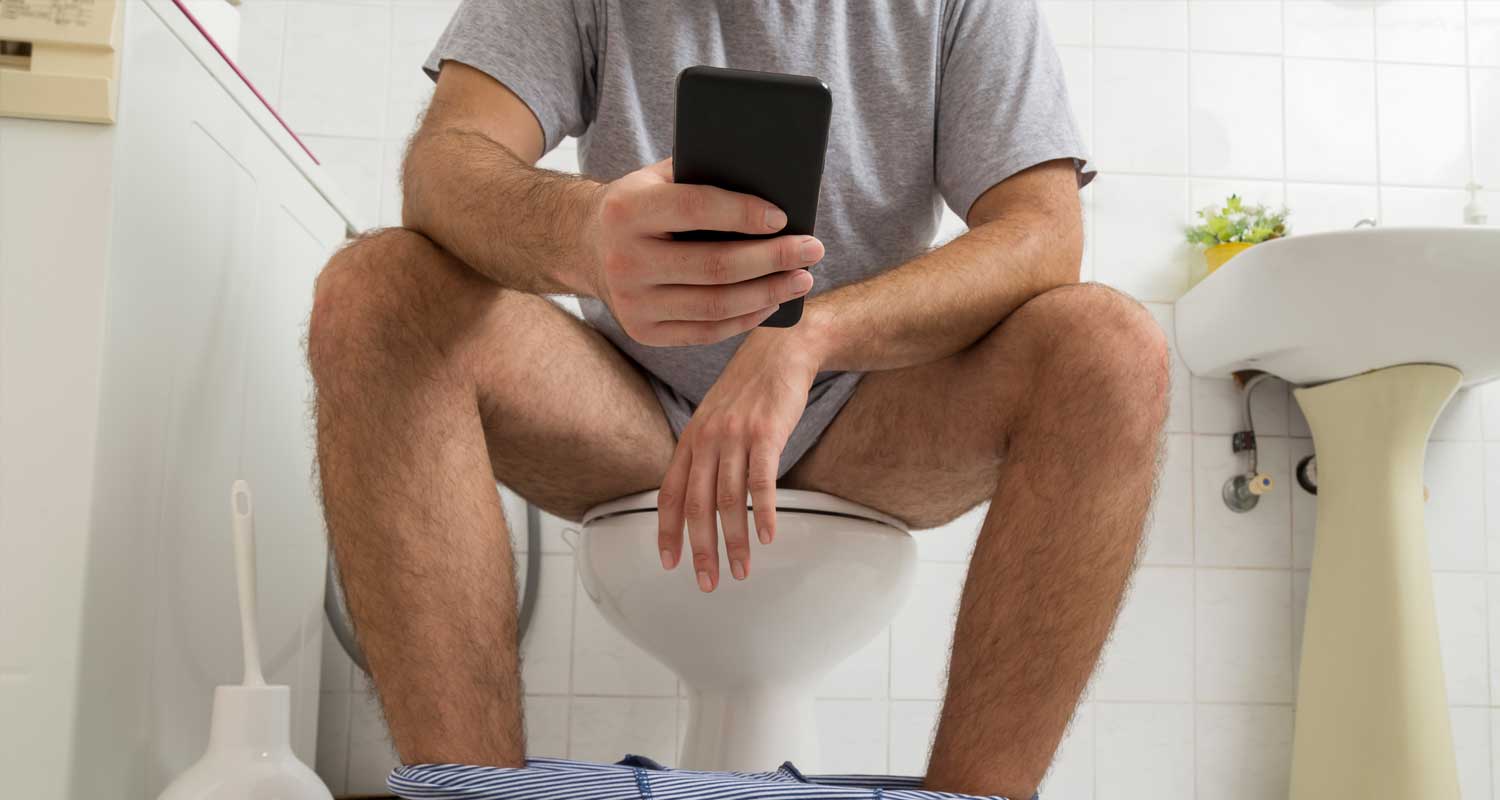
    A 2019 survey found that most people in the UK use their phones on the toilet – and it’s unlikely South Africans are much different. So, it’s not surprising to discover studies have found our mobile phones to be dirtier that toilet seats.

    It’s been estimated that people touch their phone hundreds if not thousands of times a day

    We give our phones to children to play with (who aren’t exactly well known for their hygiene). We also eat while using our phones and put them down on all sorts of (dirty) surfaces. All of which can transfer microbes onto your phone along with food deposits for those microbes to eat.

    It’s been estimated that people touch their phone hundreds if not thousands of times a day. And while many of us wash our hands regularly after say, going to the bathroom, cooking, cleaning, or gardening, we are much less likely to consider washing our hands after touching our phones. But given how disgusting and germ-infested phones can be, maybe it’s time to think more about mobile phone hygiene.

    Germs, bacteria, viruses

    Hands pick up bacteria and viruses all the time and are recognised as a route for acquiring infection. So, too, are the phones we touch. A number of studies conducted on the microbiological colonisation of mobile phones show that they can be contaminated with many different kinds of potentially pathogenic bacteria.

    These include the diarrhoea-inducing E. coli (which, by the way, comes from human poo) and the skin-infecting Staphylococcus, as well as Actinobacteria, which can cause tuberculosis and diphtheria, Citrobacter, which can lead to painful urinary tract infections, and Enterococcus, which is known to cause meningitis. Klebsiella, Micrococcus, Proteus, Pseudomonas and Streptococcus have also been found on phones and all can have equally nasty effects on humans.

    Research has found that many pathogens on phones are often antibiotic resistant, meaning they can’t be treated with conventional drugs. This is worrying as these bacteria can cause skin, gut and respiratory infections that can be life-threatening.

    Research has also found that even if you clean your phone with antibacterial wipes or alcohol it can still be recolonised by microorganisms, indicating that sanitisation must be a regular process.
    Phones contain plastic which can harbour and transmit viruses some of which (the common cold virus) can live on hard plastic surfaces for up to a week. Other viruses such as Covid-19, rotavirus (a highly infectious stomach bug that typically affects babies and young children), influenza and norovirus – which can cause serious respiratory and gut infections – can persist in an infectable form for several days.

    Indeed, since the beginning of the Covid pandemic, the US Centres for Disease Control and Prevention has introduced guidelines for cleaning and disinfecting mobile phones – which, along with door handles, cash machines and lift buttons, are considered reservoirs of infection.

    In particular, concern has been raised about the role mobile phones can play in the spread of infectious microbes in hospital and healthcare settings, as well as in schools.

    Clean your phone

    So, it’s clear that you need to start cleaning your phone regularly. The US Federal Communications Commission actually recommends daily sanitation of your phone and other devices – not least because we are still within an active Covid-19 pandemic and the virus can survive for several days on hard plastic surfaces.

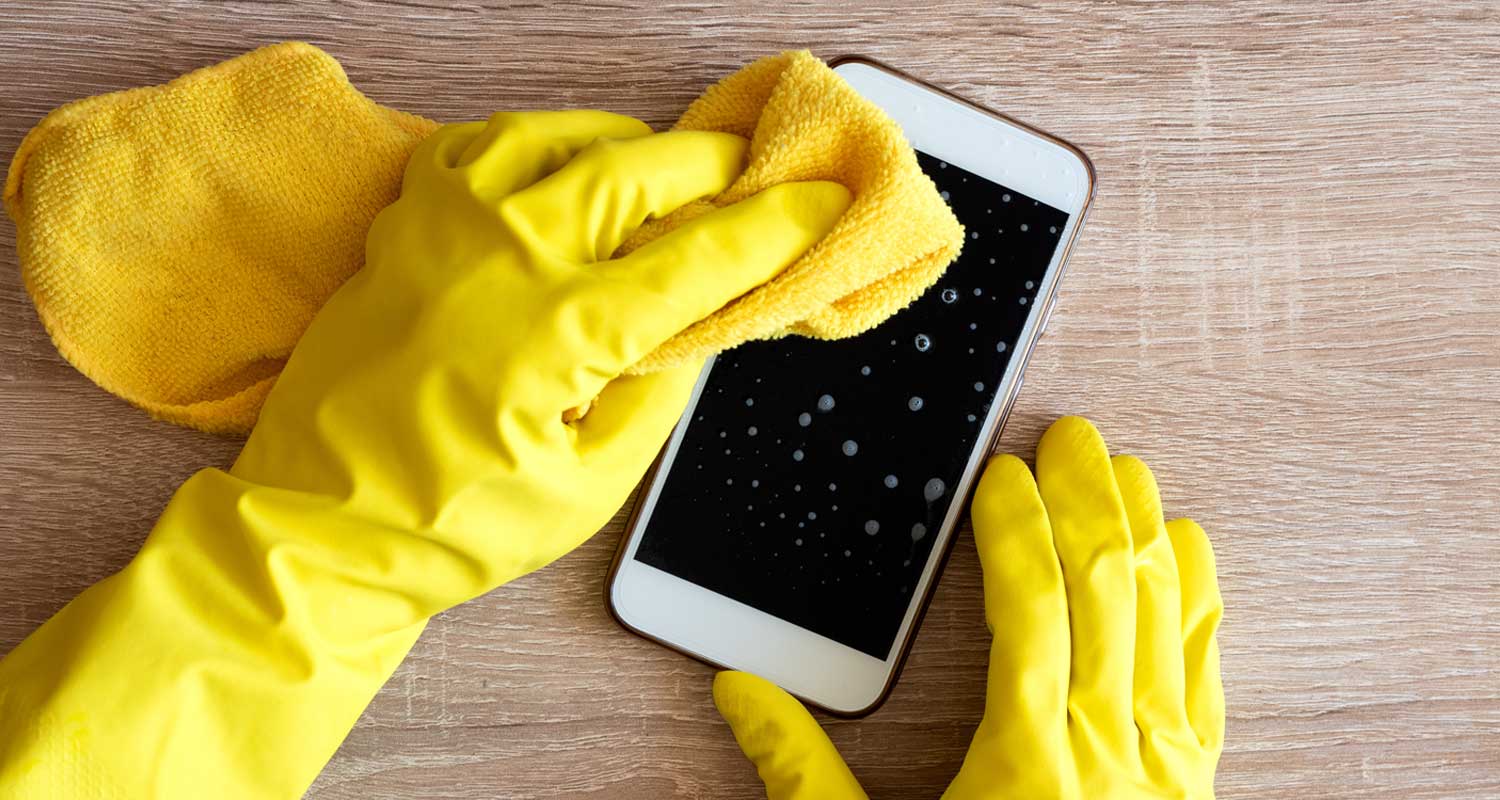
    Use alcohol-based wipes or sprays. They need to contain at least 70% alcohol to disinfect phone casings and touch screens, and it needs to be done every day if possible.

    Do not spray sanitisers directly onto the phone and keep liquids away from connection points or other phone openings. Absolutely avoid using bleach or abrasive cleaners. And wash your hands thoroughly after you’ve finished cleaning.

    Thinking about how you handle your phone will also help to avoid it becoming colonised with germs. When not at home, keep your phone in your pocket, or bag and use a disposable paper list of to-do items, rather than constantly consulting your phone. Touch your phone with clean hands – washed with soap and water or disinfected with alcohol-based hand sanitiser.

    There are other things you can do to avoid your phone becoming a source of viruses. Do not share your phone with others if you have any infection or have not first sanitised it. If children are allowed to play with your phone, sanitise it as soon as possible afterwards.

    And get in the habit of putting your phone away when not in use, then sanitising or washing your hands. You might also want to occasionally sanitise your phone charger when you are cleaning your phone.The Conversation

    • The author, Primrose Freestone, is senior lecturer in clinical microbiology, University of Leicester
    • This article is republished from The Conversation under a Creative Commons licence

    Get TechCentral’s daily newsletter

    Follow TechCentral on Google News Add TechCentral as your preferred source on Google


    WhatsApp YouTube
    Share. Facebook Twitter LinkedIn WhatsApp Telegram Email Copy Link
    Previous ArticleApple wins Epic court battle
    Next Article Convergence Partners invests in fintech trading platform

    Related Posts

    300 million Sims a year for 60 million South Africans - Ferdi Moolman

    300 million Sims a year for 65 million South Africans

    25 August 2026
    MTN targets 150MW in first phase of AI data centre push

    MTN targets 150MW in first phase of AI data centre push

    25 August 2026
    Pick n Pay puts a TikTok-style shopping feed inside its grocery app

    Pick n Pay puts a TikTok-style shopping feed inside its grocery app

    25 August 2026
    Company News
    Copilot is ready. Is your data? Ascent Technology - Microsoft Copilot

    Copilot is ready. Is your data?

    25 August 2026
    Centracom challenges telecoms gender norms - Elizabeth Makudubela

    Centracom challenges telecoms gender norms

    25 August 2026
    From data cabling to leading Lenovo at Pinnacle ICT - Inge Middlemas

    From data cabling to leading Lenovo at Pinnacle ICT

    24 August 2026
    Opinion
    The author, Jannie van Zyl

    Selling vapour is corporate suicide in slow motion

    16 July 2026
    Brazil's online gambling crackdown is a lesson for South Africa

    How Amazon outmanoeuvred Starlink in South Africa

    15 July 2026
    The Popia problem with agentic AI - Herman Haasbroek

    The Popia problem with agentic AI

    14 July 2026

    Subscribe to Updates

    Get the best South African technology news and analysis delivered to your e-mail inbox every morning.

    Latest Posts
    300 million Sims a year for 60 million South Africans - Ferdi Moolman

    300 million Sims a year for 65 million South Africans

    25 August 2026
    MTN targets 150MW in first phase of AI data centre push

    MTN targets 150MW in first phase of AI data centre push

    25 August 2026
    Pick n Pay puts a TikTok-style shopping feed inside its grocery app

    Pick n Pay puts a TikTok-style shopping feed inside its grocery app

    25 August 2026
    SpaceX wants to launch its AI satellite fleet from a Louisiana swamp

    SpaceX wants to launch its AI satellite fleet from a Louisiana swamp

    25 August 2026
    © 2009 - 2026 NewsCentral Media
    Built and maintained by Chronon
    • Cookie policy (ZA)
    • TechCentral – privacy and Popia

    Type above and press Enter to search. Press Esc to cancel.

    Manage consent

    TechCentral uses cookies to enhance its offerings. Consenting to these technologies allows us to serve you better. Not consenting or withdrawing consent may adversely affect certain features and functions of the website.

    Functional Always active
    The technical storage or access is strictly necessary for the legitimate purpose of enabling the use of a specific service explicitly requested by the subscriber or user, or for the sole purpose of carrying out the transmission of a communication over an electronic communications network.
    Preferences
    The technical storage or access is necessary for the legitimate purpose of storing preferences that are not requested by the subscriber or user.
    Statistics
    The technical storage or access that is used exclusively for statistical purposes. The technical storage or access that is used exclusively for anonymous statistical purposes. Without a subpoena, voluntary compliance on the part of your Internet Service Provider, or additional records from a third party, information stored or retrieved for this purpose alone cannot usually be used to identify you.
    Marketing
    The technical storage or access is required to create user profiles to send advertising, or to track the user on a website or across several websites for similar marketing purposes.
    • Manage options
    • Manage services
    • Manage {vendor_count} vendors
    • Read more about these purposes
    View preferences
    • {title}
    • {title}
    • {title}