Close Menu
TechCentralTechCentral

    Subscribe to the newsletter

    Get the best South African technology news and analysis delivered to your e-mail inbox every morning.

    Facebook X (Twitter) YouTube LinkedIn
    WhatsApp Facebook X (Twitter) LinkedIn YouTube
    TechCentralTechCentral
    • News
      US scored 'own goal' with ban on top Anthropic model

      US scored ‘own goal’ with ban on top Anthropic model

      15 June 2026
      Fox is buying streaming hardware firm Roku for $22-billion

      Fox is buying streaming hardware firm Roku for $22-billion

      15 June 2026
      Where SA remote workers keep the most: Wise, Grey, Payoneer or PayPal

      Where SA remote workers can keep the most: Wise, Grey, Payoneer or PayPal

      15 June 2026
      How Russians juggle VPNs to outwit the Kremlin

      How Russians juggle VPNs to outwit the Kremlin

      15 June 2026
      The millions Vodacom spends protecting its CEO - Shameel Joosub

      The millions Vodacom spends protecting its CEO

      14 June 2026
    • World
      Google on the hook for what its AI tells users, court rules

      Google on the hook for what its AI tells users, court rules

      15 June 2026
      Amazon CEO flagged Anthropic AI risks to Washington - Andy Jassy

      Amazon CEO flagged Anthropic AI risks to Washington

      14 June 2026
      Trouble at Xbox

      Trouble at Xbox

      11 June 2026
      Meta declares war on Israeli spyware firm

      Meta declares war on Israeli spyware firm

      8 June 2026
      Meta takes on OpenAI and Anthropic in enterprise AI

      Meta takes on OpenAI and Anthropic in enterprise AI

      4 June 2026
    • In-depth
      AI boom sparks rally, frenzy and fear

      AI boom sparks rally, frenzy and fear

      11 June 2026
      Every plug-in hybrid on sale in South Africa, ranked by price - Lamborghini Temerario

      Every plug-in hybrid on sale in South Africa, ranked by price

      7 June 2026
      What Wi-Fi 8 will mean for wireless networks

      What Wi-Fi 8 will mean for wireless networks

      1 June 2026
      Alfa's electric rebel - Alfa Romeo Junior Elettrica Veloce

      Alfa’s electric rebel

      29 April 2026
      Africa switches on as Europe dims the lights

      Africa switches on as Europe dims the lights

      9 April 2026
    • TCS
      Watts & Wheels S1E5: 'A Bentley of the bush and a car that swims'

      Watts & Wheels S1E5: ‘A Bentley of the bush and a car that swims’

      8 June 2026
      TCS | Charge's R1.8-billion bet on an off-grid EV future - Charge chairman Joubert Roux

      TCS | Charge’s R1.8-billion bet on an off-grid EV future

      18 May 2026
      TCS+ | The Up&Up Group on the hidden cost of AI - Jason Harrison

      TCS+ | The Up&Up Group on the hidden cost of AI

      13 May 2026
      Michael Rossouw

      TCS+ | The retirement decision most South Africans get wrong

      6 May 2026
      TCS | The Cape Town start-up listening for TB with AI - Braden van Breda

      TCS | The Cape Town start-up listening for TB with AI

      4 May 2026
    • Opinion
      The clock is ticking on South African banks' biggest advantage - Pambos Soteriades

      The clock is ticking on South African banks’ biggest advantage

      9 June 2026

      Clashing judgments leave South Africa’s crypto law unsettled

      2 June 2026
      The clock is ticking on South African banks' biggest advantage - Pambos Soteriades

      The trap inside South Africa’s banking MVNO boom

      1 June 2026
      The hidden cost of social media age bans is everyone's privacy - Petrus Potgieter

      The hidden cost of social media age bans is everyone’s privacy

      29 May 2026
      Treasury's crypto crackdown is a betrayal of Mandela's promise - Duncan McLeod

      Treasury’s crypto crackdown is a betrayal of Mandela’s promise

      22 May 2026
    • Company Hubs
      • 1Stream
      • Africa Data Centres
      • AfriGIS
      • Altron Digital Business
      • Altron Document Solutions
      • Altron Group
      • Arctic Wolf
      • Ascent Technology
      • AvertITD
      • BBD
      • Braintree
      • CallMiner
      • CambriLearn
      • CM Telecom
      • Contactable
      • CYBER1 Solutions
      • Digicloud Africa
      • Digimune
      • Domains.co.za
      • ESET
      • Euphoria Telecom
      • HOSTAFRICA
      • Incredible Business
      • iONLINE
      • IQbusiness
      • Iris Network Systems
      • Kaspersky
      • LSD Open
      • Mitel
      • NEC XON
      • Netstar
      • Network Platforms
      • Next DLP
      • Ovations
      • Paracon
      • Paratus
      • Q-KON
      • SevenC
      • SkyWire
      • Solid8 Technologies
      • Telit Cinterion
      • Telviva
      • Tenable
      • Vertiv
      • Videri Digital
      • Vodacom Business
      • Wipro
      • Workday
      • XLink
    • Sections
      • AI and machine learning
      • Banking
      • Broadcasting and Media
      • Cloud services
      • Contact centres and CX
      • Cryptocurrencies
      • Education and skills
      • Electronics and hardware
      • Energy and sustainability
      • Enterprise software
      • Financial services
      • HealthTech
      • Information security
      • Internet and connectivity
      • Internet of Things
      • Investment
      • IT services
      • Lifestyle
      • Motoring
      • Policy and regulation
      • Public sector
      • Retail and e-commerce
      • Satellite communications
      • Science
      • SMEs and start-ups
      • Social media
      • Talent and leadership
      • Telecoms
    • Events
    • Advertise
    TechCentralTechCentral
    Home » Sections » Broadcasting and Media » 100 years of radio in South Africa – and still going strong

    100 years of radio in South Africa – and still going strong

    Radio in South Africa turns 100 years old today. But advances in technology mean the medium is not standing still.
    By Sandra Laurence18 December 2023
    Twitter LinkedIn Facebook WhatsApp Email Telegram Copy Link
    News Alerts
    WhatsApp

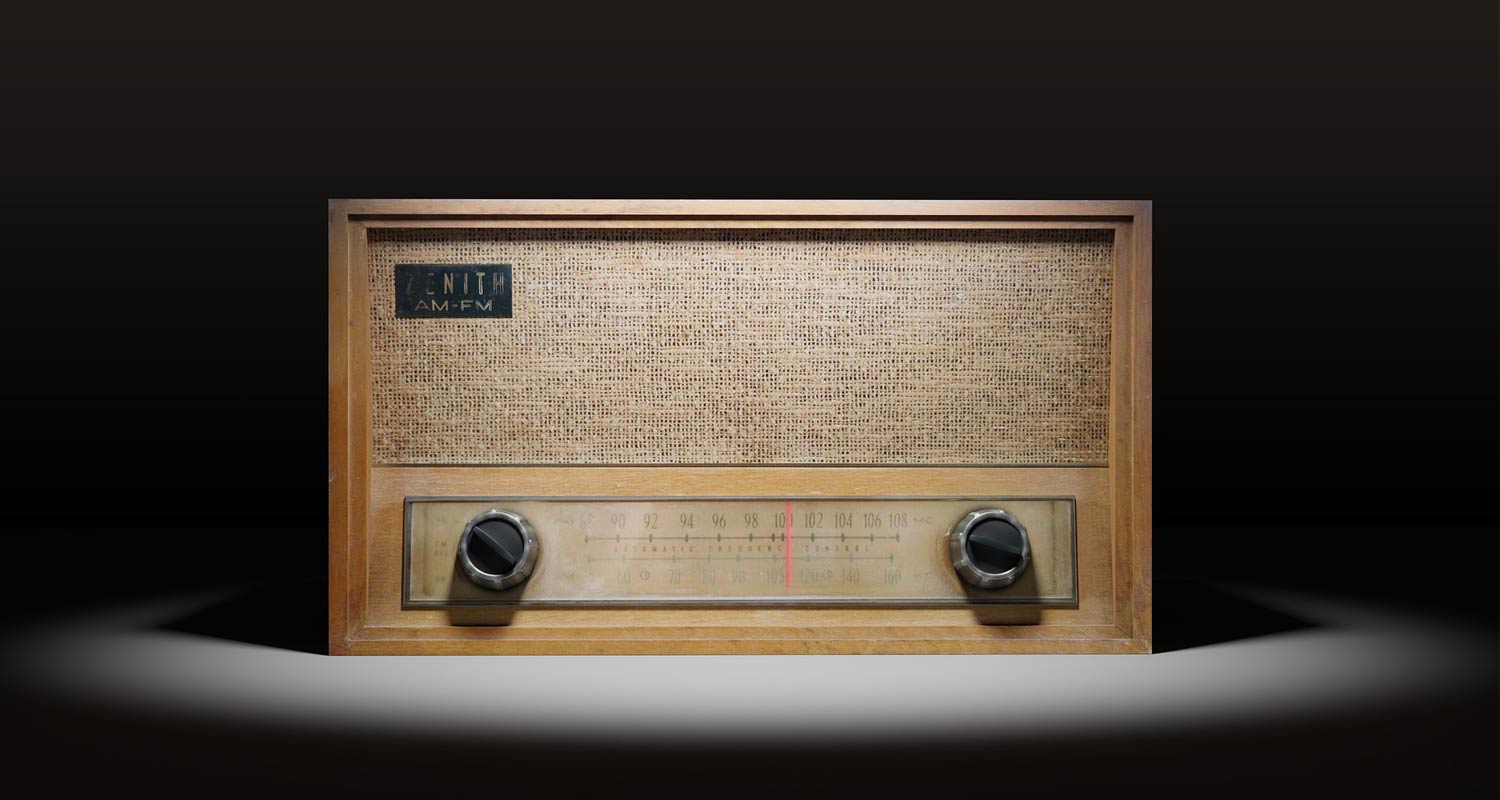
    Today – Monday, 18 December 2023 – marks 100 years since radio was introduced in South Africa, with the first experimental broadcast going out from Railway Headquarters in Johannesburg on 18 December 1923.

    Radio broadcasting began under the auspices of South African Railways, followed by the licensing of three more services: the Association of Scientific and Technical Societies in Johannesburg, the Cape Peninsular Publicity Association in Cape Town and the Durban Corporation, which began broadcasting in 1924.

    These merged into the African Broadcasting Company in 1927, owned by a wealthy businessman, IW Schlesinger, but on 1 August 1936, they were sold to the SABC, established that year through an act of parliament.

    In most of the world, reliance on the radio for communication came to an end in the 1950s and early 1960s

    The SABC took over the African Broadcasting Company’s staff and assets and maintained a state monopoly on radio until the launch in December 1979 of Capital Radio 604, and then Radio 702 in 1980.

    In most of the world, reliance on the radio for communication came to an end in the 1950s and early 1960s with the advent of television – but in South Africa, where television broadcasting was not adopted until 1976 because the Nationalist government of the time considered it a threat to Afrikaner culture, reliance on radio lasted nearly two decades longer. This meant that South African programming could take advantage of the newest technological and production advances.

    SABC stations included the English and Afrikaans language channels – eventually becoming SAfm and Radio Sonder Grense (RSG), respectively. Programming included news, plays and British content, and in 1950, the SABC launched Springbok Radio as a commercial, for-profit but still state-owned service.

    Universal mass medium

    According to Tanja Bosch, associate professor in media studies and production at the University of Cape Town, radio is still a universal mass medium in South Africa: more people have access to radio receivers and broadcasts than they do television sets. In fact, radio remains the most popular and pervasive medium across the African continent. This is despite the proliferation of cellphones, the growth of social media apps and on-demand streaming services.

    Former station manager of the SABC’s 5FM from 1986 to 1994 Lance Rothschild said this was a time of great change at the public broadcaster, not only politically but also in terms of technological advancement. “The SABC that I left in 1994 was very different from the one I joined. For one thing, Radio 5’s audience was younger and the youth are always early adopters of technology.

    “When I started, we were broadcasting from CDs, which was an innovation then. Other stations were still using tape. But we had 8-track carts we used to load with music and ‘spots’ (advertising) and then in 1986 we were able to offer FM stereo to the greater Gauteng area.”

    Read: Why the Internet won’t kill the (digital) radio star

    Prior to that, the SABC had been using AM, which was prone to atmospheric conditions, and in 1988 Radio 5 was one of the first in the world to offer FM listening nationwide with terrestrial transmitters across a broad footprint.

    Rothschild said technological innovations in radio have enhanced the intimacy between the station and the listener – where before listeners would have to write letters or fax through requests or comments, modern listeners can use WhatsApp and respond in real time, so the interaction now is like a real conversation between presenters and the audience.

    The early 1990s were a time of real change at the SABC, not only politically, but also in terms of technology. “That’s when we first started using computer-based radio programming,” said Rothschild. “It was a major leap in tech for the SABC. Again, we were the first station in the world to broadcast from a digital playback system. We used to programme an RFS selector and play from a digital hard drive, which was unheard of at the time. We had a nickname for the system at the time: ‘Fred, or fantastically reliable electronic device.’ Of course, at other times it was called other names that fitted the acronym.”

    The big tech switch was digital and Rothschild said what was exciting at the time was that the technicians involved were not afraid to make mistakes or try things out.

    “We were a boer-maak-a-plan country at the time. We still had restrictions on buying tech because the outside world was not sure how it would be used, but we weren’t afraid to see what we could do with what we had. Granted, it was a less competitive environment then, too,” said Rothschild.

    We used to make recordings on cassettes and then dump them on Revox reel-to-reels in studio

    Veteran broadcaster David O’Sullivan remembers the heady days of Capital Radio in 1982 when, as a radio reporter, he was still using quarter-inch tapes to record, editing it later using razor blades and china markers to cut the tape. “We used to make recordings on cassettes and then dump them on Revox reel-to-reels in studio,” he said.

    “Studio desks looked just as modern then, even though they were analogue. They were sophisticated, with sliders, VU meters and, although today everything’s digital, the desks don’t look that different.

    “Then we had MiniDiscs, which were not great but meant we could identify tracks, and in the 1990s we got digital recorders with software for editing, which can remove a nanosound. That was completely revolutionary for what we can achieve now.”

    ‘As healthy as ever’

    O’Sullivan said the immediacy has changed, however. “When we were out in the field reporting on the violence in Soweto in the late 1980s, for instance, we would use payphones to send in our stories; or look for a telephone line, which were few and far between, or knock on someone’s door and ask to use the phone.

    “Nowadays, obviously, you can use your mobile phone to record, edit and then send to the news desk in one seamless action, so a lot has changed.”

    O’Sullivan agreed that radio in South Africa is “never going to die” and is “as healthy as ever”. He conceded that there is a move towards people wanting to listen to their choice of music or podcast in their own time, and not have content selected for them by presenters.

    Read: Minister paves way for digital radio in South Africa

    “But radio’s a habit,” he said. “And as long as presenters understand their audiences and cater for them, it will continue to be significant.”

    The next big step in radio broadcasting is to transition to digital broadcasting – using digital radio mondiale (DRM) and digital audio broadcasting (DAB) – according to Lynn Mansfield, executive for advisory at eMedia Holdings, the parent of e.tv and Openview.

    Mansfield said radio is still a critically important medium in Africa, not only for entertainment, but also as a means of communication and access to news.

    An important factor about radio is that once you have bought your device, the service is generally free. “With streaming in South Africa, you are paying for data, and with DAB, you will not just have audio but video, too,” Mansfield said, referring to the technology that is expected – eventually – to replace analogue FM broadcasts.

    “You can’t stop DAB – already many top-end vehicles coming into the country are equipped with it, and the price of DAB receivers is dropping. We just need one commercial station to be brave and launch with it.”

    Another advantage of DAB is that it allows divisions within the spectrum for pop-up channels and sub-brands. Mansfield gave as an example Absolute Radio in the UK, which is primarily a rock music channel but also has other platforms including Absolute Radio 80s, Absolute Radio 90s, Absolute Radio Classic Rock, Hits Radio, Greatest Hits Radio, Kiss, Magic, Jazz FM and Planet Rock.

    Read: Device transmits radio waves with almost no power

    Mansfield said “there is nothing to stop South Africa launching DAB next year, as Icasa has published the digital policy and everything is in place. There have been test transmissions made by Sentech out of Brixton. Now it’s just up to the broadcasters.

    “FM is definitely not dead – in fact they can coexist. The Electronic Communications Act is tech-neutral, so you could see a scenario where FM continues to be used in the rural areas and DAB is used in the larger metro districts,” he said.  – © 2023 NewsCentral Media

    Get breaking news alerts from TechCentral on WhatsApp

    Follow TechCentral on Google News Add TechCentral as your preferred source on Google


    Capital 604 Capital Radio Capital Radio 604 David O'Sullivan eMedia Lynn Mansfield RSG SABC SAfm
    WhatsApp YouTube
    Share. Facebook Twitter LinkedIn WhatsApp Telegram Email Copy Link
    Previous ArticleAdobe’s $20-billion Figma deal called off
    Next Article Now for Musk vs Europe: EU takes direct aim at X

    Related Posts

    SABC+ buckles as 477 000 fans pile in for Bafana opener

    SABC+ buckles as 477 000 fans pile in for Bafana opener

    12 June 2026
    Malatsi opens door to 'some' partial privatisations of SOEs - communications minister Solly Malatsi

    Malatsi opens door to ‘some’ partial privatisations of SOEs

    13 May 2026
    South Africa's TikTok election is coming

    South Africa’s TikTok election is coming

    7 May 2026
    Company News
    When jammers kill the signal, AI goes blind too - Rory Atkinson Orange Logistics Sigfox South Africa

    When jammers kill the signal, AI goes blind too

    12 June 2026
    Workday Horizon shows SA firms how to make AI deliver - Kiv Moodley

    Workday Horizon shows SA firms how to make AI deliver

    12 June 2026
    Hisense, Makro team up for winter laundry promotion

    Hisense, Makro team up for winter laundry promotion

    12 June 2026
    Opinion
    The clock is ticking on South African banks' biggest advantage - Pambos Soteriades

    The clock is ticking on South African banks’ biggest advantage

    9 June 2026

    Clashing judgments leave South Africa’s crypto law unsettled

    2 June 2026
    The clock is ticking on South African banks' biggest advantage - Pambos Soteriades

    The trap inside South Africa’s banking MVNO boom

    1 June 2026

    Subscribe to Updates

    Get the best South African technology news and analysis delivered to your e-mail inbox every morning.

    Latest Posts
    US scored 'own goal' with ban on top Anthropic model

    US scored ‘own goal’ with ban on top Anthropic model

    15 June 2026
    Fox is buying streaming hardware firm Roku for $22-billion

    Fox is buying streaming hardware firm Roku for $22-billion

    15 June 2026
    Where SA remote workers keep the most: Wise, Grey, Payoneer or PayPal

    Where SA remote workers can keep the most: Wise, Grey, Payoneer or PayPal

    15 June 2026
    Google on the hook for what its AI tells users, court rules

    Google on the hook for what its AI tells users, court rules

    15 June 2026
    © 2009 - 2026 NewsCentral Media
    • Cookie policy (ZA)
    • TechCentral – privacy and Popia

    Type above and press Enter to search. Press Esc to cancel.

    Manage consent

    TechCentral uses cookies to enhance its offerings. Consenting to these technologies allows us to serve you better. Not consenting or withdrawing consent may adversely affect certain features and functions of the website.

    Functional Always active
    The technical storage or access is strictly necessary for the legitimate purpose of enabling the use of a specific service explicitly requested by the subscriber or user, or for the sole purpose of carrying out the transmission of a communication over an electronic communications network.
    Preferences
    The technical storage or access is necessary for the legitimate purpose of storing preferences that are not requested by the subscriber or user.
    Statistics
    The technical storage or access that is used exclusively for statistical purposes. The technical storage or access that is used exclusively for anonymous statistical purposes. Without a subpoena, voluntary compliance on the part of your Internet Service Provider, or additional records from a third party, information stored or retrieved for this purpose alone cannot usually be used to identify you.
    Marketing
    The technical storage or access is required to create user profiles to send advertising, or to track the user on a website or across several websites for similar marketing purposes.
    • Manage options
    • Manage services
    • Manage {vendor_count} vendors
    • Read more about these purposes
    View preferences
    • {title}
    • {title}
    • {title}